REVIEW · COOKING CLASSES
Master Korean traditional cooking with a Kimchi chef
Book on Viator →Operated by OME COOKING LAB · Bookable on Viator
Market walks beat cookbook lessons in Seoul. This small-group cooking class pairs a neighborhood ingredient hunt with hands-on Korean cooking led by a chef instructor like Chef Minseon, and your menu depends on which day you choose. After a short walk, you cook in a Korean-style home kitchen and finish by sitting down together with what you made.
I especially like how small-group means you get real help while you’re chopping, mixing, and tasting. I also like that the class isn’t just theory: you shop for ingredients at a local market and you cook a complete set of dishes, usually three menu items, before you eat.
One thing to consider: the dishes change by day, and the class starts early at 10:00am with no subway pickup. If you’re set on a specific dish (say, kimchi every day), you’ll want to book the correct day.
In This Review
- Key things I’d circle on your Seoul plan
- Price and time: $85 for three dishes you can actually make
- Where to meet: Jegi-dong Station Exit 2 and no backseat pickup
- The Gyeongdong Market ingredient hunt: where Korean flavor starts
- Menus change by day: choose your dish window wisely
- In the Korean-style house kitchen: hands-on, paced, and beginner-friendly
- Eating together: the real finish line
- Who should book this cooking class, and who should skip it
- Should you book OME Cooking Lab’s Korean cooking with a Kimchi chef?
- FAQ
- What dishes will I cook?
- Where do I meet, and what time does it start?
- Is this a hands-on cooking class?
- How big is the group?
- Is morning tea included?
- Do you offer vegan or halal options?
- Can children join?
- What if I need to cancel?
- Is pick-up or drop-off included from the subway?
Key things I’d circle on your Seoul plan
- Small-group cooking capped for a more personal, hands-on pace
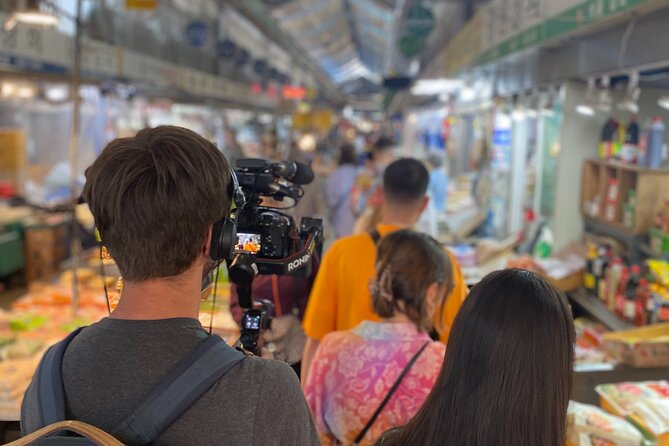
- Gyeongdong Market ingredient shopping tied directly to what you’ll cook
- A Korean-style house kitchen setup that feels local, not classroom-like
- Different menus by day (samgyetang, kimchi, bulgogi, japchae, doenjang jjigae, bibimbap, desserts)
- Included morning tea to keep the energy up during the market-to-kitchen flow
Price and time: $85 for three dishes you can actually make
At $85 per person for about 3 hours 30 minutes, you’re paying for three things: guidance, ingredients you buy with your instructor’s plan, and meals you get to eat right after cooking. That’s the math that makes cooking classes in Seoul feel worth it when you’re on a time crunch.
This experience is built for a morning rhythm. You meet at 10:00am, walk to the market, cook, then eat, and you’re back at the meeting spot afterward. It’s also described as a private activity for your group, which usually means less waiting around and fewer awkward overlaps with strangers.
One small complexity: you may see different caps mentioned. The experience describes a small group limited to seven, while the provider lists up to 10 people per booking. In either case, it should still feel intimate compared with large demo classes.
You can also read our reviews of more cooking classes in Seoul
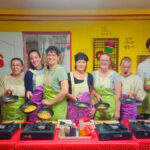
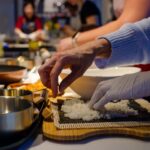
Where to meet: Jegi-dong Station Exit 2 and no backseat pickup
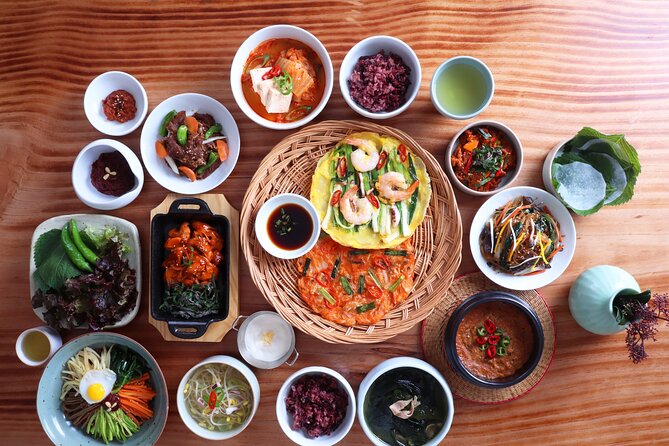
You start at Jegi-dong Station, Exit 2 near Dongdaemun Station, and you’ll want to arrive a little early. There’s no included subway pickup or drop-off, so you’re responsible for getting yourself there.
I like meeting at a clear metro exit because it reduces hassle. Once you’re there, your guide takes over: short walk, market stop, then the kitchen portion starts smoothly. Comfortable shoes matter, because you’ll be walking through local streets and a market area before you cook.
If you’re traveling with a phone-based plan, note the mobile ticket. Also, confirmation happens within 48 hours of booking, as long as availability is open.
The Gyeongdong Market ingredient hunt: where Korean flavor starts
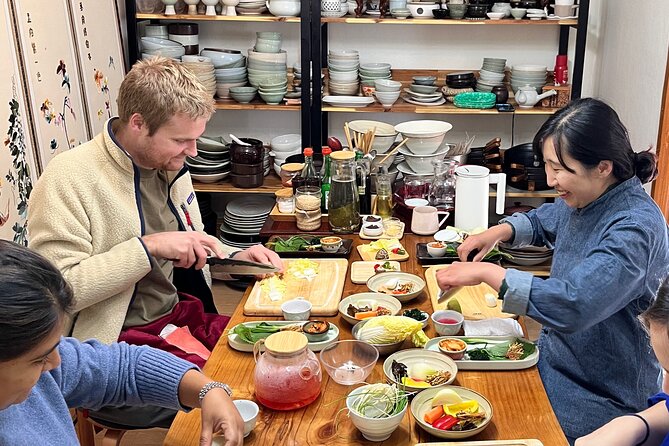
The market stop is Gyeongdong Market, and it’s not just window shopping. Your guide leads your group through choosing the ingredients used in the day’s recipes, so you learn what matters before you start cooking.
This is also where Korean food culture becomes practical. You’ll see common ingredient categories up close, and you’ll get help connecting what you spot in the market to how it shows up on the table. That matters because Korean home cooking often hinges on ingredient choices and balance, not complicated steps.
A helpful detail is that the market and kitchen are linked by the menu. You’re not wandering around collecting random items. You’re buying with a purpose, and then you use what you chose to build the dishes you’ll eat later.
My tip: plan to snack lightly before you go. Morning tea is included, but once you’re cooking and tasting, you’ll likely be ready for a real meal.
Menus change by day: choose your dish window wisely
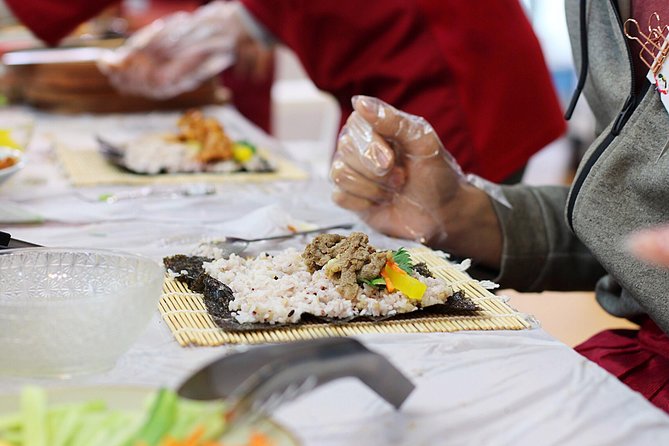
This class is designed around 3 different menu items for the day, and the cooking focus shifts depending on which day you book. That’s a real advantage if you like variety, but it’s also the main thing to verify before you commit.
Here’s the day-by-day menu breakdown you should match to your cravings:
- Monday: samgyetang
- Thursday: kimchi
- Tuesday or Saturday: bulgogi, japchae, and doenjang jjigae
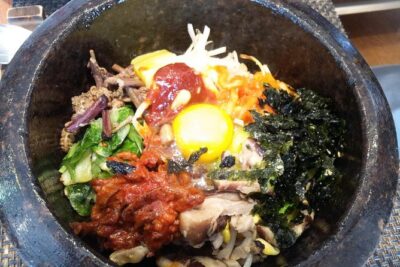
- Friday: bibimbap
- Sunday: a variety of Korean desserts
What you gain from this setup is a sense of how a Korean meal is built, not just one famous dish. You’ll also get different cooking skills depending on the day. For example, a meal built around bulgogi and japchae tends to emphasize savory-sweet seasoning and noodle/warming components, while doenjang jjigae points you toward soybean paste-based stew logic. And dessert days shift you into a different kind of technique and texture.
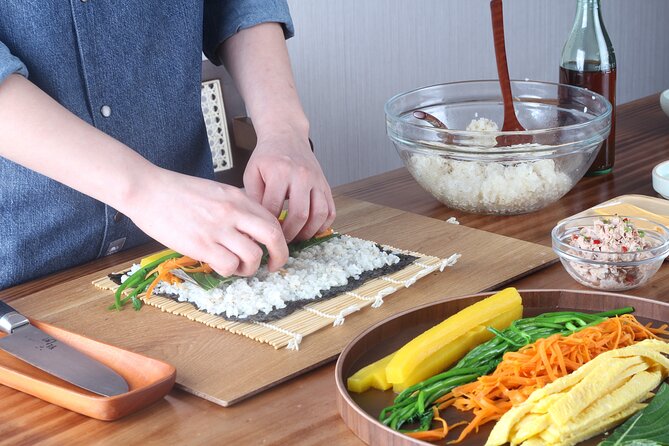
One more practical note: the experience is described as a hands-on cooking class, not a sit-and-watch demo. You’ll be set up in the kitchen with your group, and you’ll follow along through the steps to make what’s planned for that day.
In the Korean-style house kitchen: hands-on, paced, and beginner-friendly
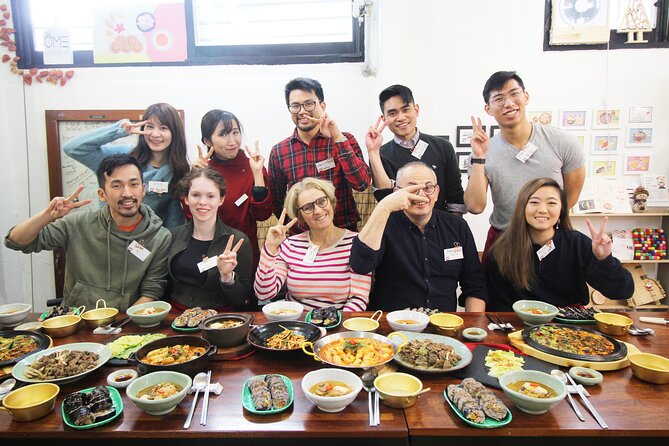
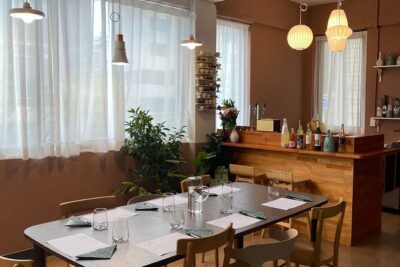
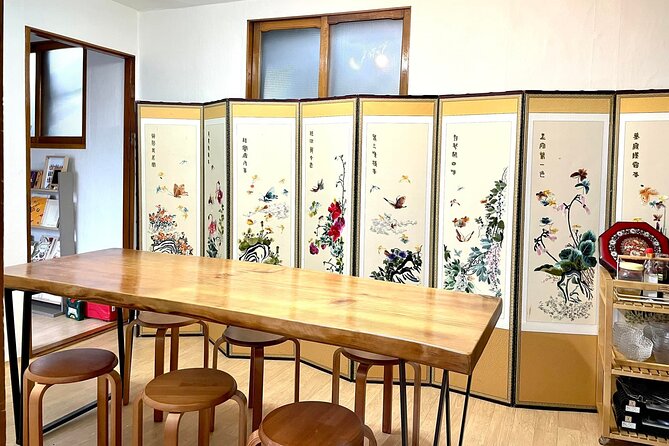
After the market, you’ll be guided to a Korean-style home in a local neighborhood. Then the class starts in the kitchen with your instructor and small group.
This is where the value really shows. The format is hands-on, meaning you’re doing the cooking, not just taking photos. Several class experiences highlight that the studio setup is well organized and that ingredients may be prepped ahead of time, so you can focus on technique and taste rather than starting from scratch.
If you’re a non-cook, that’s reassuring. One instructor style you’ll commonly see described is patience and clear instructions, including good English communication. That combination matters, because Korean cooking can involve flavors that are familiar once you know what to look for, like the difference between a stew depth and a quick seasoning adjustment.
Dietary options are also part of the plan. Vegan and halal options are available, so you’re not forced into a one-size menu. If you have dietary needs, I’d message or mention them when you book, so your guide can prepare accordingly.
A fun extra appears on at least some sessions: one class experience mentions a bonus component where a chef from Busan helped with sea pineapple preparation. Since it isn’t guaranteed in the core outline, treat it as a potential bonus, not a certainty—but it’s exactly the kind of add-on that makes a class feel like more than just a scripted recipe.






Eating together: the real finish line
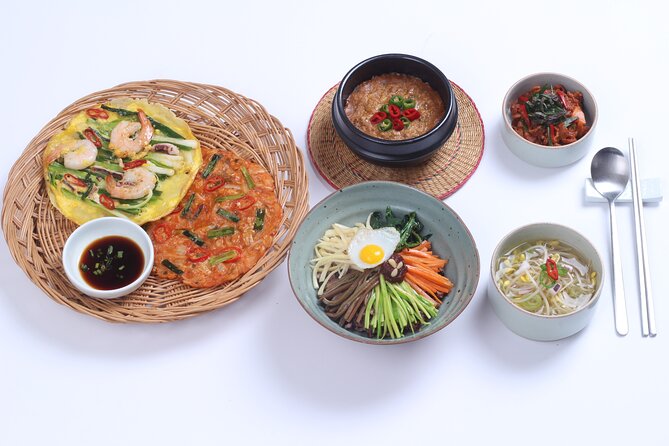
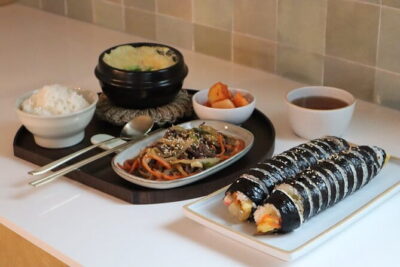
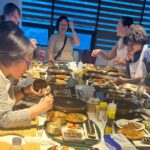
Once everything is cooked, you’ll sit down and taste the meal with your group and instructor. This is the point that turns cooking into a memory. You get feedback in real time: you can taste, compare, and learn what the dish is supposed to feel like.
The meal portion is included with the class. Depending on your selection and timing, you’ll either get lunch (or dinner) or dessert, based on the day’s menu. Either way, it’s structured so you’re eating what you cooked rather than heading out to find food afterward.
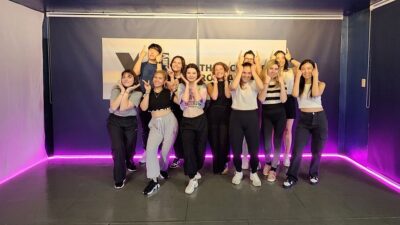
I also like that you chat with your instructor and group during the meal. It’s a low-pressure way to ask questions that don’t fit into a cooking demo—like what substitutions make sense at home or how to think about seasoning consistency.
Some classes may include a cookbook or recipe handout to take home. If you care about recreating the dishes later, that’s a major plus. You’ll want to check what’s included with your exact booking, but it’s been a common takeaway.
Who should book this cooking class, and who should skip it
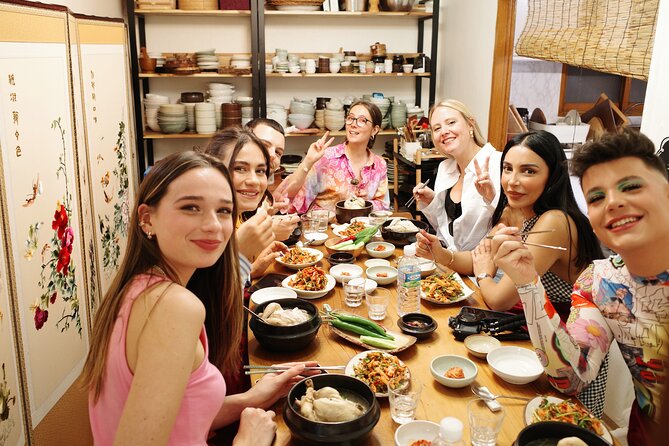
This is a great match if you want a first-time-friendly introduction to Korean cooking that goes beyond one recipe. If you like the idea of learning by doing—shopping for ingredients, cooking with guidance, and eating together—this class hits the sweet spot.
It also fits well if you only have a short window in Seoul. You get a market walk plus cooking plus a meal in one morning. And because the group stays small, you’re less likely to feel ignored while you’re learning.
It may be less ideal if you:
- Want a specific dish regardless of the day. Your menu changes, so book by what you actually want to cook.
- Hate early starts or walking. The class starts at 10:00am and you meet at the metro exit with no pickup.
- Are traveling with young kids. The experience allows up to one child per class, and under 6 years old isn’t available for safety.
If you’re booking as a couple, solo traveler, or small group, the small size should make the day feel structured without feeling stiff.
Should you book OME Cooking Lab’s Korean cooking with a Kimchi chef?
I’d book this if you want an efficient, hands-on Korean meal experience that starts in a real Seoul market and ends with you eating what you made. The market-to-kitchen flow is the part that makes it feel grounded, not touristy, and the small-group pace should help you leave with confidence.
I’d pause if you’re very picky about dish choice by day, or if you’re hoping for a late-morning start with no walking. This is designed as a morning plan, and the schedule runs that way.
If you’re choosing your day based on what you want to cook—samgyetang, kimchi, bulgogi+japchae+doenjang jjigae, bibimbap, or desserts—then you’ll likely end the class with recipes you can repeat at home, not just a photo set.
FAQ
What dishes will I cook?
The menu depends on the day you book. Monday focuses on samgyetang. Thursday is kimchi. Tuesday or Saturday includes bulgogi, japchae, and doenjang jjigae. Friday is bibimbap. Sunday features a variety of Korean desserts.
Where do I meet, and what time does it start?
You meet at Jegi-dong Station, Exit 2 near Dongdaemun Station at 10:00am. The activity ends back at the meeting point.
Is this a hands-on cooking class?
Yes. The experience is set up as a cooking class in a Korean-style house kitchen where you learn to cook the planned dishes and then eat what you made.
How big is the group?
The experience description says it’s limited to seven people for an intimate class. The provider also lists up to 10 people per booking, so expect a small group either way.
Is morning tea included?
Yes. Morning tea is included on all tours.
Do you offer vegan or halal options?
Yes. Vegan and halal options are available.
Can children join?
One child per class can participate. Children under 6 years old are not available for safety reasons, and guests over 14 are charged adult price.
What if I need to cancel?
You can cancel for free up to 24 hours in advance for a full refund. If you cancel less than 24 hours before the experience start time, the amount you paid is not refunded.
Is pick-up or drop-off included from the subway?
No. Subway station pickup and drop-off are not included. You’ll need to meet at the station exit listed.