REVIEW · COOKING CLASSES
Korean Cooking at Seoul Cooking Club
Book on Viator →Operated by Premium Cooking Class @ Seoul Cooking Club · Bookable on Viator
Korean cooking stops being theory fast. This 2.5-hour Seoul Cooking Club class in Jongno turns Korean comfort food into hands-on action, with a small group capped at 12 and the chance to taste everything you cook. You’ll build a three-course Korean meal while sampling about ten flavors across appetizers, mains, and dessert.
What I really like is the way the teaching gets you cooking without leaving anyone behind. Instructors like Olivia, Elly, Sally, Grace, and Ally show up again and again in the feedback as patient guides who explain steps clearly and keep the class moving so you don’t just watch.
One possible consideration: it may feel more like guided assembly than full-from-scratch cooking, since many ingredients can be prepped or partially handled in advance. If you’re looking for intense knife work and total DIY from raw basics, manage your expectations.
In This Review
- Key Things I’d Focus On
- Cooking in Jongno: Where the Class Starts and What the Vibe Feels Like
- Three Courses and Ten Flavors: The Meal Structure That Makes It Worth It
- Your Dish Menu: Bulgogi, Bibimbap, and the Korean Classics You’ll Actually Recognize
- Instructors Who Keep the Steps Clear (Olivia, Elly, Sally, Grace, Ally)
- Dietary Options That Go Beyond the Usual Checkbox
- What You Actually Taste and Learn While Cooking
- The Food Amount, Leftovers, and Why That Changes the Value
- Getting There and Staying Comfortable During the Session
- Price and Value: Is $109 Reasonable in Seoul?
- Who Should Book This Cooking Class (And Who Might Skip It)
- Should You Book Korean Cooking at Seoul Cooking Club?
- FAQ
- How long is Korean Cooking at Seoul Cooking Club?
- What is the group size limit?
- Do you get to eat what you cook?
- Can the class accommodate dietary restrictions like vegan or halal?
- What kinds of dishes are included?
- Where do I meet, and where does it end?
- Is there a refund if plans change?
Key Things I’d Focus On
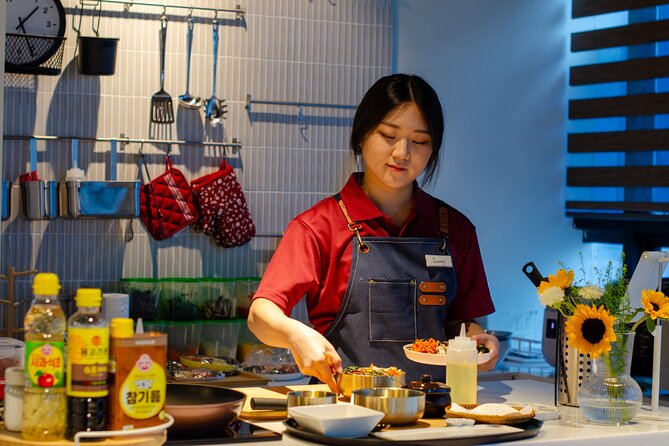
- Max 12 people keeps the pace friendly and the help close
- You eat what you make, plus there’s dessert at the end
- Dietary options are real: vegan, vegetarian, pescatarian, gluten-free, and halal choices
- Classic Korean dishes hit the menu, including bulgogi and bibimbap styles
- Take-home extras show up often: a cookbook and tote bag, plus leftovers
Cooking in Jongno: Where the Class Starts and What the Vibe Feels Like
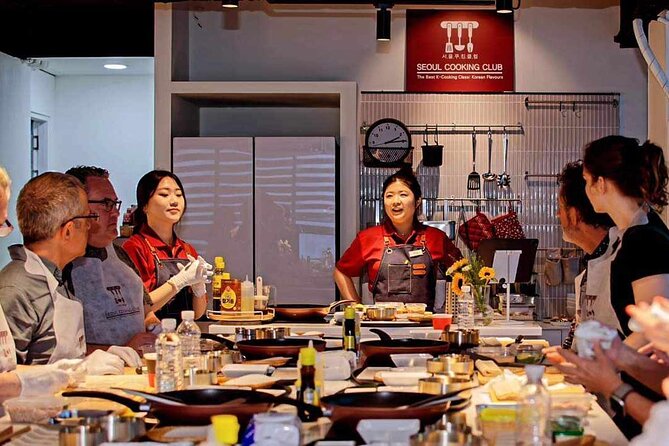
Your session begins at 71-6 Jongno 2(i)-ga in Jongno District, Seoul. The location is close enough to public transportation that you shouldn’t need a complicated plan—just get there a few minutes early, then settle into a working kitchen setup designed for group cooking.
The vibe is practical. This is not a sit-and-listen lecture. You’ll be standing at stations, following directions, and tasting along the way. The class is described as brunch, lunch, or dinner depending on your slot, so timing affects the mood: lunch tends to feel lively and casual; dinner feels like a cozy Seoul evening with a full plate in front of you.
Also, the class uses a mobile ticket, and you get confirmation at booking. For me, that matters because kitchen classes are the kind of activity where smooth check-in reduces stress. You want to walk in, wash hands, and start cooking.
You can also read our reviews of more cooking classes in Seoul
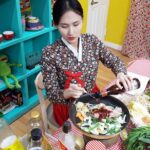
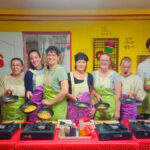
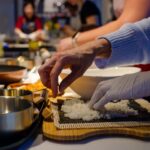
Three Courses and Ten Flavors: The Meal Structure That Makes It Worth It
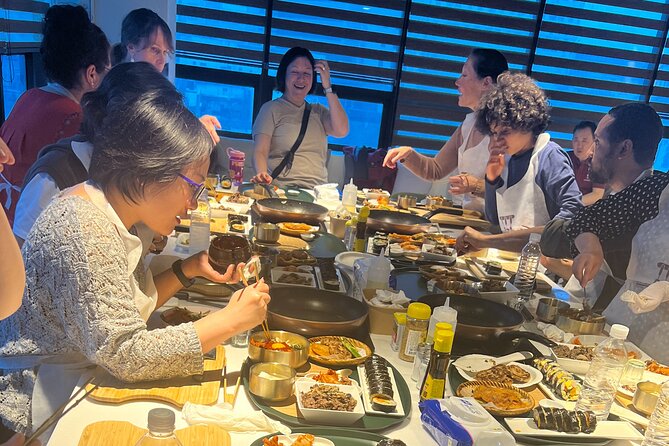
The core of Seoul Cooking Club is a structured meal experience. You’ll craft a three-course Korean meal over about 2.5 hours, and you’ll taste around 10 Korean flavors during the session. That tasting isn’t just samples thrown at you. It’s tied to the dishes you’re preparing—so you’re learning what a finished dish tastes like before it becomes something you’re expected to reproduce.
Here’s how the rhythm usually works in a class like this:
- First you tackle appetizers or small dishes so you can get comfortable with flavors and textures.
- Then you move into the mains—often the part people associate with Korea, like bulgogi-style grilling and bibimbap components.
- Dessert comes last, and it’s often treated like the celebratory finish, not an afterthought.
From what you can see in the dish variety, the class tries to cover sweet and savory. One standout theme across the feedback is that you leave full and satisfied, not “hungry but educated.” That’s important in value terms. When a cooking class includes a real meal at the end, you’re not paying only for instruction—you’re paying for dinner too.
Your Dish Menu: Bulgogi, Bibimbap, and the Korean Classics You’ll Actually Recognize
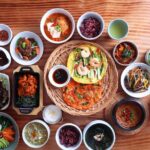
Even without memorizing a full checklist of every dish ahead of time, you can count on Korean staples. The experience highlights learning to prepare dishes that range from bulgogi to bibimbap, and multiple instructors in the class feedback are associated with menus built from classics.
Based on repeated mentions, the kinds of dishes you might make or closely follow include:
- Bulgogi (a big, recognizable Korean flavor)
- Bibimbap (a build-your-bowl style meal with lots of components)
- Gimbap (Korean-style rice rolls)
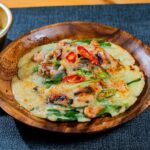
- Several types of jeon, including what people describe as pancake-style variations
- Japchae (noodles that people often find “this makes sense now” when they learn the flavor logic)
- Kimchi pancakes and other comfort dishes, depending on the session menu
The practical win here is that these dishes help you decode what you’ll see in Korean restaurants and street food menus. After a class like this, you’re more likely to order confidently, because you understand what each component is doing—sweet, salty, savory, fermented, crisp, chewy.
Instructors Who Keep the Steps Clear (Olivia, Elly, Sally, Grace, Ally)
A cooking class can be good or it can be chaotic. The repeated praise here is about clarity and encouragement, not just cooking talent.
You’ll see the same pattern in the feedback tied to instructors such as Olivia, Elly, Sally, Grace, and Ally:
- They break steps down so you’re not guessing.
- They encourage tasting and adjustment, which is where Korean cooking shines.
- They keep the atmosphere friendly, so even if you’re not confident in the kitchen, you still finish strong.
One of the best signs for this type of class is that people describe it as simple and enjoyable, not intimidating. That doesn’t mean it’s dumb. It means the teaching is designed for mixed skill levels—which fits a small group format with a maximum of 12 people.
If you’re the type who worries about cooking classes being embarrassing, this is the category that tends to feel safer. The goal is competence by the end, not perfection on the first try.
Dietary Options That Go Beyond the Usual Checkbox
Seoul Cooking Club explicitly caters to different dietary needs. That’s not a minor detail—it’s part of the reason the class works for groups where food preferences vary.
You can expect options for:
- vegan
- vegetarian
- pescatarian
- gluten-free
- halal
And in at least one case, the class feedback includes accommodation for a peanut allergy and restrictions like no beef/pork. That’s the big difference between a “we can try” note and a class that plans for real diners.
For you, that means less anxiety. You can focus on learning and eating, instead of wondering whether you’ll end up with a sad substitute. Since you’ll be cooking and tasting multiple dishes, the ability to adapt ingredients matters more than it does in a restaurant where you can just order around your limits.






What You Actually Taste and Learn While Cooking
The point of tasting 10 flavors isn’t just variety for fun. It’s a learning tool.
Korean cooking often balances several elements:
- savory umami from sauces and marinated ingredients
- sweetness in small controlled doses
- acidity from fermented components or pickled sides
- texture contrast (crispy edges, tender fillings, chewy noodles)
- spice that can be toned to your preference
In the class format, you don’t just learn recipes on paper. You see how a sauce changes when it hits heat, how a bowl tastes when components are mixed, and how toppings and seasoning affect the final bite. People in the feedback also mention learning foundations of flavor and how to make adjustments, which is exactly what helps you cook again later at home.
This is where a cookbook souvenir also earns its keep. You’ll leave with a written guide you can actually use, because you’ve already cooked the dishes. Instead of reading instructions for the first time months later, you’re remembering what the dish should taste like.
The Food Amount, Leftovers, and Why That Changes the Value
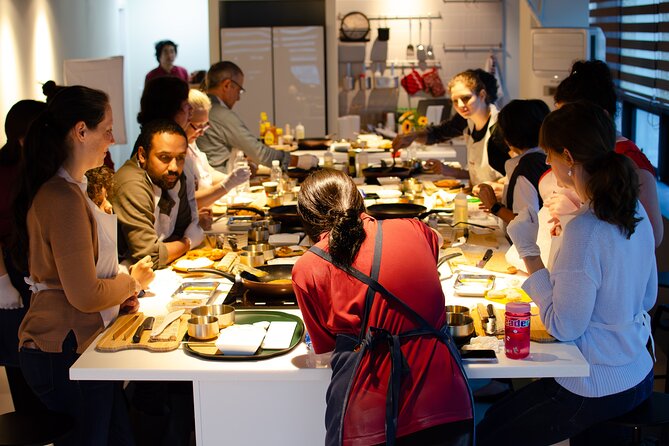
Cooking classes can be deceptive. Some give you a few bites and a pat on the back. Here, the consistent theme is that you get a massive portion—enough that many people take food to go.
That matters at $109 per person. If you’re paying for ingredients, instruction, and multiple dishes, you want the meal to be substantial. The feedback repeatedly points to:
- large portions
- good chances for leftovers
- people leaving full and satisfied
You’ll also likely get beverages during the session. One specific mention includes water, tea, and sujeonggwa, a Korean cinnamon punch often served chilled. Those details are small, but they add up to a complete meal experience rather than a snack-and-learn activity.
Finally, take-home items show up often: a cookbook and a tote bag. Even if you never use the tote again, it’s one more sign you’re not just paying for a one-time lesson.
Getting There and Staying Comfortable During the Session
The meeting point is clearly set: 71-6 Jongno 2(i)-ga, Jongno District. The class also returns back to the meeting point at the end, which is useful if you’re building your day around other Seoul plans.
A few comfort notes that can help you plan your afternoon or evening:
- The class lasts about 2.5 hours.
- It caps at 12 people.
- Service animals are allowed.
- It’s near public transportation, which makes it easier to plug into a broader Seoul itinerary.
And here’s the one practical tip I’d give most people: don’t eat a big meal right before. Several comments stress the amount of food. You’ll enjoy it more if you arrive ready to cook and then actually eat without regret.
Price and Value: Is $109 Reasonable in Seoul?
At $109 per person for about 2.5 hours, this isn’t the cheapest cooking class in Seoul. But it also isn’t “pay for watching.” You’re paying for:
- small-group instruction (max 12)
- a hands-on cooking experience
- tasting multiple Korean flavors
- a three-course meal plus dessert
- dietary accommodations
- take-home materials like a cookbook and tote bag
- leftovers in many cases
If you think of it as dinner plus a lesson, the pricing starts to make more sense. You’d likely spend a lot more than $109 if you tried to replicate the full variety—especially with the learning component, portion sizes, and structured cooking stations.
So my take: the value holds best if you want to learn Korean dishes you can recreate, and you’re okay leaving with a full stomach and a recipe guide you’ll actually use.
Who Should Book This Cooking Class (And Who Might Skip It)
This experience is a great fit if you:
- want hands-on Korean cooking, not just a demonstration
- like recognizable dishes like bulgogi, bibimbap, and gimbap
- want dietary-friendly options without making special restaurant plans
- enjoy meeting other travelers in a small group setting
- want a cookbook and take-home leftovers
It may be less ideal if you:
- are an experienced cook looking for everything cooked fully from scratch
- expect a high-effort, raw-to-finished-cooking class where every step is done by you
- hate situations where ingredients might be partially prepped in advance
One mixed note in the feedback describes a session that felt more like assembly because ingredients were already prepped or precooked. That doesn’t make the class bad. It just means you should choose it for learning flavor-building and finishing techniques, not for a hardcore “from scratch” culinary bootcamp.
Should You Book Korean Cooking at Seoul Cooking Club?
If your goal is to go home able to cook at least a handful of Korean classics—without guessing, without translating menus, and without worrying about whether you’ll find food that fits your dietary needs—this class is an easy yes.
Book it if you want a friendly, small-group kitchen experience in Seoul, with clear instruction and enough food to carry you through the evening (and into tomorrow). Skip it only if you’re chasing a very advanced, fully scratch cooking style.
One last practical thought: choose a session time that matches your appetite. If it’s lunch or brunch, plan for a later lighter dinner. If it’s dinner, you’ll probably want to keep your schedule loose afterward. This is the kind of activity that ends with you satisfied, not rushed.
FAQ
How long is Korean Cooking at Seoul Cooking Club?
The class runs about 2 hours 30 minutes.
What is the group size limit?
The experience has a maximum of 12 travelers.
Do you get to eat what you cook?
Yes. The class includes tasting everything you prepare, and you also get dessert.
Can the class accommodate dietary restrictions like vegan or halal?
Yes. Options include vegan, vegetarian, pescatarian, gluten-free, and halal.
What kinds of dishes are included?
The class focuses on Korean dishes such as bulgogi and bibimbap, plus other flavors and dishes from appetizers to dessert (the exact menu can vary by session).
Where do I meet, and where does it end?
You start at 71-6 Jongno 2(i)-ga, Jongno District, Seoul, and the activity ends back at the meeting point.
Is there a refund if plans change?
Free cancellation is available up to 24 hours in advance for a full refund.