REVIEW · DMZ TOURS
Seoul DMZ Tour with 3rd Tunnel and Red Suspension Bridge
Book on Viator →Operated by I Love Seoul Tour · Bookable on Viator
Few places feel as charged as the DMZ. This Seoul day trip lets you see the 3rd Tunnel and Dora Observatory plus wartime memorials around Imjingak, all for a budget-friendly $45. The trade-off: it is a long, active outing with real uphill walking and a tight tunnel that asks you to stoop.
Plan on clear logistics and clear rules. You’ll need a passport for the military-run area, and since the DMZ is operated by the armed forces, the tour can be canceled without notice. I like how the route mixes big picture context with physical, in-the-body stops instead of only photo ops.
In This Review
- Key highlights at a glance
- Seoul to the DMZ: what this tour really gives you
- Price and what $45 buys in real terms
- Getting to and from Myeong-dong without stress
- Stop 1: Imjingak Pyeonghoa-Nuri Park and the unification story
- Stop 2: Mangbaedan for the families left behind
- Stop 3: the 3rd Tunnel, where the DMZ becomes physical
- Stop 4: Dora Observatory and the North-facing view test
- Stop 5: Gamaksan Chulleong Bridge, the red suspension bridge moment
- Guide quality: why names matter here
- Who this tour is best for
- Planning tips so you feel strong all day
- Should you book the Seoul DMZ Tour with 3rd Tunnel and Red Suspension Bridge?
- FAQ
- How long is the Seoul DMZ Tour with 3rd Tunnel and Red Suspension Bridge?
- How much does it cost?
- Where is the meeting point and where do we end?
- Are admission tickets included?
- Do I need a passport?
- Does the tour include the Joint Security Area (JSA)?
- Is hotel pickup included?
- Will the tour make stops at shopping centers like ginseng or amethyst stores?
- What if the weather is bad for views at Dora Observatory?
Key highlights at a glance
- 3rd Tunnel, not just a viewpoint: 1,635m long with low, narrow sections that make history feel physical
- Dora Observatory views are weather dependent: you’re aiming for Gaeseong, Songaksan, and the Kim Il-Sung Statue area from far across the border
- Imjingak Pyeonghoa-Nuri Park sets the stage: a unification-focused memorial space tied to 1972 hopes
- Mangbaedan adds a human detail: New Year’s tradition for people separated from families in the North
- Gamaksan Chulleong Bridge adds contrast: a 150m suspension bridge tied to the Battle of Solma-ri (Gloster Hill)
- Small-ticket value model: included admission at the two paid stops (3rd Tunnel and Dora), while others are free
Seoul to the DMZ: what this tour really gives you
If you want DMZ context without getting lost in logistics, this tour is a tidy option. The day is built around five stops that each answer a different question: What led to the division? What did people in the North and South experience? How did soldiers move and hide? What can you actually see from the South? And how does the landscape hold battlefield memory?
The big strength is that the itinerary isn’t only about looking. The Third Tunnel requires walking in a low, narrow space, and that changes your perspective fast. Then Dora Observatory brings you back to sightlines and scale: you’re standing on the South side, trying to make out far-off landmarks in North Korea’s direction. In between, Imjingak and Mangbaedan ground the story in memorial culture rather than just military hardware.
The route also makes practical sense for first-timers. You start around Myeong-dong (a central Seoul base), go by air-conditioned vehicle, and you return near the same area. Even with the long day, it keeps decision-making low: you follow the guide, you get the admissions handled for the two paid stops, and you focus on the experience.
You can also read our reviews of more tours and experiences in Seoul.

Price and what $45 buys in real terms
At $45 per person for about 8 hours, the value is strongest if you compare it to the hassle of coordinating transport plus paying for major sites yourself. The tour includes air-conditioned vehicle time, a professional guide, and admission tickets for the Third Tunnel and Dora Observatory.
Here’s how that matters for you:
- You’re not guessing which stops cost money. Third Tunnel and Dora are explicitly ticketed and included.
- The rest of the route is efficient. Imjingak Pyeonghoa-Nuri Park and Mangbaedan are listed as free admission stops, and the Gamaksan Chulleong Bridge stop is also free.
- Time is bundled. You get a full arc—memorial park to tunnel to far-sight observatory—inside a single guided day.
A tour at this price can be worthwhile, but it’s not “easy.” This isn’t a sit-and-stare excursion. You should expect walking, some steep movement, and the tunnel’s physical restrictions.
Getting to and from Myeong-dong without stress
This tour starts and ends at Myeong-dong subway station in Jung District. That’s a smart choice if you’re staying central and want to avoid extra pickup costs and confusion.
A few practical notes from the provided details:
- Hotel pickup and drop-off are not included. You’ll meet at the station, then return there.
- Bring a current valid passport. Because the DMZ is military-operated, the requirements are strict.
- It’s recommended to avoid flip-flops, slippers, or shoes with heels. You’ll do real walking, including uphill parts.
If you’re someone who hates coordinating transport, this works. If you’re the type who likes flexible pacing, the fixed stops might feel a little tight.
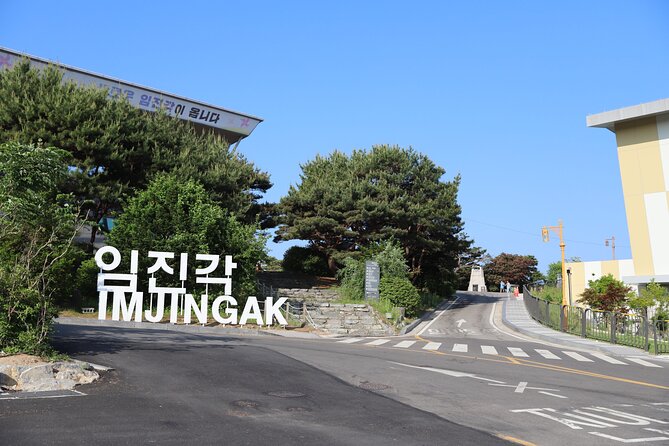
Stop 1: Imjingak Pyeonghoa-Nuri Park and the unification story
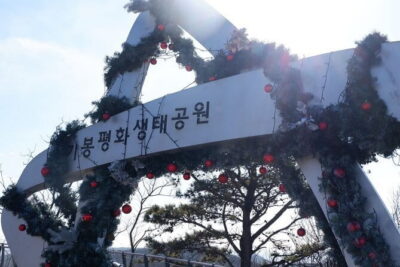
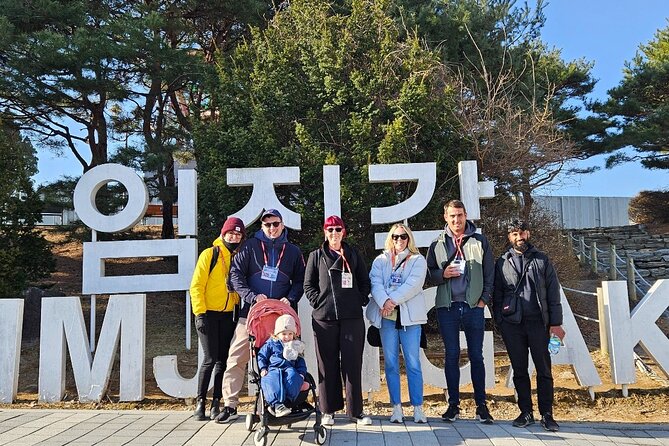
Imjingak Pyeonghoa-Nuri Park is your “set the frame” stop. It’s built in 1972 with a hope that unification would eventually happen, and it’s surrounded by monuments, Unification Park, and the North Korea Center.
Plan to spend about 30 minutes here. That time is usually enough to:
- absorb the memorial tone
- understand why this area is so symbolic in South Korea
- connect the rest of the day to one clear theme: division isn’t only political; it lives in public spaces
Why I like this stop for first-timers: it gives you vocabulary. Later, you’ll be looking at North-facing views from Dora Observatory and walking the Third Tunnel. If you only treat those as attractions, they can feel random. Imjingak helps them snap into a bigger story.
Watch for this consideration: it’s a short stop, so don’t expect to read everything deeply. Use the guide’s narration to pick what matters.
Stop 2: Mangbaedan for the families left behind
Mangbaedan is short—about 15 minutes—and focused. This is where people who left their families in the North visit on New Year’s Day.
It’s a small stop, but it’s one of the most emotionally direct parts of the day. You’re seeing a place shaped by ongoing separation, not just by a past war. That human angle matters because the rest of the route includes hard infrastructure: tunnels and bridges and long sightlines.
For practical planning: treat it like a pause. Take it in, then be ready for the more intense portion of the tour.
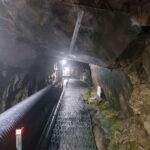


Stop 3: the 3rd Tunnel, where the DMZ becomes physical
This is the signature stop for many people. The Third Tunnel was discovered by South Korea in 1978. It spans about 1,635m in length, and the tunnel dimensions listed are 2m wide and 2m high—small enough that you feel the constraint immediately.
It’s about 52km from Seoul, and you’ll spend around 40 minutes here including time to enter, walk, and exit.
What makes it memorable:
- The tunnel is long. Even if you aren’t walking the full length at once, the experience of moving through a long enclosed route changes your scale awareness.
- The low ceiling forces you into a particular posture. Reviews also point out that you have to walk hunched over at the bottom for several minutes.
- The spacing and estimated capacity—about 30,000 soldiers—help explain why these tunnels were such a serious strategic threat.
How to prepare so you enjoy it instead of just surviving it:
- wear the most supportive shoes you own
- expect stooping and take your time on the way out
- if you’re short, know that helmets (safety equipment is mentioned in one account) still hit low ceilings if you bounce your head as you walk
The possible drawback is exactly that: the tunnel is not for the faint of heart. Add in the steep parts during approach and return, and you need at least moderate physical fitness.
Stop 4: Dora Observatory and the North-facing view test
Next comes Dora Observatory, the view platform that lets you look toward North Korea and specific landmark areas. The site is designed for sightlines across the border zone, and on a clear day, that makes a huge difference.
You’ll have about 30 minutes here, and admission is included.
The landmarks mentioned in the provided info include:
- Gaeseong
- Songaksan
- Kim Il-Sung Statue
- Cooperation Farm (Geumamgol)
A key detail: whether you can actually see much is weather dependent. One account mentions having a clear day and could see without haze. So if you’re aiming for crisp views, understand that visibility is out of your control.
Still, Dora Observatory is valuable even when the view is muted. Why? Because the guide can frame what you’re looking at—how far it is, what the landmarks mean, and why the South watches this side of the divide every day.
Practical tip: bring patience. You’re in a fixed time slot with a group, and the best moments depend on conditions.
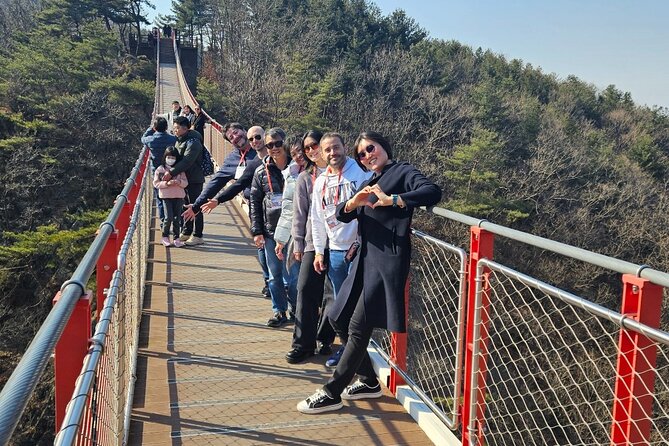
Stop 5: Gamaksan Chulleong Bridge, the red suspension bridge moment
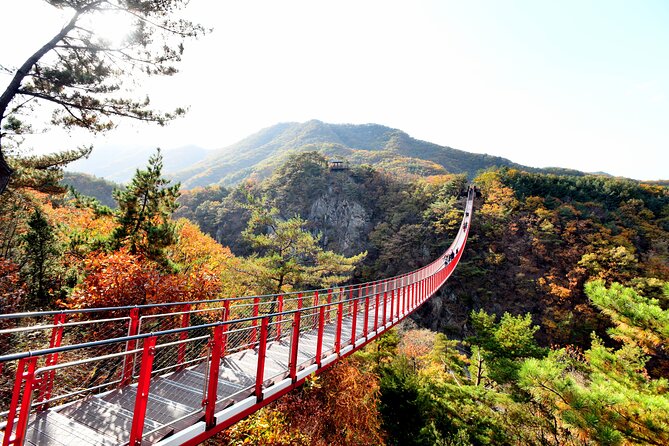
To close the loop, the tour includes Gamaksan Chulleong Bridge, a suspension bridge in the Solma-ri area tied to the Battle of Solma-ri, also known as the Battle of Gloster Hill, in 1951.
This stop runs about 1 hour, and admission is free.
The provided specifics:
- the bridge is about 150m long and 1.5m wide
- it sits in a landscape marked by war-era action
This is the kind of stop that changes the mood. After the tunnel’s intensity and the observatory’s distance, the suspension bridge gives you space to breathe—then reminds you that these scenic places also carry military history.
A consideration: you may need to climb to reach the bridge area. One account mentions roughly 400 steps from the road to the hill where the bridge begins, so plan your energy accordingly.
Guide quality: why names matter here
This tour’s quality depends a lot on the guide’s ability to turn hard facts into something you can understand in motion. The reviews you were given mention several guide names with consistently positive comments: Stella, Mama Winnie, Leo, Grace, Kenny, Thomas, and Chloe.
What stands out from those comments is a pattern:
- guides keep the day organized
- they explain the significance of each stop clearly
- they handle questions and keep the group moving on time
If you’re the type who cares about context, you’ll likely benefit. If you just want scenery and don’t want narration, you might feel the day is more lecture-like than you expected.
Who this tour is best for
This works especially well if:
- you’re visiting Seoul for a short time and want a structured DMZ day
- you want both memorial context (Imjingak and Mangbaedan) and a major physical stop (Third Tunnel)
- you like history you can walk through, not just read about
It may be a harder fit if:
- you have mobility limits or difficulty with steep walking and stairs
- you hate enclosed spaces or low ceilings
- you prefer a slower pace with lots of breaks
The tour itself notes that travelers should have moderate physical fitness.
Planning tips so you feel strong all day
Here are the practical moves that make this day go smoother:
- Bring snacks and drinks. It’s recommended, and one account notes no official lunch break but opportunities to grab snacks and coffee.
- Wear shoes you can trust on hills. The tour recommends avoiding flip-flops and heels.
- Keep your passport handy on day of travel.
- Dress for weather changes. You’ll be outdoors at the bridge and observatory; conditions can shift.
- Start the day rested. It’s about 8 hours and includes walking segments that add up.
Also, a small but important reality: the DMZ is military-run, so cancellations can happen without prior notice. That risk matters if you’re on a tight schedule.
Should you book the Seoul DMZ Tour with 3rd Tunnel and Red Suspension Bridge?
I’d book this if you want the most complete DMZ sampler you can do in one guided day: Imjingak’s memorial setting, Mangbaedan’s human detail, the Third Tunnel’s physical reality, Dora’s North-facing landmarks, and the Gamaksan suspension bridge’s wartime landscape connection.
I wouldn’t book it if your top priority is comfort or easy walking. The day is active, the tunnel is restrictive, and you’re giving up a level of independence for the bundled experience.
If you can handle a long, strenuous half-day-to-full-day rhythm, you’ll likely come away with a DMZ that feels understandable, not abstract.
FAQ
How long is the Seoul DMZ Tour with 3rd Tunnel and Red Suspension Bridge?
The duration is approximately 8 hours.
How much does it cost?
The price is $45.00 per person.
Where is the meeting point and where do we end?
The start and end point are Myeong-dong subway station in Seoul, Jung District.
Are admission tickets included?
Yes. Admission tickets are included for the 3rd Tunnel and Dora Observatory. Imjingak Pyeonghoa-Nuri Park and Mangbaedan are listed as free, and the suspension bridge stop is also free.
Do I need a passport?
Yes. A current valid passport is required on the day of travel.
Does the tour include the Joint Security Area (JSA)?
No. The tour does not stop at the Joint Security Area (JSA).
Is hotel pickup included?
No. Hotel pickup and drop-off are not included. Pick-up is arranged according to your selected designated meeting point.
Will the tour make stops at shopping centers like ginseng or amethyst stores?
No. This tour does not stop at shopping centers like ginseng centers or amethyst factories.
What if the weather is bad for views at Dora Observatory?
Views from Dora Observatory depend on conditions like haze and clarity. You’ll still visit the observatory for the included viewing opportunity, but what you can make out can vary with weather.
If you want, tell me your travel month and fitness level (easy walking vs stairs-heavy). I can help you decide if the tunnel + bridge pace matches your day.