REVIEW · COOKING CLASSES
Seoul: Korean Cooking Class at a Local Home and Market Tour
Book on GetYourGuide →Operated by HELLO K COOKING · Bookable on GetYourGuide
Cooking Korean food at home feels real fast.
This Seoul class pairs a local market hunt with hands-on cooking, plus a full Hanjeongsik style meal with lots of side dishes. I also like that the chef-guide keeps it practical, from ingredients you can recognize to cooking steps you can actually repeat later. One thing to plan for: the home venue has no elevator, so you’ll want to be okay with stairs.
Beyond the kitchen, you get the culture stuff in a way that doesn’t feel forced: you’ll taste street food during the market stop, sip a welcome drink before you cook, and learn a few Korean phrases that make the whole experience easier to enjoy. The group stays small (up to 10), and the class runs about 3.5 hours, so you get real momentum without feeling rushed.
For $98, this is more than a recipe demo. You’re paying for ingredients, equipment, market time, the chef-guide’s English/Korean instruction, your meal (including side dishes and rice wine), and even photo/video service plus recipes. The value is strongest if you like doing the work, not just watching.
In This Review
- Key Things That Make This Seoul Cooking Class Worth Your Time
- Why a Mangwon Market Stop Changes Everything
- Mangwon Station Logistics and the 3.5-Hour Rhythm
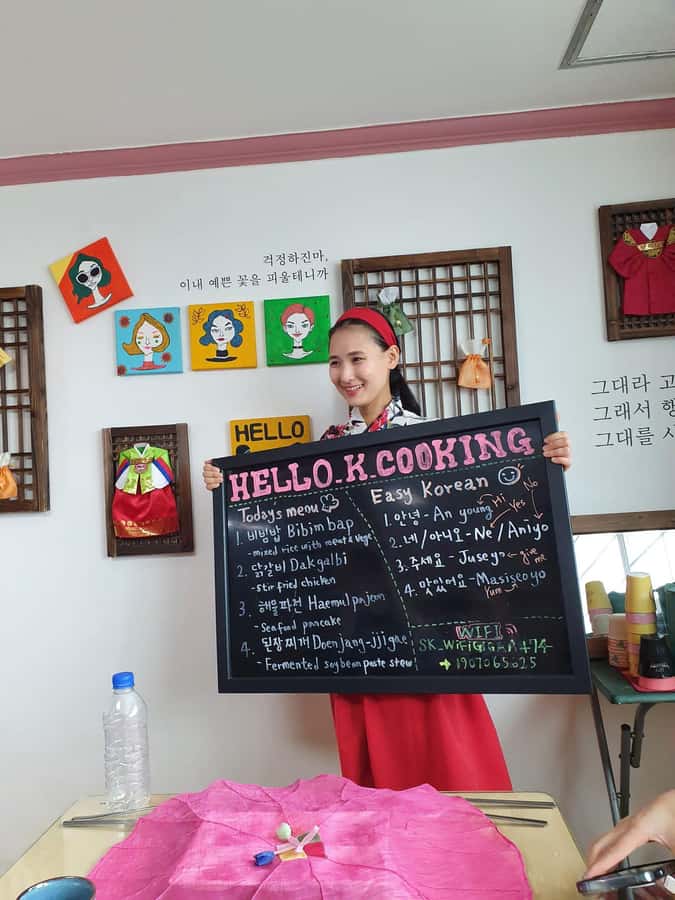
- Your Four Dishes: Bibimbap, Dakgalbi, Haemul-Pajeon, and Doenjang-Jjigae
- Bibimbap: Mixed Rice With the Right Balance
- Dakgalbi: Stir-Fried Chicken With Big Flavor Control
- Haemul-Pajeon: Seafood and Green Onion Pancake
- Doenjang-Jjigae: Fermented Soybean Paste Stew
- How the Chef-Guide Makes It Stick (Even If You’re a Beginner)
- Learning Korean Phrases Without Overthinking It
- Hanjeongsik: The Korean Course-Meal Style With 10+ Sides
- Tal Mask and Korea’s Festival-Facing Traditions
- Price and Value: What You’re Really Paying For at $98
- Who Should Book This (And Who Might Think Twice)
- Should You Book This Seoul Korean Cooking Class?
- FAQ
- Where is the meeting point for this cooking class?
- How long is the experience?
- What dishes will I learn to cook?
- Is hotel pickup included?
- Can the host accommodate dietary restrictions or allergies?
- Is the cooking class venue accessible by elevator?
Key Things That Make This Seoul Cooking Class Worth Your Time
- Market shopping that teaches you what Korean cooking starts with, not just what ends up on the plate
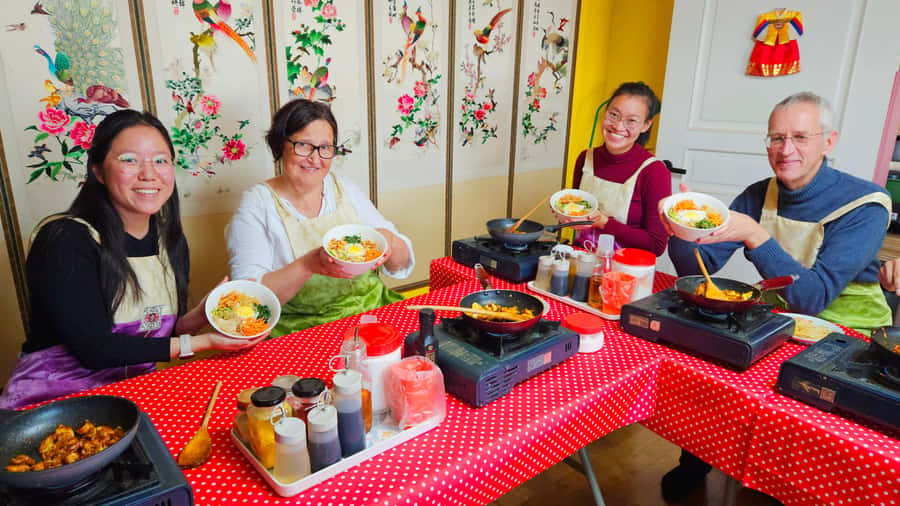
- Hands-on cooking of 4 dishes: Bibimbap, Dakgalbi, Haemul-Pajeon, and Doenjang-Jjigae
- Hanjeongsik meal format with 10+ side dishes, seasonal fruit, and rice wine
- Street food tasting during the market walk, so you connect ingredients to flavor
- Tal mask experience, tied to Korean heritage festivals (great for photos and context)
- Small group energy with a chef-guide who works with each person while you cook
Why a Mangwon Market Stop Changes Everything
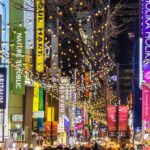
Your class starts the best way: with shopping. You meet near Mangwon Station (Exit 2, outside) and then head to a traditional market that’s popular but less touristy. This matters because Korean dishes depend on ingredients you can’t always guess from a cookbook.
In the market, your guide points out what to look for and what each item is used for. You’ll taste some street food samples, which is a big deal if you’ve only had Korean food in restaurants. One of the pleasures here is learning how normal people snack and shop—then seeing the same logic show up when you cook.
I like this setup because it makes the cooking class feel grounded. You’re not memorizing steps in the dark. You’re choosing ingredients and learning what they do.
You can also read our reviews of more shopping tours in Seoul
Mangwon Station Logistics and the 3.5-Hour Rhythm
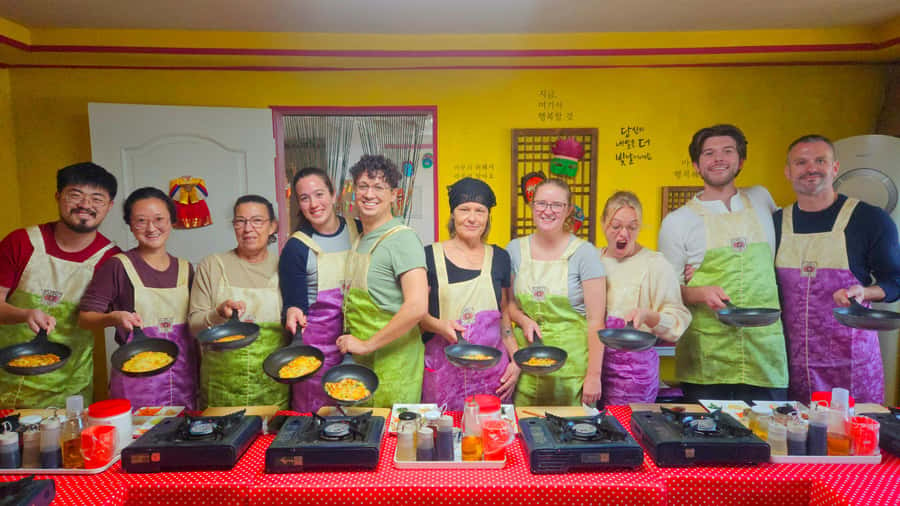
This experience runs about 3.5 hours, and it starts at specific times you can check when you reserve. The tour ends back at the same meeting point, so you don’t need to figure out a complicated second drop-off.
A few practical points you should know:
- No hotel pickup or drop-off. You’re on your own getting to Mangwon Station.
- The home venue has no elevator, so expect stairs on the way up.
- The group is limited to 10 participants, which usually keeps things friendly and lets the chef-guide give attention without rushing everyone.
If you want this to feel smooth, wear comfortable shoes. Even with a short duration, you’ll be walking and moving between the market and the cooking area.
Your Four Dishes: Bibimbap, Dakgalbi, Haemul-Pajeon, and Doenjang-Jjigae
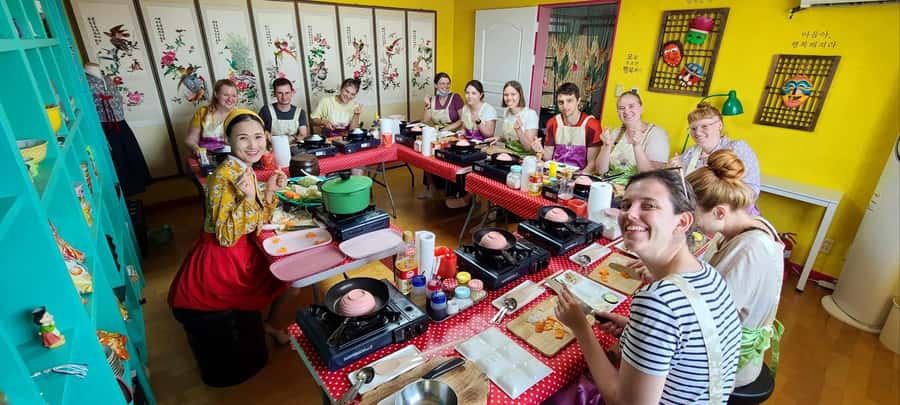
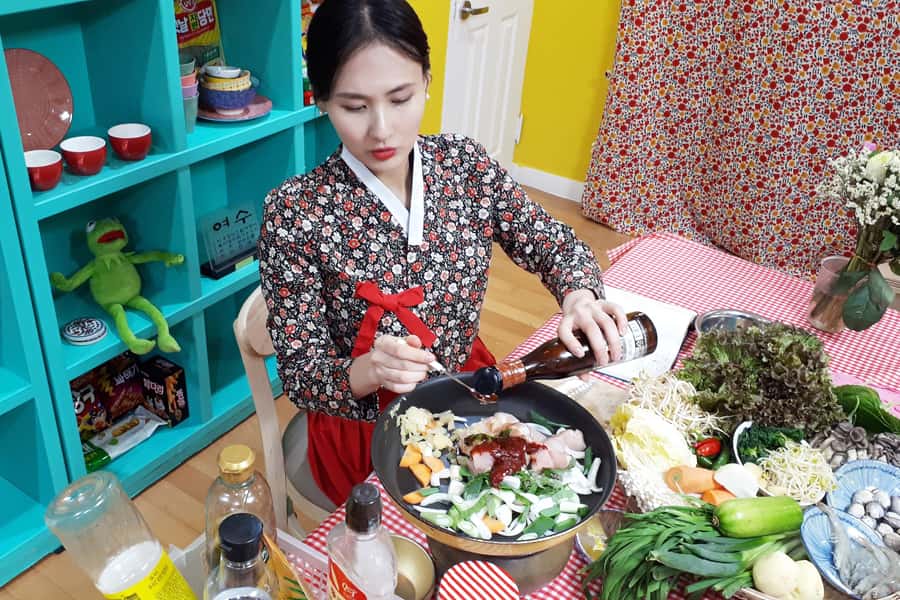
This class is hands-on in a very straightforward way: you cook 3 main dishes and 1 stew with an experienced chef-guide. You don’t just plate; you participate in the process, and the kitchen setup is designed so you can work at your own pace.
Bibimbap: Mixed Rice With the Right Balance
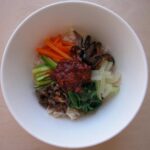
Bibimbap is the dish that teaches you balance. You’ll be working with the idea of mixed rice topped with ingredients like meat and vegetables. The real learning here is how toppings and seasonings come together so every bite tastes intentional instead of random.
Dakgalbi: Stir-Fried Chicken With Big Flavor Control
Dakgalbi is stir-fried chicken built on a thick, savory sauce. This is where you learn about heat and timing. You’ll see how quickly the texture changes in the pan and how the sauce clings to the chicken.
You can also read our reviews of more tours and experiences in Seoul
Haemul-Pajeon: Seafood and Green Onion Pancake
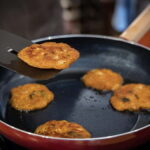
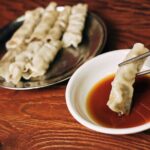
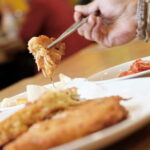
Haemul-Pajeon is the fun one—especially if you’ve never made pancakes from scratch. Seafood and green onion get mixed into a batter, cooked until crisp, and handled like a real Korean kitchen project. In the spirit of “do it yourself,” you’ll be actively cooking rather than waiting around.
Doenjang-Jjigae: Fermented Soybean Paste Stew
Doenjang-jjigae is the cozy payoff. Fermented soybean paste creates that deep, salty-savoriness that makes the whole meal feel complete. You’ll get a feel for how a stew thickens and tastes richer as it simmers.
Also worth noting: ingredients and equipment are included, so you’re not doing any last-minute grocery scavenger hunts.
How the Chef-Guide Makes It Stick (Even If You’re a Beginner)
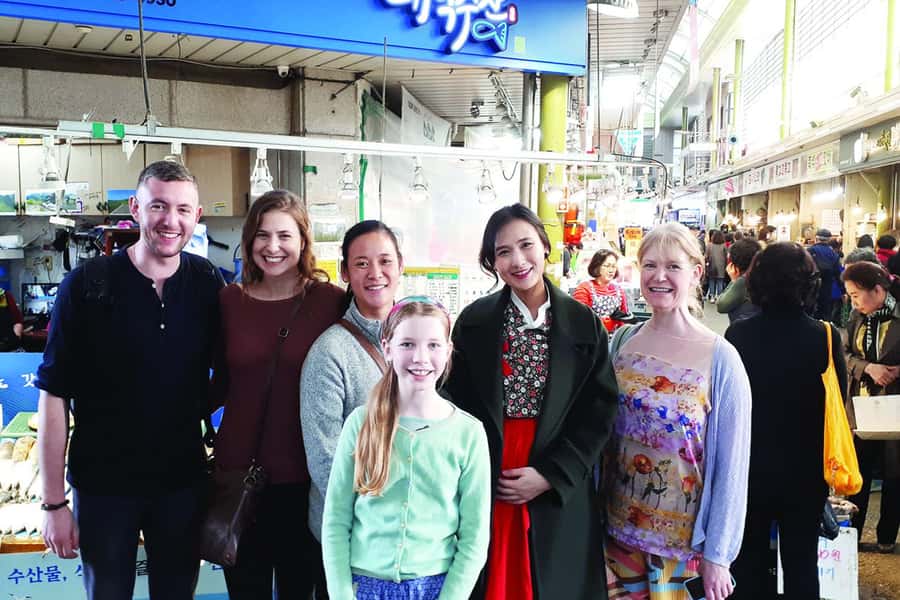
The chef-guides here teach with energy and structure. In the experiences I read about, guides like Sarah and Junghee were singled out for being engaging, funny, and genuinely helpful—without turning the class into a lecture.
What you should expect:
- Clear step-by-step guidance so you can follow along even if you’ve never cooked Korean food before.
- Plenty of interaction so you’re not stuck at one station doing one small task.
- A group setup that keeps you involved, not just watching your neighbors.
One small detail I love: the recipes are provided for you to take home. That’s what turns a great meal into something you can recreate later. In some cases, guides share recipes through messaging apps like WhatsApp, which can make it easy to save and use later.
Learning Korean Phrases Without Overthinking It
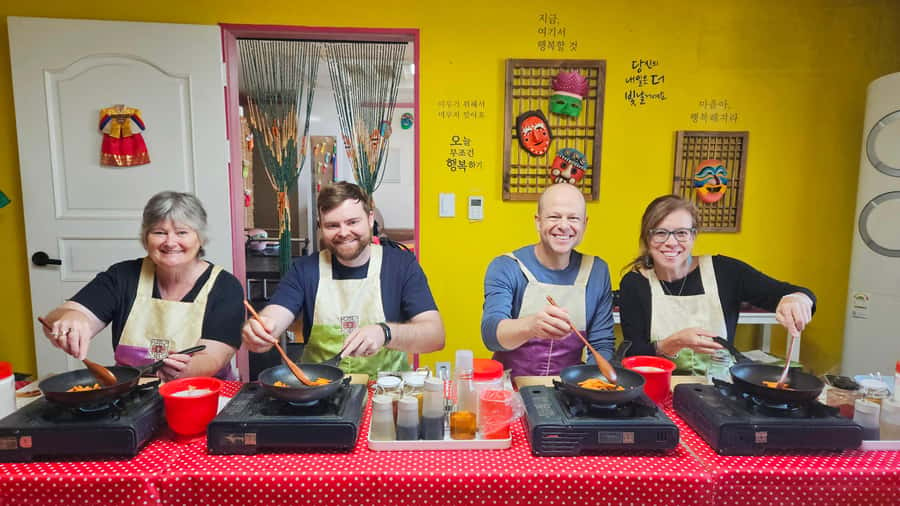
Before you cook, you’ll get a quick language moment with your guide, plus a welcome tea. This isn’t about cramming grammar. It’s about picking up a few phrases that you can use while you’re doing the market walk and cooking together.
When language is taught this way—connected to what you’re actually seeing—it sticks. You’ll also feel less awkward when you’re asking about ingredients or listening to the chef-guide explain what each step is doing.
Hanjeongsik: The Korean Course-Meal Style With 10+ Sides
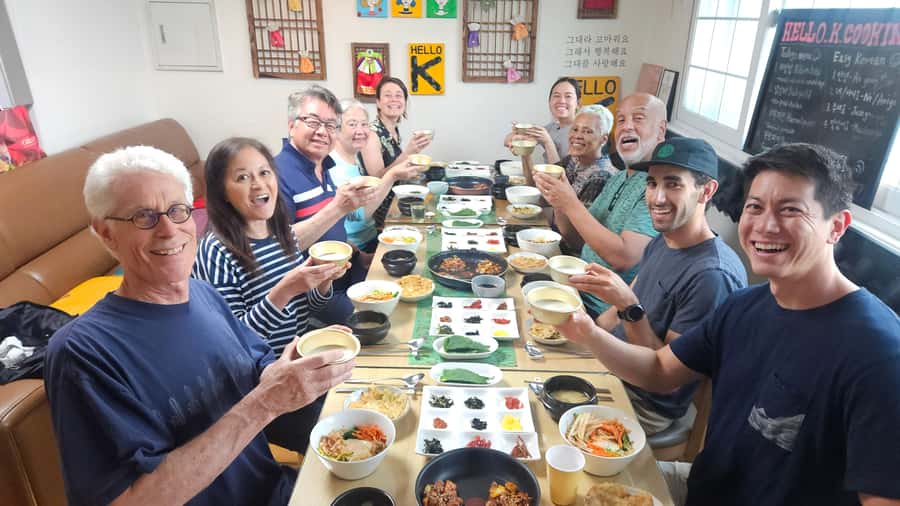
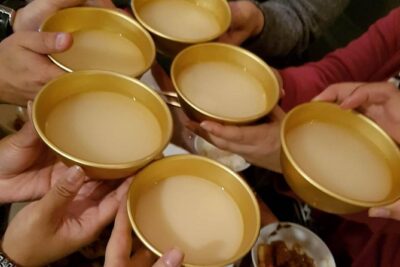
Then you eat. Not cafeteria style, not “here’s your one bowl and go”—this is a Hanjeongsik course meal. That means you’re served with more than 10 side dishes, plus seasonal fruit and rice wine.
This part is valuable because it teaches how Korean dining works as a system:
- Sides aren’t decoration; they’re part of flavor and texture.
- You learn how to mix tastes across bites.
- The meal feels like an event, not an afterthought.
One of the best outcomes of a class like this is that you stop treating Korean food as a set of separate dishes. You start seeing how they connect on a table.
Tal Mask and Korea’s Festival-Facing Traditions
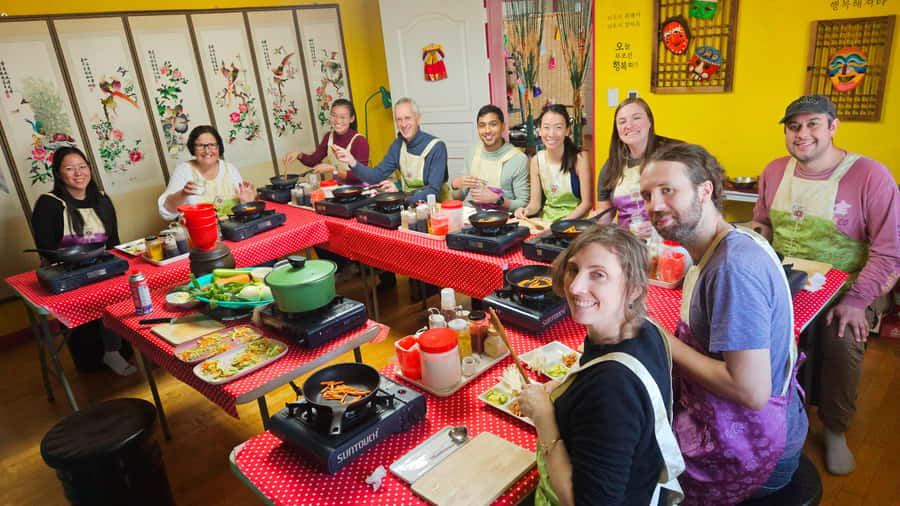
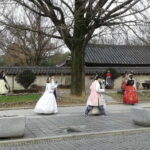
In the highlights for this experience, you’ll also try on a Tal mask—the kind worn at many Korean heritage festivals. Even if you’re not a museum person, this is a useful cultural add-on because it gives you a hands-on understanding of Korean folk traditions and festival imagery.
It also gives you something visual to remember besides food photos. Masks and festival costumes are often the easiest way to explain Korean culture to friends later, and they’re fun to wear for a few minutes.
Price and Value: What You’re Really Paying For at $98
$98 can feel like a lot until you look at what’s included. Here’s what you get in this Seoul cooking experience:
- Market tour plus street food samples
- Cooking class with a professional chef
- Ingredients and equipment
- Welcome tea
- Meals with side dishes, plus rice wine
- Water
- Photo and video service
- Recipes
Where the value really shows is the combination: market shopping + cooking + full meal. A lot of cooking classes only cover the cooking part, and you end up paying extra for ingredients or translation help. Here, most of the “hard parts” are bundled in.
Also, small group size helps. Up to 10 participants means the chef-guide can correct techniques and keep you moving through the steps.
Who Should Book This (And Who Might Think Twice)
This class is a great fit if you want:
- A hands-on Korean cooking experience in Seoul
- A local market stop to understand ingredients and everyday food culture
- A meal format you can’t easily copy at home (Hanjeongsik with 10+ sides)
- A small-group vibe with a guide who keeps things lively
You might want to think twice if:
- You have mobility issues or you’re not comfortable with stairs, since the home venue has no elevator
- You have dietary restrictions or allergies. You can request support, but you should contact the host ahead of time so the chef can plan safely.
Should You Book This Seoul Korean Cooking Class?
If you want the best use of a short Seoul visit, I’d book it. This is one of those activities where you leave with skills (how to make the dishes), context (what to buy and why), and a satisfying dinner experience (Hanjeongsik with sides and rice wine).
Book it especially if you’re the type who learns by doing. If you’re worried about stairs, message the host before you go and be honest about your needs. And since you’re starting at Mangwon Station Exit 2, plan your route to arrive a little early so you start relaxed.
FAQ
Where is the meeting point for this cooking class?
You meet your guide at Mangwon Station, Exit 2 (outside). The activity ends back at the meeting point.
How long is the experience?
The duration is 3.5 hours. Starting times depend on availability when you check to reserve.
What dishes will I learn to cook?
You’ll prepare 4 dishes: Bibimbap, Dakgalbi, Haemul-Pajeon, and Doenjang-Jjigae.
Is hotel pickup included?
No. Hotel pickup and drop-off are not included, so you’ll need to make your own way to and from the meeting point.
Can the host accommodate dietary restrictions or allergies?
You’ll need to contact the local host for dietary restrictions and allergies so they can plan for you.
Is the cooking class venue accessible by elevator?
No. There is no elevator to get up to the local home, so expect stairs.