REVIEW · GYEONGBOKGUNG PALACE & HANBOK TOURS
Korean Palace and Market Tour in Seoul Including Insadong and Gyeongbokgung Palace
Book on Viator →Operated by KOREA TOUR (DMZ TOUR) · Bookable on Viator
Seoul history hits fast on this palace-and-market circuit. This full-day route strings together UNESCO sights plus two classic shopping streets, all paced by a guide who helps you make sense of what you’re seeing. I especially like the UNESCO palace focus and the way the tour keeps moving without making you feel rushed.
My other big win is the mix of old-and-new context: you don’t just stare at walls and gates. At the National Folklore Museum at Gyeongbokgung, you get hands-on-style exhibits and replicas that explain Korean daily life through different eras, and the stop at Changdeokgung shows why this palace’s Huwon Rear Garden is famous for its ponds, bridges, and palace landscaping.
One possible drawback: you’ll hit shopping stops built into the schedule, including a ginseng center and time at duty free, so if you hate retail detours, plan to spend that time browsing lightly or keeping an eye on the clock. Also note the palaces switch if they’re closed—Tuesdays and Mondays can change what you see.
In This Review
- Key Things You’ll Notice on This Tour
- A Full-Day Seoul Route: Palaces, Temple, and Market Finds
- Hotel Pickup, the Blue House Drive-By, and the Day’s Pace
- Gyeongbokgung Palace and the National Folklore Museum
- Jogyesa Temple: A Quiet Pause Between Palaces and Markets
- Lunch Break and the Ginseng Center Stop
- Changdeokgung Palace and the Rear Garden (Huwon)
- Insadong Antique Alley and Namdaemun Market: Souvenirs With Two Different Vibes
- Guide Power: Why This Tour Gets Repeat Praise
- Price and What You Get for $89
- Who This Tour Fits Best (and Who Should Choose Another Plan)
- Should You Book This Korean Palace and Market Tour?
- FAQ
- How long is the tour?
- What’s included in the price?
- Does the tour include hotel pickup?
- What happens if Gyeongbokgung Palace is closed?
- What happens if Changdeokgung Palace is closed?
- Can I cancel for a full refund?
Key Things You’ll Notice on This Tour
- Small group feel (max 30): you’re not lost in a giant bus swarm.
- Hotel pickup and coach transport: it’s built for an efficient day start to finish.
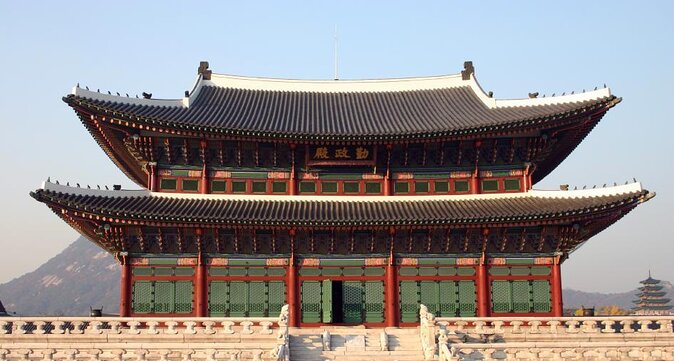
- Gyeongbokgung + National Folklore Museum: museum context makes the palace visit click.
- Jogyesa Temple stop: a calm contrast to palace grounds and market streets.
- Changdeokgung’s Huwon Rear Garden: lotus ponds, lawns, trees, and paths you can walk through.
- Insadong Antique Alley + Namdaemun Market: two different vibes for souvenirs and snacks.
A Full-Day Seoul Route: Palaces, Temple, and Market Finds
This is the kind of tour that makes your first Seoul day feel organized. You’re set up with a coach pickup, a guided route, and a clear rhythm: palace → temple → lunch → palace → markets.
The big theme is Korean culture in three layers. You get royal history at Gyeongbokgung Palace and Changdeokgung Palace (UNESCO), religious life at Jogyesa Temple, and then everyday commerce at Insadong and Namdaemun Market.
If you like your sightseeing with explanations in plain language, this tour format works well. You also get a practical break from planning: admission pieces are included for key stops, and you’re not stitching together transit between far-flung areas.
You can also read our reviews of more shopping tours in Seoul
Hotel Pickup, the Blue House Drive-By, and the Day’s Pace
The tour starts at 8:30 am with hotel pickup by coach, and it ends back at your meeting point or hotel area. Expect an 8.5-hour day with a moderate amount of walking, plus some time standing in lines at palaces and museum areas.
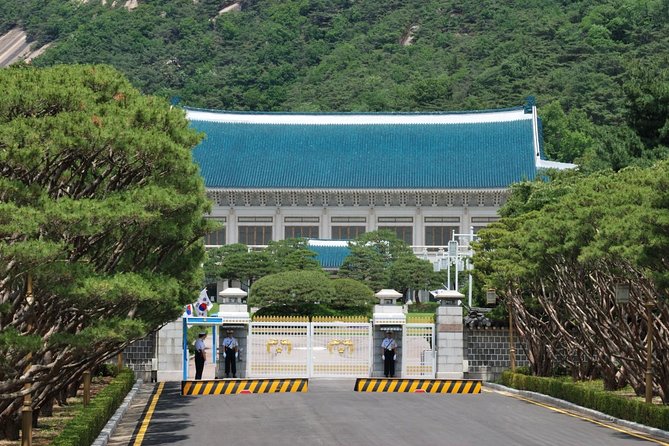
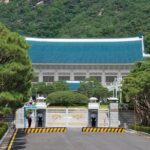
A nice touch early on is the drive past the Blue House area (the presidential residence and executive office). Even if you never step inside, it sets the political-historical tone of the day before you switch gears into Joseon-era palaces.
How the timing feels matters here. Multiple guides in recent tours have been praised for keeping things moving and staying on schedule even when weather turns rough. That matters because palaces and markets can eat time if your group is slow or wandering.
Gyeongbokgung Palace and the National Folklore Museum
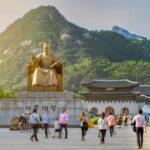
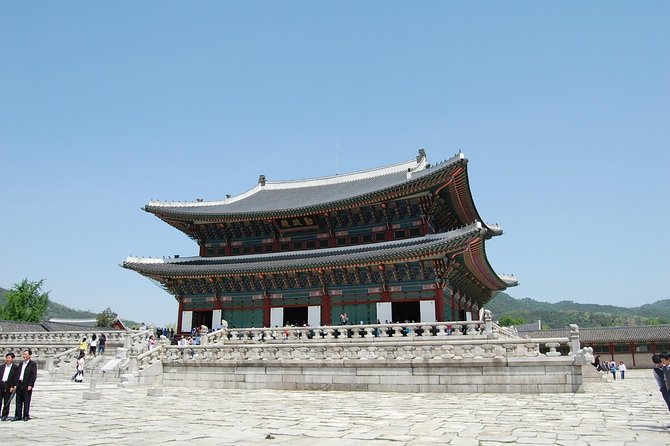
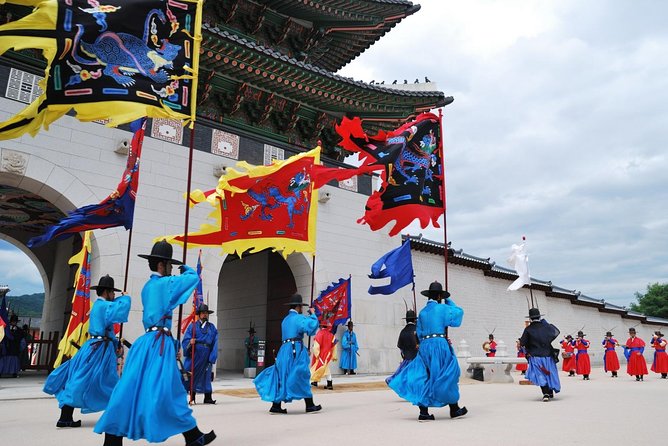
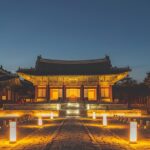
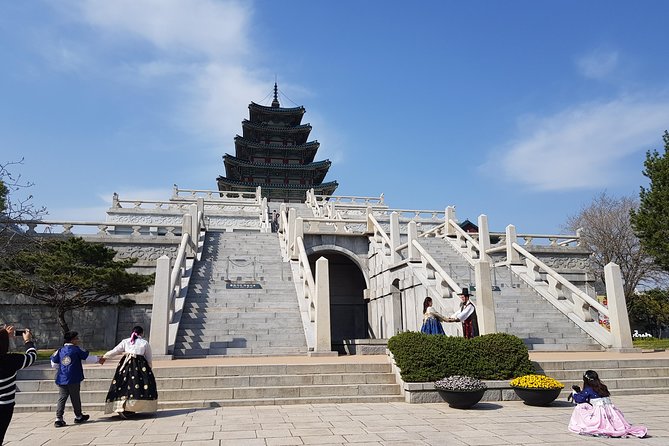
Gyeongbokgung Palace is the “big one” of Seoul’s Five Grand Palaces, and this itinerary treats it like the anchor stop it is. You’ll tour palace grounds with your guide, seeing major restored or original features like gates, pavilions, and royal halls as you walk.
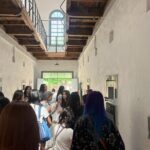
The tour also includes the National Folklore Museum, which is a smart pairing. Palaces can look impressive but abstract if you don’t know what different spaces were used for. Here, you’ll browse artifacts and exhibitions that connect Korean life from ancient times through the 20th century, plus replicas that help you visualize daily routines you can’t easily spot just by looking at buildings.
One practical note: if you’re in Seoul on a Tuesday, Gyeongbokgung Palace is closed. In that case, the tour swaps in Deoksugung Palace and includes the Seoul Museum of History. That’s helpful to know ahead of time so you don’t feel like you lost something.
Jogyesa Temple: A Quiet Pause Between Palaces and Markets
After Gyeongbokgung, you head to Jogyesa Buddhist Temple, the chief temple of the Jogye Order of Korean Buddhism. This stop is short, but it changes the mood fast—from formal royal grounds to a living spiritual center.
You’ll walk through a temple entrance lined with locust and baeksong trees, then enter the main hall to see a statue of an enlightened Buddha, dated to about five centuries old. Admission here is listed as free, and the schedule gives you about 20 minutes.
What I like about building this into a palace-and-market day is contrast. Palaces teach power and ceremony; temples teach continuity and belief. Even if you’re not religious, you’ll likely appreciate the slower pace and the way the setting shifts your attention.
Lunch Break and the Ginseng Center Stop
Midday, you’ll stop by a ginseng center before lunch. This is included on the tour, and it’s one of the built-in retail moments that some people love and some people treat as a quick stroll.
Then you’ll have authentic Korean lunch at a local restaurant. Lunch is included, which is genuinely valuable on a packed itinerary. When you’re doing palaces and markets in one day, paying for food separately can add up—and it also adds stress when the group is trying to move on time.
From a planning angle, I’d treat the ginseng center stop as a “watch and learn” moment, not a must-buy. If you’re curious, ask questions. If not, keep it brief and refocus on the palace and garden time coming next.
You can also read our reviews of more tours and experiences in Seoul
Changdeokgung Palace and the Rear Garden (Huwon)
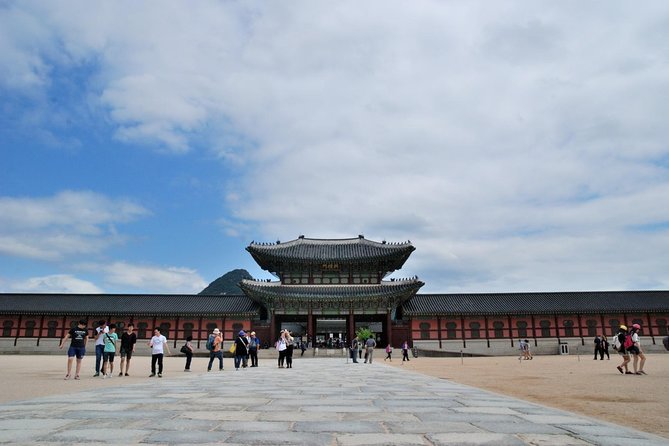
Changdeokgung Palace is another Joseon royal site, and it’s a UNESCO World Heritage stop in this tour. This visit is where the scenery feels most walkable and photogenic, because you’re not stuck only in hard-edged courtyards.
You’ll explore grand pavilions, a massive gate, and multiple halls. Then the itinerary highlights the landscaped grounds of the Huwon (Rear Garden), including Geumcheongyo Bridge and areas like lotus ponds, lawns, trees, and flowering sections.
This is also where the guide’s explanations matter. The garden isn’t just pretty—it ties into how the palace balanced ritual life with nature. If you’ve watched Korean dramas or music videos, this is the kind of location that makes those sets feel real.
Keep in mind the Monday rule: Changdeokgung Palace is closed on Mondays. When that happens, the tour visits Changgyeonggung Palace instead, another of the Joseon Five Grand Palaces.
Insadong Antique Alley and Namdaemun Market: Souvenirs With Two Different Vibes
After Changdeokgung, the tour shifts from “heritage” mode into “shop and wander” mode. First comes Insadong, especially the Insadong Antique Alley area.
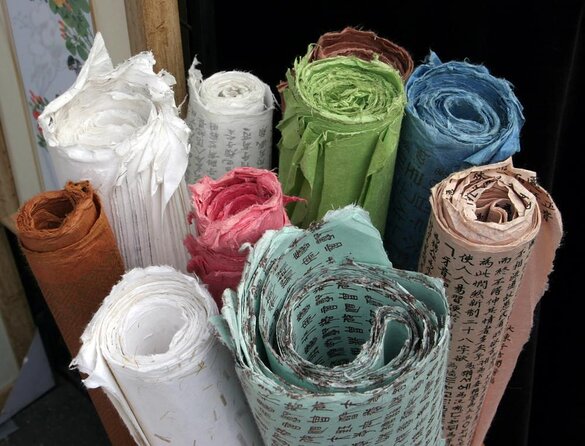
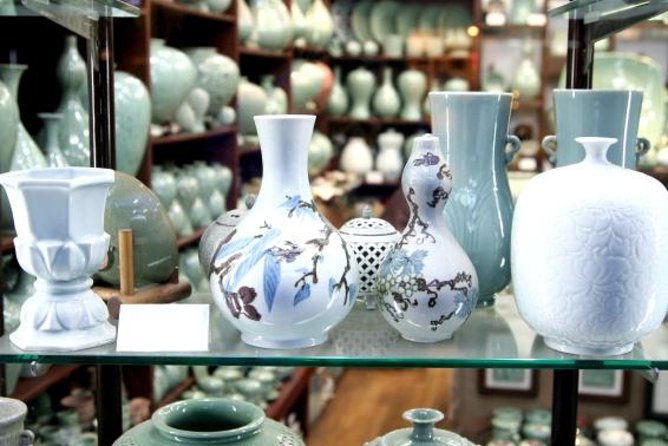
You’ll stroll craft galleries, tea-house style stops, and small storefronts focused on antiques, local artwork, and traditional objects. This is a great place to look for gifts that feel tied to Korea rather than generic souvenirs.
The schedule also includes duty free shop time around the Insadong portion. If you’re budget-focused, this is where you can skim rather than commit to purchases.
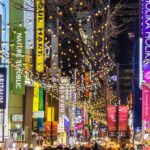
Then you’ll end with Namdaemun Market, described as Korea’s largest traditional market, and it opened in 1964. You’ll have time to browse a wide variety of goods and hunt for bargains or easy-to-pack souvenirs.
Namdaemun’s value for me is simple: it’s chaotic in the best way, and it gives you a chance to see everyday Korean buying habits. It’s also a strong final stop because the market energy helps you finish the day without feeling like you’re forced into another museum-style visit.
Guide Power: Why This Tour Gets Repeat Praise
The most consistently praised part of this tour is the guide. In past departures, names like Lizzy, AJ, Felicity, Charles, Sadie, Grace, Daria, BK, Yu Jeong, Miel, and Bonnie show up again and again in positive comments.
What those different guides seem to have in common is practical pacing and clear explanations. People highlight how guides kept groups on track, handled timing well, and adjusted when things changed—like rain or palace closures. There’s also praise for how guides were friendly and efficient, with the energy to keep a full 8+ hour day from feeling flat.
A small detail that matters: you’re often given time to take photos and also get breaks when you need them, even during hot or rainy days. That’s not just comfort—it helps you actually enjoy the sights instead of rushing through them with fatigue.
Price and What You Get for $89
At $89 per person, this tour is priced like a value city “connector” day. You’re paying for more than transport—you’re paying for guided visits to major sights plus included admissions at key stops (Gyeongbokgung palace area, National Folklore Museum, and Changdeokgung).
You also get:
- Hotel pickup and drop-off
- Air-conditioned coach
- Lunch included
- Mobile ticket
That combo matters in Seoul, where moving between palaces and markets is doable but takes time. This tour removes a lot of that friction. If you’re visiting for a short stay and want the biggest hit of UNESCO palace sights plus two market areas, $89 can pencil out as fair—especially because lunch and guide time are included.
Who This Tour Fits Best (and Who Should Choose Another Plan)
This tour is a great fit if you want a first-day overview of Seoul’s major cultural anchors, and you don’t want to plan connections between palaces, temples, and markets.
It’s also good for:
- Solo travelers who want a guided framework
- Families who benefit from a set schedule (with walking breaks)
- Anyone who likes comparing royal Korea (palaces) with spiritual Korea (Jogyesa) and street Korea (Insadong and Namdaemun)
It might be less ideal if:
- You dislike shopping stops like the ginseng center and duty free time
- You want long unstructured free time in just one area
- Your pace is very slow; the itinerary has several walking segments across a full day
Also remember that palace closures can swap in alternatives. That’s normal, but it helps to be flexible if you had a single favorite palace in mind.
Should You Book This Korean Palace and Market Tour?
I’d book it if your goal is a focused day of Gyeongbokgung + National Folklore Museum, Jogyesa Temple, and Changdeokgung’s Huwon, with Insadong and Namdaemun giving you the souvenir and snack side of Seoul.
If shopping detours are a hard no for you, you can still make the most of it—just treat the ginseng center and duty free as time to browse lightly, not as a purchase mission.
And if your plans are uncertain, it’s also the kind of tour where having the option to cancel for a full refund up to 24 hours before start time can take the edge off scheduling.
FAQ
How long is the tour?
The tour runs for about 8 hours 30 minutes.
What’s included in the price?
The price includes hotel pickup and drop-off, a professional guide, air-conditioned vehicle transport, and lunch. Admission is included for listed stops such as Gyeongbokgung Palace and Changdeokgung Palace, and the National Folklore Museum.
Does the tour include hotel pickup?
Yes. Hotel pickup and drop-off are included, and the tour starts at 8:30 am.
What happens if Gyeongbokgung Palace is closed?
If Gyeongbokgung Palace is closed on Tuesdays, the tour visits Deoksugung Palace and includes a tour of the Seoul Museum of History.
What happens if Changdeokgung Palace is closed?
If Changdeokgung Palace is closed on Mondays, the tour visits Changgyeonggung Palace instead.
Can I cancel for a full refund?
Yes. You can cancel for a full refund up to 24 hours before the experience start time.