Film can turn Seoul into a memory. This 3-hour photo experience lets you shoot with an automatic film camera in Hongdae, guided through Yeonnam-dong’s Maze Road area, then you get your photos developed and scanned with a download link. It’s a simple idea, but it changes how you see while you walk.
Two things I especially like. First, you get all the gear you need up front: an automatic camera plus a roll of Kodak film (24 shots), so there’s no gear anxiety. Second, the session ends with the film work handled for you, which means you’re not stuck finding a lab or figuring out scanning. The one drawback to plan for is the pace: this is not a fast “hit every landmark” tour, and you’ll have to wait for the developed, scanned results after you shoot.
In This Review
- What you should know before you go
- Key highlights at a glance
- A film camera walk in Yeonnam-dong’s Maze Road area
- Meeting Kinam and learning the camera fast
- Stop 1: Yeonnam-dong and how the Maze Road frames your shots
- What shooting Kodak 24 frames teaches you about Seoul
- The best part happens after: development, scanning, and your download link
- Price and value: why $56.07 can make sense
- Practical logistics: where to meet and how to plan your afternoon
- Who this fits best in Seoul
- Should you book the Seoul Film Camera Club?
- FAQ
- How long is the Seoul Film Camera Club experience?
- Where does the experience start?
- Do I get a camera and film included?
- Will the film be developed and scanned for me?
- Are meals or drinks included?
- What is the group size?
What you should know before you go
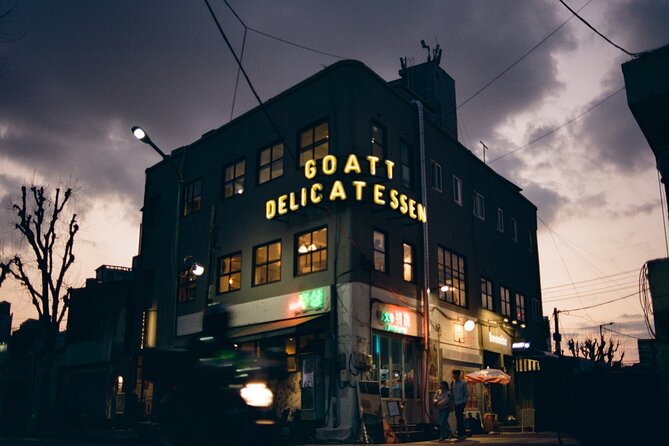
You’ll meet in Mapo-gu (183 Yanghwa-ro) and spend most of the time walking and shooting in Yeonnam-dong, with neighborhood context along the way. It’s also a small group setup (max 4), which keeps the instruction personal and makes it easier to ask basic questions without feeling rushed.
Key highlights at a glance
- Small group of up to 4 keeps the camera basics easy and the walk calm
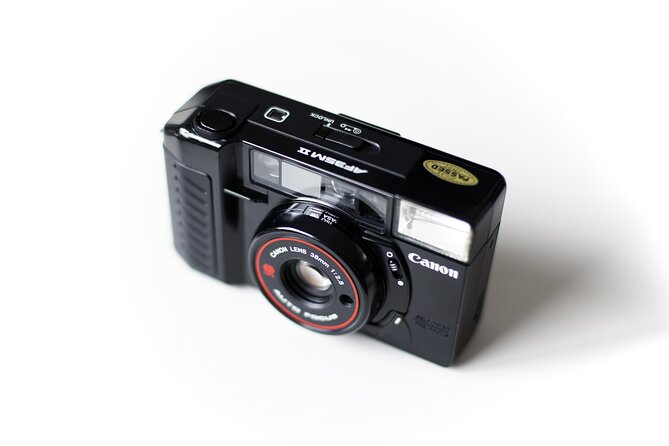
- Automatic film camera + Kodak roll (24 shots) helps first-timers get results
- Yeonnam-dong’s Maze Road gives you backstreet angles instead of the obvious tourist streets
- You develop + scan on the other side and receive a download link
- 3 hours long feels like a relaxed afternoon plan, not an all-day commitment
- Guide Kinam makes the technical part feel approachable
You can also read our reviews of more tours and experiences in Seoul.

A film camera walk in Yeonnam-dong’s Maze Road area
Hongdae gets attention for its art and street energy. This experience uses that wider area as a jumping-off point, then focuses your shooting in Yeonnam-dong—specifically along the maze-like streets around Maze Road. That matters because the best film photos usually come from slower, more specific moments: a doorway view, a street corner, a sign framed by people moving past.
I like that the walk is tied to explanation, not just wandering. You’re not only being told where to point the camera. You’re also getting context about what you’re seeing in the neighborhood, which helps your photos feel like Seoul, not just pretty pictures.
Also, film has a way of slowing you down. When your shots are limited to 24 frames per roll, you tend to stop before you shoot. You think about light, spacing, and timing instead of snapping through everything like digital. If you’ve ever taken hundreds of photos and only liked a handful, film is a strong reset.
Meeting Kinam and learning the camera fast
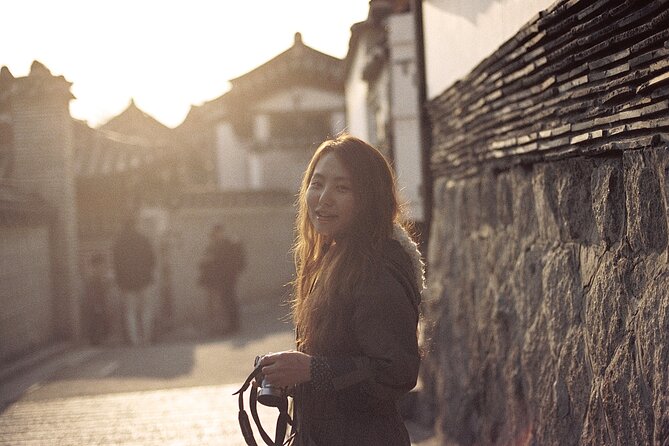
The tour guide for this experience is Kinam, and the big advantage here is that you’re not thrown into confusion. Before you start walking, you get help setting up and using the automatic film camera. That’s a key detail. Auto mode doesn’t mean you stop thinking. It just means you can spend your attention on composition and timing instead of camera math.
With a small group (up to 4), you’re more likely to get real back-and-forth. You can ask what a warning light means, how to hold the camera steady, or when to advance the film. In my view, that’s the difference between a fun “try it” activity and a frustrating tech lesson you don’t finish.
If you’re a total first-timer, this setup is designed for you. The camera is automatic, the film is provided, and you’re guided step-by-step. Still, it helps to arrive with a clear brain. Bring curiosity, not expectations that every shot will be perfect. Film photos often have character because they’re imperfect.
Stop 1: Yeonnam-dong and how the Maze Road frames your shots
Your main on-foot time centers on Yeonnam-dong. That’s where you walk through the Maze Road area with guidance, and you take film photos while listening to neighborhood explanations. The route is built around walking, not sitting still in one spot for long periods.
Here’s what this kind of street-focused stop does well. You get lots of chances to practice “film thinking” in real time. Instead of chasing one viewpoint, you learn to notice smaller details: how a street narrows, how a curve changes the light, how people appear and disappear at the edge of the frame.
A practical note: because it’s a film roll, you’ll probably want to treat each stop like a mini decision. Ask yourself: Do I want this to be a wide scene or a tighter moment? Do I need to wait two seconds for someone to pass in just the right spot? That’s where film becomes more than a novelty. It turns into a way of paying attention.
You’ll also benefit from having a guide who knows the neighborhood well. Even if you’ve been to Hongdae before, this area can still feel like a puzzle of side streets. The guidance helps you move through it with purpose—so you’re not simply guessing where the best photo angles might be.
What shooting Kodak 24 frames teaches you about Seoul
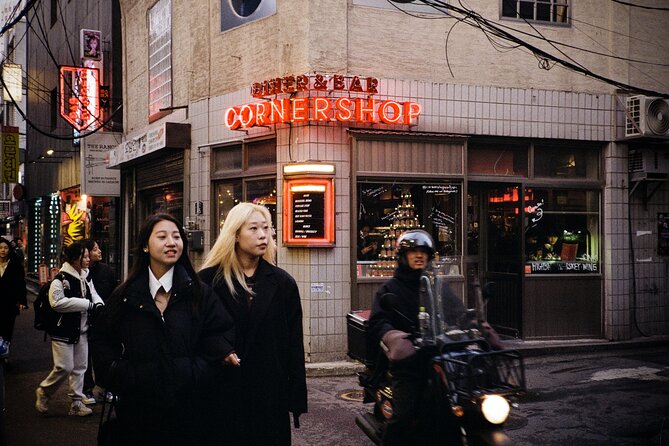
You’re provided 1 roll of Kodak film with 24 shots. That number changes behavior fast. With film, you don’t have unlimited take-backs. The limit makes you slow down and choose.
I like that this is built into the experience instead of being a hard rule you have to understand alone. You still get to experiment, but you also feel the rhythm of film. You might start the first few frames a little cautious. Then, once you get comfortable with the automatic camera and how the shots look in practice, your choices get more confident.
If you’re worried about “wasting” frames, here’s a good way to approach it: shoot in pairs. Take one wider shot to capture context, then one closer shot to capture a detail you noticed while walking. Film encourages this kind of thinking. It gives you variety without trying to solve everything at once.
Also, because the camera is automatic, your learning curve is lighter than with a manual film camera. You can focus on what you want the photo to say—street mood, everyday life, texture—rather than worrying about settings.



The best part happens after: development, scanning, and your download link
When the photo walk finishes, the film doesn’t just sit in a bag. You get film development and scanning through the experience. After that, you receive a download link so you can view the scanned images digitally.
This part is quietly valuable. A lot of film experiences stop at “you shot it.” They don’t help you deal with the lab step. Here, the processing is handled, which means you keep your energy for actually taking photos, not running around later.
You should also understand what you’re trading for this convenience: film results take time. You’ll need to wait for the development and scanning process before you see everything. If you’re the type who wants instant gratification, film will test that patience.
Still, I think the wait is part of the point. It turns your Seoul afternoon into something that continues. Instead of photos fading into a camera roll immediately, you get your results as a separate moment—like opening a small envelope from your future self.
Price and value: why $56.07 can make sense
The price is $56.07 per person, and the experience runs about 3 hours. You might wonder what you’re really paying for. Here’s my take on the value: you’re not just paying for a guided walk. You’re paying for the full film workflow.
Included in the price are:
- an automatic film camera
- Kodak film (24 shots)
- development and scanning
- your download link after processing
That’s a solid package. If you’ve ever priced film separately, plus processing, plus the time it takes to coordinate everything, it can add up quickly. Even if you already own a camera, a guided film session gives you structure: you’re walking a specific neighborhood with direction, and you’re not guessing how to use the film you bought.
The main “cost” you should consider is also the limit of the roll. You only get 24 shots. That’s not a negative—just a constraint. If you love high-volume shooting, you may feel slightly capped. But if you want fewer, better choices, film is a perfect match.
Practical logistics: where to meet and how to plan your afternoon
The meeting point is at 183 Yanghwa-ro, Mapo-gu, Seoul. The activity ends back at the meeting point. It’s near public transportation, so you’re not forced into long walks from a transit station just to start.
You’ll also use a mobile ticket, which is helpful in a city where you’re likely juggling maps, transit cards, and a dozen small plans each day. Keep your phone charged. Then keep it simple.
What should you bring? The tour includes the camera and film, so you don’t need to pack photographic gear. I’d still recommend:
- comfortable walking shoes (you’re moving through street paths)
- a small bag for your essentials
- an open mind, since the whole point is slowing down and shooting on film
Meals and drinks aren’t included, so plan a snack or coffee stop nearby either before you start or after you finish. Since the experience is only about 3 hours, it fits easily between other Hongdae plans.
Who this fits best in Seoul
This tour is a strong fit if you want a quieter kind of photography in Seoul. It suits you if:
- you’ve never used film before but want a guided, low-stress start
- you prefer walking and learning over “checklist tourism”
- you enjoy small-group experiences where you can ask questions
- you like the idea of getting real developed photos later through scanning
It’s also a good option for couples or friends who want to do something slightly different from the usual museum-and-market routine. You’ll get shared time wandering Yeonnam-dong and then a shared payoff when the scanned images arrive.
If you’re the type who needs instant results or wants to shoot hundreds of frames, film may frustrate you. But if you’re open to a slower approach, you’ll likely enjoy the way the roll shapes your attention.
Should you book the Seoul Film Camera Club?
I think you should book it if you want a guided, beginner-friendly film experience that actually handles the hard parts: camera basics, film supply, and the development + scanning afterward. The small group size and the automatic camera setup make it a lot less intimidating than going it alone.
Skip it if your main goal is maximum photo quantity or immediate digital downloads on the spot. This is about process, not speed. You’ll walk, shoot thoughtfully, then wait for your scanned images.
If you’re in Seoul for only a short time and you still want something memorable that feels distinctly different from phone photos, this is one of the better ways to do it. And if you have unused film, it may be worth asking Kinam whether there’s any flexibility on camera time during your stay, but treat that as a question to ask rather than a guarantee.
FAQ
How long is the Seoul Film Camera Club experience?
It lasts about 3 hours.
Where does the experience start?
The meeting point is 183 Yanghwa-ro, Mapo-gu, Seoul, South Korea.
Do I get a camera and film included?
Yes. You receive an automatic film camera and 1 roll of Kodak film with 24 shots.
Will the film be developed and scanned for me?
Yes. Film development and scanning are included, and you receive a download link at the end.
Are meals or drinks included?
No. Meals and drinks are not included.
What is the group size?
The tour has a maximum of 4 travelers.
If you tell me your travel dates and whether you’ve used film before, I can help you judge if the timing and pace will fit your Seoul plan.