REVIEW · 3-DAY EXPERIENCES
3-Day Korea Western course by K-shuttle Tour from Seoul to Busan
Book on Viator →Operated by US Travel Korea · Bookable on Viator
Getting from Seoul to Korea’s west coast without public-transport stress is the point here. This 3-day ride-by-coach plan strings together major history sites plus nature breaks, ending in Busan. You get a guide, transfers, 4-star hotel nights, and breakfast, so your days stay focused on what you came to see.
I like the variety packed into a short window: Baekje-era tombs and castles one day, then memorials and gardens the next. I also like how the tour tends to run with hands-on guidance; in past departures, guides such as Justin and Mr Kim (MS) were praised for clear explanations and practical tips that make check-in and evening plans easier.
One watch-out: board the correct bus early. One departure had a rocky start when the right vehicle was hard to find, so arriving a few minutes early and re-checking your group name with the staff is smart.
In This Review
- Quick hits
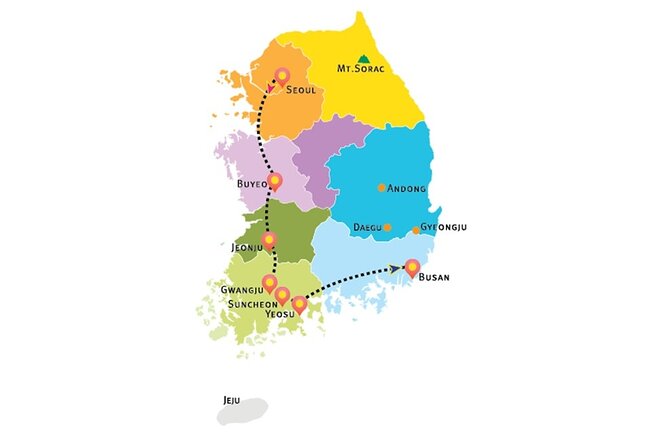
- A Seoul-to-Busan coach plan for the west coast
- First stop: meeting at Donghwa Duty Free before 8am
- Day 1: Songsan-ri Tombs and King Muryeong’s royal resting place
- Day 1: Gongju Gongsanseong Fortress and the Imnyugak Pavilion view
- Day 1: Jeonju Hanok Village for roofs, tradition, and bibimbap
- Day 2: May 18th National Cemetery and the meaning behind the site
- Day 2: Suncheon Bay Garden’s conservation design and seasonal color
- Day 2: Admiral Yi Sun-sin’s headquarters stop
- Boseong tea fields: why this west-coast route feels different
- Day 3: Jinjuseong Fortress and the layered name history
- Ending in Busan: drop at Busan Station Plaza around 13:00
- Where the value comes from: 4-star nights, transfers, and included basics
- Guide quality and how this tour tends to feel day-to-day
- Room setup, packing limits, and avoiding small annoyances
- Should you book this Seoul-to-Busan west tour?
- FAQ
- How long is the 3-Day Korea Western course?
- What time does the tour start, and where in Seoul do we meet?
- Where does the tour end in Busan?
- What is included in the price?
- Are lunch and dinner included?
- Are entrance tickets included for the sites?
- How big are the groups?
- Do I need to provide passport information when booking?
- How are rooms handled for odd numbers or solo travelers?
- What is the cancellation window for a full refund?
Quick hits
- Coach-first logistics mean you spend less time routing between far-flung stops.
- Free admission blocks are built in, like major Baekje sites and Jinjuseong Fortress.
- Jeonju Hanok Village includes time for a hands-on traditional food moment, not just a quick photo stop.
- Suncheon Bay Garden is a true seasonal pick, especially if you’re in May for canola waves.
- Ending at Busan Station at about 13:00 helps you transition quickly to your next itinerary.
A Seoul-to-Busan coach plan for the west coast
This is the kind of tour that’s built for real logistics. The west side of Korea can be easy to enjoy once you’re in the right place, but getting there by yourself often means switching buses, timing trains, and translating everything on the fly.
Here, the route is organized so you move in one direction, Seoul down to Busan, with a professional guide handling the handoffs. That matters when your priorities are on-site views, history, and walking around, not figuring out where to stand for the right bus.
You’re also not stuck in only one type of stop. The mix covers ancient Korea, royal tombs, mountain fortresses, a democracy memorial, and a garden designed for conservation. Add the promised tea stop in Boseong (from the tour’s description), and the trip gets a “south + west” feel rather than a straight sightseeing loop.
You can also read our reviews of more tours and experiences in Seoul
First stop: meeting at Donghwa Duty Free before 8am
Your morning starts at DongHwa Dutyfree on Sejong-daero in Jongno District. The meet-up point is near Gwanghwamun Station, specifically exit number 6, with a listed departure time of 8:00am.
This is one of those details that can save you stress. If you’re coming from another hotel, give yourself buffer time so you’re not sprinting through Seoul rail lines. Because the tour is coach-based, missing the pickup likely means you miss the first stretch of the day.
If you like having your bearings fast, this starting point helps. It’s right in a central area and set up for public transit access, and the tour uses a mobile ticket, so you’ll typically just show up with your confirmation and ID details ready.
Day 1: Songsan-ri Tombs and King Muryeong’s royal resting place
Day 1 is anchored in the Baekje story, starting with Songsan-ri Tombs and the Royal Tomb of King Muryeong. This is a powerful choice if you want history that feels physical, not just read-and-forget.
The Songsan-ri Tombs are known for containing representative relics from the Baekje period. It’s believed there are graves of kings from the time when Baekje’s capital was Gongju, with ten expected but only seven discovered so far. The tour highlights King Muryeong’s tomb as the 7th tomb, and it’s the resting place for Baekje’s King Mu-Ryeong and his queen.
What I’d be excited for here is the how-it-was-found element. The tomb was discovered while installing pipes meant to prevent flooding of nearby tombs (tombs number 5 and 6). That sets the stage for what you’re seeing: construction methods, what was found inside, and why scholars value the site for research on Baekje culture. The ticket entry is listed as free here, and the stop runs about 2 hours.
Practical note: you’ll likely be walking around uneven terrain at a tomb complex. Wear shoes you trust and keep your pace comfortable. Two hours is enough to read key details, not enough to dawdle if you stop for every single angle.
Day 1: Gongju Gongsanseong Fortress and the Imnyugak Pavilion view
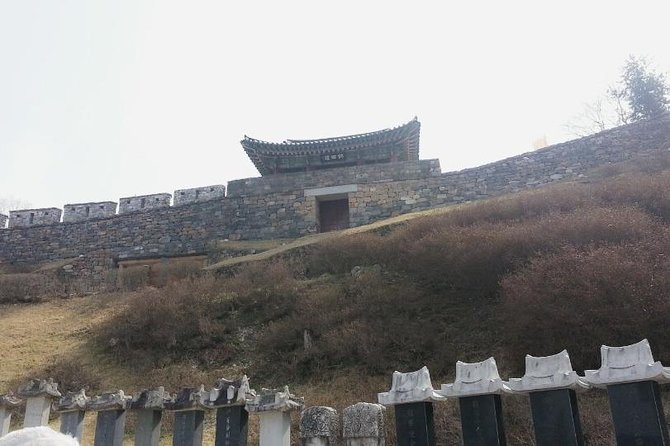
After Baekje underground history, you shift into mountain territory with Gongju Gongsanseong Fortress. This is described as a mountain castle established during Baekje, with a focus on the views along the Geumgang riverside.
What makes this stop feel worth it is the trail progression. You follow the path a bit higher and reach Imnyugak Pavilion, noted as the largest of its kind within the fortress. Even if you’re not a fortress superfan, the combination of walking effort and payoff views is the main attraction.
This stop is about 1 hour, and it’s listed as free admission. One hour is a good time slot because it keeps you moving before the day turns long. If you’re sensitive to stairs or steep paths, take your time and plan for a slower pace rather than rushing to the pavilion.
Day 1: Jeonju Hanok Village for roofs, tradition, and bibimbap
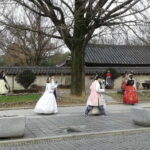
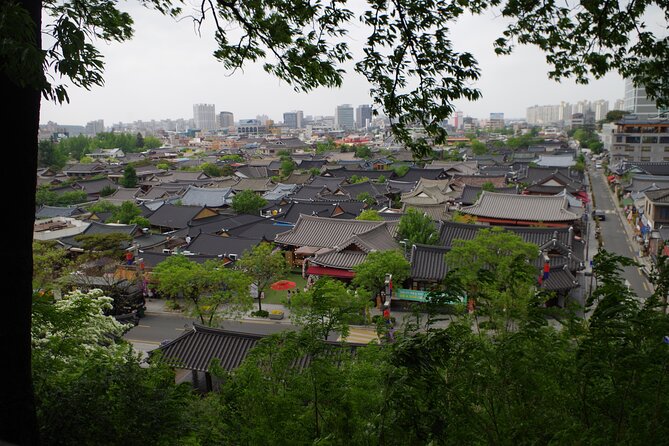
Jeonju Hanok Village is the day’s “human-scale” cultural stop. In contrast to cities that have been industrialized, this area is designed to preserve historical Korean life in a way you can actually experience.
The tour points out what to look for: the hanok roof edges, which are slightly raised. You also get time in the Hanok Life Experience Hall, where a portion of the homes is set up for visitors to experience traditional life rather than just pass by storefronts.
Food is part of the atmosphere. The tour notes traditional options, including bibimbap from the Jeonju region. Even though lunches aren’t listed as included, Jeonju’s food culture is a big reason people build day plans around this place.
Jeonju is also a great place to reset mentally. You’re going from tombs and fortress paths into a slower walking zone, which helps the trip feel varied instead of like one long museum day. The slot is about 2 hours, and admission is listed as free.




Day 2: May 18th National Cemetery and the meaning behind the site
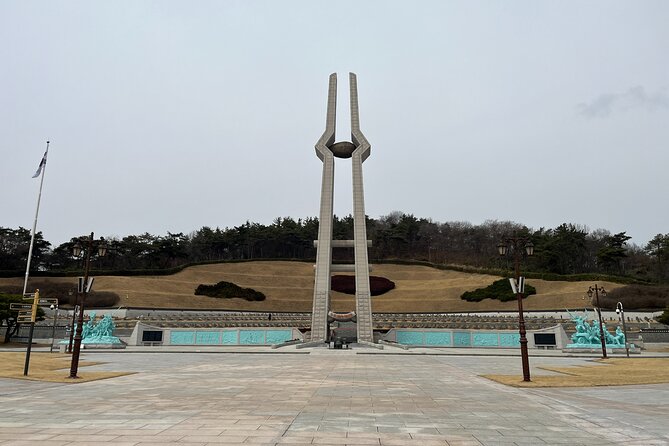
Day 2 starts with something heavy in a respectful way: May 18th National Cemetery. It sits in front of Mudeungsan Mountain and is described as a symbol of freedom and democracy, connected to victims of the May 1980 democratic movement.
The details matter here. The tour notes that victims were carried and buried by handcarts and garbage trucks in 1980. Then, in 1997, the cemetery was exhumed and reburied at the memorial site, and May 18th became a national holiday commemorating people’s desire for democracy.
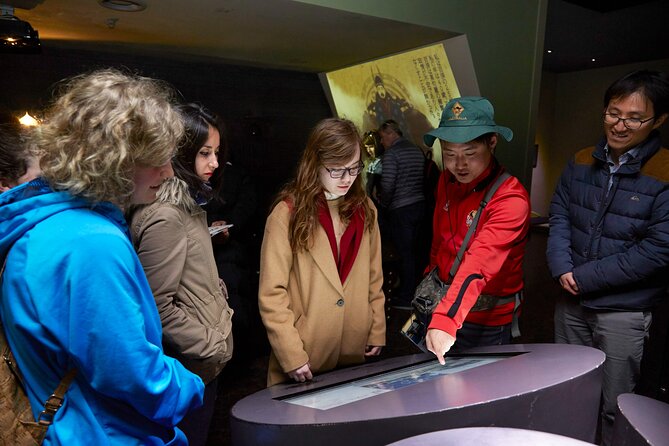
This is one of the stops where having a guide is not optional. A good guide helps you understand what you’re seeing, not just where it is. The tour lists the entrance as included, and the stop is about 2 hours.
If you want to make the moment land, give yourself a slower pace. Read key plaques, then step back and take a breath before moving on. It’s the kind of place where speed can feel disrespectful.
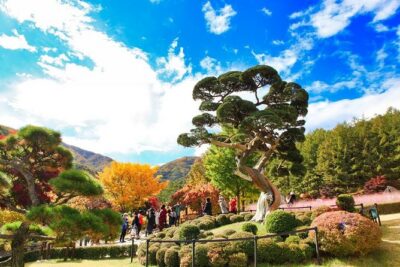
Day 2: Suncheon Bay Garden’s conservation design and seasonal color
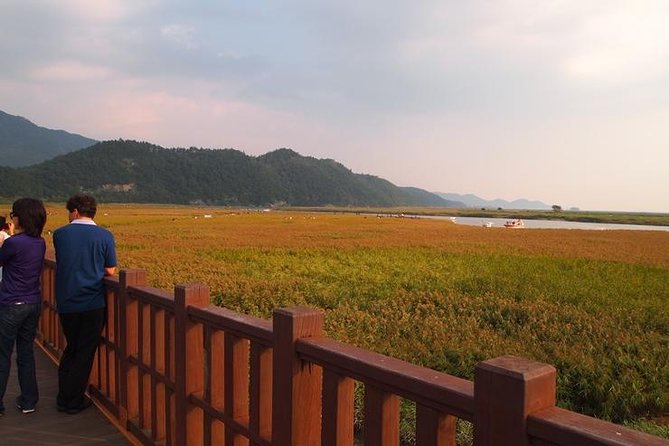
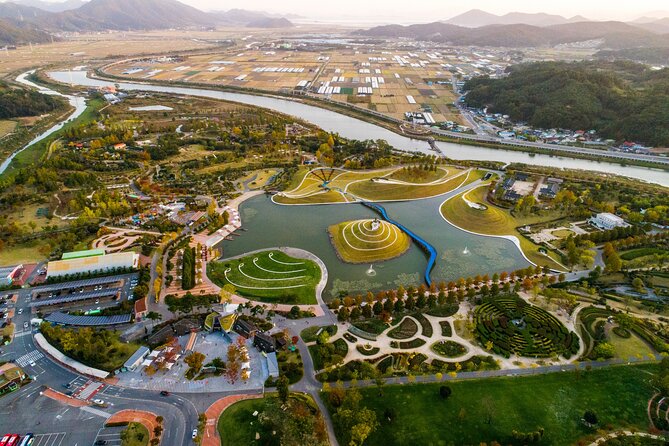
After the memorial, you move to a calmer setting: Suncheon Bay Garden. This garden is described as being created by turning 1.12 square kilometers of natural habitat into a conservation area.
It’s not just pretty plant life on a random schedule. The description highlights that the area houses over 505 species of trees and 113 species of flowers. If you like botany-level detail, this kind of site hits a sweet spot.
The tour also calls out floral highlights. Tulips and royal azaleas get attention, and if you travel around May, the nearby canola fields (30,000 square meters) can be in bloom, creating a yellow “wave” of color. Even when it’s not canola season, the design intent remains: you’re walking through managed habitat rather than a theme park.
Entrance is listed as included, and the stop is about 2 hours. Wear layers if you’re sensitive to weather changes. Garden stops can feel cooler under canopies and warmer out in the open.
Day 2: Admiral Yi Sun-sin’s headquarters stop
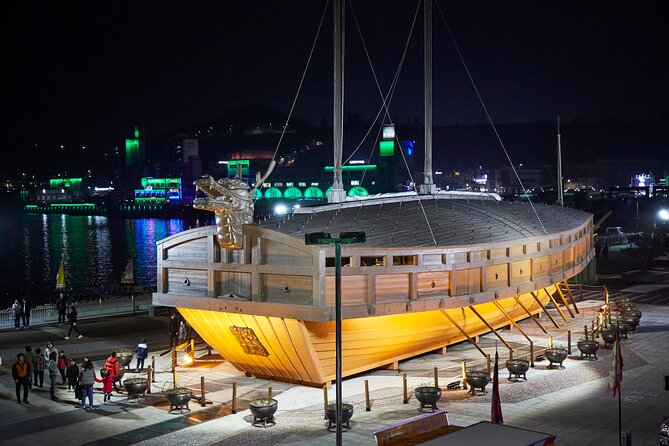
Day 2 ends with a historical hero stop: the Statue of Admiral Yi Sun-sin. The tour explains that during the Japanese invasion in 1592–1598 (Imjin Waeran), Admiral Yi decided the site should be used as his headquarters.
That makes the stop feel more grounded than a simple statue. The tour notes you’ll see artifacts honoring his efforts in protecting the country. It also points out that the hall itself is designated National Treasure No. 304 (as of 2011).
This is another 2-hour block with free admission. You’ll likely get the best experience if you treat it like a guided story: think of it as a setting where strategy decisions happened, not just a monument.
Boseong tea fields: why this west-coast route feels different
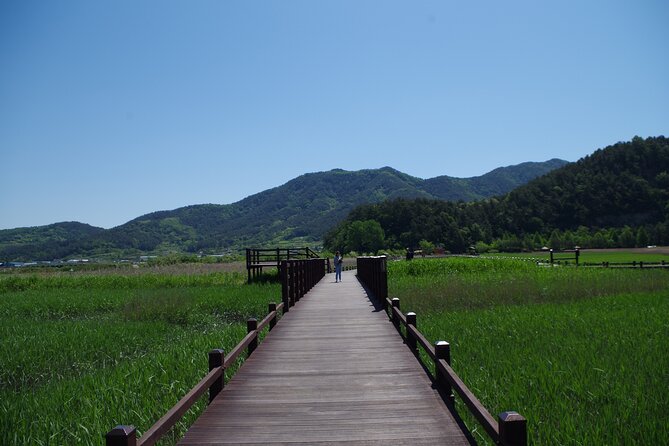
The tour description includes a green tea plantation stop in Boseong. That’s a nice contrast to the history-heavy itinerary, because tea landscapes tend to make travel feel slower and more sensory.
Just temper expectations. The data you provided doesn’t list what you’ll do there (tastings, shopping time, or viewpoints). So plan on a garden-and-field style visit where you’ll have time to see the tea environment and move on.
Still, this is one of the reasons I’d consider this tour for first-time planning. It gives you variety without forcing you to build a separate day trip on your own.
Day 3: Jinjuseong Fortress and the layered name history
Day 3 concentrates on a single big payoff: Jinjuseong Fortress in Jinju. The fortress is historically linked to the Japanese invasion in 1592, and the tour also walks through how the fortress name evolved through dynasties and eras.
It was originally called Geoyeolseong Fortress during the Three Kingdom Period. Then it was renamed Chokseokseong Fortress in the Goryeo Dynasty, and finally became Jinjuseong Fortress in the Joseon Dynasty.
That naming timeline is a great example of why a guided stop can matter. A fortress is easy to look at from the outside. A guide can help you understand why the place mattered enough to be renamed across time, and what those eras meant for the people living there. Admission is listed as free, and the stop is about 1 hour.
If you’re looking for a long walk and big stamina test on Day 3, this one may feel short. But one hour is a good fit if you want to save energy for settling into Busan.
Ending in Busan: drop at Busan Station Plaza around 13:00
Your tour ends at Busan Train Station Plaza, with a listed drop point around 1:00pm. The end location is described as Jungang-daero, 초량제3동 Dong-gu in Busan.
This timing is useful. If you’ve got a second booking in Busan, you can pivot quickly without losing the whole afternoon to transit. Also, Busan Station is a major hub, so you’ll have options for onward travel.
One practical tip: plan a light first meal near where you’ll be walking after the drop. You won’t have dinner included, so having a plan for lunch and snacks after 13:00 can keep you from hunting when you’re tired.
Where the value comes from: 4-star nights, transfers, and included basics
Let’s talk money in a way that helps you decide. The price is $749 per person, and the tour is typically booked about 34 days in advance on average. For a 3-day, Seoul-to-Busan coach itinerary, that’s not a bargain price, but it also isn’t a random splurge.
You’re paying for the structure:
- 2 nights of 4-star accommodation
- transfer by coach
- a professional guide
- breakfasts as per the itinerary
- some entrance fees
The tour is clear that lunch and dinner are not included. That’s normal for many multi-stop tours, but it’s a point to plan around. If you tend to eat at higher-end places, your final trip cost will drift upward.
Still, the inclusion of entrance fees matters. May 18th National Cemetery and Suncheon Bay Garden are listed as included, and several other stops are free admission. This can lower the total add-on cost you’d otherwise handle by yourself.
One more small thing that adds comfort: the tour limits group size to a maximum of 40 travelers. It’s not tiny, but it also shouldn’t feel chaotic.
Guide quality and how this tour tends to feel day-to-day
In tours like this, the guide is the difference between seeing places and understanding them. In past departures, people highlighted guides such as Justin for being informative and helping with evening tips and food ideas. Another guide, Mr Kim (MS), was praised for making hotel check-in and onward travel easier.
What I take from that for your planning is simple: show up early, ask questions, and use the guide for practical help. If you’re hoping for help choosing what to eat at night, this tour has the right setup for it.
You’re also dealing with multiple transit legs. The driver support gets a real mention in past feedback, and for a coach route, that matters more than you might think. Your day runs on time and stays comfortable when the driver is steady and the schedule isn’t constantly disrupted.
Room setup, packing limits, and avoiding small annoyances
Room rules for this tour are straightforward, but you should read them before you book.
For odd numbers in a group, the third person typically shares the room with a pullout bed available at no extra charge. If you want a different room arrangement (like a double room with a pullout), you need to flag it at checkout.
If you’re booking a single room, the tour notes that a single traveler surcharge applies. Also, passport details are required at booking: your name, passport number, expiry, and country.
Packing also has a real-world limit. The tour says luggage space depends on group size, and you should bring only one luggage per person. That’s exactly the kind of detail that helps your day feel smoother. If you bring extra bags, you may spend time negotiating where things go instead of enjoying the sites.
Should you book this Seoul-to-Busan west tour?
Book this if you want a guided west-coast itinerary with minimal hassle. It’s especially compelling if you value a mix of history and nature, and you’d rather pay for transport, hotels, and coordination than build that schedule yourself.
Skip it, or at least be extra careful, if you hate coach days or long sitting time. Also, if you’re very sensitive to first-day pickup confusion, show up early and confirm which bus you’re getting on. A smooth start matters more than you think in a multi-stop plan.
If you’re balancing comfort, structure, and real stops from Baekje sites to Jinju, this tour is a strong fit. And because it lands you at Busan Station around 13:00, you’ll still have time to steer your own evening plans.
FAQ
How long is the 3-Day Korea Western course?
It runs for 3 days (approximately).
What time does the tour start, and where in Seoul do we meet?
The meeting point is at DongHwa Dutyfree on Sejong-daero in Jongno District, with an 8:00am start. The pickup is also described as being at the parking lot next to Dongwha duty free shop at exit number 6 of Gwanghwamun subway station.
Where does the tour end in Busan?
You end with a drop-off at Busan Train Station Plaza around 13:00, and the end location is given as Jungang-daero, 초량제3동 Dong-gu, Busan.
What is included in the price?
The tour includes 2 nights of 4-star accommodation, transfers, a professional guide, and breakfasts as per the itinerary. Some entrance fees are also included.
Are lunch and dinner included?
No. Lunch and dinner are not included.
Are entrance tickets included for the sites?
Some entrance fees are included. For example, May 18th National Cemetery and Suncheon Bay Garden list admission as included, and several other stops list admission as free.
How big are the groups?
The tour has a maximum of 40 travelers.
Do I need to provide passport information when booking?
Yes. Passport name, number, expiry, and country are required at the time of booking for all participants.
How are rooms handled for odd numbers or solo travelers?
If a group booking has an odd number, the third person typically shares one room with a pullout bed at no extra charge. If three people do not want to share, one person can book a single room, and a single traveler surcharge applies.
What is the cancellation window for a full refund?
You can cancel up to 6 days in advance for a full refund. Any changes made less than 6 full days before the experience start time won’t be accepted for a full refund.