REVIEW · DMZ TOURS
DMZ Tour Seoul to North Korea’s 3rd Tunnel & Majang Lake Crossing
Book on Viator →Operated by VIP TRAVEL Co.Ltd · Bookable on Viator
Korea’s most tense border, in one day. On this DMZ tour from Seoul, I love the telescope view at Dora Observatory and the walk-into-the-history feel of the 3rd Tunnel, plus the way the day ties Cold War facts to real human separation. The one drawback is the pace: there are ID checks and plenty of steps and inclines, so it’s not a laid-back day.
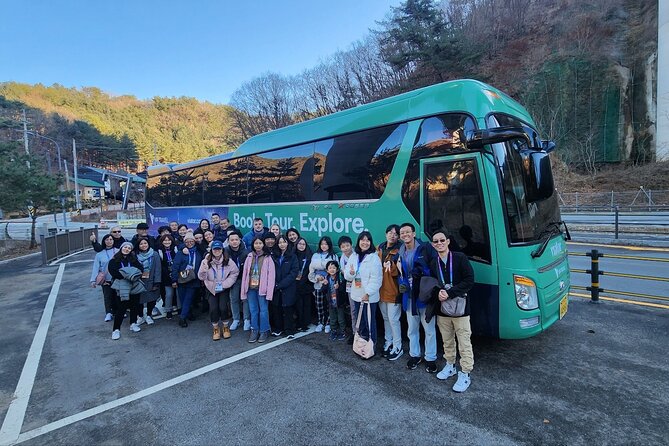
I also like how the day is structured so you’re not guessing your way from one checkpoint to the next. Hotel pickup and multiple Seoul meeting points (Myeongdong, City Hall, and Hongdae) make it easier to plug in, and guides such as Nancy and Alex often get praised for turning the stops into a story you can actually follow.
And yes, you should plan for “DMZ weather”—hot, humid, and sometimes foggy. If you’re heading into the Third Tunnel, expect a hard hat and make sure it’s actually secured, because you’ll be ducking and moving underground for about an hour.
In This Review
- Key highlights worth your attention
- The real deal: a DMZ day that’s more than sightseeing
- Meeting in Seoul: Myeongdong, City Hall, or Hongdae
- Imjingak Tourist Center: the quick clearance moment that matters
- Imjingak Park: bell tower memories, peace symbolism, and breathing room
- Bridge of Freedom: the crossing that carries POW return history
- The Paju Imjingak Peace Gondola option: a viewpoint without rushing
- Jangdan Station’s steam locomotive: the Gyeongui Line paused in 1950
- The Peace Park-to-checkpoint rhythm: Unification Bridge ID checks
- Imjin River views from the bus: wildlife where the armistice held
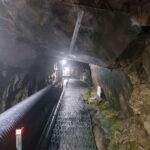
- The 3rd Tunnel of Aggression: what to expect underground
- Dora Observatory: telescope viewing of North Korea from South Korea
- Tongilchon-gil: the quiet village stop and Jangdan soybeans
- Majang Lake Suspension Bridge: the optional crossing that stretches the day
- Price and value: why $35 can work (and when it doesn’t)
- Practical tips that will save your day
- Who this DMZ tour suits best
- Should you book this DMZ tour to the 3rd Tunnel and Majang Lake?
- FAQ
- How much does the DMZ Tour Seoul to North Korea’s 3rd Tunnel & Majang Lake Crossing cost?
- How long is the tour?
- Where do you meet the tour guide and bus in Seoul?
- Is hotel pickup included?
- Is lunch included?
- What’s included in the ticket, and what’s not?
- Do I need a passport?
- Is the Majang Lake Suspension Bridge crossing included?
- Can I cancel for a full refund?
Key highlights worth your attention
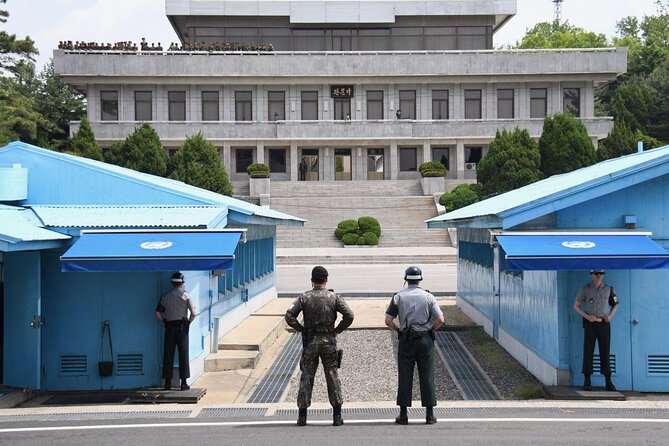
- Telescope time at Dora Observatory for one of the closest official looks toward North Korea from South Korea
- The 3rd Tunnel of Aggression (1,635 meters) where you experience the scale of the infiltration effort
- Imjingak Peace Park stops that connect reunification hope with POW return memories and memorial spaces
- Bridge of Freedom crossing tied to prisoner-of-war return stories and symbolic history
- Unification Bridge ID checkpoint where soldiers inspect documents before you pass
- Optional Majang Lake Suspension Bridge crossing (262 meters long, 25 meters above the lake) if you select it
The real deal: a DMZ day that’s more than sightseeing
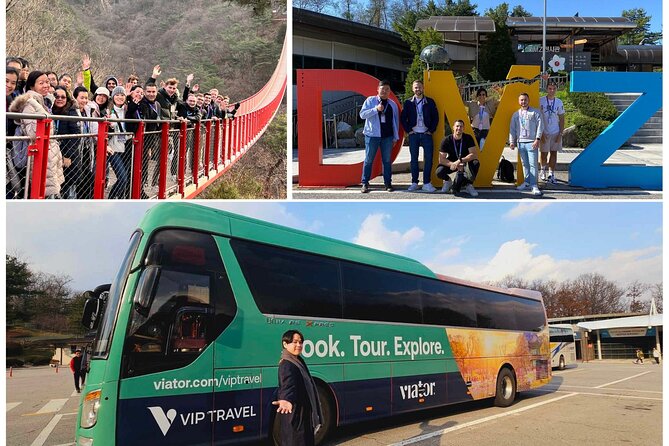
A good DMZ tour has two jobs. First, it gets you to the official viewing points. Second, it explains why those points exist—why this border was drawn, why it held, and what people did while waiting for change.
This one does that job with a tight route that mixes big iconic stops with smaller, quieter places like memorial altars and a preserved steam locomotive. I like the balance: you get the headline moments (tunnel and telescope), but you also get the “human scale” parts—bells, return stories, and family remembrance spaces.
You should also know what you’re signing up for. This is not slow tourism. It’s a guided, structured day where the group moves together, the weather matters for visibility, and checkpoints require your documents.
You can also read our reviews of more tours and experiences in Seoul.

Meeting in Seoul: Myeongdong, City Hall, or Hongdae
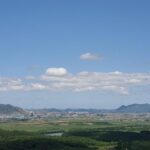
Your day starts at one of three subway meeting points, and arriving early is the difference between calm and stressful.
You’ll meet the bus and guide at:
- Myeongdong subway station, Exit 9
- Seoul City Hall subway station, Exit 6
- Hongdae subway station, Exit 3
These stops are close to major transit, and the tour mentions mobile tickets, which helps reduce time spent on paperwork. Still, it’s common to see multiple groups assembling in the same area, so give yourself a 10–15 minute buffer.
If you’re coming from a hotel near the center, hotel pickup usually makes the whole morning smoother. If you’re starting farther out, the meeting points keep you from needing a complex plan to get to the bus.
Imjingak Tourist Center: the quick clearance moment that matters
Before you actually go deeper into the controlled area, you hit a short stop at the Imjingak Tourist Information Center. This is where your guide collects the entrance clearance and tickets used to access the civilian-controlled parts of the DMZ.
It’s only around 10 minutes, but it’s important. This is the behind-the-scenes step that keeps the rest of the day possible. If you’re used to traveling casually, this stop is a reminder that the DMZ runs on rules and document timing.
Imjingak Park: bell tower memories, peace symbolism, and breathing room
Next you move into Imjingak Park, a sanctuary established in 1972 that honors those separated by the Korean War. The tone here is more reflective than dramatic, which helps reset the mood after transit.
You’ll typically see several key peace-oriented stops within Imjingak, including:
- Bell Tower areas linked to reunification hopes
- Mangbaedan Memorial Altar, built in 1987, where families pay tribute to relatives in North Korea during traditional holidays
- Pyeonghwauijong Peace Bell, a heavy 21-ton bronze bell cast in 2002 that symbolically reinforces the yearning for unity
This section is where the day becomes less about borders on a map and more about what separation does to families. The pacing is fast enough to keep you on schedule, but it’s long enough to let you feel the shift in atmosphere.
Bridge of Freedom: the crossing that carries POW return history
The Bridge of Freedom is one of those stops that feels simple at first glance—just a wooden span. Then the context lands.
You’re crossing the Imjin River on a bridge built in 1953 to replace a war-damaged railroad bridge. The symbolic weight comes from the story of the 12,773 POWs who returned to South Korea, with liberation shouts that became part of the public memory.
This is a great photo stop, but I’d treat it as more than a picture. Stand there and read the context on-site. The point is how quickly history can turn into routine—until you realize you’re walking on a place that once marked return and release.


The Paju Imjingak Peace Gondola option: a viewpoint without rushing
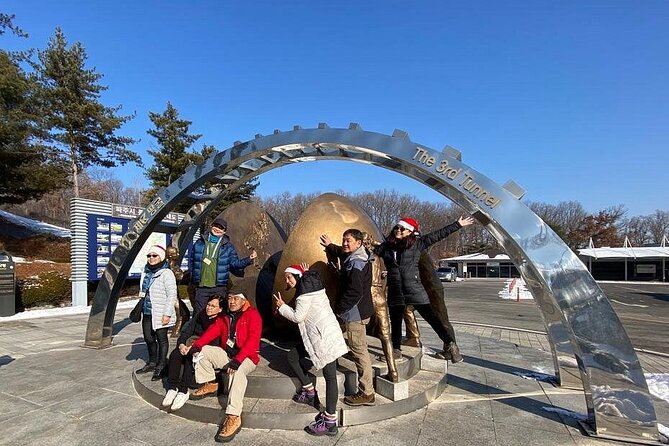
There’s an optional stop for the Paju Imjingak Peace Gondola (DMZ Gondola), launched in 2020. If you choose it, you’ll spend around 1 hour including admission.
This is a good add-on if you like views but don’t want more walking. You’ll get an elevated perspective over the Imjin River area along the DMZ edge. The ride is optional, so it’s smart to decide based on your energy level and the weather.
If visibility is clear, the gondola can be a nice way to see the “edge” feeling of the DMZ without waiting only on telescope time later.
Jangdan Station’s steam locomotive: the Gyeongui Line paused in 1950
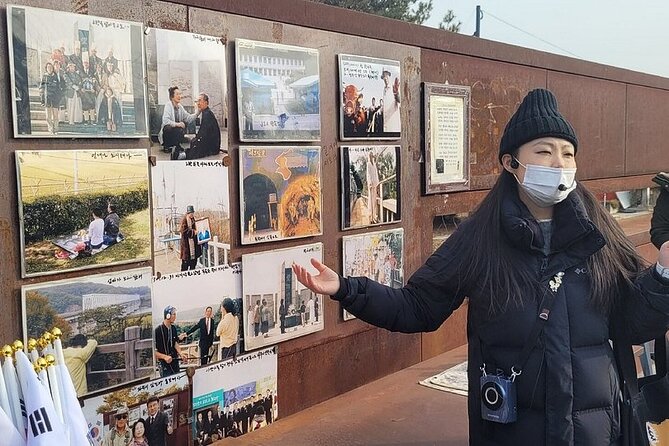
Another stop that quietly adds texture is the steam locomotive at Jangdan Station of the Gyeongui Line. This “iron horse” reflects the old railway route that ran until the Korean War halted it in 1950.
It’s a short stop, about 10 minutes, but it’s memorable because it connects the DMZ to movement and everyday infrastructure. When you think “DMZ,” you might picture fences and towers. Here you also remember trains, schedules, and people who depended on routes that stopped overnight.
The Peace Park-to-checkpoint rhythm: Unification Bridge ID checks
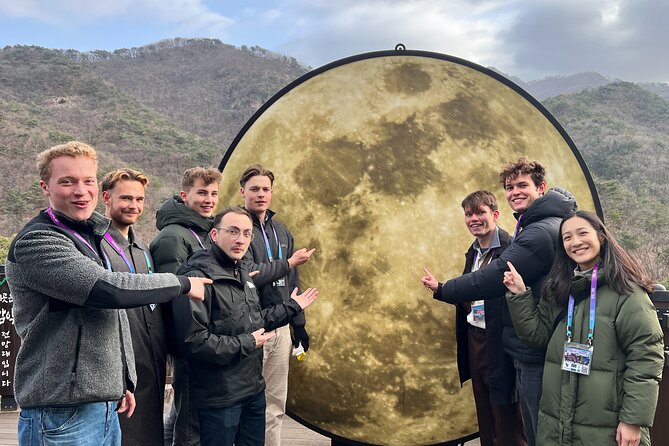
As the day approaches the more sensitive parts of the route, you hit the Unification Bridge area briefly.
This isn’t just a scenic stop. You’ll face a military checkpoint where soldiers inspect the bus and then do ID checks. The tour explicitly notes you should have your passport, Military ID Card, or a South Korea-issued identification document.
If you take one practical lesson from the whole day, it’s this: don’t assume you can “fix it later.” Bring the right documents from the start, because the checkpoint timing is not something you control.
Imjin River views from the bus: wildlife where the armistice held
As you travel, your bus passes over the Imjin River. The tour notes the area has wildlife and birds that were left undisturbed after the armistice.
This part is quick, but it’s one of the ways the DMZ feels real. It’s not only concrete and machinery. It’s also a zone where the absence of civilian traffic created a haven for animals, which makes the whole border feel more complicated.
The 3rd Tunnel of Aggression: what to expect underground
This is the headline stop, the reason many people book the tour specifically. The Third Tunnel of Aggression—also known as the 3rd infiltration tunnel—was uncovered in 1978, about 52 km from Seoul and 12 km from Munsan.
You’ll spend around 1 hour at the tunnel with admission included. The tunnel is described as 1,635 meters long, and it’s known as an infiltration attempt exposed after years of Cold War tension.
What you’ll notice first is the human feeling of scale. You’re not standing outside looking at a diagram. You’re moving in a space built for secret movement and hidden operations.
Practical tip from the real-world tunnel experience in reviews: secure your hard hat properly. If it’s loose, you’ll bump your head. Also, dress for a cooler, more enclosed feel even on hot days, since tunnels don’t behave like the outdoors.
Dora Observatory: telescope viewing of North Korea from South Korea
After the underground stop, the day shifts back above ground with a big “pinpoint view” moment.
The Dora Observatory is established at Dorasan and revamped in 2018. It’s positioned for the closest official view of North Korea from South Korea, and you get telescope viewing and time on-site (about 40 minutes).
This is the pinnacle for many visitors, and it’s easy to see why. The observatory isn’t a casual viewpoint; it’s built around giving you a chance to look across the divide with the best available tools.
You can also buy North Korean products at the observatory. That’s one of the odd realities of the DMZ: even with the political separation, there are controlled commercial pieces and official pathways for limited access.
One more reality: weather can affect how rewarding the view is. If conditions are foggy, the tour can adjust the order of stops to improve viewing chances—so don’t assume the exact sequence will always match your expectations.
Tongilchon-gil: the quiet village stop and Jangdan soybeans
Next you pause near the civilian control line at Tongilchon-gil, also referenced as a tranquil village area where the DMZ soils support prized Jangdan soybeans.
This is around 20 minutes, and the tour notes a chance to treat yourself to the nutty, velvety flavor of the soybeans. This stop works best if you like small tastings and short cultural moments, rather than only “big monument” stops.
If you’re skipping it, you’ll still get the core DMZ experience, but I like it as a reminder that the DMZ isn’t only about military zones—it also affects agriculture and regional identity.
Majang Lake Suspension Bridge: the optional crossing that stretches the day
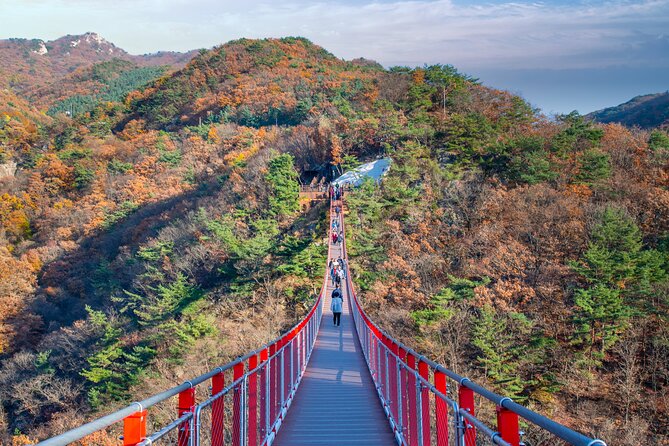
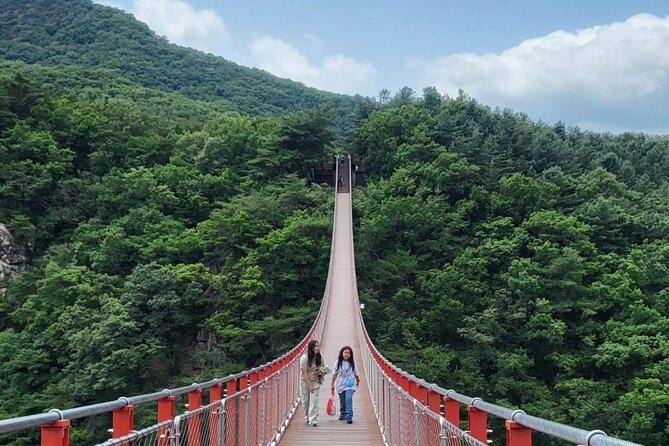
Your title mentions Majang Lake crossing, and here’s the key detail: it’s optional. If you select it during checkout, you’ll visit the Majang Lake Suspension Bridge for about 1 hour with admission included.
This bridge opened in 2020 and is described as 262 meters long, rising 25 meters above the serene Majang Lake (also known as Majang Reservoir). Crossing it is different from the rest of the day. It’s not checkpoint drama and it’s not underground. It’s open air, views, and the kind of modern engineering that feels like a contrast to what you just saw.
The tour also mentions another optional add-on: the Gamaksan Red Suspension Bridge. If you choose that during checkout, it’s included as part of the package.
If you’re doing both bridge options, you’ll want to pace yourself. There’s already a full day, and this adds walking time on top.
Price and value: why $35 can work (and when it doesn’t)
At $35 per person, this tour is priced like a budget-friendly DMZ primer, not a premium private experience. The value comes from what’s bundled:
You get:
- a professional guide in English or Chinese
- hotel pickup from main subway/downtown pickup points
- admission included for major DMZ components
- optional add-ons if selected during checkout (like Majang Lake Bridge, and the red bridge option)
What you don’t get:
- lunch
- hotel drop-off (you can get off at Myeongdong, Hongik Univ Subway Station, or City Hall)
So the math is simple. If you’re fine handling lunch on your own and you want a guided DMZ route that covers the big sights, $35 can feel like a steal. If you expect a full-day meal plan and minimal walking, you may feel nickel-and-dimed unless you pack snacks or plan a late lunch stop afterward.
Also remember: the day is about official access and timing. You’re paying for structure as much as sightseeing.
Practical tips that will save your day
If you want this day to go smoothly, here’s what I’d treat as non-negotiable:
Bring your documents. For the Unification Bridge checkpoint, the tour explicitly calls for your passport or acceptable ID.
Dress for heat and movement. One review mentions hot and humid conditions. The route includes inclines and stairs, and even with a good pace, you’re moving a lot.
Don’t underestimate the tunnel. Reviews include a clear warning to secure your hard hat tightly so you don’t keep bumping your head. You’ll be in a space that forces you to pay attention to your own body.
Arrive early at meeting points. The tour asks you to be there 10–15 minutes early. That matters because you might be joining several coaches at one subway stop.
Plan for timing changes. The DMZ depends on conditions, and the itinerary order can shift if visibility is poor or access changes. That flexibility is part of how the day stays workable.
Bring a light layer. Even when Seoul feels warm, tunnels and observatory areas can feel different. A comfy jacket is an easy win.
Who this DMZ tour suits best
This tour is a strong fit if:
- you want a classic “first DMZ day” with the 3rd Tunnel plus the telescope view at Dora Observatory
- you prefer a guided route so you don’t waste time figuring out what’s accessible
- you enjoy history that’s explained through stories, not just facts
It may be less ideal if:
- you have trouble with stairs and inclines, since the day includes physical movement between stops
- you expect lots of free time to wander independently (this is a group-managed day)
Should you book this DMZ tour to the 3rd Tunnel and Majang Lake?
Yes, if your goal is to cover the DMZ’s biggest “why it matters” sites in one efficient day. The combination of 3rd Tunnel + Dora Observatory telescope is the core payoff, and the Imjingak peace-zone stops do the important work of humanizing the border beyond slogans.
Book it with extra care if you’re sensitive to tight schedules, need lots of comfort time, or hate checkpoints. In those cases, you can still go—but go with realistic expectations, bring your documents, and plan for a long day.
FAQ
How much does the DMZ Tour Seoul to North Korea’s 3rd Tunnel & Majang Lake Crossing cost?
It costs $35.00 per person.
How long is the tour?
The duration is about 8 hours.
Where do you meet the tour guide and bus in Seoul?
The tour lists three meeting locations: Myeongdong subway station Exit 9, Seoul City Hall subway station Exit 6, and Hongdae subway station Exit 3.
Is hotel pickup included?
Yes. The tour includes complimentary hotel pickup from main subway stations or downtown areas.
Is lunch included?
No. Lunch is not included.
What’s included in the ticket, and what’s not?
The tour includes a professional guide, hotel pickup, and admission for the main included stops. It also lists optional add-ons (like the Gamaksan Red Suspension Bridge or Majang Lake Bridge) if selected during checkout. Lunch and hotel drop-off are not included.
Do I need a passport?
The tour specifically mentions you should bring your passport (or Military ID Card or South Korea-issued ID) for the Unification Bridge military checkpoint.
Is the Majang Lake Suspension Bridge crossing included?
It’s optional. If you select it during checkout, it’s included and you’ll spend about 1 hour there with admission included.
Can I cancel for a full refund?
Yes. You can cancel up to 24 hours in advance for a full refund.