REVIEW · BBQ
Korean Cooking Class Full Meal with BBQ on an All in One Table
Book on Viator →Operated by Soop Table: The Hansik Atelier · Bookable on Viator
Hands-on Korean cooking starts right at the table. I love the calm, Hanok-inspired kitchen setting and how the class focuses on cooking, plating, and eating a full Korean meal together. You will also love that it is built around Korean dining style, with dishes moving toward one shared table rather than a Western sequence. One thing to consider: this is not a sightseeing or market tour, so if you want lots of time wandering Seoul, you’ll spend your hours mostly at the workstations.
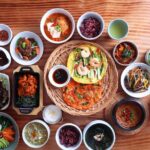
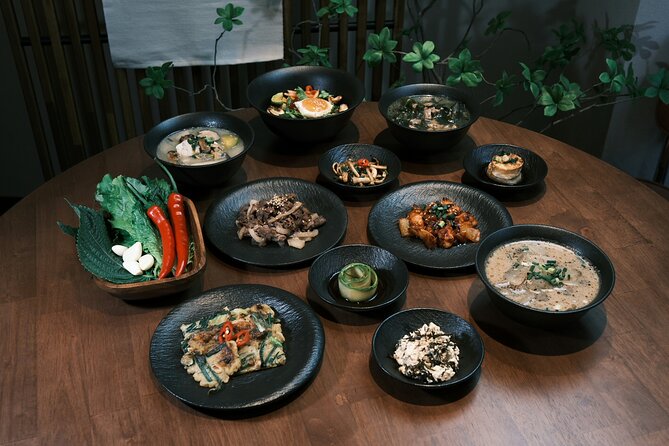
I also liked that you handle nearly everything yourself: four kinds of side dishes, then your own bibimbap plating, plus a chosen main and soup/stew. The chef adds the grilled pork belly BBQ and a small taste of traditional liquor, which keeps the cooking class manageable without turning it into a BBQ-only experience. The group stays small, max 8 travelers, so you get hands-on time without feeling rushed.
In This Review
- Key Highlights I’d Circle
- Entering the Hanok-Inspired Kitchen in Mapo-gu
- The Welcome Tea and the Rhythm of Korean Meals
- Cooking Four Banchan: Your Hands, Fresh Veg, Real Fermentation
- Choosing Your Main Dish and Soup or Stew
- Bibimbap Plating: The Difference Between Eating and Arranging
- Chef-Served BBQ Pork Belly and a Taste of Traditional Liquor
- Dessert Together: Closing the Meal the Korean Way
- The Host Touch: Woody and Easy-to-Follow Guidance
- Price and Value: Is $89 a Fair Deal in Seoul?
- Who Should Book This Korean Cooking Class (and Who Should Skip It)
- Should You Book: My Quick Verdict
- FAQ
- How long is the Korean cooking class?
- What does the class include for food?
- Is there a market tour included?
- How many people are in the group?
- Where is the meeting point?
- Do I get a mobile ticket?
- What is the cancellation policy?
- What happens if weather is poor?
Key Highlights I’d Circle
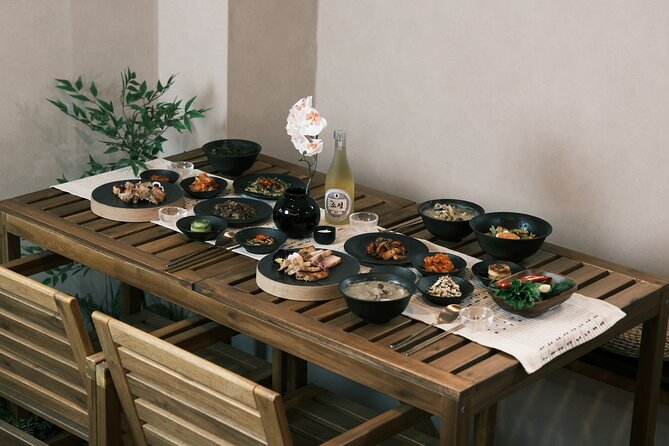
- Hanok-style studio kitchen that makes the whole class feel calm and special
- Full Korean table meal: banchan, soup/stew, main, then dessert
- Cook your own bibimbap and plate it in the way you like
- Fermented flavors with staples like doenjang and gochujang
- Chef-grilled BBQ pork belly served during the meal (you watch and taste, not grill)
- Small group size (up to 8), which matters for pacing and help
Entering the Hanok-Inspired Kitchen in Mapo-gu
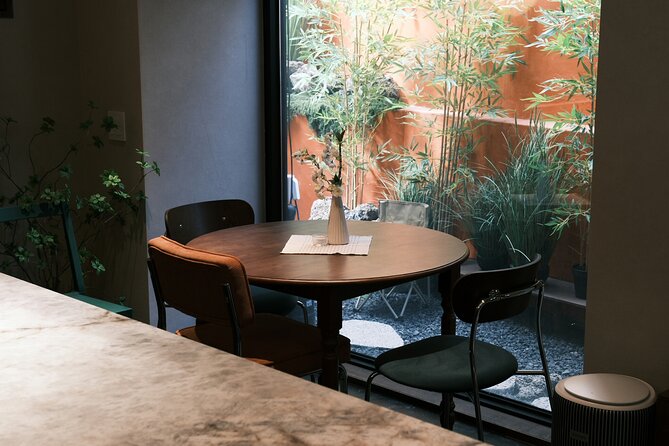
This class starts in Seoul’s Mapo-gu, at Soop Table: Korean Cooking Class, Donggyo-ro 46-gil 34, 1층. The setup is part studio, part kitchen lesson, and part dinner party. The vibe is not loud or performance-style. It’s designed for you to cook, ask questions, and focus on food.
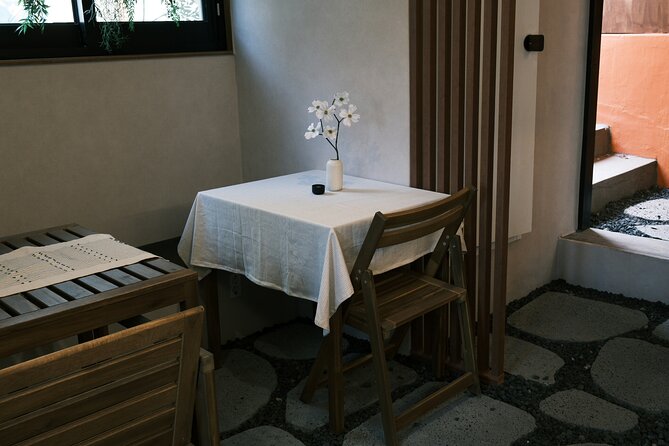
One of the first things I’d point out is the physical space. The building has a lava and slate walkway and an overall ambience that feels carefully considered rather than like a generic cooking room. It helps you settle in fast, and it makes the meal feel like a real Korean gathering instead of a timed activity.
Getting there is also straightforward. It’s near public transportation, and you use a mobile ticket. If you like to plan lightly, this one supports that.
You can also read our reviews of more cooking classes in Seoul
The Welcome Tea and the Rhythm of Korean Meals
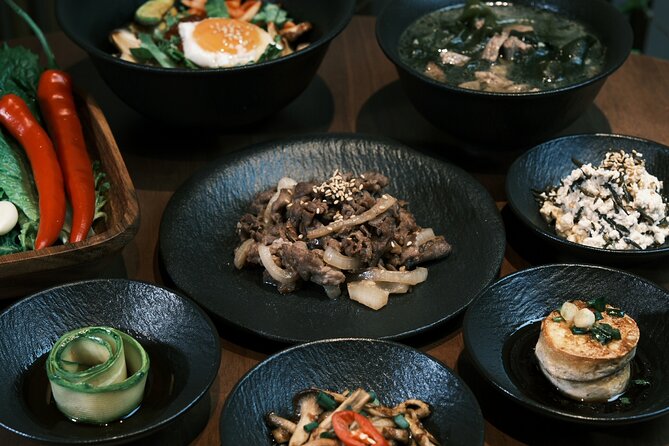
Before your cutting board comes out, you start with a seasonal Korean welcome tea. It’s a small moment, but it sets the tone. Korean meals often begin with something warm and gentle, and this class follows that same idea: get comfortable first, then start cooking.
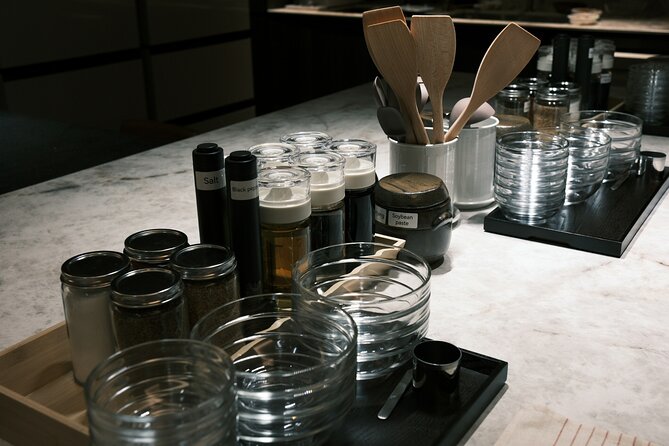
Then the class teaches you how sauces and ingredients relate to nature and season. You’ll work with flavors that feel distinctly Korean, including fermented pastes such as doenjang (soybean paste) and gochujang (red chili paste). The takeaway isn’t just taste. It’s understanding why these ingredients are so central—fermentation gives depth, and Korean cooking uses it to balance the table.
A key difference from many Western-style cooking classes: you do not end with a single dish and hope you’re full. This class is designed for a table meal, meaning the sides, soup/stew, main, and bibimbap are meant to be experienced as one combined event. That impacts pacing. It also impacts your appetite—by the time the BBQ and dessert arrive, you’ll feel like you’ve actually had dinner, not just a demo.
Cooking Four Banchan: Your Hands, Fresh Veg, Real Fermentation
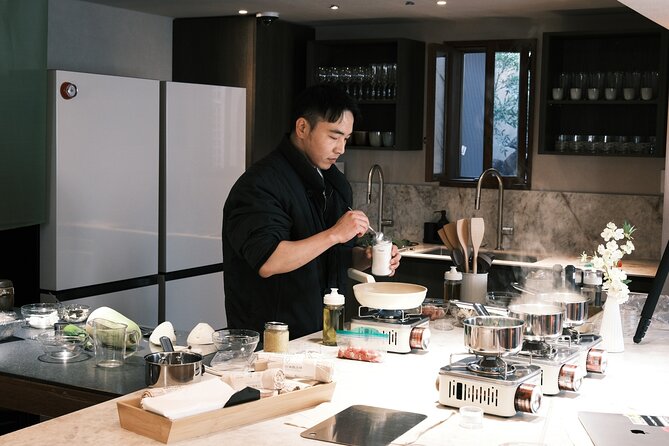
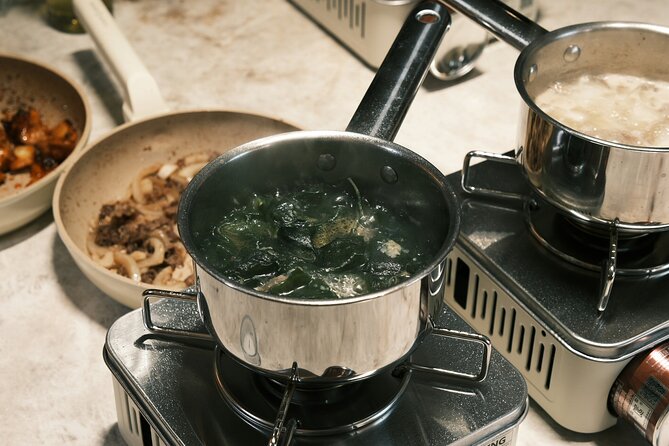
Your first real cooking block is making four kinds of Korean side dishes, using fresh vegetables and the fermented base flavors the class highlights. Banchan are not side dishes in the background. In Korea, they are the point. You eat them as part of the whole meal, and they create variety in texture, saltiness, sweetness, and heat.
In practice, what you’ll do matters: you are not watching a chef do everything. You’re preparing your own dishes, so you learn the feel of Korean cooking rather than just the end result. With limited time, the class focuses on essential techniques—how sauces behave, how to season step-by-step, and how to balance multiple dishes without overthinking.
The menu is built with seasonality in mind, so you’ll be using vegetables that match the time of year. That matters for two reasons. First, fresher produce tastes better. Second, it helps you understand Korean food as seasonal eating, not just a fixed recipe sheet.
Choosing Your Main Dish and Soup or Stew
After the banchan, you choose one main dish and one soup or stew based on your taste. This is one of the smarter parts of the format. Instead of forcing everyone into one menu, you get some control over your plate.
That choice matters because Korean meals often balance rich, hearty flavors with something lighter and comforting. The soup/stew gives you that reset between bites. And the main dish can be tailored to your preference so the meal doesn’t feel one-note.
Also, the chef is involved in the rhythm of the class. For example, your BBQ portion comes from the chef rather than being something you assemble on your own. That keeps the timing realistic, but it also means you still get a full meal without spending the entire class grilling.
Bibimbap Plating: The Difference Between Eating and Arranging
Now for the part that feels most satisfying: plating your own bibimbap beautifully. You don’t just cook ingredients and dump them into a bowl. You build the look of the dish.
Bibimbap has a structure. You’ll see how the toppings work together—vegetables, sauces, and the way fermented flavors anchor the whole bowl. Then you make it visually yours. That matters because bibimbap is a food you eat with your eyes first.
What I like about this element is that it turns learning into muscle memory. You remember proportions and textures because you handled them. And you end up with a dish that looks like something you’d order in Korea, not like a simplified cooking-class version.
You can also read our reviews of more tours and experiences in Seoul


Chef-Served BBQ Pork Belly and a Taste of Traditional Liquor
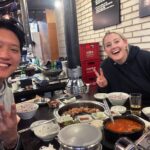
During the meal, the class includes grilled pork belly BBQ, served by the chef. You get the flavor payoff of Korean BBQ without needing to manage the grilling logistics yourself. It’s a good split: you do the hands-on cooking and plating, while the chef handles the part that needs expert timing.
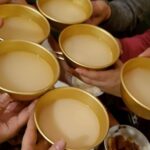
At the same time, you’ll get a taste of traditional liquor. It is just a taste, but it adds another layer to the Korean dining feel—food and drink arriving together, not separately.
A practical note: if you don’t drink alcohol, you should say so ahead of time or ask during the introduction. The data confirms the liquor taste is included, but it doesn’t spell out substitutions—so it’s worth checking what the host can do for you.
Dessert Together: Closing the Meal the Korean Way
After the savory part of the meal, you make a popular Korean dessert together. The class keeps this as a shared moment, so the energy shifts from cooking intensity to a more relaxed pace.
Dessert is often what people forget to plan for in cooking classes. Here, it’s built in. That’s why the experience feels complete. You finish with a sweet note that fits the end of a Korean table meal.
The Host Touch: Woody and Easy-to-Follow Guidance
One detail that stands out in the class vibe is the host approach. Woody reaches out to confirm dinner choices and timing. That’s useful because you are choosing your main and soup/stew, and you want that settled before you arrive.
The instruction style also gets a lot of praise. Steps are set up so you can follow along without feeling lost, even if you’ve never cooked Korean food before. I especially appreciate classes like this because they teach you the reasons behind the flavors, not just the actions.
Price and Value: Is $89 a Fair Deal in Seoul?
At $89.00 per person for about 3 hours, you’re paying for a full, hands-on Korean meal experience in a small group setting. This isn’t a quick tasting stop. You’re making four banchan, building bibimbap, preparing a main and soup/stew, plus making dessert. And the chef adds grilled pork belly BBQ and a taste of traditional liquor.
Where the value lands for me:
- You get real cooking time (not just a demonstration).
- You get a full table meal, which costs more than you’d expect if you only compare it to a single dish.
- You get a small-group format (max 8), which usually means more attention and less waiting.
If you like food experiences that leave you with skills you can actually repeat at home, this price feels reasonable. If you want a cheaper class with only one dish, you may find better deals elsewhere—but you’ll likely lose the full-meal structure that makes this one satisfying.
Who Should Book This Korean Cooking Class (and Who Should Skip It)
This is best for you if:
- You want a true Korean cooking experience in Seoul, focused on cooking and dining rather than sightseeing.
- You enjoy fermentation flavors like doenjang and gochujang and want to learn how they behave in multiple dishes.
- You like small-group instruction and want to plate something yourself, not just taste.
You might skip it if:
- Your priority is walking markets and sampling street food for hours. This is not a market tour. If you’re curious, the hosts may share trusted local markets, but the core experience stays at the studio.
- You prefer a lot of grilling work. The BBQ portion is served by the chef, and your hands-on cooking focuses on the banchan and meal components.
Should You Book: My Quick Verdict
Book it if you want a Korean meal that feels complete, made with your own hands, in a calm setting that supports learning. The Hanok-inspired kitchen, the full-table format, and the small group size make it more than a basic class.
Skip it only if you’re expecting a food crawl or a heavy sightseeing itinerary. This experience is about food work, plating, and eating together—no detours.
If you’re coming to Seoul and want one hands-on activity that teaches you how the pieces of a Korean table fit together, this is a strong choice.
FAQ
How long is the Korean cooking class?
It lasts about 3 hours.
What does the class include for food?
You’ll make four kinds of Korean side dishes, cook one main dish and one soup or stew (chosen based on your taste), plate bibimbap, enjoy grilled pork belly BBQ served by the chef, have a taste of traditional liquor, and make a popular Korean dessert together.
Is there a market tour included?
No. It is not a food tour and it does not run commercial market tours. If you’re curious, the team can share a few trusted local markets.
How many people are in the group?
The maximum group size is 8.
Where is the meeting point?
Soop Table: Korean Cooking Class, Seoul, Mapo-gu, Donggyo-ro 46-gil, 34 1층.
Do I get a mobile ticket?
Yes, it includes a mobile ticket.
What is the cancellation policy?
You can cancel for a full refund up to 24 hours in advance of the experience start time, and free cancellation is available.
What happens if weather is poor?
The experience requires good weather. If it’s canceled due to poor weather, you’ll be offered a different date or a full refund.