REVIEW · SEOUL
Small Group 7D Korea package Tour with Seoul Gyeongju Busan Jeju
Book on Viator →Operated by Here Korea Travel · Bookable on Viator
A 7-day sprint across South Korea.
I like the way this plan stacks major sights with real local experiences, from volcanic Jeju landmarks to Seoul food stops, without making you do the heavy logistics yourself. Small-group pacing (up to 15 people) also helps, because you get an English-speaking guide and time to ask questions as you move. Two big highlights for me are the DMZ day with hands-on access to the Third Tunnel and Dora Observatory, and the built-in culture + food days that go beyond checklists. The main drawback to weigh is the pace: it is a packed schedule, with lots of walking and frequent transfers, so you’ll need to keep your energy up.
This is set up as a true multi-city package: you fly within Korea to Jeju, then use the KTX for the jump back to Seoul. You’ll stay in 3–4 star hotels (6 nights), and you’ll get entrance fees and several meals already covered, so you can focus on seeing rather than counting costs. There’s also a chance to keep things personal—vegetarian options are available if you plan ahead, and the itinerary is described as flexible because it’s a private small group.
One more consideration: optional add-ons exist (like Nanta), and not everything is a freebie. You’ll still want a buffer for personal spending, and you should expect long tour days that rely on the guide’s schedule—so don’t book your own tight plans right after.
In This Review
- Key things that make this tour work
- Jeju Day 1: Beaches, Sunrise Peak, and that slow-motion island start
- Jeju Day 2: Hallasan, optical illusions, and waterfalls that hit harder than photos
- Busan Day 3: Gamcheon color, Jagalchi appetite, and a temple on the coast
- Gyeongju Day 4: UNESCO jewels, tomb complexes, and a night pond moment
- Seoul Day 5: Cooking class, Hongdae streets, and optional Nanta
- Seoul Day 6: Palaces, Jogyesa, Bukchon lanes, then Market and Tower views
- DMZ Day 7: Third Tunnel, Dora Observatory, and what ID checks mean
- Price and Logistics: Is $1,988 worth it for Seoul, Jeju, Busan, Gyeongju, and the DMZ?
- Who this tour fits best (and who should skip it)
- Should you book this 7D Korea package?
- FAQ
- Is pickup included?
- What transportation is included?
- Are meals included?
- Is the Nanta show included?
- Can you accommodate vegetarian meals?
- Do I need my passport for the DMZ?
Key things that make this tour work
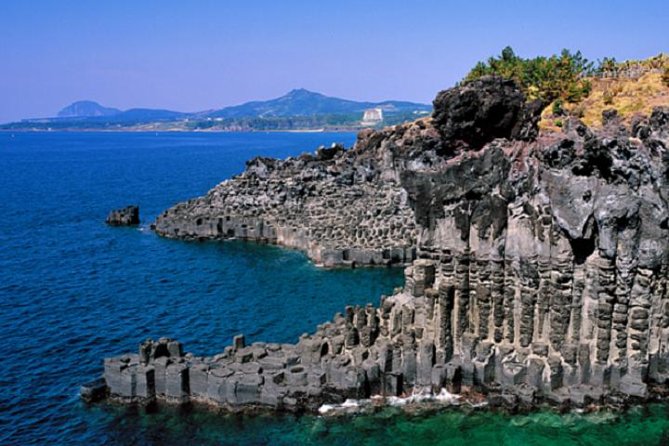
- Jeju’s volcanic highlights: Sunrise Peak, caves, waterfalls, and a folk village day that feels like a tour of the island’s geology and daily life
- Busan markets + coast temples: Jagalchi and Gukje Market energy paired with Haedong Yonggungsa by the ocean
- Silla-era stops in Gyeongju: UNESCO Bulguksa and Seokguram, plus tomb complexes and a night pond walk
- Seoul food experiences: Gwangjang Market food tour and a cooking class where you make Korean basics
- DMZ access with passport control: Third Tunnel, Dora Observatory, and civilian-zone stops with ID checks
Jeju Day 1: Beaches, Sunrise Peak, and that slow-motion island start
Day 1 starts with getting you moving quickly, even before you reach the main Jeju sights. You arrive at ICN in the morning, then get picked up and transferred to Gimpo to fly to Jeju, where your guide meets you. That structure matters because it reduces the frustrating first-day scramble that DIY trips often turn into.
Once you’re on Jeju, you’ll begin with Woljeongri Beach and then Gwangchigi Beach. These aren’t just “stand and take a photo” stops. Jeju beaches are part of the island’s personality: basalt landforms, black sand, and that coastal light that makes the whole place feel different from mainland beaches. You also get time carved out here—about an hour each—so it doesn’t feel like you’re rushing through sand and wind without a break.
Next comes Seongsan Ilchulbong, also known as Sunrise Peak. This is a tuff-cone crater formed from hydro-volcanic activity thousands of years ago, and the top views are the payoff. You’re given about an hour, which is enough to climb, catch the crater landscape, and absorb why this is one of Jeju’s signature shapes.
After that, you’ll see the seasonal flow of the island with a stop at the Seongsan Canola Flower Field and related streets (the plan notes canola and cherry-blossom timing depending on the month). Then you shift underground to Manjanggul Cave, which is formed by volcanic action over a long time. The stop is shorter (around 30 minutes), so go in expecting a focused cave visit rather than a long spelunking day.
You finish the Jeju day with Seongeup Folk Village, where you can see traditional Jeju houses and island life. That last stop helps the whole day click: you’ve looked at landforms above and below, and now you see how people built a life in that environment. It’s a good balance for a first day that could otherwise feel like only scenery.
You can also read our reviews of more tours and experiences in Seoul.

Jeju Day 2: Hallasan, optical illusions, and waterfalls that hit harder than photos
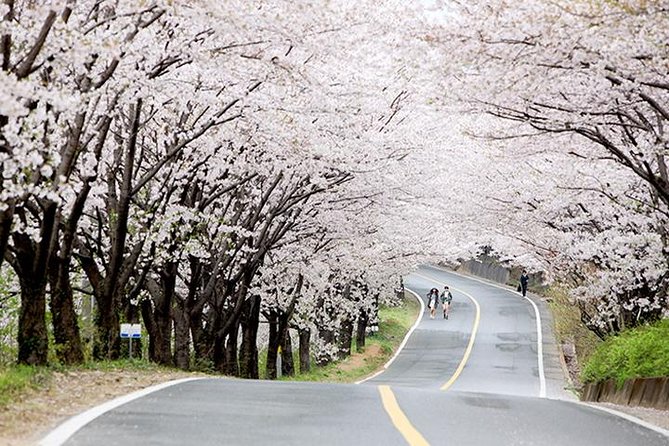
Jeju continues on Day 2 with a cherry-blossom-oriented start at Jeju National University, Ara Campus (the timing notes specific blossom windows). Even if you’re not traveling during peak petals, this type of stop is valuable because it’s tied to a real place rather than a random viewpoint. You get about an hour here, which makes it an easy win.
Right after, the itinerary includes a stop for a playful road phenomenon—where objects appear to roll uphill. It’s described as an optical illusion, and that’s exactly the kind of thing that makes a trip fun without taking a huge chunk of time.
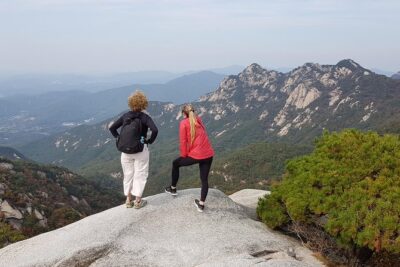
Then you head into Hallasan National Park, with Hallasan noted as South Korea’s highest mountain at 1,950 meters. The plan frames it as a dormant volcano and mentions geological interest. You’ll get about two hours here, which is ideal if you want a park experience without committing to a full-day hike.
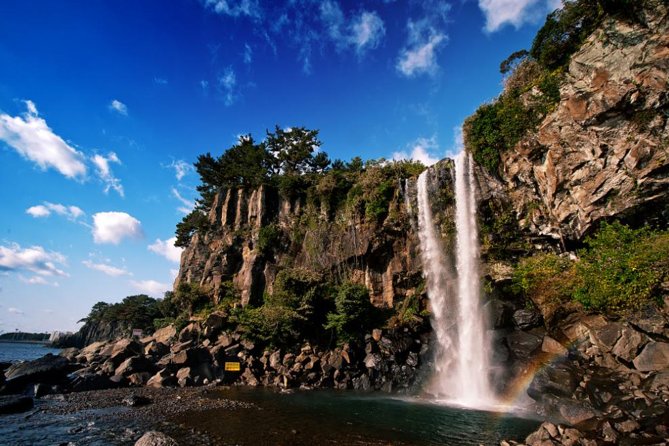
The next sequence includes coastal rock formations, followed by waterfall stops at Cheonjiyeon Falls and Jeongbang Waterfall. Jeongbang is specifically called out as the one that drops directly into the ocean. That matters because it’s a rare geographic setup, and it’s the kind of detail that makes you understand why certain destinations earn their reputations.
Your Day 2 also includes ARTE MUSEUM JEJU, described as an art space focused on light and video. This is a useful contrast to outdoor days. On a multi-island package like this, I always look for one “your feet can rest” activity after enough walking. About an hour here fits that role nicely.
Between the park, the water, and the art stop, Day 2 feels like the island’s three moods: dramatic nature, mythology-like legends tied to waterfalls, and a modern creative reset before you head onward.
Busan Day 3: Gamcheon color, Jagalchi appetite, and a temple on the coast
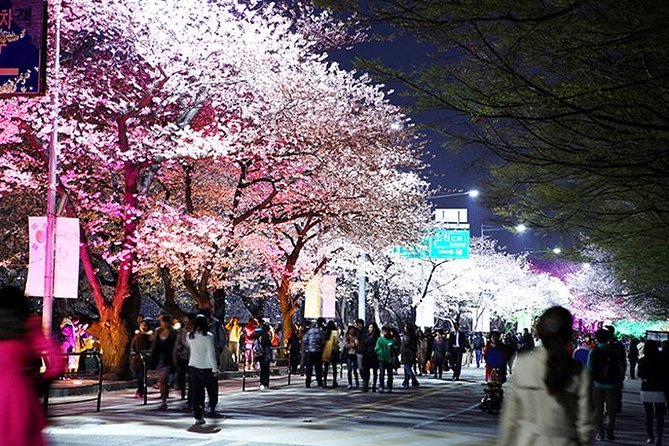
On Day 3 you move from Jeju to Busan territory in the itinerary flow, and the first stop is Haeundae Dalmaji-gil Road. It’s positioned as a cherry-blossom site along a mountain-slope route with sea views nearby. Even in non-blossom seasons, this kind of street layout gives you an easy coastal-to-city visual progression without heavy effort.
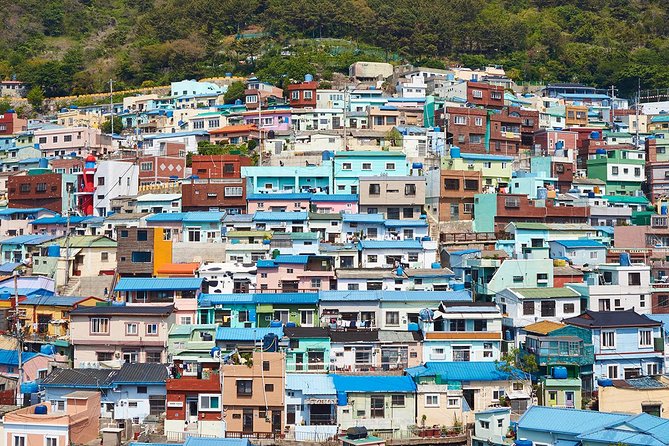
Next is Gamcheon Culture Village, built as tiered housing for war refugees and later developed by the city. The staircase-style neighborhoods are the point. You’ll get about an hour, which is the right amount for moving through alleys, taking photos, and not getting trapped in “one more lane” syndrome.
Food and market time shows up strongly with Jagalchi Market, famous for fresh fish and people eating right there. It’s about an hour and it’s the right length to watch the action, try what you’re comfortable trying, and still keep moving. Then the plan adds BIFF Square, also tied to Busan’s film festival scene, plus street food energy in that area.
From there you go to Gukje Market, set up by post-war refugees in Busan. It’s a shopping and browsing stop, but the value here is context: it’s not only trendy—it’s tied to how the city rebuilt itself. After that, you swing back to scenery with Haedong Yonggungsa, the coastal temple the plan calls out as a must-visit in Busan. Expect ocean views paired with temple atmosphere, and then a finish at Haeundae Blue Line Park, which includes a train ride with seaside scenery.
If your ideal vacation includes both taste and views, this day delivers. The “watch people eat” market experience plus the “ocean temple” stop gives you two different kinds of Busan energy in one flow.
Gyeongju Day 4: UNESCO jewels, tomb complexes, and a night pond moment
Day 4 is your Silla-era deep cut, centered around Gyeongju. You start with Bulguksa Temple, described as a UNESCO World Heritage and a historic jewel of the Silla capital. You’ll get about an hour—enough to understand why this is famous and to see the key structures without feeling rushed into a gift-shop finish.
Then you visit Seokguram, also UNESCO-listed in the same general heritage cluster, and noted as a stone temple grotto. The plan highlights how it has been preserved for over 1,200 years because of its ventilation-friendly design. This is the type of stop where the timing matters. In an organized schedule, you can actually look closely instead of sprinting between locations.
Next up is Bomunho Lake Tourism Complex with cherry blossoms in April (the plan notes pink petals covering walkways in that season). Then you head to Daereungwon Tomb Complex, where you’ll see large tomb mounds shaped like rounded hills, plus an option to enter Cheonmachong Tomb. That mix—look from outside, then step into a tomb if conditions allow—helps the day feel physical, not only observational.
You also stop at Gyeongju Gyochon Traditional Village for nobleman-style homes, and then you end the day with Donggung Palace and Wolji Pond as a night-view location. This is one of those scheduling choices I appreciate: finishing your Gyeongju highlights with a pond-side night atmosphere makes the entire day feel like a story with a proper ending.
The itinerary then includes a major transfer: KTX to Seoul. It notes about two hours for the train, and KTX is a big deal in a 7-day package because it keeps you from losing a day to slow travel. You arrive back in Seoul already set for the final stretch.
Seoul Day 5: Cooking class, Hongdae streets, and optional Nanta
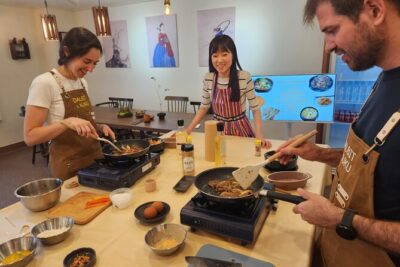
Seoul Day 5 starts with a cooking class at 오미 요리연구소 (Omi Cooking Institute / Omie Yori research institute). The menu is listed as three Korean dishes: bibimbab, traditional pancake, and soup. It also notes that menu can change depending on season, so treat this as hands-on learning rather than a fixed recipe you can memorize at home.
This class is one of the best value pieces in the whole trip. You’re not just eating Korean food; you’re learning what makes it work. And for a short, packed itinerary, a cooking class can act like a reset. Your brain switches from “look and move” to “make and taste.”
After class, the plan takes you to Hongdae, the youth street known for shopping, food, and street performances. You get about an hour and that fits browsing and quick bites without making it a half-day detour.
Then there’s an optional show: Myeongdong NANTA Theater, listed as a popular non-verbal performance. It’s optional, and the plan includes seat-price tiers in USD (S, P, V). Optional doesn’t mean unimportant, though. If you like comedy with audience energy and you don’t want language barriers, this can be a fun evening add-on.


Seoul Day 6: Palaces, Jogyesa, Bukchon lanes, then Market and Tower views
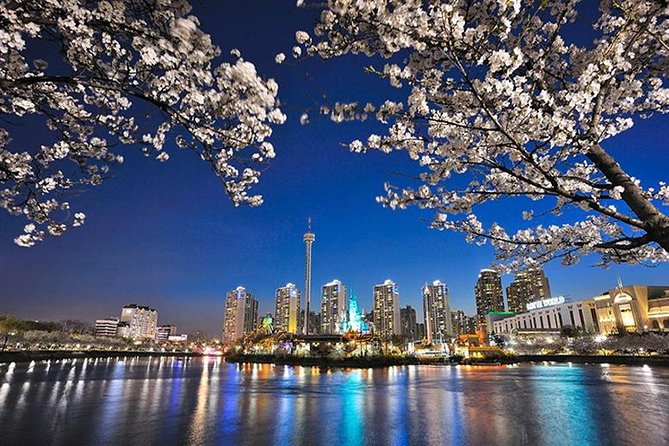
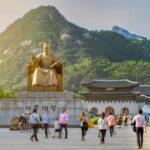
Day 6 is a classic Seoul mix of grand structures plus neighborhood atmosphere. You start at Yeouido Park, tied to a cherry blossom festival in spring. Next comes Gyeongbokgung Palace, described as the first and largest Joseon Dynasty palace built in 1395, located by Gwanghwamun Square.
From there you visit Jogyesa Temple, the head temple of Korean Buddhism. Even though it’s in the city center and relatively compact, it’s described as active year-round with lectures, events, and rituals. That’s a nice balance against palace grandeur: you get a spiritual Seoul beside a political Seoul.
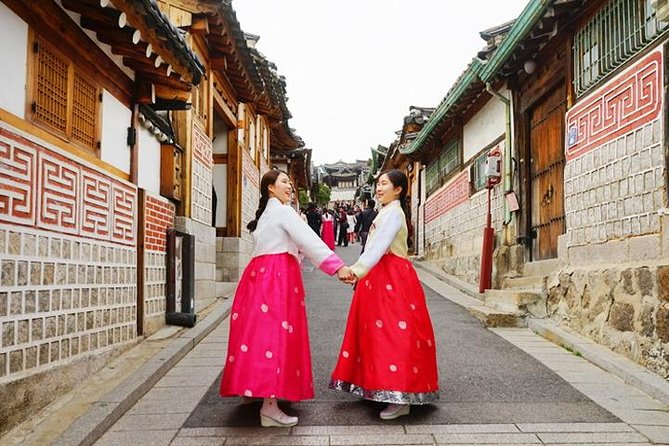
You then stop at Bukchon Hanok Village, the area of traditional hanoks dating back to the Joseon Dynasty. The itinerary frames it as a labyrinth of closely packed traditional homes. This is another place where timing matters. If you’re there while the day is still organized, it’s easier to enjoy the streets without turning it into a photo-challenge that makes you miss details.
After that, you head into Gwangjang Market, explicitly described as a food tour location. This is one of the most practical stops on the whole trip. Markets let you eat the country’s everyday flavors, and in a guided format, you avoid the awkward guesswork of what to order.
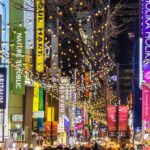
You finish with N Seoul Tower for a 360-degree view and then Myeongdong Shopping Street for shopping and snacks. Finally, you end at Insadong, known for art and antiques, tea cafes, traditional sweets, and souvenir-style browsing. Together, this day gives you both “Seoul from above” and “Seoul up close.”
DMZ Day 7: Third Tunnel, Dora Observatory, and what ID checks mean
Day 7 is your DMZ day, and it’s the most “real-world” feeling segment of the entire package. The plan starts at Imjingak Pyeonghoa-Nuri Park. This is where you buy DMZ shuttle bus tickets, and it includes an important note: you’ll need your passports because there’s an ID check point when you enter the civilian control zone.
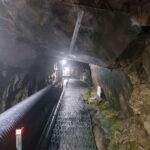
Then you visit The Third Tunnel, described as the beginning of the DMZ tour. You’ll pass the south limit line to reach the site, and you can go inside the actual tunnel. That inside access is a big part of why this stop matters; it turns maps and headlines into something you can stand in.
Next is Dora Observatory, noted as one of the northern-most observatories open to the public in South Korea. The plan says you can see North Korea with your naked eyes, and the key word here is naked eyes—expect you’ll stare for a while, and expect it to be emotionally intense.
You end with Tongilchonan-gil, a civilian control zone area with souvenirs and local products under curfew conditions. Finally, you do Gamaksan Chulleong Bridge, described as part of a Korean War battlefield that now looks like nature scenery. It includes only a short hike (about 10 minutes) and a suspension bridge viewpoint, giving your DMZ day one last grounded, outdoorsy moment.
DMZ days require patience and seriousness. This itinerary builds that in: it’s not only “go see and leave,” it’s structured with transport, ID checks, and multiple stops so you get the sense of how the area is controlled and experienced.
Price and Logistics: Is $1,988 worth it for Seoul, Jeju, Busan, Gyeongju, and the DMZ?
At $1,988 per person for 7 days, this isn’t a budget deal. But for what you’re getting, it can be fair value—especially if you’d otherwise spend your time piecing together transport, hotels, and guided access.
Here’s the practical math as you should think about it: you’re paying for English-speaking guide coverage, entrance fees, an AC tour vehicle, and big-ticket transportation moves—domestic flights to Jeju and KTX back to Seoul. You also get 6 nights in 3–4 star hotels and a set of meals (breakfast included four times, lunch seven times, with some dinners listed as included depending on the itinerary). When a package covers those friction points, it often costs less than doing it yourself once you add the time and complexity.
The group size cap of 15 travelers is also part of the value. It’s small enough that you can ask questions, but large enough that the vehicle and planning are efficient. If you’re the type of traveler who wants highlights plus guidance (rather than constant research), that’s where this earns its price.
The main reason you might not love it is also price-adjacent: with a packed schedule, you might feel like you’re always on the move. If you crave slow travel, long meals, and zero structure, you may find you want more free time between stops.
Who this tour fits best (and who should skip it)
This tour fits best if you want a guided first visit to South Korea covering the “name cities” without turning your trip into a spreadsheet. It also suits you if you like hands-on experiences like the bibimbab + pancake + soup cooking class, plus guided context at palaces, markets, and heritage sites.
It may be less ideal if:
- you want mostly downtime in each city
- you prefer choosing restaurants totally independently every night
- you get worn down by daily schedules that include multiple stops
If you’re traveling as a couple, a small family, or a group of friends who want shared guidance, the small-group structure is a plus.
Should you book this 7D Korea package?
I’d book this if you’re looking for a structured sampler that still includes meaningful experiences: Jeju’s volcanic sights, Busan’s markets and coastal temple, Gyeongju’s Silla treasures, Seoul’s food-and-palace day, and a DMZ segment that includes passport-controlled access points. The biggest strength is that it reduces planning stress while still giving you real stops, not only scenic driving.
I’d think twice if you have low tolerance for long days, lots of walking, and rapid city-to-city transitions. This is a great “see a lot” trip, not a lazy one.
If you go, do it with one mindset: treat it like a guided highlights film, then add your own unstructured time where you land at the end of the itinerary.
FAQ
Is pickup included?
The tour offers pickup, and it also describes airport pickup after you arrive at ICN in the morning on Day 1.
What transportation is included?
You’ll use a domestic flight to Jeju and a KTX bullet train back to Seoul. An AC tour vehicle is included as well.
Are meals included?
Breakfast is included 4 times, and lunch is included 7 times as stated in the tour information. Some dinners are listed as included, so you’ll want to check the exact itinerary meals for your departure.
Is the Nanta show included?
Nanta at Myeongdong NANTA Theater is optional.
Can you accommodate vegetarian meals?
A vegetarian option is available, and you should advise the provider at booking.
Do I need my passport for the DMZ?
Yes. The DMZ day includes an ID check in the civilian control zone, and the tour notes you need your passport.