REVIEW · GHOST & DARK HISTORY TOURS
Seoul moonlight walking tour with local historian
Book on Viator →Operated by SeoulDude's Walking tours · Bookable on Viator
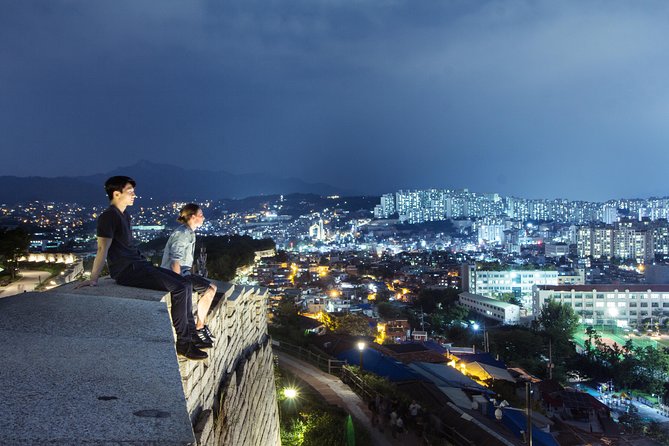
Seoul looks different after dark. I like the night views from Naksan Park and the Hanyang City Wall, and I like how the guide ties everyday student and neighborhood life into the story. The only real catch is stairs on a hill, so bring comfy shoes and don’t plan this if you hate walking uphill.
This is a 2-hour, small-group night walk (up to 20 people) from Hyehwa, run by SeoulDude’s Walking tours. Guides vary, but the best-rated experiences often mention humor and lots of photo-stops, with names like Jessica, Ethan, Leah, June, and Smin showing up in standout reviews.
In This Review
- Key highlights I’d plan around
- How this Seoul moonlight walk feels at night
- Price and what you actually get for $31.98
- Where you meet and how the timing works
- The route stop-by-stop: what each place adds
- Stop 1: Seoul University Hospital Medical Museum
- Stop 2: Marronnier Park for live theater energy
- Stop 3: Naksan Park and Seoul’s capital story
- Stop 4: Ihwa Mural Village and the hillside past
- Stop 5: Seoul City Wall (Hanyang City Wall) for the night-view payoff
- The stairs issue: manageable, but it’s still real walking
- Guides, humor, and what to expect from the storytelling
- What makes this tour different from a standard sightseeing walk
- Small-group size and photo time: why it matters
- Optional food after the tour
- Weather matters more than you’d think
- Should you book this Seoul moonlight tour?
- FAQ
- FAQ
- How long is the Seoul moonlight walking tour?
- Where do I meet for the tour, and where does it end?
- Do I need to buy entrance tickets for the stops?
- Is the ticket a mobile ticket?
- What’s included in the tour price?
- Is dinner included?
- How many people are in a group?
- Is this tour okay for most people to join?
- What if the weather is bad?
- Can I cancel and get a full refund?
Key highlights I’d plan around
- Hyehwa start point at Daehak-ro, then a gentle build-up toward the hilltop views
- Ihwa Mural Village + the story behind it, with a focus on hillside homes and changing neighborhoods
- Naksan Park history and capital clues that make the city feel less random
- Hanyang City Wall night views, including the wall segment people associate with popular culture spots
- Free admissions for every listed stop, so you pay for the tour, not entrance fees
- Practical tips from the field, like charging your phone and bringing bug spray
How this Seoul moonlight walk feels at night
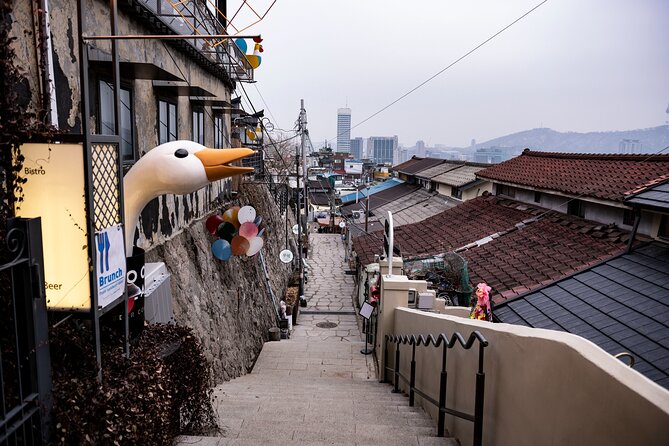
This isn’t a run-of-the-mill big-city photo sprint. The pace is designed for a night stroll with explanations as you move, so you get why each place matters—not just what it looks like under streetlights.
You start in Hyehwa, a part of Seoul that already feels like a mix of student energy and artsy late-night life. From there, the route climbs toward viewpoints where the city lights open up and everything suddenly makes sense.
You can also read our reviews of more walking tours in Seoul
Price and what you actually get for $31.98
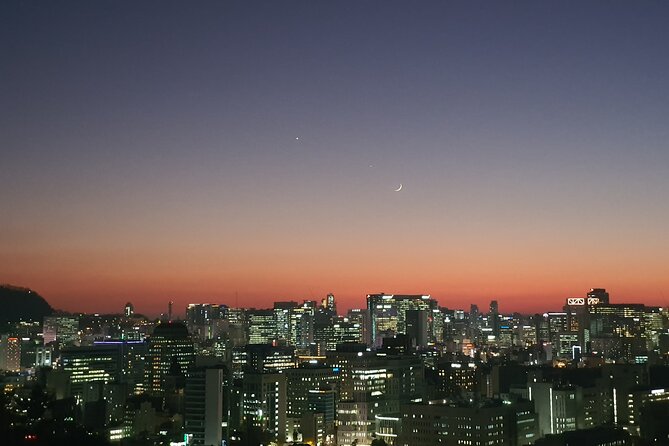
At around $31.98 per person for about 2 hours, the value comes from three things. First, you get a local historian-style guide doing the connecting-the-dots work between history and current street life. Second, the tour includes free entry for every listed stop, so you don’t get hit with surprise admission fees mid-walk. Third, it saves you from figuring out a hill route by yourself at night.
If you like your sightseeing to be useful (stories, context, and a clear reason to walk), this price feels fair. If you only want landmark-hopping with zero explanations, you might decide it’s more than you need.
Where you meet and how the timing works
You meet at Hyehwa 120 Daehak-ro (Jongno District), and the tour ends back at the same meeting point. That matters because a night walk can be easier when you don’t have to negotiate transfers at the end.
The tour runs about 2 hours, and it’s built as a sequence of short stops: most are around 5–20 minutes. That keeps you moving, but it also means you’ll want to be ready to stand, walk, and climb at a steady pace.
The route stop-by-stop: what each place adds
Stop 1: Seoul University Hospital Medical Museum
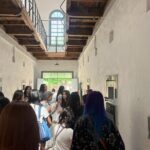
You begin at the Seoul University Hospital Medical Museum, described as the highest place students can reach in the system. In practice, what makes this stop valuable is how it reframes education as something public and cultural—not just a private career path.
You spend about 10 minutes here, and the admission is listed as free. It’s a short intro that sets the tone: the tour isn’t only about streets and views, it’s about how people live and aim higher in Korean society.





Stop 2: Marronnier Park for live theater energy
Next is Marronnier Park, a cultural spot known for live theaters and live shows. This is a quick 5-minute pause, but it’s the kind of stop that helps you read the neighborhood at night—who’s out, what kind of entertainment is happening, and how arts fit into daily life.
Admission is also listed as free. Think of this as your mood-setter before the climb starts.
Stop 3: Naksan Park and Seoul’s capital story
Then you reach Naksan Park, where the tour turns toward the question of how Seoul’s capital position developed over time. You get about 10 minutes here, and the stop is framed as a way to understand changes in the city’s setup and priorities.
This part works well if you enjoy history that connects to geography. You’re not just hearing facts—you’re seeing how the city’s location shaped what rose where, and why the hill feeling matters.
Stop 4: Ihwa Mural Village and the hillside past
Ihwa Mural Village is the big creative visual moment, but the tour emphasis is more human than artsy. It’s described as a mural village tied to unwealthy residents, with many hillside homes historically built on steep ground.
You’ll spend about 20 minutes here, and admission is listed as free. The mural scenery makes it easy to photograph, but the story behind it gives the place weight: it’s a reminder that neighborhoods aren’t born as attractions—they often change through pressure, hardship, and reinvention.
If you hate crowds at photo spots, go slow and don’t expect a quiet experience. This stop is one of the most visually popular moments in the walk.
Stop 5: Seoul City Wall (Hanyang City Wall) for the night-view payoff
Finally, you reach the Seoul City Wall, specifically framed as the Hanyang City Wall, with romantic nighttime atmosphere and major viewpoints. The description also points to how the wall area shows up in popular culture, which helps explain why people talk about it even if they’ve never studied architecture.
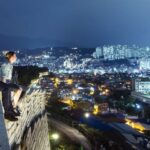
This is where the “moonlight” part earns its name. You get about 20 minutes at the wall area, with free admission listed. By now you’ve climbed, and the city opens up below you.
It’s also where a lot of that review advice becomes real: charge your phone before you go, wear shoes you trust on stairs, and take a minute to stand still so the light show fully lands.
The stairs issue: manageable, but it’s still real walking
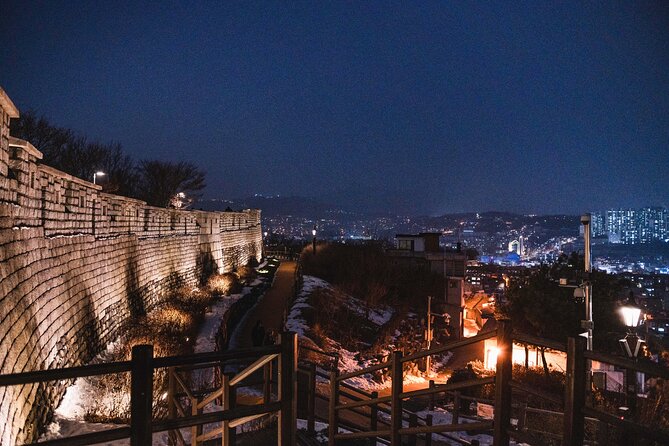
The tour is labeled as something most travelers can participate in, but the reviews are consistent about one thing: there are stairs and you’ll be walking uphill. One review called it worth it but still reminded people to be ready.
Here’s my practical take: if you’re comfortable walking 10–20 minutes at a time with uneven footing, you’re likely fine. If you’re dealing with knee issues, you should think twice, because the climbs and descents are part of why the views work.
Tip from the reviews that’s worth listening to: bring bug spray (especially if you go in warmer months) and don’t rely on “I’ll just take a quick walk” logic—this is an evening workout disguised as sightseeing.
Guides, humor, and what to expect from the storytelling
Local guide quality is a huge part of why this tour earns a 5/5 rating across hundreds of reviews. Many of the standout mentions include guides like Jessica, Ethan, Leah, June, and Smin, with repeated praise for mixing history with fun conversation and keeping the group moving at an easy pace.
That said, one less-perfect review noted English and storytelling issues with a guide. So if you’re very particular about narration style, keep your expectations flexible and treat the tour as a guided walk where visuals do some of the work too.
No matter who you get, the structure is consistent: short stops, quick cultural context, and time at the viewpoints. That formula helps you leave feeling like you learned something—even if your guide’s style is different than you hoped.
What makes this tour different from a standard sightseeing walk
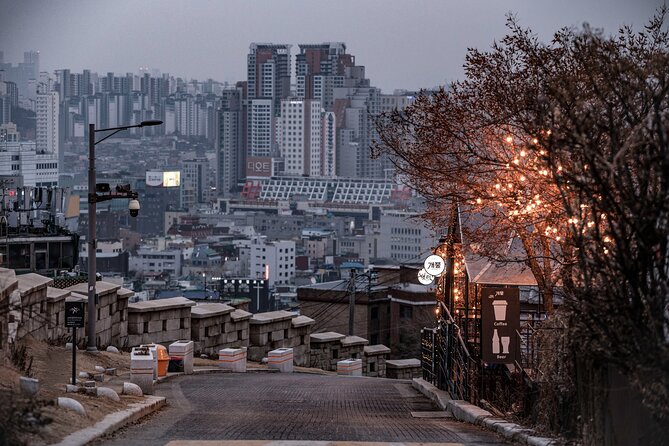
The biggest difference is the “why” behind the route. You’re not just walking from point A to B to C. You’re reading Seoul in layers: education culture at the museum, entertainment energy at Marronnier Park, capital-and-geography clues at Naksan, then the story behind the hillside murals.
That blend is exactly what makes a night tour worth it. In daylight, you can see buildings. At night, you also see habits: how people gather, how neighborhoods glow, and how the city’s layout changes the feeling of moving through it.
Small-group size and photo time: why it matters
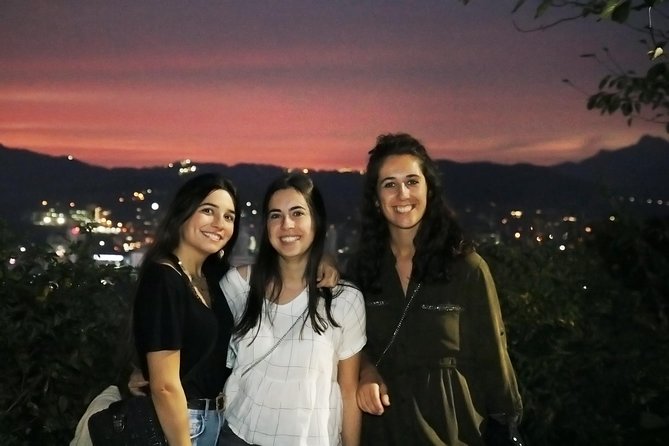
With a maximum of 20 travelers, the pace stays human. You’re not swallowed by a huge group, and it’s easier to ask questions or get pointed to the best angles for city light photos.
You’ll also want a charged phone because the top viewpoints are a major part of the experience. One of the most repeated practical tips is exactly that: plan for photos, not just walking.
Optional food after the tour
The tour includes an optional food session after the walk, but meals are not included in the price. This can be handy if you want a low-effort plan for what to eat next while your guide is still nearby with local recommendations.
Just don’t count on it as a built-in meal. Budget extra if you’re hungry right after the wall viewpoint.
Weather matters more than you’d think
This experience requires good weather. If it gets canceled due to poor weather, you’ll be offered a different date or a full refund. Night walks also change quickly with rain because stairs and slick ground can turn annoying fast.
If the forecast looks iffy, check again on the day. If skies are clear and the ground is dry, this tour has a real “standstill and stare” payoff at the city wall.
Should you book this Seoul moonlight tour?
Book it if you’re a first-timer or a return visitor who wants a Seoul that feels lived-in, not just photographed. It’s especially good for people who like a clear route with short context stops and a big viewpoint finish.
Skip it (or plan carefully) if uphill stairs are a problem for you, or if you hate walking at night on uneven paths. Also, if you only want passive sightseeing with minimal explanation, you may find the structure a bit more than you need.
FAQ
FAQ
How long is the Seoul moonlight walking tour?
The tour lasts about 2 hours.
Where do I meet for the tour, and where does it end?
You meet at Hyehwa 120 Daehak-ro in Jongno District, Seoul, and the tour ends back at the same meeting point.
Do I need to buy entrance tickets for the stops?
No. The itinerary lists admission tickets as free for each stop.
Is the ticket a mobile ticket?
Yes, it uses a mobile ticket.
What’s included in the tour price?
The tour includes the guided walking experience. No special supply is needed for the walk.
Is dinner included?
No. There is an optional food session after the tour, and its fee is not included.
How many people are in a group?
The tour has a maximum of 20 travelers.
Is this tour okay for most people to join?
It says most travelers can participate, but the walk includes stairs as part of the route.
What if the weather is bad?
The experience requires good weather. If canceled due to poor weather, you’ll be offered a different date or a full refund.
Can I cancel and get a full refund?
Yes. You can cancel up to 24 hours in advance for a full refund.