REVIEW · SEOUL CITY & PRIVATE TOURS
Private Seoul City Tour
Book on Viator →Operated by Top Korea Tour · Bookable on Viator
A private Seoul day like this makes the city click fast. I love the hotel pickup and the fact that you’re not wrestling Seoul transit while carrying a daypack and trying to see big sights on time. It strings together palace history, traditional neighborhoods, and real local shopping into one logical flow.
I also like the custom-made itinerary part. That flexibility matters, especially when timing and closed days can mess with a fixed plan. Guides like Juno and Miae are repeatedly praised for matching the pace to your group and keeping the day on track.
One thing to consider: lunch isn’t listed as included, so you’ll want a budget for your meal stop and a plan if you have dietary needs.
In This Review
- Key things to know
- Why this private route works for first-timers
- Price and value: what $210 actually buys you
- Hotel pickup, the 9:30 start, and how the day flows
- Gyeongbokgung Palace and the changing of the guard moment
- Tuesday swap: Changdeokgung instead of Gyeongbokgung
- Bukchon Hanok Village: 1930s traditional houses and street-level charm
- Jogyesa Temple: downtown Buddhism without the long trek
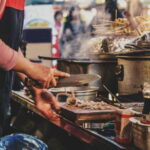
- Gwangjang Market: where the local-life part becomes real
- Naksan Park and the Seoul wall viewpoint finale
- Lunch, snacks, and what you still need to budget
- Guides matter: Miae and Juno’s style and why it counts
- Who should book this private Seoul city tour
- Should you book this private Seoul city tour?
- FAQ
- How long is the Private Seoul City Tour?
- What time does the tour start?
- Does the tour include hotel pickup and drop-off?
- Are entrance fees included?
- Is lunch included?
- What happens if it’s a Tuesday?
Key things to know
- Hotel pickup + private air-conditioned transport: you skip the stress of getting from one end of the city to the other.
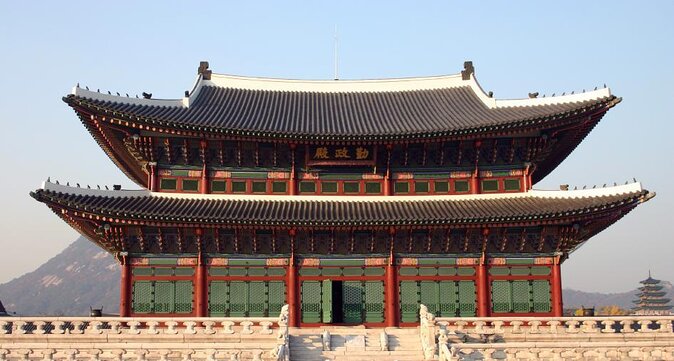
- One big palace moment with changing guard: Gyeongbokgung is the focus, with a Tuesday swap to Changdeokgung.
- Old-town atmosphere without constant paid entry fees: Bukchon, Jogyesa, Gwangjang, and Naksan are free stops.
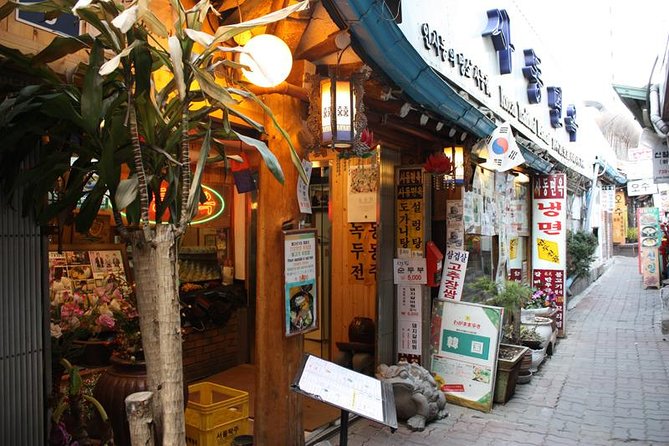
- Gwangjang Market is the food-and-local-life section: you’ll have time to graze and shop like locals do.
- Seoul wall views from Naksan Park: a calmer viewpoint finish with scenery over the old fortification route.
Why this private route works for first-timers
Seoul can feel like two different cities at once: huge modern avenues, then suddenly a calm pocket of old architecture, a temple courtyard, or a market where everyone seems to know what to order. This tour is built to help you connect those dots in a single day.
The value isn’t just the stops. It’s the order and pacing: a palace in the morning, traditional neighborhoods mid-day, a market to turn history into something you can taste, and a viewpoint to wrap it up. You also get practical perks that matter when you’re on a clock—bottled water and an air-conditioned vehicle that keeps you moving.
I’ll be honest: what you’re really buying here is momentum. Instead of spending your morning figuring out train routes, transfers, and walking loops, you spend it seeing Seoul’s highlights with someone steering you.
You can also read our reviews of more city tours in Seoul
Price and value: what $210 actually buys you
$210 per person is not a budget tour. But it can be good value if you care about comfort and time.
Here’s what that price covers, based on the tour details:
- Hotel pickup and drop-off
- Private transportation in an air-conditioned minivan
- A driver guide when the group is larger than 8 (otherwise it’s handled as a private tour setup)
- Bottled water
- Admission for the main palace stop
- A 1-day itinerary built around efficient movement
The “value math” gets even better if you’re not traveling solo. Private tours often cost more than group options, but splitting the vehicle cost across a small party can feel more reasonable than it sounds at first glance—especially when you add up what you’d pay for admission, transit tickets, and time.
The main missing piece is that lunch isn’t included. That doesn’t make the tour bad; it just means you’ll want to plan for a meal (and maybe dessert) on your own terms.
Hotel pickup, the 9:30 start, and how the day flows
The tour begins at 9:30 am with pickup. That early start is helpful. You beat some of the crowds and you’re in position for the palace timing that matters most for the morning segment.
You’re in motion for most of the day, but the schedule is realistic: each stop has a set window, and you aren’t expected to run across the city between every photo. Bukchon Hanok Village and Naksan Park are both time-friendly—enough walking to feel the place, but not so much that your legs turn into noodles by mid-afternoon.
One practical tip: wear comfortable shoes. Palace grounds, hanok alleys, and viewpoints all involve uneven surfaces and stairs. The tour notes a moderate physical fitness level, so if you know you need frequent breaks, tell your guide early so they can set a pace that works.
Gyeongbokgung Palace and the changing of the guard moment
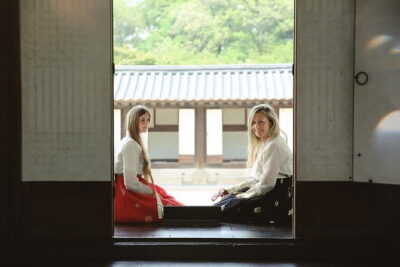
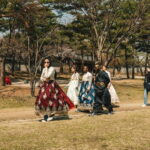
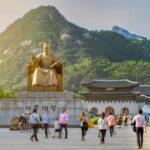
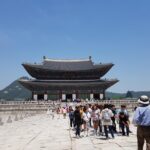
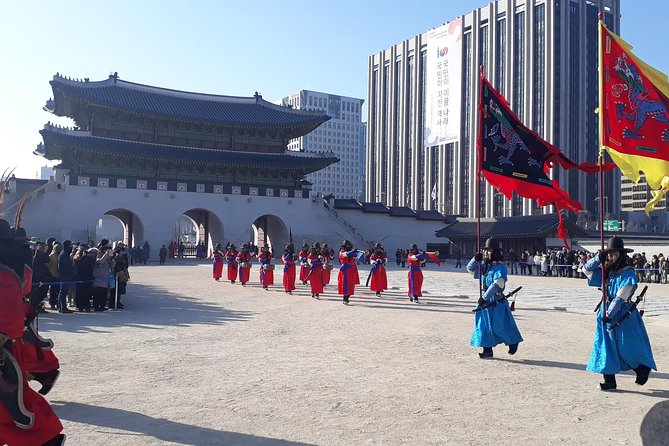
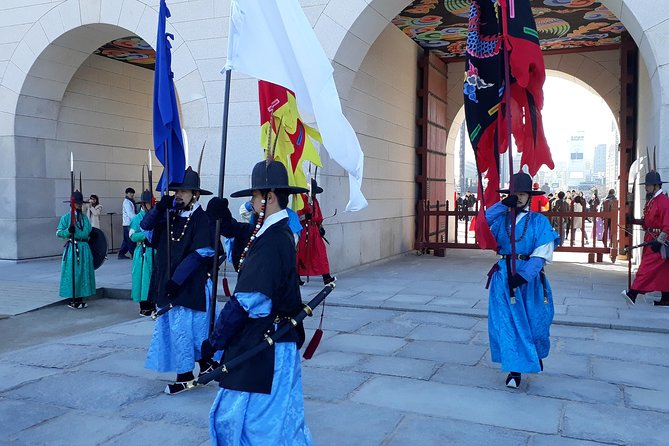
The day’s centerpiece is Gyeongbokgung Palace, Seoul’s main royal palace and the setting for the changing of the guard ceremony. The palace stop is planned for 1 hour 10 minutes, and admission is included.
Why this matters: this is the one part of Seoul that many first-timers recognize instantly from photos, but live it hits differently. The ceremony gives you a clear narrative hook—this isn’t just pretty architecture. It’s a performance tied to royal tradition, and your guide can frame what you’re seeing so it’s more than spectacle.
Practical note: palace visits can involve queues and walking from one viewpoint to another. If you’re sensitive to standing for periods, go in with the expectation that the ceremony is worth it—but you may want a slightly slower pace around the edges.
Also, don’t assume every photo spot will be empty. Build in time for quick shots, then step back so you can enjoy the atmosphere instead of getting stuck behind elbows.
Tuesday swap: Changdeokgung instead of Gyeongbokgung
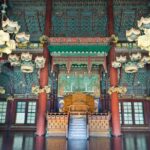
There’s a simple scheduling reality to know: Tuesday is closed for Gyeongbokgung in this tour plan, so the itinerary swaps to Changdeokgung Palace instead. Changdeokgung is listed as a UNESCO World Heritage Site, and it’s a smart alternative when the main palace isn’t an option.
The best way to think about the swap: you still get the morning palace experience and a guided explanation of old royal life, but the setting changes. If you’re traveling on a Tuesday, this is actually a good deal. You keep the palace focus rather than losing time to a last-minute reroute.
If your trip is limited to one day and you’re coming specifically for Gyeongbokgung, check your day of week before you book. On weekdays other than Tuesday, the planned focus remains Gyeongbokgung and the ceremony.
You can also read our reviews of more private tours in Seoul

Bukchon Hanok Village: 1930s traditional houses and street-level charm
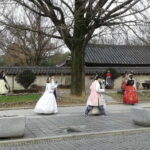
Next up is Bukchon Hanok Village, with 40 minutes on the clock. Here’s the detail I love: it’s described as city-style traditional houses built in the 1930s. That matters, because it keeps your expectations realistic. This isn’t a single restored palace district. It’s a neighborhood texture—small streets, homes, and viewpoints where the past is present at street level.
What to do with your time:
- Take a slow walk through the lanes and look for small framing shots between houses.
- Watch for how the architecture sits against modern Seoul around it.
- If your group likes photos, you’ll likely want your guide nearby to help you find good angles quickly.
The tour notes admission here is free, which is great. You’ll spend less time justifying costs and more time enjoying the place.
A small drawback: like any popular hanok area, it can be crowded depending on the day and time. That’s where having a guide helps—someone who knows where to move next can save you from walking in circles.
Jogyesa Temple: downtown Buddhism without the long trek
After the hanok streets, you switch to a quieter spiritual pause at Jogyesa Temple. It’s planned for 30 minutes, with entry free. The standout fact here is that Jogyesa is the head temple for the Jogye order, which is described as the largest Buddhism in Korea.
This stop works because it balances the day. You’ve gone from royal drama and old-town lanes to a living religious site in the middle of the city. The layout is typically compact enough to see key spaces without feeling like you need half a day.
What I’d suggest: keep this stop un-rushed. Even if you’re not deeply religious, take a moment in the courtyard areas. It’s one of the places where Seoul slows down, and your other stops make more sense after you catch that reset.
Gwangjang Market: where the local-life part becomes real
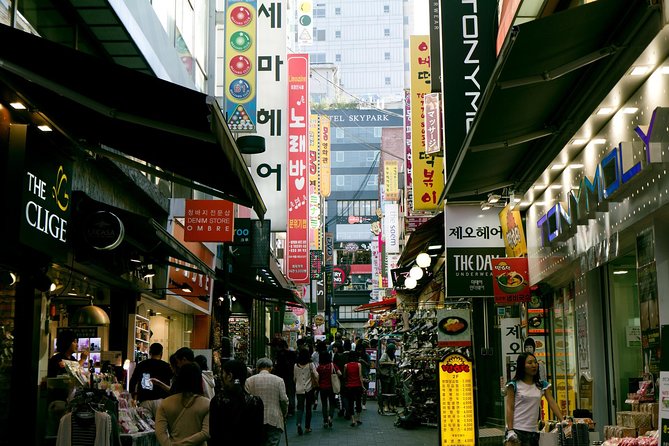
Then you hit Gwangjang Market for 40 minutes. Admission is free, and this is the section built for food-and-shopping vibes where locals actually come.
Here’s the practical value: your guide helps you navigate what to buy and how to order so you’re not just wandering and hoping. The tour description points to learning how Koreans eat and live, and the market time is where that turns into something you can experience.
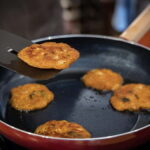
In Gwangjang, you can typically find classic Korean street-food favorites. Based on what your guide is likely to steer you toward, expect items like tteokbokki, sundae, and odeng as options you can try on your own dime. If you’re the sort of person who likes hands-on food memories, this is one of the best places in Seoul for it.
Also pay attention to the shopping side. One of the market draws here is the nearby focus on hanbok and fabric areas, which can make for fun browsing even if you don’t buy anything.
One consideration: markets mean lots of walking, strong smells, and busy aisles. If your group has mobility or sensory sensitivity, tell your guide at the start so they can pick a path that keeps things comfortable.
Naksan Park and the Seoul wall viewpoint finale
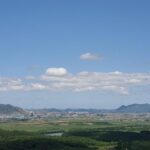
The final stop is Naksan Park, scheduled for 30 minutes. Admission is free. The big attraction is the scenery of Seoul plus views of the old city walls built to protect Seoul.
Why this ending works: it’s a viewpoint finish that puts the whole day into context. You spend hours on old-world sites—palaces, hanok lanes, a temple—and then you look out over the city with the wall line in your mind. It’s a good way to feel Seoul’s layers instead of treating each stop like a disconnected postcard.
This is also a “reset button.” After Gwangjang Market, you get a calmer scene where you can slow down, take photos without the crowd pressure, and just breathe.
If you’re sensitive to cold (or heat), plan for it. Viewpoints expose you to weather more than indoor palaces or shaded alleys. Bring a layer.
Lunch, snacks, and what you still need to budget
One key detail: lunch isn’t included in the tour package. Alcoholic drinks, snacks, and coffee/tea are also not included, though they can be purchased during the day.
So how should you handle this?
- Plan to eat around the market period or during your free time window.
- If you have allergies or dietary restrictions, message your guide early.
- Bring a small amount of cash just in case, since markets can be easier with local payment options (even when cards are accepted).
I like having a guide for lunch decisions. Not because you’ll be forced into one place, but because they can point out what’s worth the wait and what to skip.
Guides matter: Miae and Juno’s style and why it counts
This tour’s success isn’t only about the itinerary. It’s also about the guide dynamic.
Miae and Juno come up again and again in the details you’re likely to care about: staying organized, adjusting pace, using good English, and making sure the day fits your group. Some guides are also praised for being especially attentive with guests who need extra time or support, including seniors and people with mobility needs. If that’s your situation, this is the kind of tour where you’ll want to prioritize who’s steering the day.
A final note I appreciate: the guides you’ll be matched with aim to keep you moving efficiently between stops. That means fewer wasted minutes stuck in the wrong line or in traffic, and more time enjoying what you came for.
Who should book this private Seoul city tour
Book it if you want:
- A full-day overview that covers palaces, traditional neighborhoods, a major temple, and a top market
- Hotel pickup and private transport so you’re not planning transit while tired
- A guide who can adjust pace and help you understand what you’re looking at
- A route that includes both culture sites and hands-on market time
Consider skipping (or picking a different style) if:
- You prefer strict DIY with public transit and don’t want to pay for guiding
- Your group hates walking and standing in crowds at major landmarks
- You don’t want to manage your own lunch plan
Should you book this private Seoul city tour?
If you have one day and you want Seoul highlights without turning your trip into a logistics spreadsheet, I’d say yes. The mix of Gyeongbokgung (or Changdeokgung on Tuesdays), Bukchon, Jogyesa, Gwangjang Market, and Naksan Park gives you old-and-new balance with real local life.
Make your decision with these two questions:
1) Do you value convenience enough to pay for pickup, private transport, and guide help?
2) Can your group handle a day of moderate walking and a lunch that’s on your own plan?
If both are a yes, this is a strong way to get your bearings fast—and still come home with food memories and palace moments, not just photos.
FAQ
How long is the Private Seoul City Tour?
It’s listed as approximately 8 hours.
What time does the tour start?
The start time is 9:30 am.
Does the tour include hotel pickup and drop-off?
Yes. Hotel pickup and drop-off are included.
Are entrance fees included?
Admission is included for the main palace stop (Gyeongbokgung in the regular plan). The other listed stops (Bukchon Hanok Village, Jogyesa Temple, Gwangjang Market, and Naksan Park) are marked as free in the itinerary.
Is lunch included?
No. Lunch is not included.
What happens if it’s a Tuesday?
Gyeongbokgung Palace is marked as closed on Tuesdays for this tour, and the itinerary swaps to Changdeokgung Palace instead.