REVIEW · WALKING TOURS
(Closed) Korea’s White House Walking Tour Blue House
Book on Viator →Operated by Epic Korea Days · Bookable on Viator
You can walk inside Korea’s former White House. This Blue House walking tour in Seoul gives you reserved entrance before public access changes, led by an English licensed guide who turns the grounds into clear, human stories about power, culture, and how decisions got made.
I especially love the small-group size (max 9), which makes it easier to ask questions and actually hear the details, and I like that the route moves through multiple meaningful zones instead of one photo-op area. One thing to consider: you’re on a set schedule with no hotel pickup, so you’ll need to be ready to start at 10:00 am near Gyeongbokgung Station.
Below, I’ll break down what you’ll see at each stop, what’s worth paying attention to, and who this tour fits best if you want more than a quick look at Korea’s most famous presidential site.
In This Review
- Key Points You’ll Care About Before You Go
- Why Cheong Wa Dae Access Still Feels Special
- Price and Value: What $199 Really Buys
- Getting There: Gyeongbokgung Station and a Tight Start Time
- Cheong Wa Dae Yeongbingwan: Welcome Hall Energy in 10 Minutes
- The Blue House Main Building: The Working Center with the Blue Roof
- The Former Presidential Office Area: Where the Past Worked
- The Presidential Residence Grounds: Privacy Separate from Office Life
- Chimnyugak House: A Small Pavilion Break in the Middle of the Walk
- Sangchunjae and Chunchugwan: Beauty for Special Guests, Then the Press
- Sangchunjae: Traditional Building for Special Guests
- Chunchugwan: Former Press Center and Official Announcements
- Why the Guide Makes or Breaks This Tour
- Pacing, Group Size, and the “Short Stop” Reality
- Who Should Book This Blue House Walking Tour?
- Quick Planning Checklist (So You Don’t Miss Anything)
- Should You Book This Blue House Walking Tour?
- FAQ
- How long is the Blue House walking tour?
- What time does the tour start and where does it begin?
- How much does the tour cost?
- How many people are in each group?
- What’s included in the price?
- Is hotel pickup included?
- Are tickets included for the stops?
- Can I bring a service animal?
- What’s the refund/cancellation window?
Key Points You’ll Care About Before You Go
- Max 9 people keeps the pacing calm and the guide’s explanations easy to follow.
- Reserved entrance to Cheong Wa Dae gets you into the Blue House grounds before the public window changes in June.
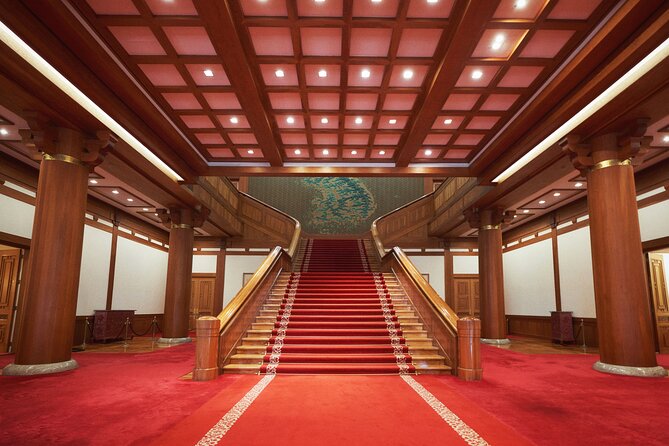
- Multiple zones cover welcome halls, the working office, the former office area, the residence grounds, and quieter pavilion spaces.
- English-speaking licensed guide with strong storytelling and clear meeting-point instructions.
- Short, focused stops (5–20 minutes each) add up to about 2 hours 30 minutes without feeling dragged out.
Why Cheong Wa Dae Access Still Feels Special
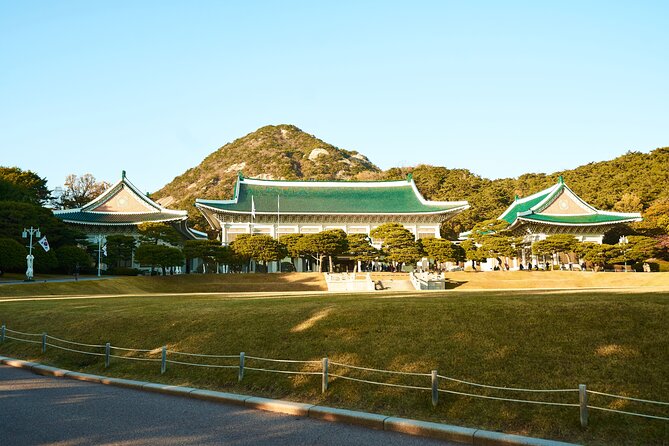
For decades, entry to the Blue House—Korea’s presidential residence and office—was tightly restricted. In other words, this place wasn’t designed for casual sightseeing. It was built for state meetings, visiting dignitaries, and the work of running a country.
That’s why a walking tour like this hits differently than most “see the building” outings. You’re not only looking at architecture and gardens; you’re learning how different parts of the property functioned in real life—who they were for, what kinds of events happened there, and how privacy and official duties were handled in one compound.
And yes, the timing matters. The tour is positioned around access that won’t last forever, with the note that you should visit before public access ends in June. If you’re in Seoul near that window, this is one of those chances that can quietly disappear while you’re busy doing other plans.
You can also read our reviews of more walking tours in Seoul
Price and Value: What $199 Really Buys
At $199 per person for about 2 hours 30 minutes, this isn’t a budget add-on. But when you look at what’s included, the price starts making sense:
- Reserved entrance to the Blue House (this is the big value item)
- An English-speaking licensed guide
- A tour structure that uses a guided narrative to connect multiple areas of the grounds
On a site like Cheong Wa Dae, the “product” isn’t just the location—it’s access plus context. Without a guide, you might still enjoy the walk, but you’d miss the hidden logic: what happened in each zone, how formal spaces differed from residential privacy, and why certain buildings became symbols of government.
Also, the stops list shows admission tickets are free at each location on the route. That doesn’t mean the tour itself is free—it means you’re not paying separate entry fees as you move from one part of the compound to the next. You’re paying for your slot, your guided interpretation, and the reserved access that makes all of it possible.
Getting There: Gyeongbokgung Station and a Tight Start Time
The tour starts back at the meeting point near Gyeongbokgung Station, with a 10:00 am start time. There’s no hotel pickup and drop-off, so plan on arriving on your own.
This matters because the whole experience runs like a scheduled walkthrough:
- You’ll be walking and stopping for short stretches (many stops are around 5–20 minutes)
- You’ll cover several areas of the Blue House grounds in one continuous loop
- You don’t want to cut it close and miss early instructions
The good news: the meeting area is described as near public transportation, so you’re not stuck with a long taxi hunt.
Cheong Wa Dae Yeongbingwan: Welcome Hall Energy in 10 Minutes
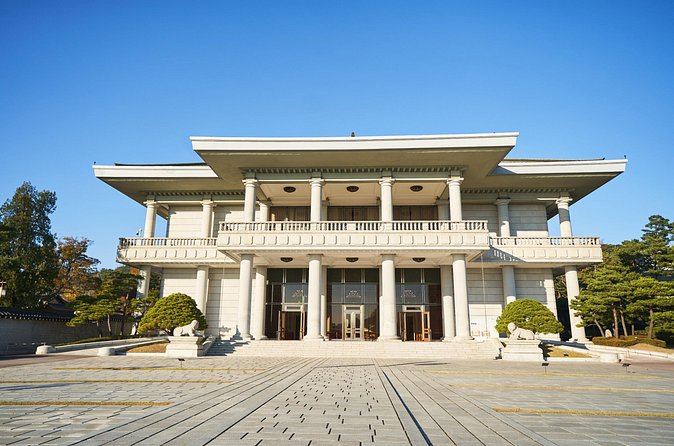
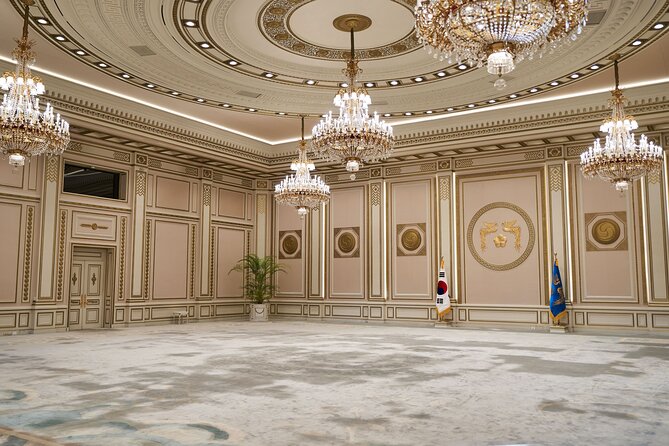
Your first stop is Cheong Wa Dae Yeongbingwan, a building used to welcome important guests from other countries. This is the kind of place that does two jobs at once: it signals formality, and it sets the tone for high-level diplomacy.
The tour note highlights that major leaders met here and that dinners or meetings happened inside. Even in a short visit, this stop can help you see the compound as more than “the Blue House.” It becomes a place with choreography—rooms and buildings designed to manage the flow of status, conversation, and protocol.
What I’d pay attention to:
- How the guide explains the building’s purpose as a “front stage”
- How welcome spaces compare to working spaces later in the route
The Blue House Main Building: The Working Center with the Blue Roof
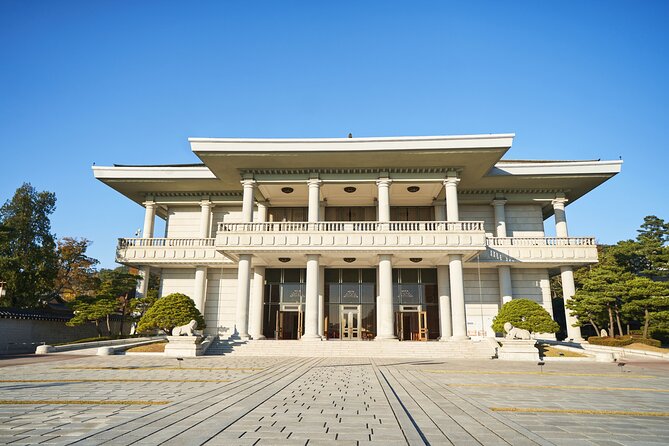
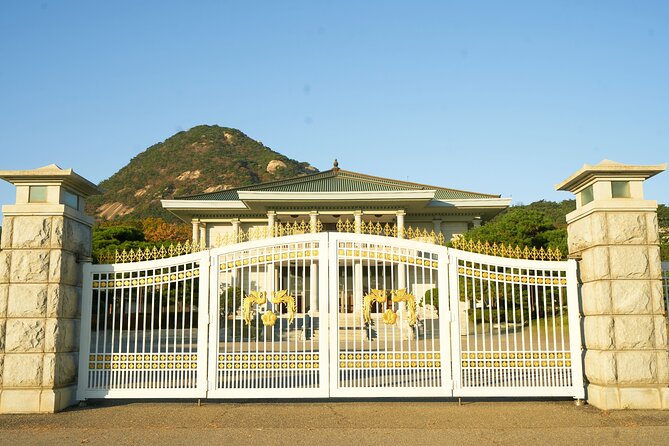
Next comes the Blue House (Cheong Wa Dae) main building—the presidential workplace where important meetings and major decisions took place. The signature detail you’re likely to hear about is the blue roof, described as a symbol of the Korean government.
This is one of the most central stops on the route (about 20 minutes). The value here is in the guide’s ability to connect design and function. A building like this is not just a backdrop; it’s an instrument for how government operates—meetings happen, agendas get set, and decisions get shaped.
Practical note: because the time at each stop is limited, go in with one mindset—watch for what the guide points out first, then let the story fill in the “why.”




The Former Presidential Office Area: Where the Past Worked
After that, you’ll visit an area described as the old main office site—The Blue House (Cheong Wa Dae) again, but specifically tied to the former office before the current main building was built. This stop is about 20 minutes.
This is a subtle but smart inclusion. It gives you a timeline feeling: not every part of Cheong Wa Dae serves the same era or purpose. Seeing the earlier office zone helps you understand how presidential spaces evolved over time, rather than treating the Blue House as one static photo.
If you’re the type who likes context (and not just current landmarks), this is a good stop to slow down mentally, even if you’re physically moving.
The Presidential Residence Grounds: Privacy Separate from Office Life
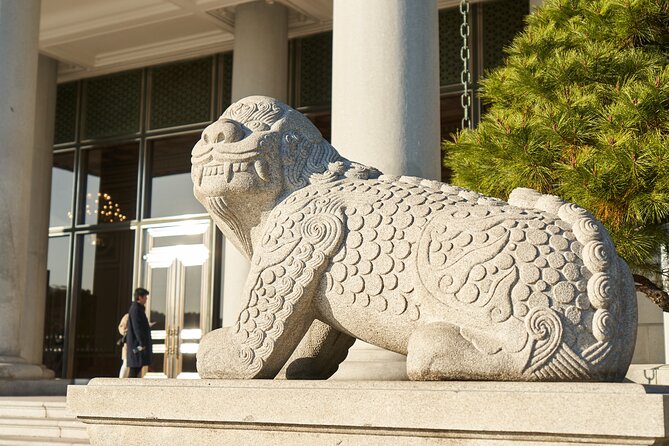
Then the tour shifts to the more private side: the part of Blue House (Cheong Wa Dae) where the president and family lived. The tour notes emphasize that this area was separate from the office to give privacy, quiet surroundings, and a space surrounded by trees.
It’s also described as containing bedrooms and other living spaces. Even if you don’t go into every room, the guide’s explanation matters because it changes how you read the grounds. You stop thinking only about formal power and start thinking about everyday life under public scrutiny.
What to look for in this segment:
- The contrast between work buildings and residence areas
- The guide’s explanation of why separation-by-design matters
Chimnyugak House: A Small Pavilion Break in the Middle of the Walk
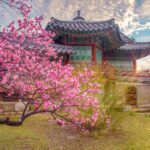
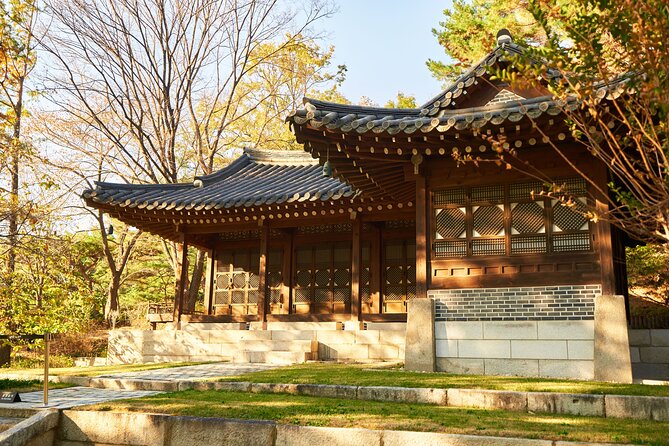
Your route includes Chimnyugak House, a traditional pavilion surrounded by trees. This stop is only about 10 minutes, but it functions like a breath in the middle of the tour.
A pavilion like this is often used for calmer moments—pauses, conversation, and architecture meant to be experienced slowly. The tour note specifically mentions a peaceful atmosphere and a short break while the guide explains the architecture and history tied to the quiet function.
This is also where you’ll appreciate the small-group format. With fewer people, the pacing stays manageable and you’re more likely to hear the guide over the ambient noise.
Sangchunjae and Chunchugwan: Beauty for Special Guests, Then the Press
Two of the later stops are especially interesting because they deal with who arrives and who reports the news.
Sangchunjae: Traditional Building for Special Guests
Sangchunjae is described as one of the most beautiful traditional buildings on the grounds. It’s included for its role in hosting special guests and quiet meetings. You’ll walk around the wooden structure while your guide explains its use.
Time is about 10 minutes here. In that short window, I’d focus on how the guide frames traditional architectural style as a practical tool for hosting and conversation—how “beautiful” and “functional” can be the same thing.
Chunchugwan: Former Press Center and Official Announcements
Next comes Chunchugwan, the former press center where official announcements were made. The tour description notes that reporters from Korea and around the world came there to hear the president speak. This stop is about 5 minutes, so it’s quick—but it ties your tour together.
This is your reminder that the Blue House wasn’t only internal decision-making. It was also public communication. After you’ve seen welcome and residence spaces, the press center gives you the external-facing side of power: speeches, timing, and the mechanics of public messaging.
Why the Guide Makes or Breaks This Tour
If you take one lesson away from the experience data, make it this: the guide quality is the difference between a pleasant walk and a truly memorable one.
The guide name that comes up again and again is Jungho. In the feedback I reviewed, people highlight that:
- His English is clear and engaging
- His instructions for where to meet were straightforward
- He managed the full walkthrough time and explanation clearly
- He also helped people finish the day by walking them back to the metro station
There’s also a recurring theme of storytelling and context—turning architecture and space into something you can understand fast. One person even mentioned how his personal-style stories added weight to the site, not just facts on a screen.
In plain terms: if you care about meaning, Jungho-style guiding is what makes the Blue House feel alive instead of like another historic structure.
Pacing, Group Size, and the “Short Stop” Reality
This tour lasts about 2 hours 30 minutes, and the stop list shows multiple brief visits. You’ll likely experience the day as a series of focused moments rather than long museum-style wandering.
That’s not a downside if you’re realistic:
- You’re paying for access and interpretation, not freeform time
- Each stop is short enough that you’ll feel momentum
- The guide can keep tying each location back to the larger story of Cheong Wa Dae
The key advantage of the max 9 group size is that it keeps those short moments understandable. With more people, even the best guide starts speaking into a fog. With a smaller group, you get room for questions and clearer audio.
Who Should Book This Blue House Walking Tour?
This is the best fit if you:
- Want reserved entry to Cheong Wa Dae, not just “look from outside”
- Like history and politics, but prefer it explained through places and functions
- Appreciate a small-group format and English storytelling
- Are visiting Seoul around the time access windows matter (not after it’s gone)
It might be less ideal if you want a long, slow walk with lots of unstructured time. Because stops are scheduled and relatively short, the tour works best for people who enjoy being guided through a theme.
Quick Planning Checklist (So You Don’t Miss Anything)
Before you commit, make sure you can handle:
- A 10:00 am start
- Meeting near Gyeongbokgung Station
- No hotel pickup
- About 2.5 hours total walking and stopping on the grounds
If you keep those points in mind, you’ll get the most out of the reserved access and the time the guide has with your group.
Should You Book This Blue House Walking Tour?
Yes—if your priority is access plus meaning. For $199, you’re really buying two things: entry and a licensed English guide who can connect each part of Cheong Wa Dae to how the compound functioned. The small-group size (max 9) is also a big deal here; it makes the experience feel personal and keeps the explanations clear during short stops.
I’d especially recommend booking sooner rather than later, since this tour is positioned around a window that changes with public access in June. And if you’re choosing between doing the Blue House on your own versus with a guide, go with the guided option if you want the “why” behind what you’re seeing.
If you want, tell me your travel dates and what else you plan to do around Gyeongbokgung Palace. I can suggest a simple half-day or full-day flow that pairs nicely with the Blue House tour.
FAQ
How long is the Blue House walking tour?
It runs for about 2 hours 30 minutes (approx.).
What time does the tour start and where does it begin?
The tour starts at 10:00 am and begins at Gyeongbokgung Station in Seoul. It ends back at the meeting point.
How much does the tour cost?
The price is $199.00 per person.
How many people are in each group?
The tour has a maximum group size of 9 travelers.
What’s included in the price?
You get reserved entrance to Korea’s White House (Cheong Wa Dae) and an English-speaking licensed tour guide.
Is hotel pickup included?
No. Hotel pick-up and drop-off are not included.
Are tickets included for the stops?
Admission tickets for the listed stops are listed as free, as part of the tour experience.
Can I bring a service animal?
Yes, service animals are allowed.
What’s the refund/cancellation window?
Cancellation is free up to 24 hours in advance for a full refund.