REVIEW · SEOUL
Best Things to Do – Half Day Seoul Trip (Seoul Palace & Temple)
Book on Viator →Operated by VIP TRAVEL Co.Ltd · Bookable on Viator
Three hours, Seoul’s top icons. This half-day tour is a fast, well-paced way to see major cultural stops in central Seoul, with an air-conditioned coach and hotel pickup included. You also get real time at a UNESCO palace and a quick look at Korea’s Buddhist side, not just palaces.
I love the Changing of the Guard style moment at the main palace stop, because it turns statues and stone into a real scene you can understand quickly. I also like that the itinerary can swap to UNESCO-listed Changdeokgung when Gyeongbokgung is closed, so you still get the palace highlight without a wasted morning. Guides like Judy, Sunny, and Henry are repeatedly praised for making the route make sense fast and keeping things moving.
One possible drawback: the final shopping stop at a ginseng center can feel like a sales-heavy detour, and a portion of people feel the pressure. If you’re not into shopping pitches, plan your mindset before you step inside.
In This Review
- Key Things You’ll Notice on This Tour
- Getting Your Bearings in Seoul: A Tight 3-Hour Plan
- Jogyesa Temple: Downtown Calm for 40 Minutes
- The Main Event: Gyeongbokgung or Changdeokgung (UNESCO Day)
- Cheongwadae Sarangchae: Learning Korea Beyond the Gate
- Market Time: Seoul Shopping Without the Rush
- The Ginseng Center Stop: Know What You’re Signing Up For
- Value Check: Is $38 a Good Deal?
- Who This Tour Fits Best (And Who Should Skip It)
- Practical Tips for a Smooth Half-Day
- Should You Book This Tour?
- FAQ
- How long is the half-day Seoul trip?
- What does the tour cost and what is included?
- Which places are visited?
- Is lunch included?
- Do I get hotel pickup?
- Is there free cancellation?
Key Things You’ll Notice on This Tour
- Hotel pickup + air-conditioned coach to move between stops without you doing Seoul logistics
- Jogyesa Temple in the heart of downtown, with free admission time built in
- Palace ceremony time plus a smart substitution to Changdeokgung on Tuesdays
- Cheongwadae Sarangchae museum visit, included, right in the Blue House area
- Two market stops for browsing and small local finds (not just sight-seeing)
- Ginseng center as the wild card: some love it, others want to skip it fast
Getting Your Bearings in Seoul: A Tight 3-Hour Plan
This is the kind of tour that works when you want the highlights but you’re short on time. The whole experience runs about 3 hours, which means you’re not spending your day stuck in transit or waiting around. You’re in an air-conditioned coach, and pickup is offered, so you can start already on-site instead of sprinting to the first stop.
At $38 per person, the value comes from stacking multiple categories of stops: a major Buddhist temple, a key palace experience, and a museum setting near the Blue House. The tour also includes things like a professional guide (English or Chinese) and taxes/handling, plus fuel surcharge, so you’re not piecing together extra costs mid-day. It’s not a slow “study tour.” It’s a “see it, understand it, move on” day.
Also, it has a maximum capacity of 100 travelers, so in theory it can get big. In practice, guides get praised for navigating crowds and keeping the visit on track, which matters a lot at palaces.
You can also read our reviews of more tours and experiences in Seoul.

Jogyesa Temple: Downtown Calm for 40 Minutes
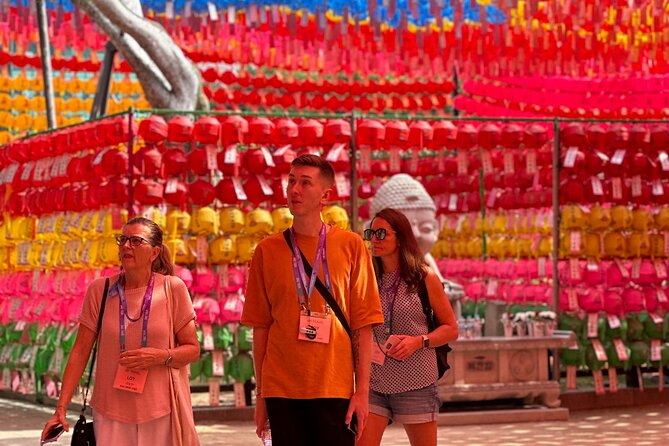
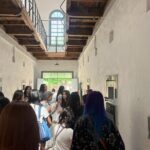
Jogyesa Temple is one of Seoul’s key Buddhist landmarks, and it’s surprisingly accessible once you’re there. You get about 40 minutes on-site, and admission is listed as free for this stop. Since Jogyesa dates back to 1935, it also gives you a modern anchor point while the rest of the day leans into royal history.
What I like about starting here is the mood shift. Palaces can feel like pure stone and ceremony. A temple stop resets your senses, and you get a more everyday Seoul texture—people moving through the downtown district while the temple holds steady nearby. Even if you don’t know a lot about Buddhism, the guide can help you understand what you’re seeing without turning it into a lecture.
Practical tip: wear shoes you can walk in comfortably. Temples and palace grounds both involve paths that can feel long when you’re doing them back-to-back. Also, if it’s cold or hot, dress in layers or breathable clothing. One review mentioned extreme cold, another mentioned intense heat, and the coach AC is a comfort buffer—but you still spend time outdoors.
The Main Event: Gyeongbokgung or Changdeokgung (UNESCO Day)
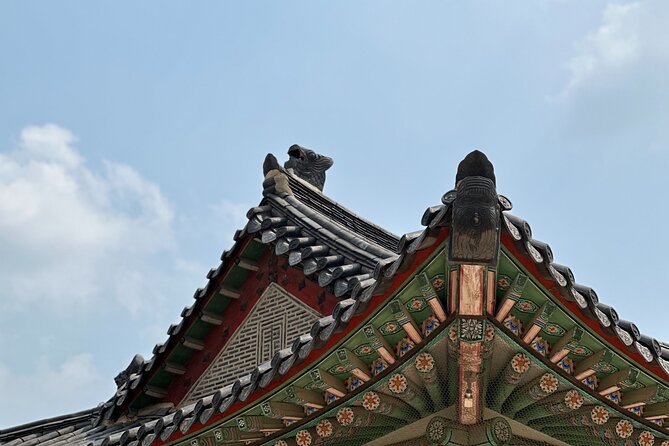
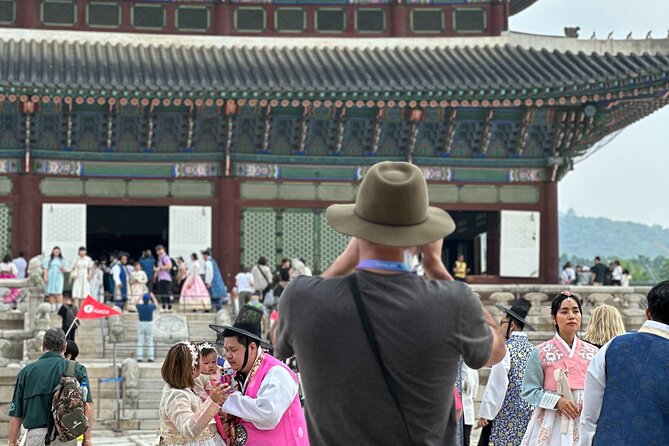
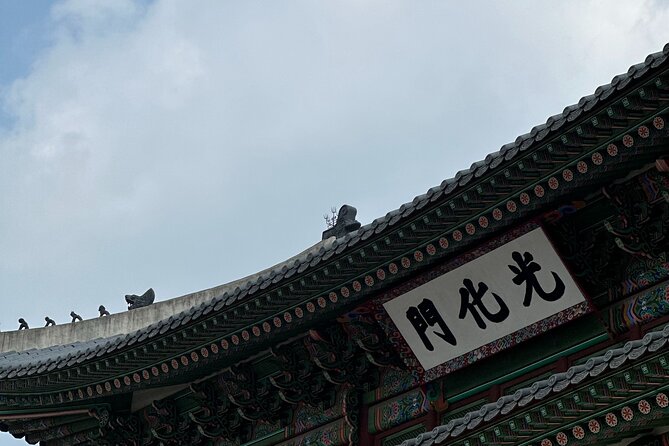
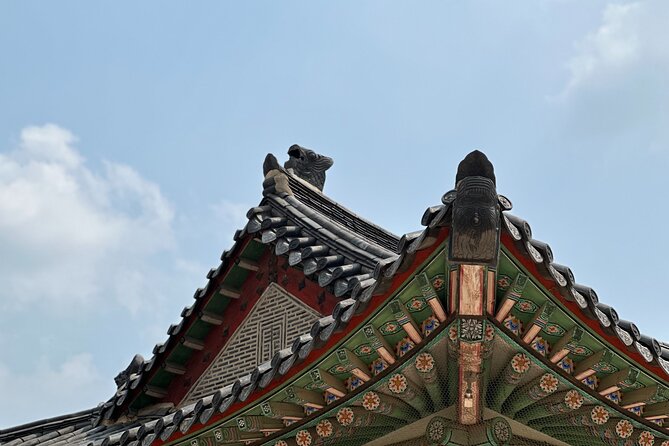
The palace stop is the centerpiece, and the tour handles a real-world problem for you. Gyeongbok Palace is closed on Tuesdays, so it’s substituted with Changdeokgung, which is UNESCO listed. That’s important because it keeps the “palace highlight” from falling apart on your travel day.
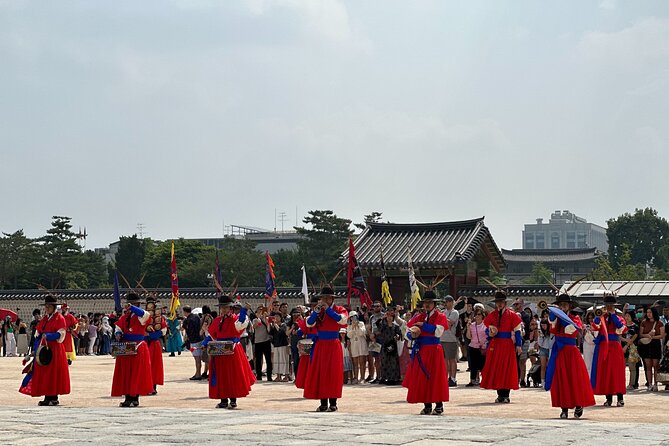
At the palace, you also see the ceremony in front of the main building area, described as a choreographed moment that visitors typically associate with palace life. A lot of the power here is timing: you’re there long enough to catch the moment and short enough that you’re not burning your whole half-day waiting for the next scheduled scene.
The tour overview notes that only a few buildings from the 19th century survived Korea’s modern upheavals, including the Japanese occupation and the Korean War. Even if you don’t remember every date, it’s a useful frame: this isn’t just “old architecture.” It’s survival, reused by later generations.
One helpful detail: guides are praised for timing the palace visit well. If you’re worried about crowds, this is the kind of place where a guide who knows when to move and where to stand can save you time and frustration. You might also spot small features like the lucky tree some guides point out, depending on where you’re positioned in the grounds.
Cheongwadae Sarangchae: Learning Korea Beyond the Gate
After the palace, you shift into a more explanatory space at Cheongwadae Sarangchae. This stop runs about 40 minutes, and admission is listed as included. It’s set up as an exhibition hall for important Korean artifacts and documents, so you get context for what you saw—and how power and culture have been organized over time.
The location matters. It’s described as being just in front of the Blue House area, which makes it a natural “bridge” between palace ceremony and the modern political story. If you’re the type who likes understanding what you’re looking at instead of just taking photos, this museum-style pause is a smart use of time.
What I found most practical about this stop is that it gives you explanations without demanding more walking. You get seated time, interpretive context, and a break from outdoor temperature swings. If you’re traveling with teens or a history-curious friend, this is often the part that turns a palace visit from pretty to meaningful.
Market Time: Seoul Shopping Without the Rush
This tour also includes shopping time at two popular Seoul markets. The idea here isn’t to turn you into a full-time shopper. It’s to give you a chance to browse local goods while you’re already moving through central areas.
In real terms, markets on a half-day tour are best for quick wins:
- picking up small souvenirs,
- checking prices before you commit elsewhere,
- and grabbing snack-type items if you get hungry later.
Because the schedule is tight, this part works best if you go in with a plan. If you love street markets, you’ll enjoy the variety. If you hate shopping and prefer viewpoints, markets may feel like “extra time.” Luckily, guides generally keep the route moving so you don’t lose the day.



The Ginseng Center Stop: Know What You’re Signing Up For
The final major stop is Cheongha Plus (Ginseng Shopping Center) for about 30 minutes. Admission is listed as free for this stop, but the main experience people remember is the sales pitch component.
This is where feedback splits. Some people report the visit is fine and not overly pushy. Others describe it as forced or bait-and-switch-like in feel, with one-hour shopping-museum-style pressure and pricey product focus. It also can be treated like a commercial stop rather than a cultural stop, even though ginseng is culturally important in Korea.
My practical advice: decide before you go. If you’re not buying, set a firm boundary. You can politely listen and still leave. If you want to be extra careful, don’t accept free products or “trial” items if you’re sensitive to supplements. One review specifically flagged a situation where someone’s son felt unwell after a trial tea—while you can’t assume causation, that’s enough to treat sample drinks as a personal-risk choice.
If you do want ginseng, ask questions and compare options quickly. But don’t let the sales energy bully your time. You only have about a half-day, and your palace and temple time is the real core.
Value Check: Is $38 a Good Deal?
At $38, the tour is positioned as a budget-friendly way to bundle several paid and time-based activities. Here’s what you’re getting according to the included details:
- Professional guide (English or Chinese)
- Hotel pickup offered
- Air-conditioned coach
- Admissions included at the palace stop (and the palace admission is listed as included)
- Admissions included at Cheongwadae Sarangchae
- Fuel surcharge and taxes/fees covered
Not included: lunch and hotel drop-off service. So you should plan on arranging your own post-tour meal and transport once the route ends.
What makes this feel like good value is the ratio: you’re paying for time saved and tickets grouped together. If you were doing this solo, you’d still pay for palace entry and museum entry, and you’d spend extra time figuring out transit between areas. This tour’s selling point is reducing friction.
The “deal breaker” for some people isn’t price—it’s the ginseng detour. If you know you hate shopping pitches, you may feel the $38 buys you less sightseeing time than you expected.
Who This Tour Fits Best (And Who Should Skip It)
This tour fits best if you:
- want a high-impact Seoul highlights day without committing to a full day,
- like a mix of temple + palace + museum,
- enjoy guided explanations, especially guides like Judy, Henry, Gabby, and K who are repeatedly praised for clarity and pacing,
- and you like K-drama-adjacent royal settings (the palace focus is strong, even in brief form).
You might want to skip or choose a different option if you:
- dislike shopping-heavy stops,
- want a slow, deep palace visit with lots of wandering time,
- or you’re allergic/sensitive to supplements and don’t want any chance of sample pressure at the ginseng center.
Practical Tips for a Smooth Half-Day
Because this is short, small choices matter. I’d do three things before you leave your hotel:
- Wear comfortable shoes. You’ll walk between temple and palace grounds.
- Bring layers. Reviews mention both cold and intense heat. The coach helps, but outdoor stops don’t.
- Have a snack plan. Lunch isn’t included, so your energy matters if the route ends and you need food fast.
Also, if you use hotel pickup, double-check the pickup timing so you’re not stuck waiting. A couple of feedback comments pointed to pickup confusion, but it was usually resolved. Still, don’t assume it will be perfect on day one—confirm what you can.
Finally, be ready for crowds. Palaces in central Seoul get busy. A good guide helps you avoid wasting energy, and that’s a real part of why this tour works for first-timers.
Should You Book This Tour?
Book it if you want a smart, time-efficient Seoul introduction with a temple start, a palace ceremony moment, and a museum stop near the Blue House area—while keeping the day to about 3 hours. The guide quality and pacing are a big part of the experience, and it’s a strong value when you compare tickets and transport time.
Skip it or adjust your expectations if the shopping pitch at the ginseng center is a deal-breaker for you. This tour includes markets and a ginseng stop, and not everyone enjoys that part of the schedule. If that will frustrate you, look for a palace-and-temple-focused option without the sales-heavy segments.
If you book, go in with a plan: treat the ginseng stop as optional in spirit, enjoy the palace ceremony and Jogyesa for what they are, then head out for lunch on your own.
FAQ
How long is the half-day Seoul trip?
The tour lasts about 3 hours.
What does the tour cost and what is included?
It costs $38 per person and includes a professional guide, pickup offered, air-conditioned coach, admission tickets at the palace stop and Cheongwadae Sarangchae, plus taxes/fees and fuel surcharge.
Which places are visited?
Stops include Jogyesa Temple, a palace stop (Gyeongbokgung is substituted with Changdeokgung on Tuesdays), Cheongwadae Sarangchae, and a ginseng shopping center stop, plus shopping at two markets.
Is lunch included?
No. Lunch is not included.
Do I get hotel pickup?
Hotel pickup is offered, but hotel drop-off service is not included.
Is there free cancellation?
Yes. You can cancel for a full refund if you cancel at least 24 hours before the experience start time.