REVIEW · DMZ TOURS
Closest Observatory to DMZ & Suspension Bridge Tour from Seoul
Book on Viator →Operated by I Love Seoul Tour · Bookable on Viator
Aegibong brings the DMZ story to street level. This trip pairs Aegibong Peace Eco Park with the Jogang Observatory, where you can see North Korea from just 1.4 km away. I also like the human side of the place: Hill 154’s wartime history and the postwar visits by displaced people are woven into what you see today, including the well-known Starbucks stop.
The main thing to consider is that this is a passport-required border-adjacent experience with weather dependence. If conditions are poor, the day may change or you’ll get a refund, so don’t plan a rigid itinerary around it.
In This Review
- Key points to know before you go
- Why this DMZ-adjacent tour is different from the usual Seoul day trip
- Aegibong Peace Eco Park: Hill 154, displaced families, and today’s design choices
- The Starbucks moment at the park: fun, but plan around what’s included
- Jogang Observatory: seeing north from the closest distance
- Timing from Myeong-dong: how the 4h 45m usually feels
- Price check: is $48 good value for this kind of access?
- The guide experience matters more than you think
- What to bring (and what to skip) for a smooth day
- Who this tour is best for (and who should consider alternatives)
- Should you book this Seoul DMZ observatory tour?
- FAQ
- Do I need a passport for this tour?
- Where does the tour start and end?
- How long is the tour?
- How much time do I spend at Aegibong Peace Eco Park?
- Is Starbucks coffee included?
- Is a professional tour guide included?
- What is the maximum group size?
- What happens if the weather is bad?
Key points to know before you go
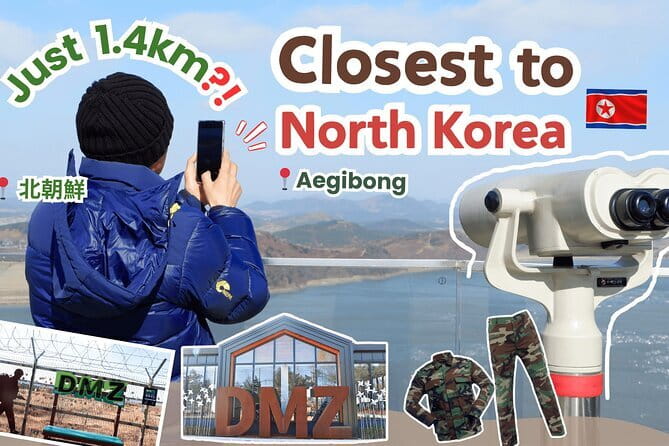
- North Korea viewing point from 1.4 km away at the Jogang Observatory
- Aegibong Peace Eco Park sits on former Hill 154, tied to fierce fighting during the Korean War
- Starbucks at the observatory is a fun, iconic moment, but coffee is not included
- Christmas lights controversy changed the park design (the tree was removed and bridges were built in its shape)
- Strong guide experience highlighted by names like Sunny, Thomas, and Shin
- Small-time focus: about 1 hour 30 minutes at Aegibong, with the rest of the 4h 45m for transit and viewing
Why this DMZ-adjacent tour is different from the usual Seoul day trip
Most DMZ day trips feel like they’re about motion: bus, stops, and boxes to check. This one feels more intentional because it centers on two specific places tied to the same stretch of history—Aegibong Peace Eco Park and the observatory viewpoint connected to it.
You also get something rare for Seoul-based trips: the chance to look north from the closest observatory distance described here. That alone makes the day worth packing for. And the emotional weight is real. Hill 154 wasn’t just a random hill; it was a key battlefield area, and after the war, displaced people came here to try to see their hometowns again. That context turns the scenery into a story you can follow.
On the practical side, the tour runs about 4 hours 45 minutes total and uses an air-conditioned vehicle. The group size is capped at 120, and you start in Myeong-dong and end at Myeongdong Station—simple, central, and easy to connect with the rest of your Seoul time.
You can also read our reviews of more tours and experiences in Seoul.

Aegibong Peace Eco Park: Hill 154, displaced families, and today’s design choices
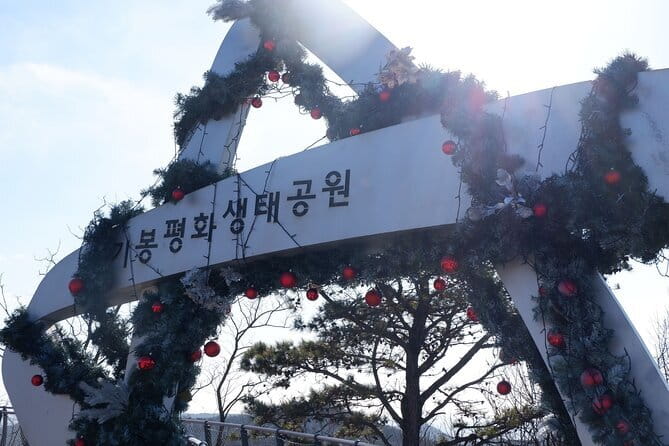
Your first stop is Aegibong Peace Eco Park, located at the mouth of the Hangang River along with the Jogang River. This is the kind of geography that matters here. The view you’re about to get is shaped by where these rivers meet, and the site’s meaning comes from what happened on this ground during and after the Korean War.
Aegibong used to be known as Hill 154, where the two Koreas fought fiercely. After the war, displaced people often came here because they missed home and wanted to see their hometowns again. That postwar tradition is part of why Aegibong remains meaningful: it isn’t only about what broke; it’s about what people tried to hold onto.
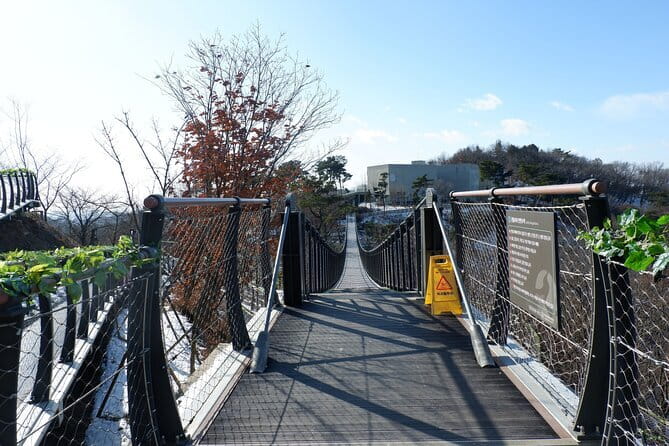
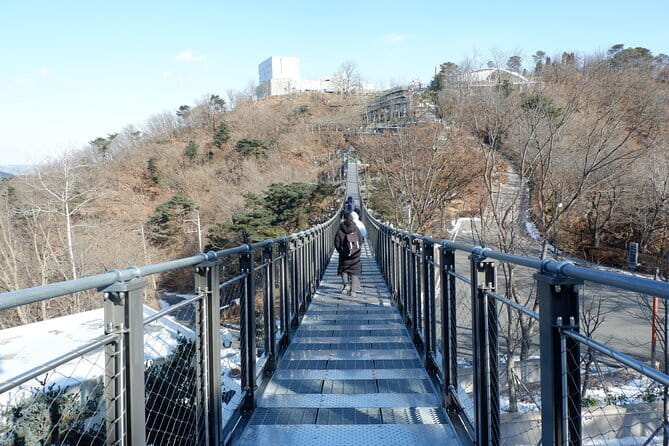
Now for the part that feels almost like a running gag from history. The observatory area used to be famous for a huge Christmas tree. But the lights were reportedly too bright for North Korea and created conflict, blamed on a lack of electricity there. The tree was removed, and park workers built bridges in the shape of the tree instead. So even the holiday visual has a political and logistical backstory behind it.
You’ll get about 1 hour 30 minutes here, with an admission ticket included. That time is long enough to wander the eco-park calmly, take in the peace-and-harmony message, and grab that iconic photo moment—especially since the park is now also tied to the famous Starbucks.
The Starbucks moment at the park: fun, but plan around what’s included
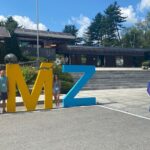
Yes, this area is known for a Starbucks on the observatory grounds. It’s the kind of contrast that only South Korea can pull off: global coffee culture sitting next to one of the most serious places on earth.
Here’s the key practical point: coffee and tea at Starbucks are not included. So I treat Starbucks as an optional add-on, not part of the tour price. If you’re trying to keep costs down, you can enjoy the setting and skip the drink.
If you want the best experience, think of Starbucks here as a photo stop and a chance to pause. The real value is the way this place puts a friendly, familiar brand inside a boundary-adjacent story.
Jogang Observatory: seeing north from the closest distance

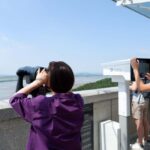
After Aegibong, the focus shifts to the observatory viewpoint. The old observatory was established in 1978, then it was demolished and renewed under the name Jogang Observatory. The point of the redesign, in practical terms, is access to the view that Aegibong represents—looking north from the closest distance described on this tour.
The numbers matter. You’re told North Korea is visible from about 1.4 km away. That’s close enough to make you slow down and really look, not just take a quick glance and move on.
This is also where the tour’s peace-and-harmony message becomes more tangible. The view is framed by history: Hill 154’s wartime role, the postwar visits by displaced families, and the way the observatory itself has changed over time. You’re not just seeing a direction on a map. You’re standing in a place where people once tried to bridge separation with the power of looking.
One extra angle that’s worth noting: a guide can make the viewing moment land harder. In the feedback that stands out most, guides like Sunny and Thomas are praised for explaining the South–North conflict clearly and in an engaging way. Another guide, Shin, is also highlighted as one of the best for making the whole day feel organized and informative. When the story is told well, the view becomes more than a photo.
Timing from Myeong-dong: how the 4h 45m usually feels

This tour starts in Myeong-dong and ends back in the same neighborhood at Myeongdong Station. That’s a real advantage. Myeong-dong is where you’ll already have dinner plans, shopping, and subway access, so you’re not stranded at the edge of the city.
Duration is listed at about 4 hours 45 minutes. You’ll spend 1 hour 30 minutes at Aegibong. That leaves the rest of the time for transportation and time at the observatory viewpoint. Because travel times aren’t broken out in detail here, I recommend you treat the day as a half-day plan and avoid booking anything right after you return.
You’ll ride in an air-conditioned vehicle, which helps in hotter months. The tour also lists a moderate physical fitness requirement. This isn’t set up like a hike, but you should expect walking around park areas and standing for viewing.




Price check: is $48 good value for this kind of access?
At $48 per person, this tour sits in a reasonable range for a DMZ-adjacent experience that includes transportation, a timed visit, and access to the main locations. The value comes from what’s included versus what you’d likely pay anyway on your own.
Here’s what you get:
- Air-conditioned vehicle
- An admission ticket for the Aegibong stop
- Requirements for passports as part of the process
- A professional tour guide if you choose that option
What you don’t get:
- Coffee/tea at Starbucks
- Snacks or any other food
- Lunch
- Travel insurance
- Hotel pick-up/drop-off (it’s anchored around Myeong-dong meeting)
Also, this is something people plan ahead for—on average it’s booked about 31 days in advance. That usually means you should lock in your date sooner rather than later if your schedule is tight.
My take: $48 feels fair when you want a guided, structured day that handles the passport requirement and gets you to the viewing area without stress. If you’re the type who only wants a quick look and doesn’t care about context, you might question the price. If you want the story and the closest observatory access described here, it’s solid value.
The guide experience matters more than you think
With border-adjacent history, the guide isn’t just there to count people. You need clear explanations and a calm tone. The strongest praise in the information you provided centers on exactly that.
I Love Seoul Tour feedback repeatedly points to guides such as:
- Sunny, praised for being engaging and caring, with clear communication
- Thomas, praised for friendly support and explaining the conflict in a way that clicks
- Shin, praised as one of the best for being both highly informative and easy to follow
What you should take from this: if you can select a guided option, do it. The physical sights are striking, but the meaning is what stays with you. A good guide helps you connect Hill 154, postwar displacement, and the changed observatory landscape into one understandable story—so you don’t leave with only a photo and a shrug.
What to bring (and what to skip) for a smooth day
Since passports are mandatory, this is not a day to wing it. Bring your passport, and keep it accessible. A mobile ticket is also part of the setup, so make sure your phone is charged.
Because coffee and tea are not included and snacks aren’t provided, plan for your own food and water needs. You’ll be out for almost five hours total, and while you can buy something at stops, it’s smarter to arrive with the basics handled.
Also, the tour requires good weather. If conditions are poor, you’ll be offered a different date or a full refund. So bring layers for changing temperatures and be flexible with your plans. If you hate plan-shifts, consider booking an alternate activity for later in the same week.
Finally, remember the maximum group size is 120. You’ll likely still feel like you’re in a crowd at peak times, so be patient and move with the group when the schedule tightens.
Who this tour is best for (and who should consider alternatives)
This experience is ideal if you want:
- A DMZ-adjacent day trip focused on real places tied to war and separation
- A chance for a closest-distance look toward North Korea from the observatory viewpoint
- A guided explanation that helps you understand the why behind what you’re seeing
- A “special moment” stop that includes the Starbucks at the observatory area, without turning the day into a gimmick
It’s also a good fit if other DMZ options are limited. One strong clue from the guide feedback: the tour is recommended even when JSA is closed, because you still get an observatory-based view.
You might want to skip it if:
- You don’t want passport requirements (this one requires a passport)
- You’re uncomfortable with weather-dependent changes
- You only want the shortest possible stop and dislike a guided structure
Should you book this Seoul DMZ observatory tour?
I think you should book if your priority is meaning plus access. The combo of Aegibong Peace Eco Park (Hill 154’s story, displaced families, and even the Christmas-tree-to-bridges redesign) and the Jogang Observatory (North Korea visible from 1.4 km away) makes this more than a bus-and-bite-size stop.
It’s also a smart pick if you’re staying near Myeong-dong and want a day that returns you to the same area, ready for dinner and an easy night. Guides like Sunny, Thomas, and Shin are repeatedly highlighted for clear, engaging explanations—exactly what you want here.
One last nudge: book with weather in mind. If it shifts, you’ll have to roll with it, since the tour is set up around good viewing conditions.
If that fits your style, this is a strong way to get closer to the DMZ story—without turning the day into chaos.
FAQ
Do I need a passport for this tour?
Yes. Passports are mandatory for this experience.
Where does the tour start and end?
The tour starts in Myeong-dong, Jung District and ends at Myeongdong Station in the same area.
How long is the tour?
The total duration is about 4 hours 45 minutes.
How much time do I spend at Aegibong Peace Eco Park?
You spend about 1 hour 30 minutes at Aegibong Peace Eco Park, and the admission ticket is included.
Is Starbucks coffee included?
No. Coffee and tea at Starbucks are not included. You can still visit, but you’ll pay for drinks yourself.
Is a professional tour guide included?
A professional tour guide is included if you select the option that includes a guide.
What is the maximum group size?
The tour has a maximum of 120 travelers.
What happens if the weather is bad?
This experience requires good weather. If it’s canceled due to poor weather, you’ll be offered a different date or a full refund.