REVIEW · HISTORICAL TOURS
Seoul: Deoksugung Palace Heritage Walking Tour
Book on GetYourGuide →Operated by S.A. Seoul · Bookable on GetYourGuide
Palaces teach Seoul’s big turning points fast. This Deoksugung Palace Heritage tour links the late Joseon world to Korea’s opening to the outside, using Jeongdong-gil street stops that turn history into something you can walk right through.
I love how the guide connects Korean royal life with outside influences you can still spot today, and I love the way the walk brings in real street texture along the route, not just museum walls. The one catch is that it’s still a walking tour, so comfy shoes matter.
In This Review
- Quick vibe check before you go
- Key highlights you’ll feel on the ground
- Deoksugung Palace: Where Joseon Power Meets Seoul’s Global Turn
- Finding Your Way: City Hall Station to an Easy Start
- The First Walk Inside Deoksugung: 45 Minutes That Make the Palace Make Sense
- Jung-gu Street Life and a 15-Minute Café Break That Actually Helps
- Jeongdong-gil: The Street Where Korea Meets the Outside World
- Donuimun Museum Village: Seoul’s Neighborhood Time Capsule
- Gwanghwamun Square: Learning Monument Meaning Without the Homework
- Cheonggyecheon: From Old Drainage to a Walkable Cultural Corridor
- The Guide Makes It: Real Storytelling and Q&A Energy
- Price and Value: What $56 Buys You in Real Terms
- Pacing, Comfort, and Who Should Choose This
- Should You Book the Deoksugung Palace Heritage Walking Tour?
- FAQ
- How long is the Deoksugung Palace Heritage Walking Tour?
- Where do I meet the guide?
- What’s included in the price?
- Are food and drinks included?
- What should I bring?
- Is there a private group option?
Quick vibe check before you go
If you prefer long, slow time inside buildings, you might feel the pace is a bit quick. You get smart coverage—just not the kind of hour-after-hour deep interior sightseeing some people crave.
Key highlights you’ll feel on the ground
- Deoksugung Palace through both Korean and Western-era details you can actually point at while you walk
- Jeongdong-gil’s foreign footprint, including Paichai Academy, Chungdong First Methodist Church, the Russian Embassy, and Gyeonggyojang
- Donuimun Museum Village as preserved Seoul neighborhoods, with homes dating from the 1900s through the 1980s
- Gwanghwamun Square’s monument stories, tied to Korea’s government-and-public-life themes
- Cheonggyecheon’s transformation, from drainage ditch to a walkable cultural corridor with sculptures and places to stop
You can also read our reviews of more walking tours in Seoul
Deoksugung Palace: Where Joseon Power Meets Seoul’s Global Turn
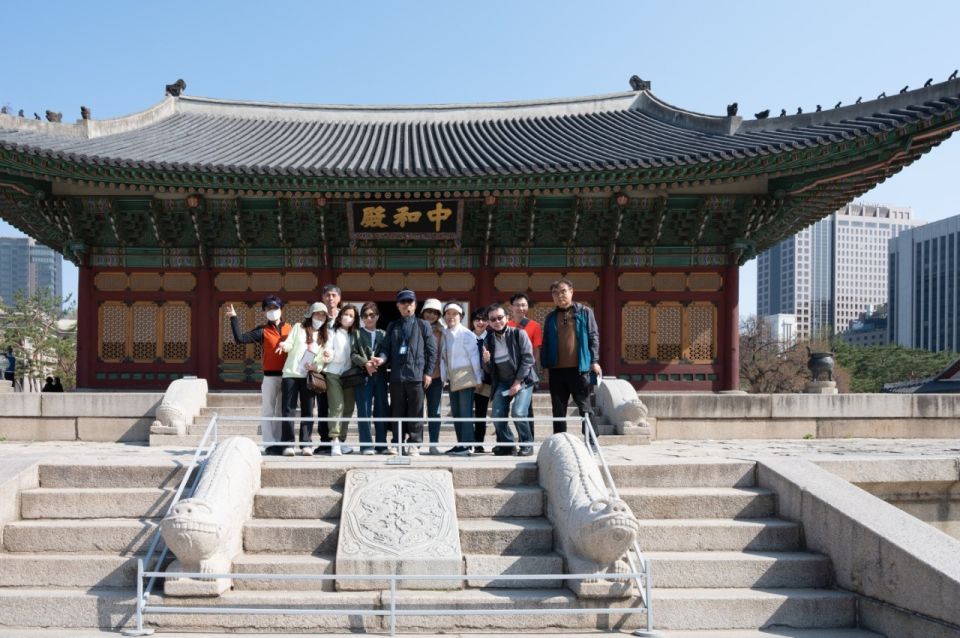
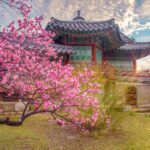
Deoksugung Palace is a great choice if you want more than photo ops. You’re in the late Joseon Dynasty era, where court life, politics, and outside pressure were all colliding. The palace has a storyline that keeps expanding as your guide talks: it began as a residence connected to a royal relative, and later became a principal palace during the Japanese invasion in 1592.
What makes this stop extra valuable is how the tour frames the palace as a living record. You’re not just looking at gates and stonework. You’re learning how changes in the world shaped what Korea built, how it governed, and how it represented itself. That’s why Deoksugung works so well early on—it gives you a history spine for everything you’ll walk past afterward.
And yes, there are Korean elements you’ll recognize as distinctly royal and ceremonial. But the tour also spotlights Western-era influences that show up in the palace area. That mix helps you understand Korea’s opening to the world as a gradual push-and-pull, not a single dramatic moment.
Finding Your Way: City Hall Station to an Easy Start
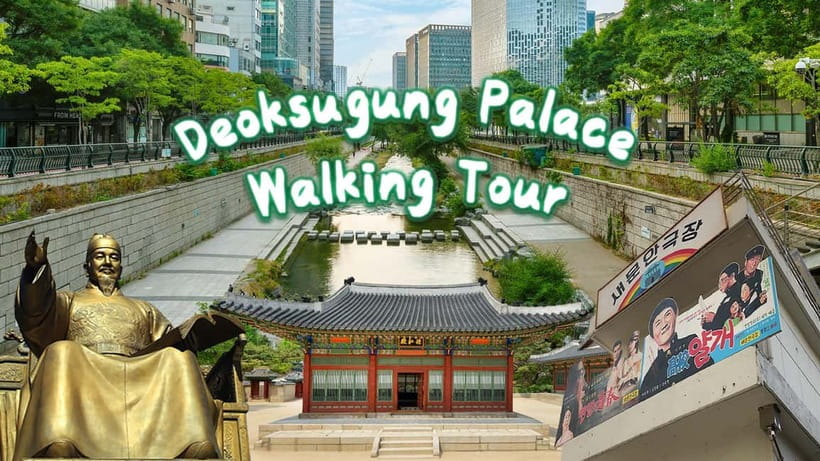
The meeting point is simple: in front of the Deoksugung Palace ticket office, Exit 2 of City Hall Station. That matters more than it sounds. When a tour starts in the middle of the city core, you spend less effort figuring out transit and more effort listening.
You’ll also appreciate the pre-booked ticket setup for both Deoksugung Palace and Donuimun Museum Village. It cuts down the annoying wait time and keeps the tour moving at a pace that actually feels like a 3-hour experience, not a half-day puzzle.
Bring an extra layer if you’re touring in shoulder seasons, but the real practical item is footwear. You’re on foot for the whole experience, and the ground and crossings add up over time.
The First Walk Inside Deoksugung: 45 Minutes That Make the Palace Make Sense
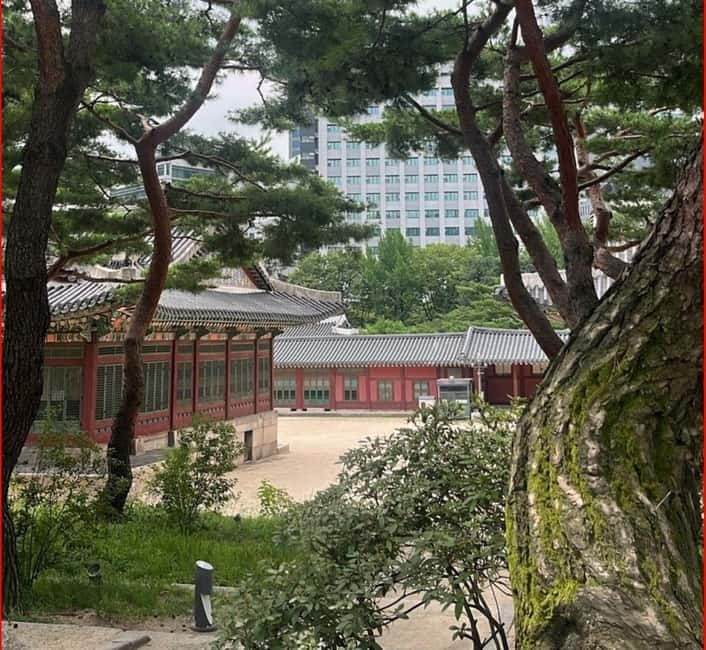
You’ll spend about 45 minutes at Deoksugung with a guided walkthrough and sightseeing. That time window is tight enough that the guide can’t just repeat facts. Instead, you’ll get stories tied to what you’re seeing in front of you—why a particular structure matters, how the palace’s role changed over time, and what the late Joseon period was dealing with politically.
This is one of the best parts of the tour for people who like context. If you’ve ever visited a palace and felt like you were looking at pretty things with no connecting thread, this format fixes that. You’ll learn how Deoksugung fits into the bigger sweep of the Joseon Dynasty’s legacy—especially the 500-year arc and the disruption around the late 16th century.
Also, pay attention to the Korean-versus-foreign details the guide points out. Even if you don’t know Korean history yet, you’ll start making visual connections quickly. It becomes easier to read the space like a timeline.
Jung-gu Street Life and a 15-Minute Café Break That Actually Helps
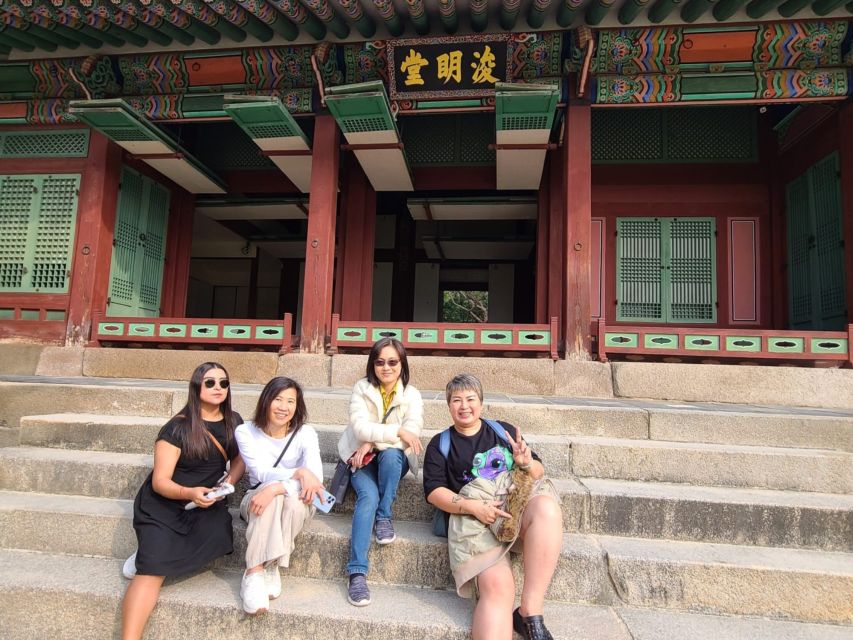
Between palace time and the next cultural stops, the tour includes a short stretch through Jung-gu with walking and brief passing points, followed by a 15-minute break at a local café.
This break is small, but it’s smart. By the time you reach it, you’ve already been doing active walking, listening, and taking in visual details. A short reset keeps you from turning the rest of the route into one long blur.
You’ll also get the practical reminder that food and drinks aren’t included. So if you want a coffee with your break, plan for it. I like treating it as part of the experience rather than an interruption—grab something, cool down if you need to, then get back to the stories.
You can also read our reviews of more historical tours in Seoul
Jeongdong-gil: The Street Where Korea Meets the Outside World
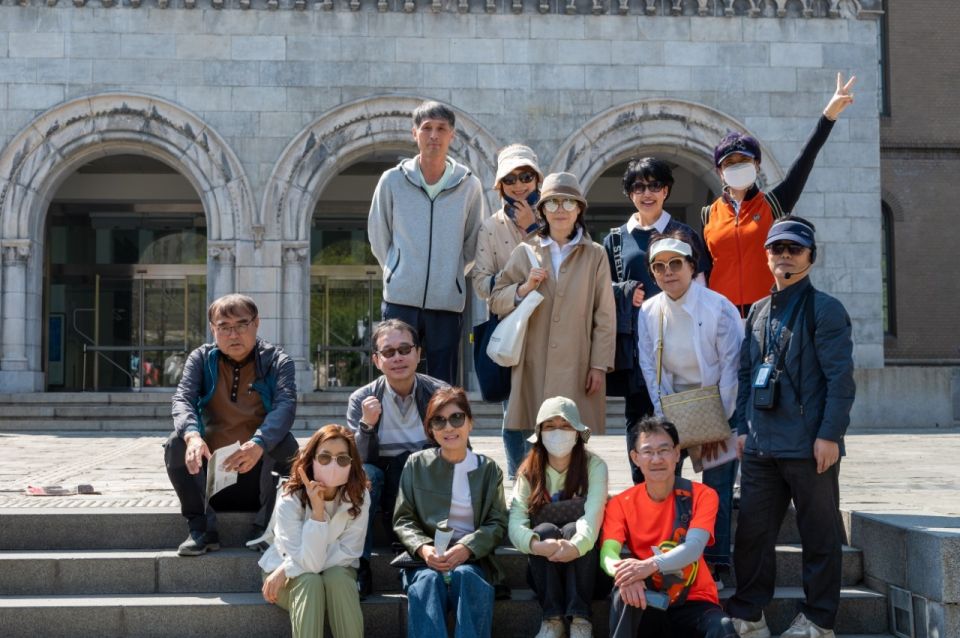
Jeongdong-gil is the star street stop, and it’s not just because it’s photogenic. This is the road tied to early foreign missionary institutions and major foreign embassies. In other words, it’s one of the places where Korea’s opening to the world isn’t an abstract concept—it’s in the built environment and the institutional legacy.
As you walk along, you’ll pass or learn about specific landmarks, including:
- Paichai Academy
- Chungdong First Methodist Church
- The Russian Embassy
- Gyeonggyojang
This is where the tour’s “government corridor” theme starts to make sense. You’re learning how influence moved through Korea: schools, churches, diplomatic presence—then how those networks shaped Korea’s modern development.
What I like about this section is the guide’s ability to link the street-level sites to the big historical story. It helps you stop treating each building as a random stop and start seeing a system: education, faith communities, and diplomacy all pulling at the same historical moment.
Donuimun Museum Village: Seoul’s Neighborhood Time Capsule
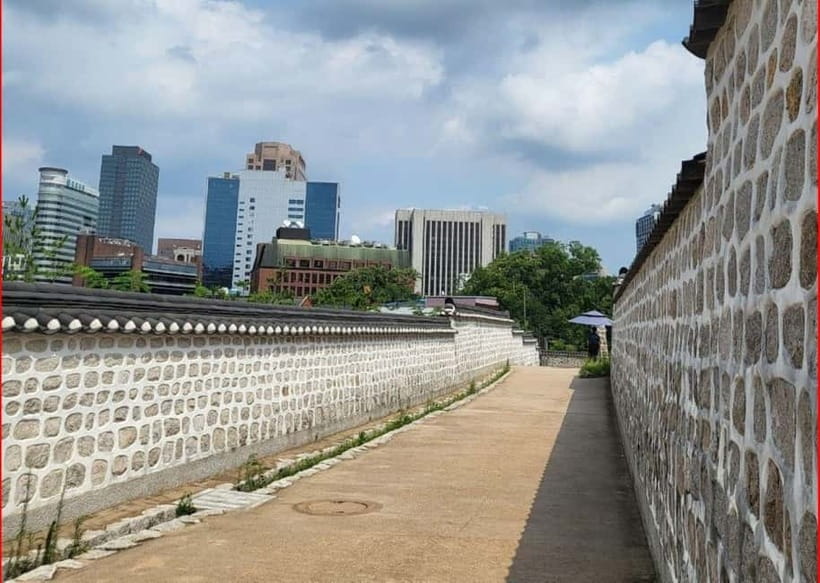
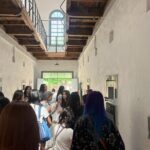
After Jeongdong-gil, you head to Donuimun Museum Village, where you’ll have a guided visit and sightseeing for about 20 minutes.
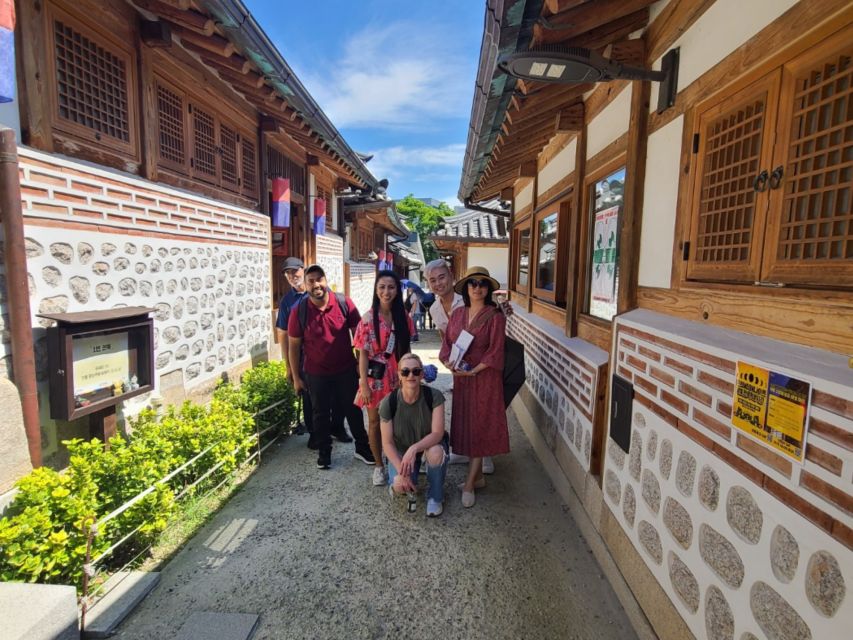
Donuimun is an outdoor village meant to preserve Seoul architecture across decades. You’ll see examples of homes from the 1900s up to the 1980s, which is a refreshing range. Many Seoul sites focus on one era; this one shows how everyday housing and neighborhood structure changed over time.
Here’s the detail I really like because it signals authenticity: Donuimun Museum Village was founded in September 2017, and it preserved 40 out of 63 houses in the historic district of Saemunan. That preservation math matters. It means you’re not walking through a full reconstruction pretend-neighborhood. You’re seeing a curated set of surviving houses from a real historic district.
In practical terms, 20 minutes works well here. You’re not expected to analyze every corner. Instead, you’ll get a guided sense of the “feel” of the architecture across time—then you can decide where to slow down for photos.
Gwanghwamun Square: Learning Monument Meaning Without the Homework
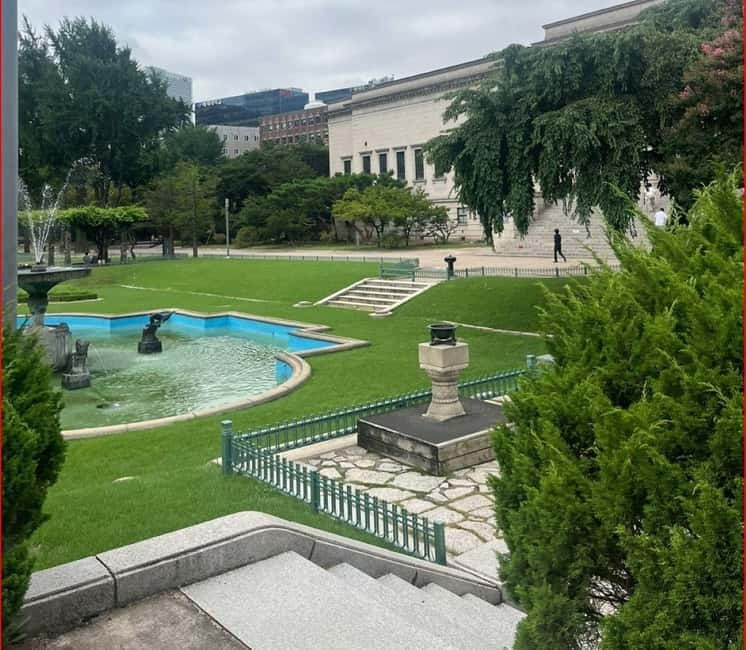
From Donuimun, the tour includes on-foot walking and then reaches Gwanghwamun Square for about 30 minutes of guided sightseeing.
This part is about symbolism. The tour frames the square as a central hub in Seoul with powerful stories behind the monuments. Each statue and monument points to pivotal moments in Korea’s journey and the nation’s cultural values.
If you’ve ever stood in a big plaza and thought, I have no idea what I’m looking at, this is your fix. The guide helps you connect the visual language of monuments to what they represent—government identity, public life, and major historical milestones.
I also like how this stop transitions you from the more “institutional” feeling of palace and embassy history into public-space history. You’re moving from historic governance spaces into how the modern city communicates identity through prominent symbols.
Cheonggyecheon: From Old Drainage to a Walkable Cultural Corridor
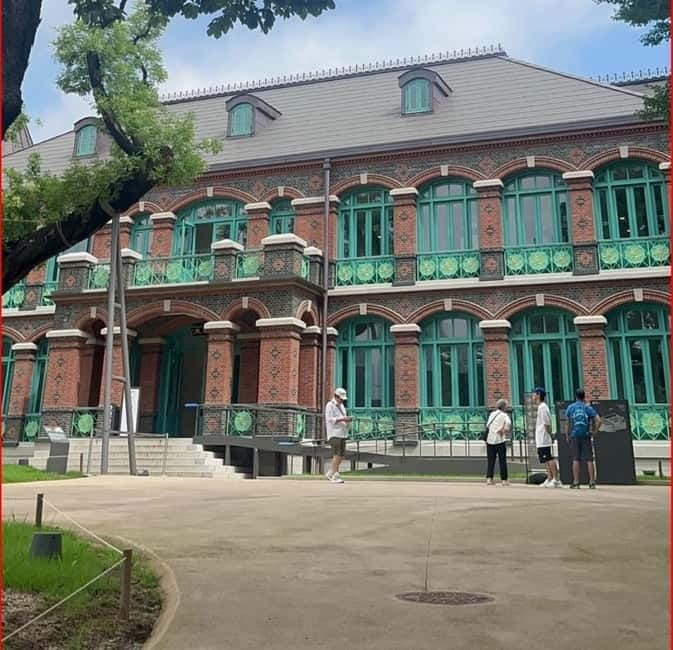
The final stretch brings you to Cheonggyecheon, with about 30 minutes to visit, sightseeing, and walk.
Cheonggyecheon’s story is one of Seoul’s best modern transformations. This stream was once an unsightly drainage ditch. It has been renovated into a major cultural focus, lined with sculpture pieces, restaurants, and cafés, and it hosts festivals at various times of the year.
That matters for the tour because it ties into the theme of change. You’ve spent the day moving through late Joseon and early foreign influence. Now you finish in a place where the city literally reshaped the past into a new public experience.
You’ll finish at 1 Cheonggyecheon-ro, Jongno-gu. That ending spot is useful because it drops you near a lively walking area, so you can keep going on your own right away.
The Guide Makes It: Real Storytelling and Q&A Energy
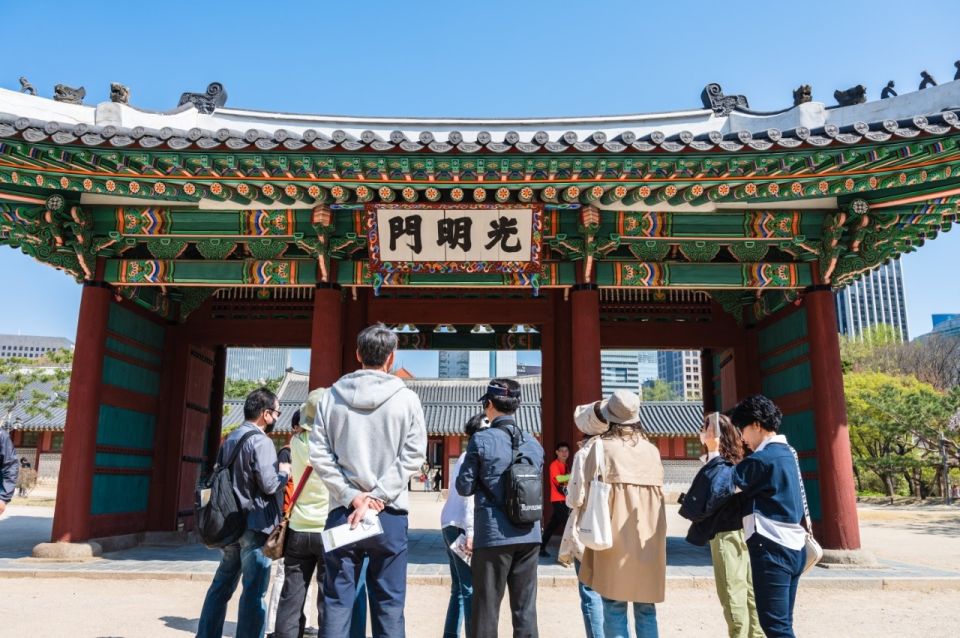
A good historical tour doesn’t just list dates. It makes the connections feel logical, and it helps you ask questions without feeling awkward.
One guide in particular, Mitch, stands out for being well prepared and able to answer not only site questions but also broader topics like working culture and school system in Korea. That kind of flexibility changes how you experience the tour. You don’t just hear a script—you get real-time context that makes Korea feel less like a history lecture and more like a place people still live in.
You’ll have an English-speaking historical guide as part of the experience, and the tour can also be available in Korean. Private group options exist too, which is a nice way to keep questions rolling without worrying about the group pace.
Price and Value: What $56 Buys You in Real Terms
At $56 per person for about 3 hours, the value comes from what’s included: an English-speaking historical guide plus entrance ticket coverage.
You also get pre-booked tickets for Deoksugung Palace and Donuimun Museum Village, which tends to reduce friction on arrival. Food and drinks are not included, so you’ll still want a budget for your café break or any snacks you buy during the day.
In my view, the price is fair because you’re paying for two things most tourists can’t easily replicate alone:
- A guide who explains why these sites connect (palace, foreign institutions on Jeongdong-gil, monuments at Gwanghwamun, and the Cheonggyecheon transformation).
- A guided path that saves you time and keeps you from missing key context.
If you’re the type who loves to wander, you could theoretically do parts on your own. But the “why” component is exactly what makes this tour worth the ticket cost.
Pacing, Comfort, and Who Should Choose This
This is built for people who enjoy walking and storytelling more than people who want long unhurried museum time. You’ll move through multiple areas in a morning-to-afternoon style flow, and the tour includes several short guided segments rather than one giant museum block.
You’ll love it if:
- You’re new to Korea and want a clear historical thread.
- You like the shift from palace life to foreign influence to modern public space.
- You enjoy asking questions and getting straight answers.
You might want to skip it or choose a slower alternative if:
- You struggle with walking distances or dislike packed stop-to-stop schedules.
- You’re hunting for extremely deep architectural analysis inside every building (this is guided, but time is shared across key highlights).
For comfort, stick to comfortable shoes. Also, since there’s an instant messaging requirement for emergency contact, have some method ready on departure day so the guide can reach you if needed.
Should You Book the Deoksugung Palace Heritage Walking Tour?
Book it if you want Seoul history that feels connected instead of chopped into unrelated stops. The best part is how the tour uses Deoksugung Palace plus Jeongdong-gil’s foreign-era landmarks to explain Korea’s turning points, then closes with Gwanghwamun Square and Cheonggyecheon so the day ends in a living Seoul scene rather than a dead-end “and that’s it.”
Skip it if you hate walking tours or you want lots of free time at each site. But if you’re game for a well-paced, story-driven walk with meaningful stops, this is a strong value way to understand central Seoul beyond the usual route.
FAQ
How long is the Deoksugung Palace Heritage Walking Tour?
It’s listed as a 3-hour walking tour.
Where do I meet the guide?
Meet in front of the Deoksugung Palace ticket office, Exit 2 of City Hall Station.
What’s included in the price?
The tour includes an English-speaking historical guide and entrance tickets.
Are food and drinks included?
No. Food and drinks are not included, though there is a short café break during the tour.
What should I bring?
You should wear comfortable shoes, since the experience is a walking tour.
Is there a private group option?
Yes, private group availability is listed.