REVIEW · DMZ TOURS
DMZ Tour, 2nd Tunnel & UNESCO Suspension Bridge Tour from Seoul
Book on Viator →Operated by I Love Seoul Tour · Bookable on Viator
One tunnel, two worlds, and real-world history. This DMZ-focused outing mixes serious ground-level geopolitics with a breather of scenery at Hantangang Geopark. The pacing works best when you’re ready to listen closely and keep your questions coming, helped along by an English guide like Leo.
I really liked the hotel pickup setup and the air-conditioned ride that gets you out of Seoul early without the hassle of figuring transit. The only real drawback to plan for is the long 11–13 hour day and the “moderate fitness” requirement, especially with walking in and around cliffside areas and museum stops.
In This Review
- Key Highlights You’ll Actually Feel
- DMZ Reality Check in Cheorwon: What This Day Trip Tries to Explain
- The 7:00am Rhythm: Myeong-dong Pickup and a Long Ride Out
- Korean Workers’ Party Headquarters: A Starting Point With Political Weight
- The 2nd Tunnel: Dimensions, Depth, and What 500m Lets You Understand
- Cheorwon Peace Observatory: Exhibits, Views, and Learning Without Screaming
- Woljeongri Station and the Iron Triangle Battlefield: The Train Relic Stop
- Hantangang Tour: Sky Bridge Views and UNESCO Geopark Cliff Path Feelings
- Bidulginang Waterfalls: A Quick Nature Pause With a Dove Story
- Guide Leo’s Role: Why the Tour Feels Understandable
- Price and Value at $87: What You’re Getting for a Full DMZ Day
- Timing, Weather, and Walking: The Things That Can Affect Your Day
- Who This Tour Fits Best (and Who Might Want Something Different)
- Should You Book This DMZ + 2nd Tunnel + Sky Bridge Tour?
- FAQ
- How long is the DMZ tour with the 2nd Tunnel and UNESCO suspension bridge stops?
- Where does the tour start and end?
- What time does the tour start?
- What is the price per person?
- What’s included in the tour price?
- Is lunch included?
- What DMZ sites does the itinerary include?
- How much of the 2nd Tunnel can you explore?
- Are tickets included for every stop?
- What happens if weather is bad?
- How big are the groups?
Key Highlights You’ll Actually Feel
- 2nd Tunnel access is limited to about 500m, but it’s 50–160m underground and built for serious infiltration
- Guide Leo brings clear English, friendly context, and a smooth flow between stops
- Cheorwon’s Peace Observatory turns history into a view-focused visit, not just photos
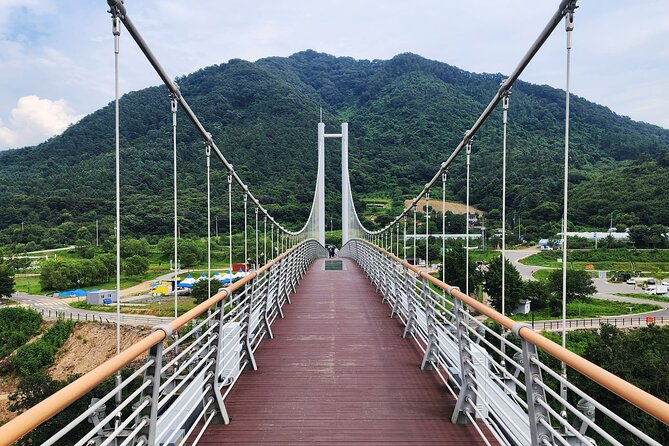
- Hantangang Sky Bridge + geopark cliffs offer a dramatic contrast to the DMZ
- It’s a full day: 7:00am start, round-trip drive time around 4–5 hours, and lots of seats used both ways
DMZ Reality Check in Cheorwon: What This Day Trip Tries to Explain
This tour is built around one big idea: the DMZ is not an abstract line on a map. It’s a working border zone shaped by tunnels, outposts, and geography that both sides have tried to use. You start with sites connected to the North Korean Workers’ Party legacy, then you move quickly toward the 2nd Tunnel, and finally you wrap with nature stops in the Cheorwon area that help you reset your head.
The better way to think about the day is as two stories happening in parallel. One is engineered and underground: the tunnel dimensions, depth, and what it could carry. The other is visible and above ground: cliffside paths, columnar rock formations, waterfall caves tied to doves, and a suspension bridge known from a popular TV drama. You get the contrast on purpose, and it makes the technical DMZ details hit harder.
You can also read our reviews of more tours and experiences in Seoul.

The 7:00am Rhythm: Myeong-dong Pickup and a Long Ride Out
You’ll start at Myeong-dong Station at 7:00am, and the tour runs about 11–13 hours total. The DMZ portion includes a round-trip vehicle drive of roughly 4–5 hours, so you’ll spend a good chunk of the day inside the bus in both directions.
The practical win is that you don’t need to coordinate transport on your own. The tour includes hotel pickup and uses an air-conditioned vehicle, which matters because your day begins early and you’re covering a large zone in limited time.
A small planning note: this is a “stay alert, but don’t sprint” kind of schedule. There are several stops, and the day can feel long if you’re expecting a relaxed hop-on/hop-off style.
Korean Workers’ Party Headquarters: A Starting Point With Political Weight
The first stop is the Korean Workers’ Party Headquarters, with an origin described as built in early 1946. The key detail here is timing: the records say it existed before the establishment of the Workers’ Party of North Korea, which helps anchor the whole DMZ narrative in post–World War II years.
Admission is listed as free for this stop, and the visit is designed to give you a frame for what comes next. Even if you don’t read every exhibit panel, you’ll feel the purpose: this isn’t just sightseeing. It’s about understanding why later structures—like the tunnel and the observatory—were created.
If you prefer tightly focused, one-topic tours, this opening may feel like the “intro lecture” portion. But it does pay off later when you see the tunnel as engineering with intent.
The 2nd Tunnel: Dimensions, Depth, and What 500m Lets You Understand
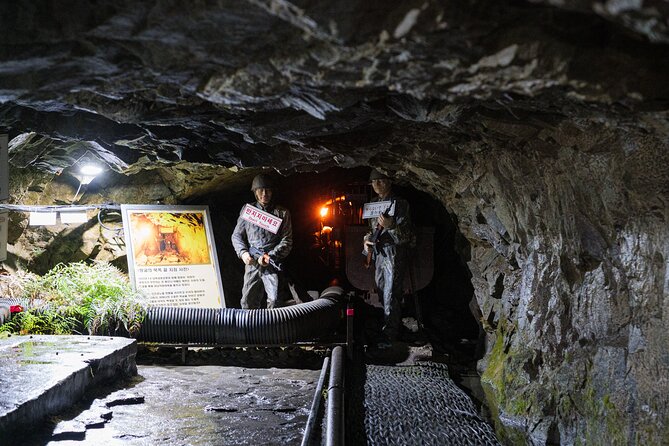
The centerpiece is the 2nd Tunnel, a North Korean-made infiltration tunnel in the DMZ area north of Cheorwon. The information on discovery timing is given as mid-March 1975, with references to March 19 and March 24 depending on the account. Either way, it was discovered in 1975 and opened a window into how serious the military planning was.
Here are the specifics that help you picture it like a real structure, not a vague rumor:
- It runs about 3.5 km long
- It sits roughly 50–160 meters below ground
- The tunnel arch is listed as about 2.1m wide and 2m high
- It’s described as capable of allowing around 30,000 armed troops to infiltrate within an hour with vehicles, artillery pieces, and even tanks
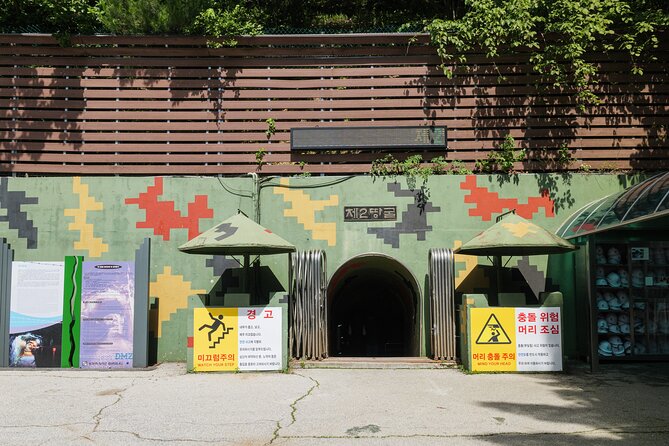
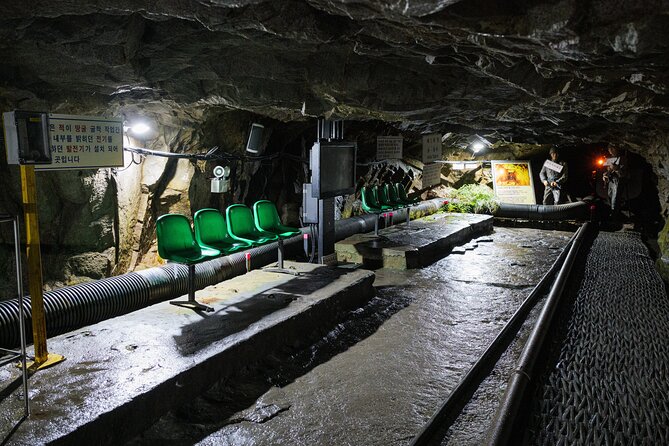
Now the part you’ll experience directly: you can currently explore about 500 meters of the tunnel, reached near the southern limit line. That doesn’t mean the rest is not important—it’s just what’s practical and permitted for visitors. What you’ll notice in that stretch is the tunnel’s enclosed scale. Even when you’re walking only part of it, the dimensions and the depth make the purpose feel immediate.
This is also where you should lean on your guide. A good guide turns “engineering facts” into “human consequence.” With Leo’s approach—clear explanations plus friendly context—you’ll be better equipped to connect what you’re seeing to why it matters.
Cheorwon Peace Observatory: Exhibits, Views, and Learning Without Screaming
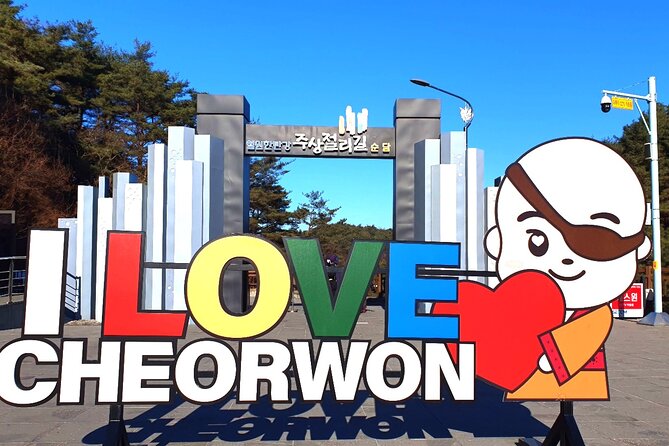
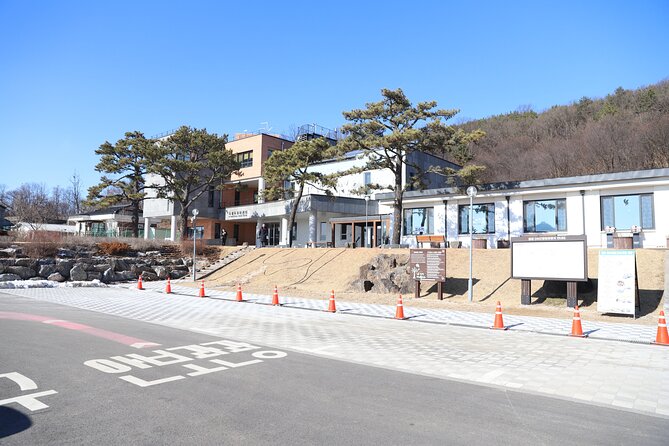
Next comes the Cheorwon Peace Observatory, a three-story building with a basement, opened in November 2007. The structure matters because it lets you split your attention: the first floor works like an exhibition hall, while the second floor functions as an observatory.
That layout helps you avoid the common problem on border tours: everything feels like rushing from one checkpoint to the next. Here, you can slow down. You get to absorb displays, then shift up to a view-focused stop where the surroundings start to explain the strategic logic behind the region.
Admission is included for this stop, so you’re not juggling extra tickets mid-day. It’s also one of the better “value anchors” of the itinerary because it balances information with a sense of place.



Woljeongri Station and the Iron Triangle Battlefield: The Train Relic Stop
Before you go deeper into the DMZ region, you hit Woljeong-ri Station, also tied to the Iron Triangle Battlefield story. This is the last stop before reaching the DMZ area on the schedule, and it’s built around remains of a train used for frequent trips to the north side (the description cuts off in the provided summary, but the idea is clear: transportation and supply routes).
There’s also a sign on site reading The iron horse wants to run again. The tone is symbolic, not technical, which is exactly what you want right before the tunnel and the more intense stops.
This is a short stop, around 30 minutes, but it can be emotionally useful. It reminds you that warfare is not only guns and tunnels—it’s also logistics, rail lines, and the infrastructure that tries to keep movement possible.
Hantangang Tour: Sky Bridge Views and UNESCO Geopark Cliff Path Feelings
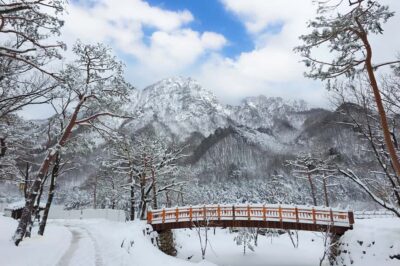
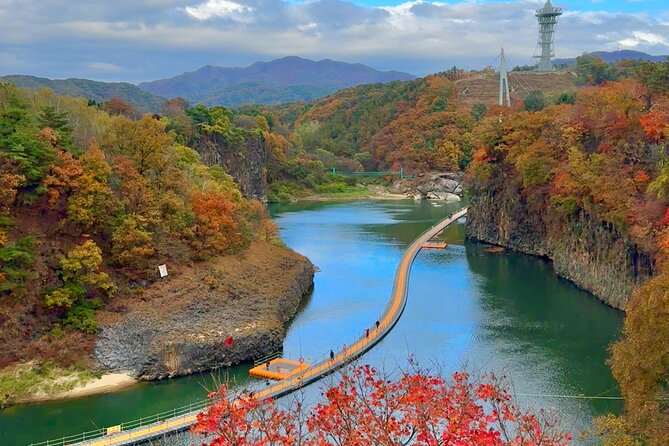
Then the day shifts outdoors in a big way: you go to Hantangang Geopark and the Sky Bridge, a suspension bridge featured in the TV drama Crash Landing on You. Even if you’re not a drama fan, the value here is the setting.
The Hantangang area is described with geology details that are rare for a DMZ-focused itinerary. You’re told the granites formed about 110 million years ago, then were covered by basalt lava flow, and later eroded in a way that created asymmetrical natural views of the Hantan River. You also hear about cliffside paths at 30–40m heights and columnar jointing linked to a UNESCO Global Geopark reference described as about 3.6 km long.
So what do you do with all that? You walk and look. The suspension bridge gives you a safe, planned viewpoint, while the cliffside environment gives you the “why this geology matters” part. It’s a genuine contrast to the tunnel. Instead of engineered darkness, you get air, light, and a sense of scale you can’t get underground.
This stop is short—about 30 minutes—so don’t expect a long hike. Use the time to soak in views, then let the day move on.
Bidulginang Waterfalls: A Quick Nature Pause With a Dove Story
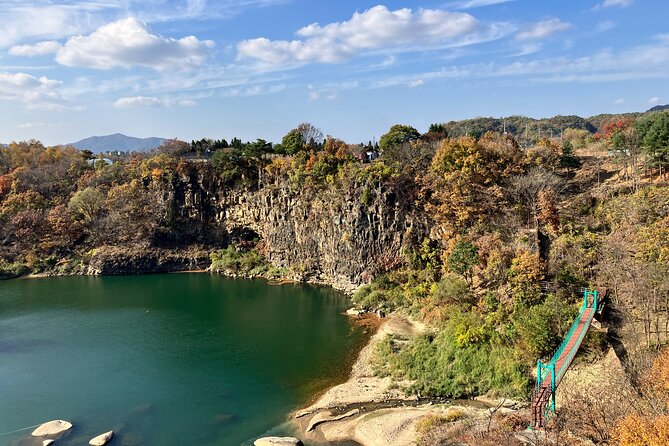
After the suspension bridge, you stop at Bidulginang Waterfalls for about 20 minutes. The name comes from the Korean word “nang,” explained as meaning nest, inspired by the hundreds of white doves that once nested in a cave behind the waterfall.
This is your calm intermission. The DMZ details are heavy, and the waterfalls let your brain reset. You’ll likely take a few photos, but the better use of the stop is as a break from all the underground and military framing.
It’s also another admission-free stop, which helps keep your day smooth and predictable.
Guide Leo’s Role: Why the Tour Feels Understandable
A DMZ tour lives or dies on explanation quality. The information here is detailed: tunnel length and depth, troop infiltration capacity, observatory structure, and multiple nearby sites. Without a strong guide, it can turn into memorizing numbers without understanding meaning.
That’s why the praise for Leo matters. The consistent theme around him is that he’s friendly, informative, and kind, and he knows how to set context without making the day cold or scripted. One practical bonus from his approach: he can steer you toward a local restaurant for lunch. Since lunch is not included on the tour, this is useful in real terms. You don’t want to burn time hunting food after a long early start.
If you’re the kind of person who likes to ask follow-ups, this kind of guided structure helps you get answers instead of just impressions.
Price and Value at $87: What You’re Getting for a Full DMZ Day
At $87 per person, the value comes from packing in multiple major sites plus the basics that make the logistics painless. You’re paying for:
- a professional English-speaking guide
- hotel pickup
- an air-conditioned vehicle
- all taxes, fees, and handling charges
- included admission items like the 2nd Tunnel and Cheorwon Peace Observatory
Two big “value signals” are how the admissions are handled and how much driving is covered. The tour includes ticketing where it counts, while other stops are listed as free. And you’re not spending your energy solving transport for a long, out-of-town schedule.
What can affect value for you personally is lunch. Lunch isn’t included, so plan to budget extra for that meal. If you’re disciplined about packing snacks or eating once at a good local spot, you’ll feel the price is fair for the amount of territory covered.
Timing, Weather, and Walking: The Things That Can Affect Your Day
This experience lists a moderate physical fitness level requirement, and that’s honest. You’ll be walking at multiple sites, including tunnel areas and outdoor viewpoints.
It also says the tour requires good weather, and if it’s canceled due to poor weather, you’ll be offered a different date or a full refund. So yes, plan around that. If you’re scheduling your trip tightly, keep some flexibility.
One more “day feel” factor: maximum group size is 80 travelers. That’s not “private tour” energy, so you’ll want to listen for where your guide wants you to stand and move as groups do. You’ll still get context, but you may not always have quiet, slow pacing.
Who This Tour Fits Best (and Who Might Want Something Different)
I think this tour fits best if you want a structured, guided introduction to the DMZ area that includes both high-emotion history and above-ground nature stops. It’s also a strong choice if you’re traveling solo or in a small group and want everything handled: pickup, vehicle, and major admissions.
It might feel less ideal if you:
- hate long days that start early
- want a lot of time in only one site (because this is a multi-stop day)
- prefer minimal walking and low physical effort
For most people, though, the mix works. You get the tunnel’s “engineering reality,” then you get observatory learning, then you get a scenic reset at Hantangang.
Should You Book This DMZ + 2nd Tunnel + Sky Bridge Tour?
Book it if you want a single-day structure that links the DMZ’s most famous tunnel story with the Cheorwon area’s visible geology and viewpoints. The included admissions for the 2nd Tunnel and the Peace Observatory help the day feel complete, and the guide quality—especially Leo’s clear, friendly explanations—can turn a hard topic into something you understand.
Skip it or choose another option if you can’t handle an 11–13 hour day, if walking is a problem for you, or if you need a lighter, shorter itinerary. And if your travel window has shaky weather, remember this is explicitly weather-dependent.
If you’re going to spend a day away from Seoul, this is the kind that gives your brain something to carry home: facts you can picture, and a landscape you can actually see.
FAQ
How long is the DMZ tour with the 2nd Tunnel and UNESCO suspension bridge stops?
The tour runs about 11 to 13 hours (including travel time).
Where does the tour start and end?
It starts and ends at Myeong-dong Station in Seoul.
What time does the tour start?
The start time is 7:00am.
What is the price per person?
The price is $87.00 per person.
What’s included in the tour price?
The tour includes a professional English-speaking guide, hotel pickup, all taxes/fees/handling charges, and an air-conditioned vehicle. Admission is included for the 2nd Tunnel and the Cheorwon Peace Observatory.
Is lunch included?
No, lunch is not included.
What DMZ sites does the itinerary include?
It includes the Korean Workers’ Party Headquarters, the 2nd Tunnel, the Cheorwon Peace Observatory, and Woljeong-ri Station (Iron Triangle Battlefield).
How much of the 2nd Tunnel can you explore?
You can explore about 500 meters of the 2nd Tunnel (currently available length), near the southern limit line.
Are tickets included for every stop?
Admission ticket is included for the 2nd Tunnel and Cheorwon Peace Observatory. Other stops listed are admission free.
What happens if weather is bad?
The tour requires good weather. If it’s canceled due to poor weather, you’ll be offered a different date or a full refund.
How big are the groups?
The tour has a maximum of 80 travelers.