REVIEW · KOREAN COOKING CLASSES
Korean Kimchi Making Day Experience with a Local Market Tour
Book on Viator →Operated by cookorean · Bookable on Viator
Kimchi making gets real when you shop first. This Seoul class pairs a guided walk through Mangwon Market with hands-on coaching from chef Jomin, then you make four types of kimchi and bring them home.
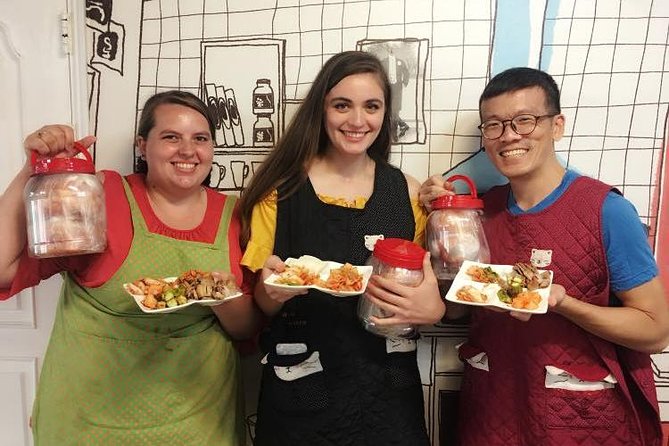
I especially love the maximum-four class size. You get one-on-one attention while you’re actually working with ingredients, not just watching. I also like the Mangwon Market part, because it teaches you how to spot what matters for flavor and freshness, plus you can nibble street snacks along the way.
The main thing to plan for is the take-home amount. You’ll leave with a take-home container full of kimchi, which can mean space issues (and yes, kimchi has a strong aroma if your luggage isn’t set up for it).
In This Review
- Key Things to Know Before You Go
- Mangwon Market Is the Secret Ingredient
- Timing and Logistics: What the 3.5 Hours Adds Up To
- Chef Jomin’s Kitchen Coaching for Four Types of Kimchi
- The Hands-On Meal: Kimchi With Pork and Tofu
- Take Home Your Kimchi: Great Souvenir, Real-World Planning
- Price and Value: Where the $89 Makes Sense
- Who Should Book This Kimchi-Making Day
- Cancellation and Rebooking: The Only Watch-Out
- Should You Book This Kimchi Making Day in Seoul?
- FAQ
- Where do I meet for the kimchi making class?
- How long is the experience?
- What will I be making during the class?
- Do I get to take kimchi home?
- Are there vegetarian or vegan options?
- What if the class doesn’t have enough guests?
Key Things to Know Before You Go
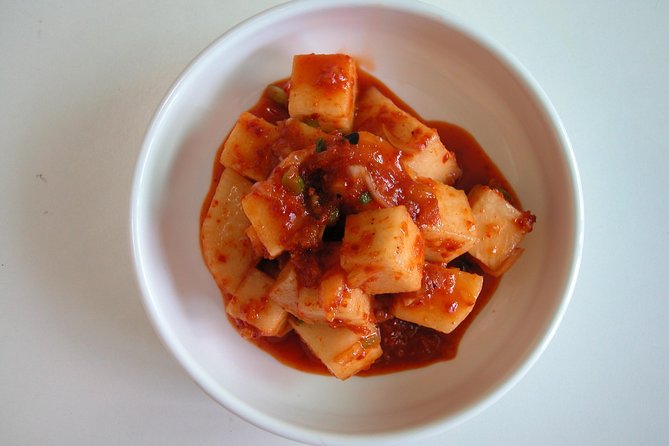
- Small-group attention with up to four people in the cooking portion
- Mangwon Market ingredient scouting before you start chopping and seasoning
- Four distinct kimchi styles made in one 3.5-hour session
- Hands-on teaching led by chef Jomin, not a demo-only class
- You eat what you make, plus a Korean-style meal afterward
- Take-home leftovers so you can keep tasting your work after the class
Mangwon Market Is the Secret Ingredient
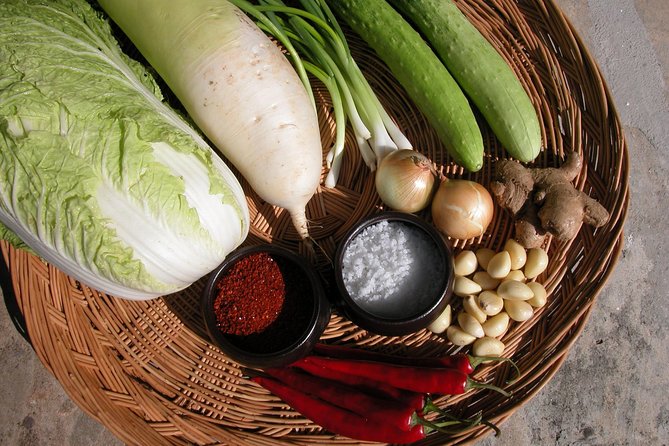
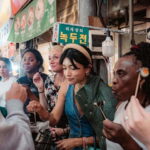
This experience starts at Mangwon Metro Station (Line 6), Entrance 2—then you’re not thrown directly into a kitchen. Instead, you walk through Mangwon Market first, with chef Jomin guiding you through how Korean cooking starts with buying the right stuff.
This matters more than it sounds. Kimchi isn’t just about a recipe card—it’s about sourcing. In the market portion, Jomin points out ingredients used in class like Korean cabbage, radish, and cucumber, and explains how to find quality. You also get the fun part: tasting street foods. Think of this as learning the language of the ingredients while you snack your way through a real local food scene.
If you like the idea of cooking back home, the market walk is the difference between I made kimchi once and I can rebuild it anytime. You’re learning how to approach shopping, not only how to follow steps.
You can also read our reviews of more shopping tours in Seoul
Timing and Logistics: What the 3.5 Hours Adds Up To
The class runs about 3 hours 30 minutes, using a straightforward flow that keeps the energy up without feeling rushed.
- You meet at the subway entrance, then head to the cooking studio with time for the market walk.
- At the studio, you switch gears from eating and browsing to mixing, seasoning, and assembling.
- Afterward, you eat a meal made with your kimchi, and you take your leftovers home.
This timing is practical. It’s long enough for real hands-on practice with four types of kimchi, but short enough to still enjoy your day in Seoul without losing an entire evening to cooking.
There’s also a real comfort factor here: the group is small. The class segment is maximum four people, so questions don’t get lost in the crowd. The overall activity can have up to 11 travelers, but the cooking portion stays intimate.
Chef Jomin’s Kitchen Coaching for Four Types of Kimchi
Once you reach the studio, you’ll get cooking instruction from chef Jomin. The promise here is not passive watching. You’re coached through the process, which is a big deal because kimchi is all about technique: texture, seasoning distribution, timing, and how you layer the ingredients.
The class focuses on four authentic types of kimchi using fresh produce. You work with ingredients like cabbage, radish, and cucumber—the flavors you’ll recognize from Korean homes, and the building blocks that help you understand how kimchi varies.
Why this approach is valuable: many beginner classes teach one style (often the classic napa-cabbage version) and stop there. This one pushes you to see how the method adapts across different textures and setups. By the end, you’re not just making one jar—you’re building a base you can apply to future experiments.
You’ll also get a recipe reference to take home. In the reviews and course description, this is repeatedly framed as a confidence booster: you leave with the know-how to recreate the process, not just the taste.
The Hands-On Meal: Kimchi With Pork and Tofu
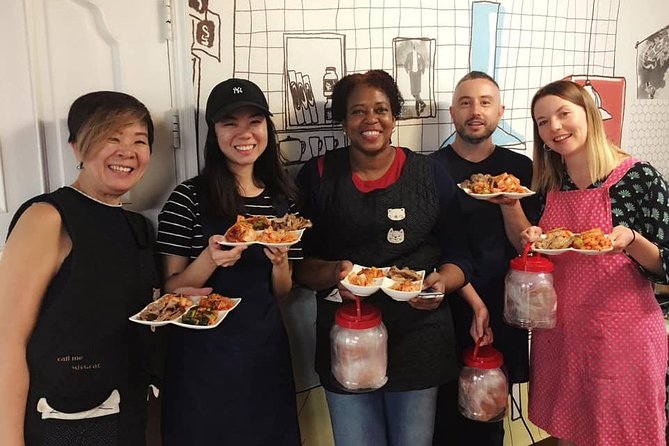
After the cooking, you sit down and eat what you made. The meal is described as kimchi paired with boiled pork and fried tofu, served in the style families enjoy on a special day.
This part is more than a reward. It’s how you learn. When you taste kimchi right after it’s prepared, you understand what the ingredients are doing and how the seasoning lands.
You can also expect a Korean dining vibe. One review mentions pairing with makgeolli, which is often part of cozy Korean meal culture. Even if you don’t choose to drink it, it’s a helpful cue for the overall comfort-food feel: this is meant to be a full experience, not a snack workshop.
And if you’re vegetarian or vegan, the class notes vegetarian and vegan options are available, so you’re not locked out of the meal portion.
Take Home Your Kimchi: Great Souvenir, Real-World Planning
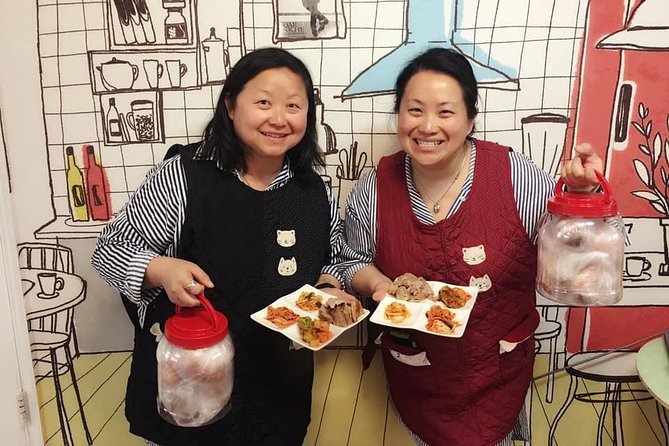
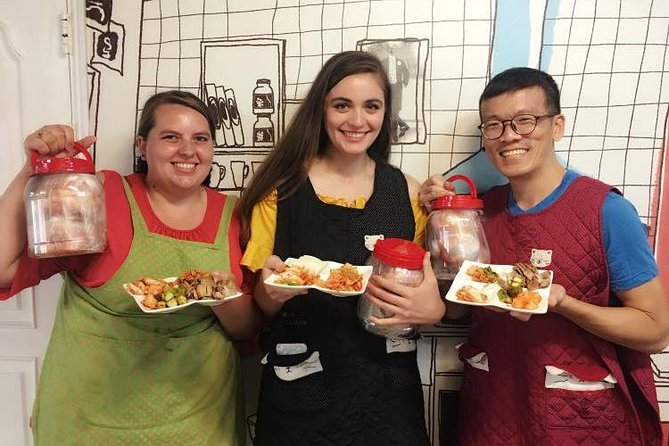
You get to take home any leftovers after the class—and the container is a key detail. More than one review stresses that you’ll come away with a lot, and that it becomes a souvenir you’ll actually use.
That’s fantastic value, but it’s also why you should pack smart:
- Leave room in your luggage if you can.
- Store it in a way that won’t spread odor everywhere.
- Plan your schedule so you can enjoy it soon after your class day.
Kimchi keeps well, but your travel day doesn’t. If your hotel fridge space is limited or your flight is tight, you’ll want to think ahead so the take-home part stays fun instead of stressful.
You can also read our reviews of more tours and experiences in Seoul




Price and Value: Where the $89 Makes Sense
At $89 per person, this class isn’t the cheapest food activity in Seoul. But when you break it down, it starts to look like a solid deal for what you actually get:
- A guided market walk (with ingredient education and street-food tastings)
- A cooking session that teaches four types of kimchi
- Chef-led, small-group instruction with maximum four people in the class
- A sit-down meal featuring the kimchi you made
- A take-home container with leftovers
In other words, you’re not just paying for the final jar. You’re paying for the shopping education, the technique coaching, the guided tasting, and the materials/food used during class.
If your goal is to learn a skill you can repeat, this price can feel reasonable fast—especially because the class design supports questions and real participation.
Who Should Book This Kimchi-Making Day
This is a great fit if you want one of the most practical cooking souvenirs possible: real recipes, ingredient shopping confidence, and jars you’ll eat after you fly home.
You’ll likely enjoy it most if you:
- Love Korean food and want to understand what makes kimchi work
- Prefer small groups and direct coaching over big tour energy
- Want to learn more than just one style of kimchi
- Like market-based learning, not only studio cooking
It may be less ideal if:
- You don’t want to deal with luggage space or odor from take-home food
- You need a very quiet experience (markets are active; you’ll be around stalls and lots of sensory input)
- You expect a super long deep-dish fermentation lecture (this is a hands-on class format, not a long theoretical workshop)
Cancellation and Rebooking: The Only Watch-Out
This experience can be rescheduled or canceled if it doesn’t meet a minimum number of guests (the information indicates a minimum of 4). That means you should plan with some flexibility if your dates are fixed.
The good news is that the booking is set up with a mobile ticket, and you’ll receive confirmation at the time of booking.
Should You Book This Kimchi Making Day in Seoul?
If you’re trying to choose between yet another Seoul food tour and a hands-on experience, this one leans hard toward hands-on.
Book it if you want:
- Market-to-studio learning (you learn how to choose ingredients, not only how to mix them)
- Four kimchi styles in one class
- A small group with real guidance from chef Jomin
- The satisfaction of eating what you made and bringing a lot home
Skip it if you absolutely can’t handle take-home food in your luggage, or if you only want a quick tasting without cooking.
For most food lovers, this is one of the more useful classes you can do in Seoul. You’ll leave with jars, recipes, and the confidence to shop and cook kimchi again.
FAQ
Where do I meet for the kimchi making class?
You meet at Mangwon Station (Line 6), Entrance 2. The activity ends back at the meeting point.
How long is the experience?
The class runs for about 3 hours 30 minutes.
What will I be making during the class?
You’ll learn to prepare four types of kimchi using fresh ingredients such as Korean cabbage, radish, and cucumber.
Do I get to take kimchi home?
Yes. You can take home any leftovers after the class, and a container is provided.
Are there vegetarian or vegan options?
Yes. Vegetarian and vegan options are available.
What if the class doesn’t have enough guests?
If the experience doesn’t meet the minimum number of travelers, it can be rescheduled or canceled, and you’ll be offered a different date/experience or a full refund.