REVIEW · HISTORICAL TOURS
Korean History & Heritage Tour
Book on Viator →Operated by KoreanTourGuide · Bookable on Viator
A day in Gangbuk makes history feel close. This private, 7-hour Seoul tour strings together Joseon-era landmarks and everyday culture in a tight route, with hotel pickup/drop-off and an air-conditioned vehicle to keep you moving comfortably.
I especially like the mix of big sights and human-scale places: the Gyeongbokgung Palace guard change and the National Folk Museum’s life-cycle storytelling. The one real consideration is that lunch isn’t included, and the palace admission isn’t included either, so you’ll want to budget time and money for that midday gap.
In This Review
- Key Highlights You’ll Feel Right Away
- Why Gangbuk Works: A One-Day Route Through Joseon-Era Seoul
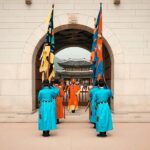
- Gyeongbokgung Palace and the Guard Change: More Than a Photo Moment
- National Folk Museum of Korea: Birth, Life, Death, and the Afterlife
- Bukchon Hanok Village: Traditional Streets Where People Still Live
- Insadong: Antique Lanes Tied to Royal Arts
- Jogyesa Temple and Cheonggyecheon: A Calm Break From Buildings
- Kwangjang Market: The Comfort-Food Finish Line
- Price and Value: What $475 per Group Really Buys
- Getting the Day Right: Guide Quality and a Quick Safety Check
- Who Should Book This Seoul Gangbuk Day?
- Should You Book This Korean History & Heritage Tour?
- FAQ
- What does the tour include?
- How much is the tour?
- What time does the tour start and how long is it?
- Is lunch included?
- Do I need to pay for admissions?
- Is pickup available outside Seoul?
- Is this a private tour?
- Is the tour suitable for most people?
- Are service animals allowed?
Key Highlights You’ll Feel Right Away
- Private group, up to 6 people, so the pace can match your interests
- Hotel pickup and drop-off from anywhere in Seoul, saving you time and stress
- Gyeongbokgung Palace guard change plus deeper palace time, not just a quick photo stop
- National Folk Museum of Korea is free and structured around everyday life
- Bukchon Hanok Village, Insadong, Jogyesa Temple, and Cheonggyecheon in one efficient day
- Kwangjang Market at the end lets you shift from heritage to street food comfort
Why Gangbuk Works: A One-Day Route Through Joseon-Era Seoul
Gangbuk is where you can feel Seoul’s older rhythms—palaces, traditional neighborhoods, and religious sites—without hopping all over the city. The smart part of this tour is the order of stops. You start with royal power, then move to how ordinary life was lived and explained (through museum storytelling), and only after that do you wander through streets, markets, and spiritual spaces.
Because you’re in a private group with a guide, you’re not stuck doing the same museum spiel or standing at the same viewing spot as everyone else. You get to ask questions and point out what you want to linger on. And with a dedicated car, you’re not spending your day fighting Seoul transit maps.
The route also helps you avoid the common trap: stacking five heavy sights and getting numb. Here, the tour alternates between structured places (palace, museum) and breathing-space walks (stream, market, hanok streets).
You can also read our reviews of more historical tours in Seoul
Gyeongbokgung Palace and the Guard Change: More Than a Photo Moment
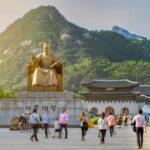
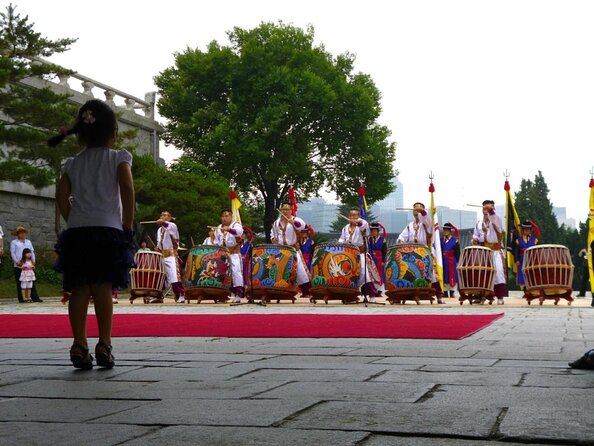
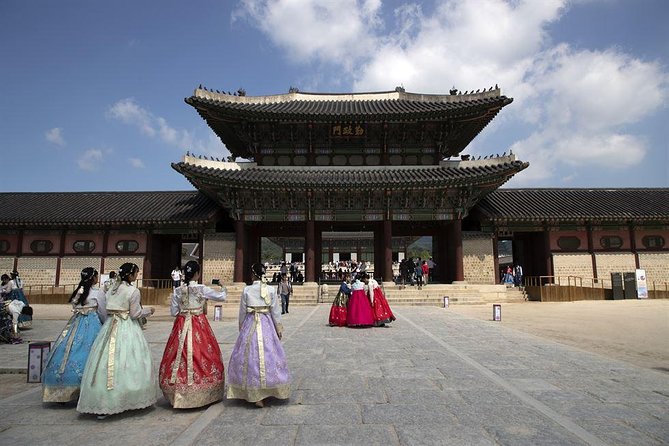
Gyeongbokgung Palace is the headline. You’ll see the Changing of the Guard Ceremony and then go deeper into the palace grounds to appreciate the architecture and the way a royal complex is laid out. With only 45 minutes allotted, you’ll want the guide to help you choose what to focus on—best angles, major halls, and the “what am I looking at” details that turn stone and courtyards into something understandable.
Also note the practical point: admission for the palace isn’t included. That’s not a deal-breaker, but it does mean you should bring extra cash/card for entry. If you’ve been to palaces before, you’ll know the entry process and lines can eat time—having that built into the tour plan helps.
What I like about starting here is that you’re fresh. Later in the day, after temples and markets, you might still enjoy it, but your attention is more likely to split. At the start, the palace delivers its best payoff: scale, symbolism, and the feeling of stepping into a court setting.
National Folk Museum of Korea: Birth, Life, Death, and the Afterlife
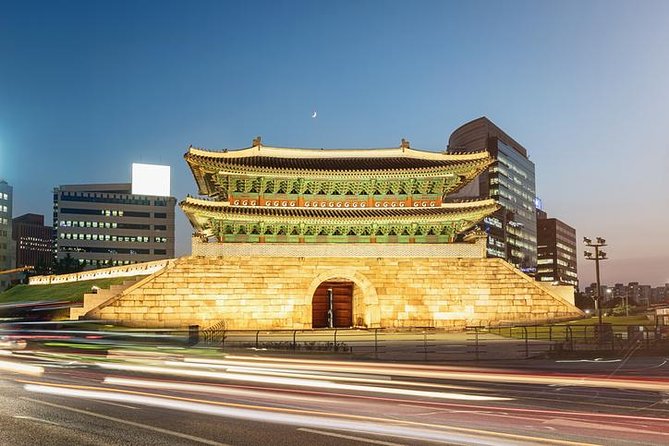
Next up is the National Folk Museum of Korea, where you get a compact lesson on how Koreans understood life as a whole—from birth to everyday living to death, with views of what came after. The tour time here is about 30 minutes, and the best value is that it’s not random room-hopping. It’s framed as a story of human experience.
Admission is free for this stop, which is a nice bonus in a day that still includes a paid palace ticket. You can treat this museum stop like the tour’s “translation tool.” After you see palaces and hanoks, the museum helps you connect the buildings and rituals to real people and real beliefs.
A tip for getting the most out of a short museum visit: pick a few themes you care about most—family life, clothing traditions, burial customs—and ask your guide to point you to the best exhibits for that theme. In a tight time window, that strategy beats trying to read everything.
Bukchon Hanok Village: Traditional Streets Where People Still Live
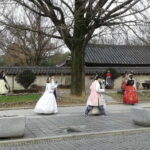
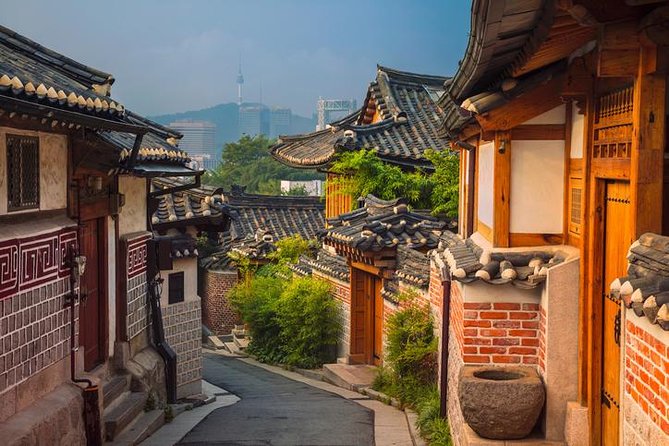
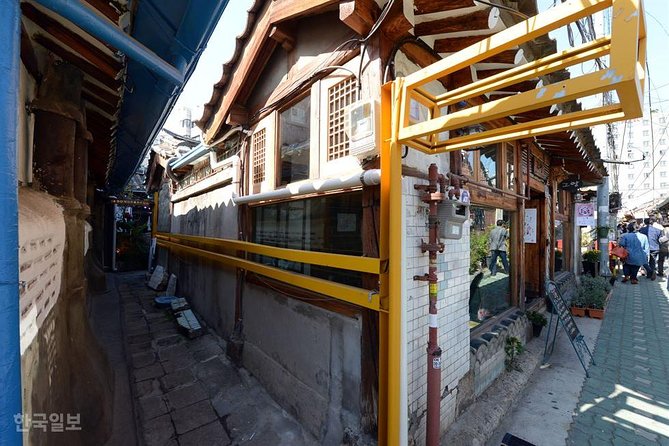
You’ll then spend about 40 minutes in Bukchon Hanok Village, where you can see a traditional Korean neighborhood with residents still living there. This stop is free, but the value isn’t “free admission,” it’s context. You’re not just looking at historic facades from a distance. You’re walking through a living neighborhood layout—courtyards, narrow street sightlines, and the way homes fit together over time.
The drawback of hanok villages is simple: they can feel crowded and your walking path may be uneven. If your knees are touchy, pace yourself. Let the guide steer you around the most practical routes, and don’t feel pressured to sprint for every viewpoint.
What I love here is the small-scale feel. Palaces are grand and controlled; hanok village streets are intimate and real. That contrast is part of the tour’s strength.
Insadong: Antique Lanes Tied to Royal Arts
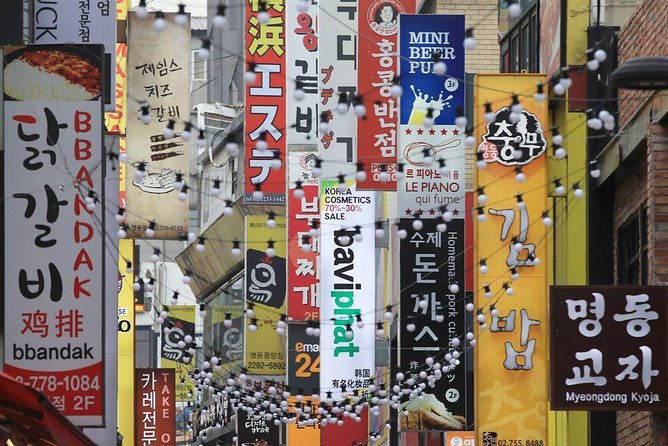
After hanoks, the tour shifts into a creative/art-and-souvenirs mood in Insadong. You walk through what’s described as a place connected to a king’s guild—artists and designers commissioned to create artworks—and now it’s known for antique alleyways where you can pick up Korean souvenirs.
You’ll have about 45 minutes, which is enough time to browse without turning it into a marathon. The key is to use this stop intentionally. If you’re hunting for a specific type of item—paper goods, craft pieces, or small cultural keepsakes—go in with a rough idea. In a shopping-heavy area, a plan beats impulse-browsing.
Also, Insadong can be busy depending on the time of day. If you want calmer strolling, keep your pace steady and let the guide guide you to the easier lanes. You’ll still get the atmosphere without losing your patience.




Jogyesa Temple and Cheonggyecheon: A Calm Break From Buildings
Then comes a pair of stops that act like a reset. At Jogyesa Temple, you’ll see a Buddhist temple connected to the country’s historical role of Buddhism as a national religion. Time here is only about 20 minutes, so think of it as an orientation stop—enough to notice the architecture, the spiritual setting, and the way the space functions.
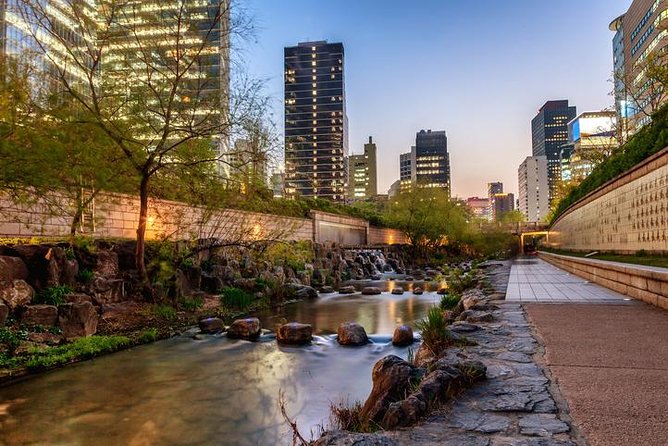
Next you walk along Cheonggyecheon Stream for about 30 minutes. This is a city waterway and walking stretch, and the tour frames it with stories behind it. Even if you’ve seen photos of Cheonggyecheon before, walking it with commentary helps you notice what you would otherwise skip: why this kind of public space matters, and how Seoul mixes old and new.
This middle-to-late-day rhythm is smart. After palace and museum, you get movement and light. After shopping, you get something quiet. You don’t end the day totally fried.
Kwangjang Market: The Comfort-Food Finish Line
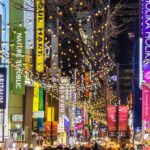
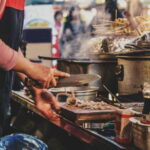
To cap it off, you end with Kwangjang Market, described as a 600-year-old market that evolved from selling linens for special occasions into a go-to place for Korean comfort street food. You’ll have about 30 minutes, so it’s a taste-and-walk stop rather than a full feast.
This is where you’ll feel the payoff of the whole day. The tour has moved from heritage to daily life—then the market brings daily life back to you, in the form of snacks and food-cart culture.
One practical note: 30 minutes disappears fast in a place like this. If you’re hungry, make your choices quickly and don’t get stuck reading every sign. In past experiences with guides named Michael, guests were guided toward dishes like ginseng black chicken, so if that style of comfort food appeals to you, it’s worth asking your guide what’s best to try in the time you have.
Also, plan your appetite for the fact that lunch isn’t included. If you skip lunch, you’ll want to treat the market as a late meal. If you eat earlier on your own, use the market as a sampling stop.
Price and Value: What $475 per Group Really Buys
The price is $475 per group (up to 6 people). That phrasing matters. In a private setup, you’re not paying per person like many solo-focused tours. You’re buying a shared day of transport, a guide experience, and a guided route through multiple free stops plus one paid palace ticket on your own.
What’s included is an air-conditioned vehicle, plus hotel pickup and drop-off anywhere in Seoul. That’s a big “time-value” benefit in a city where transit can be fast but planning can be exhausting. You’re also getting a mobile ticket, which is usually a small convenience but still helpful on a day full of timed visits.
What’s not included: lunch, and palace admission at Gyeongbokgung. And if you’re picked up outside Seoul but within Gyeonggi Province, there’s a $50 surcharge. So the real value question becomes: are you comfortable handling lunch on your own and paying one main admission?
If your group is 4–6 people, this kind of private day can feel like a bargain compared to piecing together taxis, museum tickets, and guide time separately. If you’re traveling solo or as a couple, you’ll want to weigh convenience versus cost—still great, but the per-person value depends on how many you can split with.
Getting the Day Right: Guide Quality and a Quick Safety Check
A private tour is only as good as its execution. The good sign here is that guides like Michael and Judy have been highlighted for being friendly, patient, and good at explaining how daily life and history connect. That’s exactly what you want when you have limited time and multiple stops.
Still, there’s an outlier caution in the mix: an unprofessional experience was reported involving a guide named YT Kim, where the car was parked far away and the tour felt like it shifted into a walking-style outing. I can’t verify any specific logistics, but it does point to a simple rule for you: if pickup seems off, ask immediately. Confirm the plan for each stop before you start moving, and if your guide changes the route or transport without clear communication, you should speak up right then. Private tours work best when everyone is aligned from minute one.
A practical move: have your hotel address ready and note a clear pickup spot. If you’re joining from a busy street, choose a landmark for meeting the car. That prevents awkward delays that can shrink your museum and market time later.
Who Should Book This Seoul Gangbuk Day?
This tour is best for you if you want a guided overview of Korean heritage in one shot—palace ceremony, folk culture, traditional neighborhoods, Buddhist temple, and a market finish. It’s also a strong choice if you’d rather avoid logistics and just trust a route.
You’ll likely enjoy it if:
- You like history but want it explained through daily life, not just facts
- You want a comfortable, air-conditioned ride between far-flung stops
- You enjoy markets and want a guided taste experience at Kwangjang Market
It might not fit perfectly if:
- You want a long, unstructured market hangout (30 minutes is a taste, not a full food quest)
- You strongly prefer lunch included in the price
- You want a fully self-guided pace with no scheduled stops
Should You Book This Korean History & Heritage Tour?
I’d book it if you’re aiming for one efficient, meaningful day in Seoul’s Gangbuk area. The combination of Gyeongbokgung, the National Folk Museum, lived-in hanok streets, a temple-to-stream break, and a market finish gives you a balanced snapshot without dragging you across the whole city.
Book it especially if your group can split the cost up to 6 people, because the private transport and pickup value gets stronger. Bring a little flexibility for lunch planning, budget for the palace admission, and you’ll likely have a smooth day that feels like Seoul’s past and present working together.
FAQ
What does the tour include?
You get an air-conditioned vehicle and free hotel pickup and drop-off from anywhere in Seoul, plus a private guided experience through multiple stops. A mobile ticket is used.
How much is the tour?
The price is $475 per group, up to 6 people.
What time does the tour start and how long is it?
It starts at 9:00 am and runs for about 7 hours.
Is lunch included?
No. Lunch isn’t included.
Do I need to pay for admissions?
Gyeongbokgung Palace admission isn’t included. The other listed stops (National Folk Museum of Korea, Bukchon Hanok Village, Insadong, Jogyesa Temple, Cheonggyecheon Stream, and Kwangjang Market) are listed as free or without admission costs.
Is pickup available outside Seoul?
Pickup outside Seoul but within Gyeonggi Province adds a $50 surcharge.
Is this a private tour?
Yes. It’s private, meaning only your group participates.
Is the tour suitable for most people?
The info says most travelers can participate.
Are service animals allowed?
Yes, service animals are allowed.