REVIEW · SEOUL CITY & PRIVATE TOURS
Korean War Memorial Private Guided Tour
Book on Viator →Operated by 강원피스투어 · Bookable on Viator
Korean history gets real fast. This private tour of the Korean War Memorial turns Korean War Room I–III into a guided, easy-to-follow story, and I especially like the one-group format with English-speaking PhD-student guides plus complementary picture-and-document materials. The main thing to consider is cost: it’s $100 per group (up to 5), so solo travelers can feel it more if you’re not splitting with companions.
In This Review
- What You’ll Love and What to Watch For
- Key Highlights at a Glance
- Korean War Memorial Basics: Why This Tour Starts Here
- The Private, 2-Hour Format That Makes Sense
- Meeting the Guide and Finding the Right Spot
- Korean War Room I–III: The Timeline You Can Actually Follow
- When the Guide Brings Propaganda vs. Truth Into the Room
- The Documents You Get to Keep: Learning That Stays With You
- Guide Expertise You Can Feel: PhD Students and Peace Focus
- Practical Notes: Ticket, Timing, and Comfort
- Price and Value: Is $100 Per Group Worth It?
- Who This Tour Suits Best
- Should You Book? A Simple Decision Guide
- FAQ
- How long is the Korean War Memorial Private Guided Tour?
- What does the tour cost and how big is the group?
- Is the admission ticket included?
- What language are the guides?
- What is included besides the guide?
- What if I need to cancel?
What You’ll Love and What to Watch For
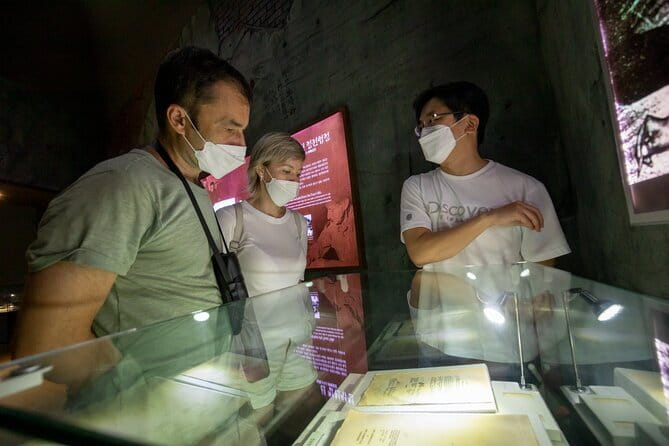
You’re paying for clarity and context, not just museum time. I’d watch for one trade-off: the tour is focused on the Korean War and its aftermath, so if you want a broad “Seoul sights” walk or a lot of time for browsing at your own pace, this may feel a bit tightly scheduled—though that structure is also why it works.
Key Highlights at a Glance
- Private group (up to 5) for a full 2 hours—no crowd shuffle
- PhD-student guides with expertise in Korean history, peace activism, and DMZ tours
- Guided viewing of Korean War Rooms I–III with a timeline approach
- Complementary materials: pictures and copies of documents to take with you
- Q&A that tackles propaganda vs. what actually happened
- Free admission ticket to the War Memorial for this guided time
You can also read our reviews of more guided tours in Seoul


Korean War Memorial Basics: Why This Tour Starts Here
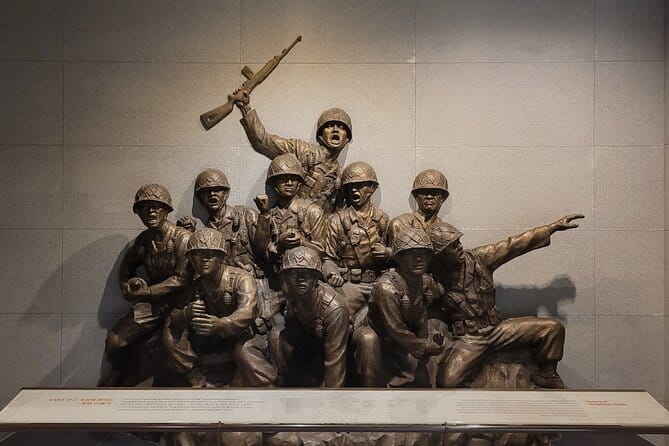
If you’re trying to understand South and North Korea today, the Korean War isn’t optional background. It’s the hinge. This tour is built around that idea: you’ll connect the events after liberation to how the war formed, what happened in key phases, and why the armistice mattered so much.
What I like about this approach is that it isn’t just military history in a vacuum. The tour frames the conflict from both civil and international perspectives through a peace lens. That gives you a way to read what you’re seeing in the museum without getting lost in dates and slogans.
Also, the setting helps. The War Memorial complex is full of information. With a guide, you don’t just collect facts—you learn what to pay attention to and how different parts of the story fit together.
The Private, 2-Hour Format That Makes Sense
This is a private tour/activity for only your group, with a group size of up to 5. Duration is about 2 hours, and you get a mobile ticket.
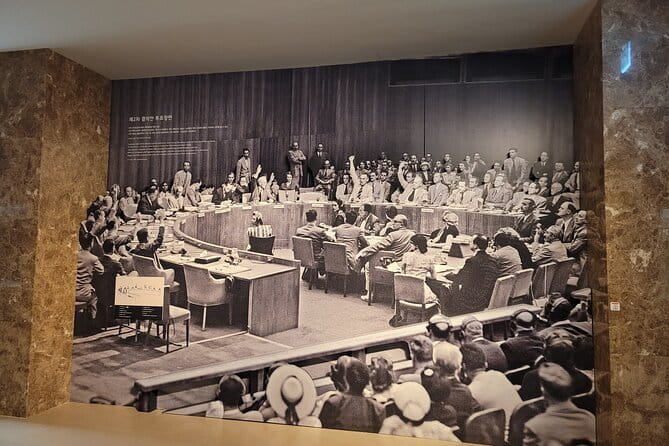
That one-group focus matters more than it sounds. In a museum, people often face the same problem: you can walk around for hours, but you still come out with a blurry timeline. Here, the structure forces the story into order: birth of the two Koreas after liberation, the origins and backgrounds of the war, the four stages of war situation, and the armistice leading into what became the DMZ.
You’ll also have time to ask questions. Several guides are described as able to answer questions clearly and honestly, and that’s crucial for a topic where information can be politicized. If you’re the type who likes to test your understanding as you go, this format is made for that.
Meeting the Guide and Finding the Right Spot
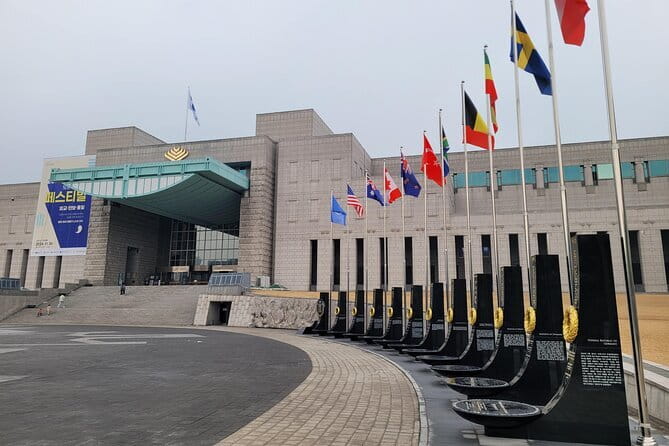
You start at 8-66 Yongsan-dong 1(il)-ga, Yongsan District, Seoul, and you end at War Memorial of Korea, 29 Itaewon-ro, Yongsan District. Meeting is in the lobby of the War Memorial of Korea.
The tour is near public transportation, so you’re not chained to a taxi. Service animals are allowed too, and there’s a note that you should have moderate physical fitness—which in museum terms usually means comfortable walking through exhibition spaces and standing for explanations.
One practical detail that stands out from the experience style: if you’re late, the guide team can help you catch up by updating where they are inside the museum space. That’s the kind of small stress-saver you’ll appreciate if Seoul timing goes sideways on you.
Korean War Room I–III: The Timeline You Can Actually Follow

The heart of the tour happens in the War Memorial’s Korean War Rooms I–III. Your guide leads you through the highlights, but the key is the way they connect the pieces.
Here’s what the tour content is aiming to cover:
- Liberation and the birth of two Koreas: how conditions after liberation helped shape what came next
- Origins and backgrounds of the war: including context that helps you understand why conflict erupted
- Four stages of the war: a structured way to track how the situation changed over time
- Armistice and the birth of the DMZ: what the armistice did, and why the DMZ became a defining feature
The tour also emphasizes something you’ll feel as you listen: the guide frames the story with peace and activism in mind. That doesn’t mean it’s only moralizing. It means you’re guided to ask questions like: What were the human costs? What were the political narratives? What facts can you verify, and what claims should you treat carefully?
You can also read our reviews of more private tours in Seoul





When the Guide Brings Propaganda vs. Truth Into the Room

A standout theme from the experience is how often the guide helps you distinguish propaganda from what’s more grounded in reality. That matters because the Korean War is tangled with competing narratives, and even smart, well-read people can get turned around if they don’t have a framework.
This tour gives you that framework. The guides are described as able to explain complex points in a way that feels organized, not confusing. They also answer questions directly rather than brushing you off with broad statements.
You’ll also see a shift in perspective: the war isn’t just “who fought whom.” It’s a story with social consequences. One of the strongest points mentioned is attention to the terrible social cost—the kind of impact that doesn’t always fit neatly into a battlefield timeline.
If you care about understanding conflict as something that reshapes ordinary life, you’ll probably leave with a more human grasp of the story, not just an academic one.
The Documents You Get to Keep: Learning That Stays With You
This tour includes complementary materials—specifically, pictures and copies of documents.
That’s not a gimmick. With a museum tour, you often remember the general idea and forget the details. Having printed or copied materials means you can review your notes later, follow up on ideas you didn’t fully catch the first time, and keep your own timeline straight.
If you’re planning to keep studying after Seoul—maybe through reading, museum revisits, or a future DMZ-related itinerary—these handouts help you make connections faster. They also turn the tour into something you can revisit instead of a one-time explanation you quickly forget.
Guide Expertise You Can Feel: PhD Students and Peace Focus
The guides are described as PhD students with expertise in Korean history, peace activism, and DMZ tours. That matters because you can tell when someone has studied the subject deeply and learned how to explain it clearly for non-specialists.
Names you might hear mentioned include Lee Kichan and KaiChin (spelled in a few ways). Regardless of which guide you get, the experience points to a consistent style: confident English, patient answers, and a willingness to talk about politics and how narratives are built.
A big plus here is tone. The tour doesn’t just hand you a prepared script. It’s built to respond to your questions, which is especially useful if you’ve read something online that conflicts with what you’re seeing in person.
Practical Notes: Ticket, Timing, and Comfort
Here’s what you should know to show up ready:
- Duration: about 2 hours
- Admission ticket: free for this guided visit
- Ticket type: mobile ticket
- Group size: up to 5 in a private group
- Fitness: moderate physical fitness level recommended
- Where to meet: lobby of the War Memorial of Korea
- Where the tour ends: at the War Memorial location (same area)
You don’t have to be a military-history nerd to enjoy this. The structure is designed to make the timeline make sense, and the guide materials aim to help you keep track of what matters.
The tour also works well if you’re trying to choose between doing this first versus doing it late in your trip. Doing it earlier helps you understand what you’re looking at later in other contexts.
Price and Value: Is $100 Per Group Worth It?
Let’s talk numbers without hand-waving.
The price is $100.00 per group (up to 5). That means:
- If you go as a group of 5, you’re effectively paying about $20 per person.
- If you go as a couple, you’re paying about $50 per person.
- If you go solo, you’re paying the full $100.
So the value depends on your travel style. If you’re traveling with friends, family, or another pair, this can be a bargain compared to the cost of paying for separate private guidance. The museum admission is free for your guided time, so you’re mostly paying for the expert explanation, the document handouts, and the structured timeline.
For short stays, the timing helps too. Two hours is long enough to build understanding, short enough to fit into a busy Seoul schedule.
Who This Tour Suits Best
This Korean War Memorial private tour is a strong fit if you:
- want a clear, organized timeline instead of random museum wandering
- prefer asking questions in a private setting
- care about peace studies, social impacts, and the politics behind narratives
- plan to keep learning during your trip and want materials to reference later
It may be less ideal if you want a casual, flexible “browse at your own pace” visit. This tour is structured. That’s its strength, but it’s also the trade-off.
Should You Book? A Simple Decision Guide
Book it if you want to understand the Korean War in a way that holds together: four stages, armistice into the DMZ, and the human and political costs behind the headlines. You’re also getting practical learning tools—pictures and document copies—plus a guide who can answer questions in clear English.
Skip it (or reconsider) if you’re expecting a broader Seoul history stroll or you’re set on spending most of your time reading exhibits silently. This is best when you want someone to connect the dots for you quickly and responsibly.
If you’re the type who likes to ask, Why did this happen? and What did people really experience? this tour is the kind of time that sticks.
FAQ
How long is the Korean War Memorial Private Guided Tour?
The tour lasts about 2 hours.
What does the tour cost and how big is the group?
It costs $100 per group, with a private group size of up to 5 people.
Is the admission ticket included?
Yes. The admission ticket for the War Memorial is free as part of this guided experience.
What language are the guides?
The tour includes a professional English-speaking guide.
What is included besides the guide?
You get complementary materials, including pictures and copies of documents, along with all fees and taxes.
What if I need to cancel?
You can cancel for a full refund if you cancel at least 24 hours before the experience’s start time.