REVIEW · COOKING CLASSES
Korean Cooking Class with Grocery Shopping at Seoul Local Market
Book on Viator →Operated by Seoul Foodventure · Bookable on Viator
A local market plus a home-style cooking class. That mix is the heart of this experience, with Mangwon Market shopping feeding straight into cooking three Korean staples. I love the hands-on format and the way the host turns everyday ingredients into real Korean food culture. One thing to plan for: you’ll need to arrive on time, because slipping late can mean missing part of the market walk.
In practice, this is a small-group class (up to 8 people) designed for beginners and confident cooks alike. You’ll shop for ingredients with Sunghyun (who goes by Phoebe) and then learn Bulgogi, Gyeran-jjim, and Kimbap in a cozy studio near Mangwon Station. If you’re sensitive to strong smells that can come with cooking raw meat and garlic, consider that before you book.
In This Review
- Key Highlights at a Glance
- Mangwon Market Beats a Standard Sightseeing Detour
- Meet Phoebe (Sunghyun) at Seoul Foodventure
- Market Time at Mangwon Market: Buying Ingredients the Local Way
- Cooking Bulgogi, Gyeran-jjim, and Kimbap (Without the Guesswork)
- Bulgogi: Flavor First, Then Heat
- Gyeran-jjim: Steamed Egg, Korean Comfort Food
- Kimbap: The One You Can Turn Into a Meal Later
- The Coziness of Studio Cooking (and Why Group Size Matters)
- What This Experience Gives You Beyond Recipes
- Price and Value: What $91.91 Really Buys
- Timing, Location, and Logistics You Should Actually Care About
- Should You Book This Korean Cooking Class?
- FAQ
- FAQ
- How long is the cooking class?
- What time does it start?
- Where is the meeting point?
- What dishes will I learn to cook?
- Is this class suitable for beginners?
- How many people are in the group?
- What happens if I’m late?
- Can I bring up dietary restrictions or special needs?
- Is there a cancellation option?
Key Highlights at a Glance
- Mangwon Market shopping before cooking so your ingredients feel personal, not generic
- Three practical dishes: Bulgogi, Gyeran-jjim, and Kimbap, all home-cookable later
- Small group size (max 8) for more hands-on time with Phoebe
- Beginner-friendly pacing with clear, patient instruction
- Han River kimbap picnic idea if you want to turn leftovers into a local moment
Mangwon Market Beats a Standard Sightseeing Detour
If you’re tired of Seoul days that feel like checklists, this class takes a smarter angle. It starts with shopping at Mangwon Market, a local spot with about 40 years of history. Instead of chasing a photo, you’re learning how people actually choose food for everyday meals.
I like that the market walk isn’t just “look at this stall.” You’re picking ingredients for your own dishes, which makes everything you cook later feel more doable. And because it’s connected to a real home-food approach, you get the sense that the class is about living Korean food, not performing it.
The market itself is busy enough to feel real, but the class format keeps it organized. Since the group is limited to 8, you’re less likely to get swallowed by crowds.
You can also read our reviews of more shopping tours in Seoul
Meet Phoebe (Sunghyun) at Seoul Foodventure
Your meeting point is at Seoul Foodventure in Mapo-gu, Mangwon-dong, in the 4th floor location next to Mangwon Station. That’s a real convenience when you’re pairing this with other parts of your Seoul day.
What matters most is the host, Sunghyun, who goes by Phoebe. From the way instruction is described, she’s patient and explains things step by step, even when you’re new to Korean cooking. You also get time to chat about Korean food and food culture, which is often where a class becomes memorable.
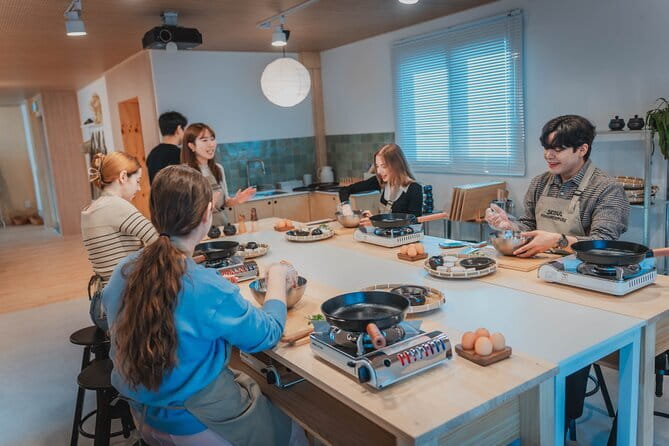
The studio setting is described as cosy and pleasant, which helps. Cooking classes can feel hectic, but a calmer kitchen layout makes it easier to focus on what you’re actually doing.
Market Time at Mangwon Market: Buying Ingredients the Local Way
The class is built around a simple idea: if you understand the ingredients, cooking gets easier at home. So the first big chunk is at Mangwon Market, where you pick fresh items for the three dishes.
You’ll also get to experience shopping in the host’s go-to style—places and stalls she uses as a daily adult. That’s the kind of detail that turns a “tour” into something closer to learning a habit.
A practical note: the experience schedule starts at 10:30 am, and the market portion is time-sensitive. If you’re more than 10 minutes late, you might miss the market tour, so plan to arrive early and not on the edge.
Also think about what you wear. You’ll be walking around and moving through stalls before you cook, so comfy shoes help more than you’d expect.
Cooking Bulgogi, Gyeran-jjim, and Kimbap (Without the Guesswork)
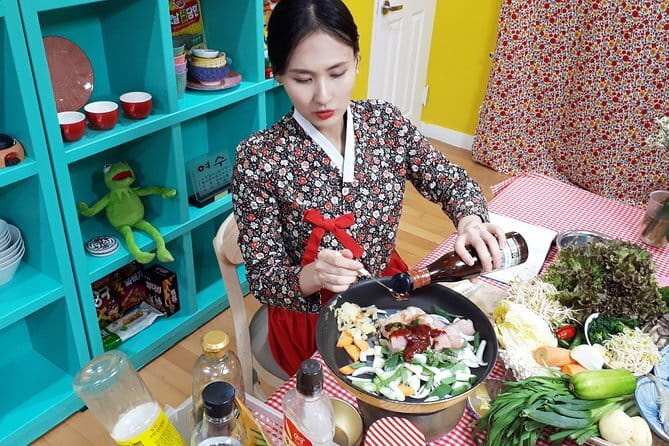
This is a three-dish class, and that’s a big part of the value. Learning to cook one Korean dish is fun; learning three that cover different textures and techniques gives you a practical Korea toolkit.
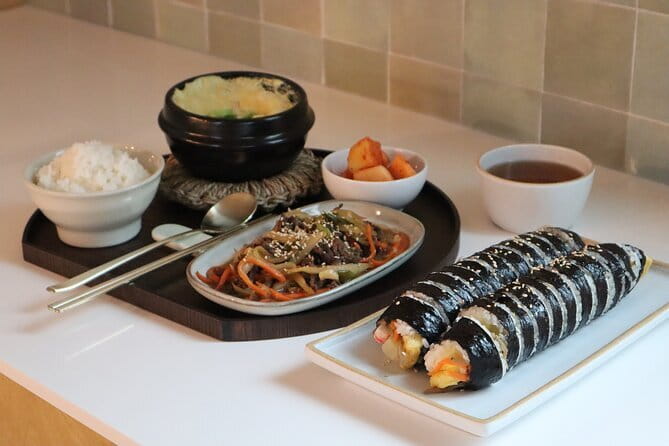
You’ll make:
- Bulgogi (marinated beef)
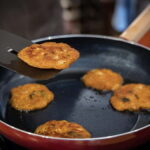
- Gyeran-jjim (steamed egg)
- Kimbap (Korean-style rice rolls)
The key benefit is skill transfer. Bulgogi teaches you about flavor building and meat marinade mindset. Gyeran-jjim brings you into the lighter, more gentle side of Korean cooking. And Kimbap is the one you’ll likely repeat at home, because it’s structured, portionable, and easy to adjust.
Bulgogi: Flavor First, Then Heat
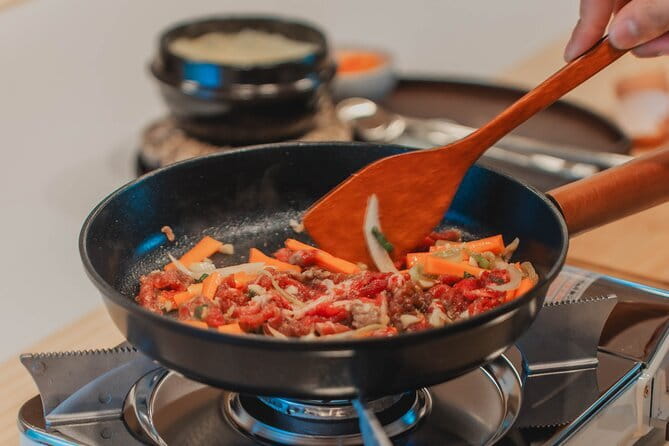
Bulgogi can be intimidating if you only know restaurant versions, but a class format helps you understand the logic. You’re working with marinated beef, so you get a sense of how Korean cooking often builds taste up front.
If you’ve ever tried to recreate bulgogi at home and ended up with “tasty but not right,” this dish is a good place to fix that. The class approach focuses on practical steps, so you’re less likely to guess.
You can also read our reviews of more tours and experiences in Seoul

Gyeran-jjim: Steamed Egg, Korean Comfort Food
Gyeran-jjim is a great contrast because it’s not about sizzling complexity. Instead, it’s about texture and gentle cooking, where small timing and method choices matter.
It’s also a dish that makes beginners feel capable. If you can follow instructions and manage heat, you can get the right feel. That confidence is part of why people enjoy this class so much.
Kimbap: The One You Can Turn Into a Meal Later
Kimbap is the dish people often want to eat, but the bigger win is learning the process. Rice rolls are repetitive by nature, which can make them easier to master in a single session.
The class also positions Kimbap as a takeaway moment. If you have leftover kimbap, the experience encourages you to take it to the nearby Han River for a sunny picnic. That’s not just a fun suggestion—it gives you a built-in plan for your day after cooking.
The Coziness of Studio Cooking (and Why Group Size Matters)
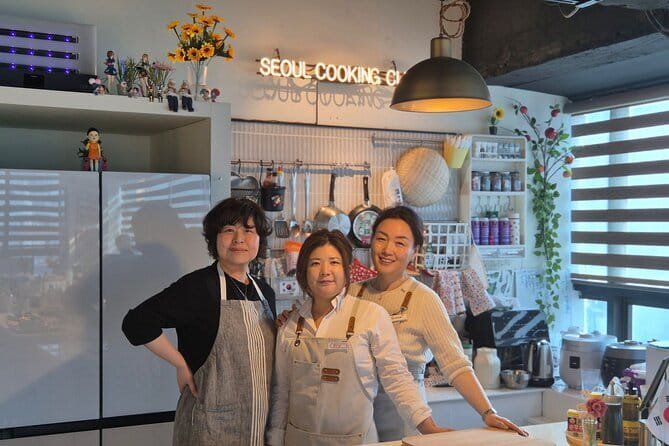
After market shopping, you shift to the studio kitchen. This part is where the experience becomes useful, not just entertaining.
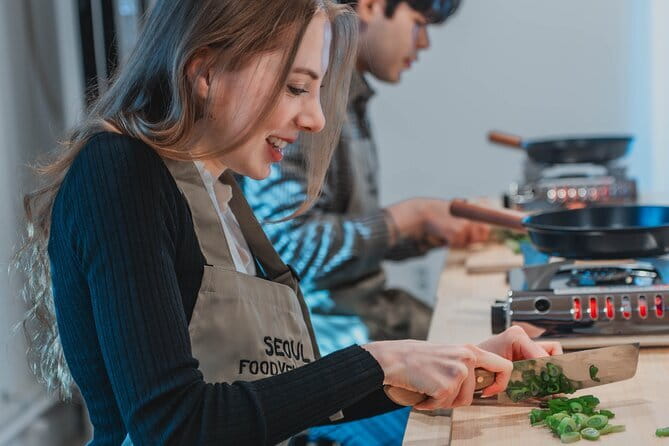
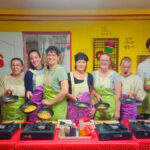
Because the group is capped at 8, you’re not watching from the side. You’re cooking with instruction and support from Phoebe. In a small kitchen, you also get more chances to ask questions when something doesn’t work exactly as you expected.
Time is tight too—your full experience runs around 3 hours. That forces a good pacing: you learn, you cook, you finish, and you don’t spend the whole session waiting. The result is a class that feels efficient but not rushed.
Another small but important point: a mobile ticket keeps things simple. You don’t need complicated check-in steps to start cooking.
What This Experience Gives You Beyond Recipes
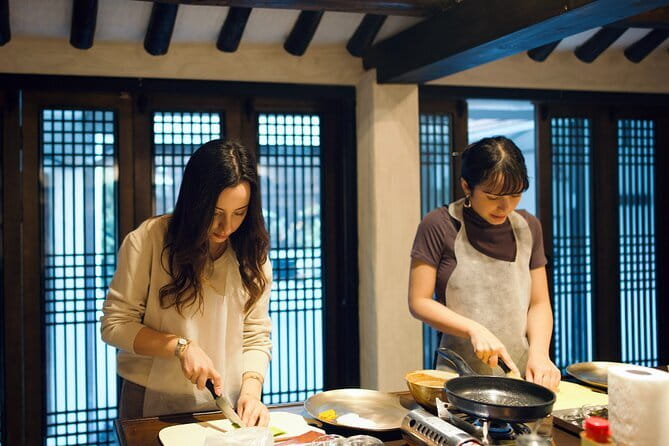
This class is pitched as more than learning how to make food, and the structure supports that. You’re connecting the dots between ingredient choice at a local market and the way Korean dishes show up at home.
You also learn cultural context in practical ways. For example, you’ll be guided through the meaning behind each dish’s tradition, not just the recipe steps. That helps when you eat Korean food later and start noticing patterns like flavor balance, side dishes, and how rice-based meals fit into daily routines.
There’s also a social factor that comes from cooking together. Even with strangers, cooking in a small group tends to create quick conversation, especially when you’re chatting with the host about how Koreans cook and eat.
Price and Value: What $91.91 Really Buys
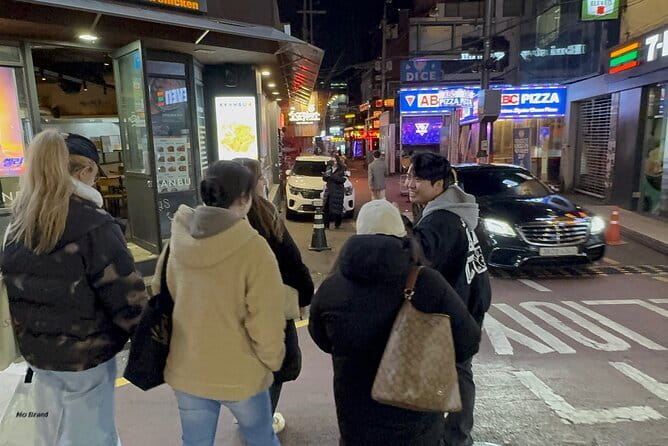
At $91.91 per person, this isn’t the cheapest thing in Seoul. But it also isn’t just a generic “cooking demo.”
You’re paying for a full sequence: market ingredient shopping, instruction, and cooking three dishes in a studio setting. Since the group is limited to 8, you also get a more supported experience than big classes where you do less and ask fewer questions.
There’s also value in the takeaway format. If you leave with skills you can repeat—especially Kimbap—you’re turning a paid activity into future home meals. That’s where classes often earn their keep.
One more practical detail: this tends to be booked about 21 days in advance on average. If you’re set on the date, booking sooner helps you avoid last-minute availability issues.
Timing, Location, and Logistics You Should Actually Care About
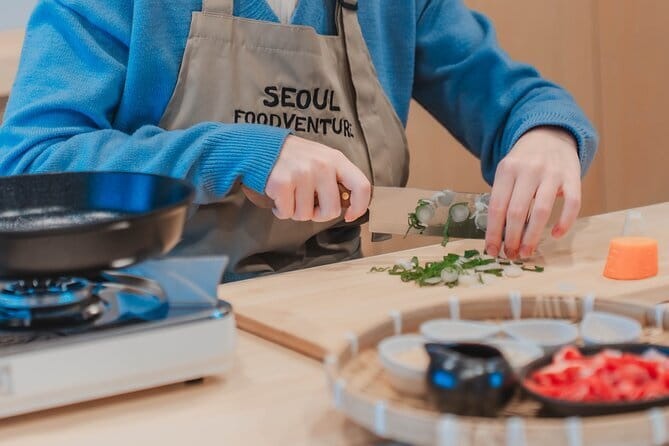
Start time is 10:30 am, and the whole thing wraps up back at the meeting point. That makes it easy to plug into a morning plan.
The meeting point is near public transportation, which helps if your Seoul schedule is already crowded. And since it ends where you start, you won’t need to puzzle out a second location.
The biggest timing rule is the late-arrival buffer: arrive early enough that you’re not sweating the 10-minute cutoff. If you hate stress, build in extra time for getting from the station to the 4th-floor meeting point.
If you have dietary restrictions, you should tell the provider in advance. That’s the sensible move, because cooking changes require planning, not on-the-fly improvisation.
Should You Book This Korean Cooking Class?
Book it if you want a Seoul experience that feels like a day with food-focused locals. This works especially well if you:
- want hands-on cooking, not just watching
- enjoy market wandering with a clear purpose
- like the idea of making Bulgogi, Gyeran-jjim, and Kimbap you can repeat at home
- want a small group class instead of a crowd
Skip it (or at least reconsider) if you’re very sensitive to cooking smells or you hate being on a schedule. The market portion matters, and arriving late can cut into the planned flow.
FAQ
FAQ
How long is the cooking class?
The experience runs for about 3 hours.
What time does it start?
The start time is 10:30 am.
Where is the meeting point?
You meet at Seoul Foodventure, Mapo-gu, Mangwon-dong, 377-4, 4th floor.
What dishes will I learn to cook?
You’ll learn to prepare Bulgogi, Gyeran-jjim, and Kimbap.
Is this class suitable for beginners?
Yes. The class welcomes everyone, from complete beginners to experienced cooks.
How many people are in the group?
The experience has a maximum of 8 travelers, so it stays small.
What happens if I’m late?
If you’re more than 10 minutes late, you might miss the market tour.
Can I bring up dietary restrictions or special needs?
Yes. If you have dietary restrictions, you should let the provider know in advance.
Is there a cancellation option?
There’s free cancellation. You can cancel up to 24 hours in advance for a full refund; cancellations within 24 hours don’t receive a refund.