REVIEW · SEOUL
Danyang Tour:Guinsa Temple & Bobaljae & Cheongpung Cable Car
Book on GetYourGuide →Operated by Lecirt · Bookable on GetYourGuide
Guinsa Temple in the forest feels like a reset button. On this Danyang tour, I like how the day blends big Korean culture with big views: Guinsa Temple is Korea’s largest, and the Cheongpung Hoban Cable Car turns a lake ride into a full-on photo moment. You also get a rare chance to taste temple-style food for free, which makes the day feel more than just sightseeing.
One thing to plan for: you’ll deal with walking and stairs. If you’re not comfortable on uneven temple paths (and uphill temple steps), this may feel like more work than you expected.
Key highlights to know before you go
- Guinsa Temple, Korea’s largest: a major temple visit with plenty to see
- Free vegetarian temple food: a real taste of temple tradition
- Bobaljae Observatory photos: classic overlooks with scenic payoff
- Bobaljae Road drives in fall: autumn leaves along the way
- Cheongpung Hoban Cable Car over Cheongpungho Lake: high-angle lake views and views that keep coming
- Transfers from Seoul with a bilingual guide: English and Chinese support built in
In This Review
- Guinsa Temple in the Woods: Why This Stop Hits Hard
- Vegetarian Temple Food: A Simple Meal Worth Planning Around
- Bobaljae Observatory: Photo Time That Actually Pays Off
- Cheongpung Hoban Cable Car Over Cheongpungho Lake: The Best Use of a Day Trip
- Why This Works from Seoul: Less Hassle, More Time on Site
- Price and Value: What $105 Really Buys You
- Who Should Book This Trip (and Who Might Rethink It)
- Should You Book the Guinsa Temple, Bobaljae, and Cable Car Day Trip?
- FAQ
- What’s included in the tour price?
- What’s not included?
- Is there free food?
- How much walking and how many stairs should I expect?
- What languages are the guides?
- Do I need a minimum number of people to run the tour?
- What is the cancellation policy?
Guinsa Temple in the Woods: Why This Stop Hits Hard
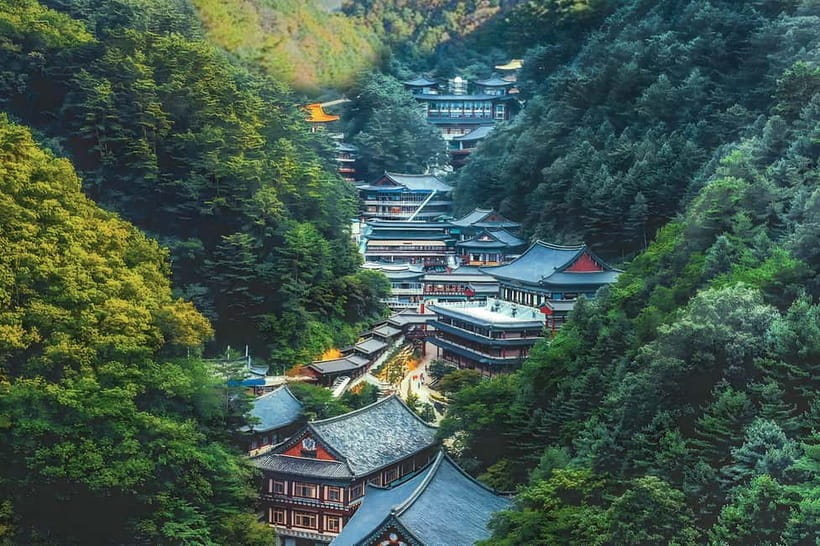
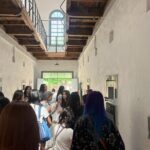
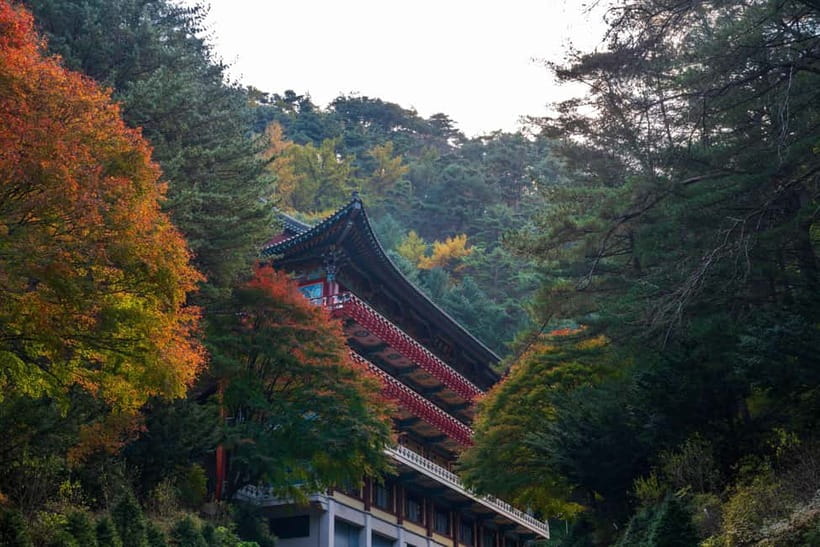
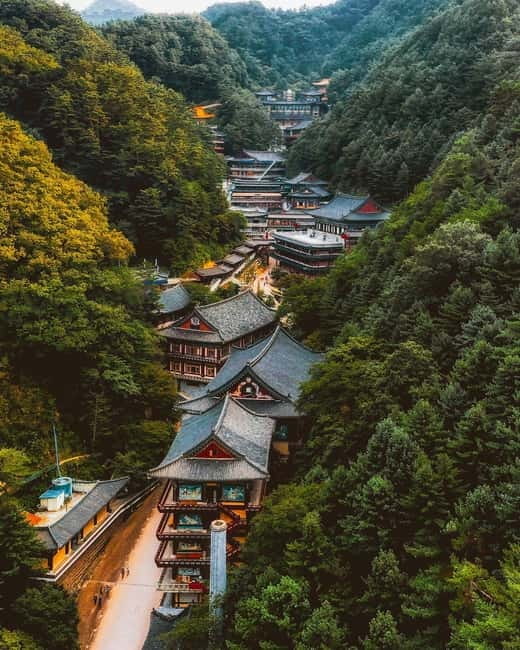
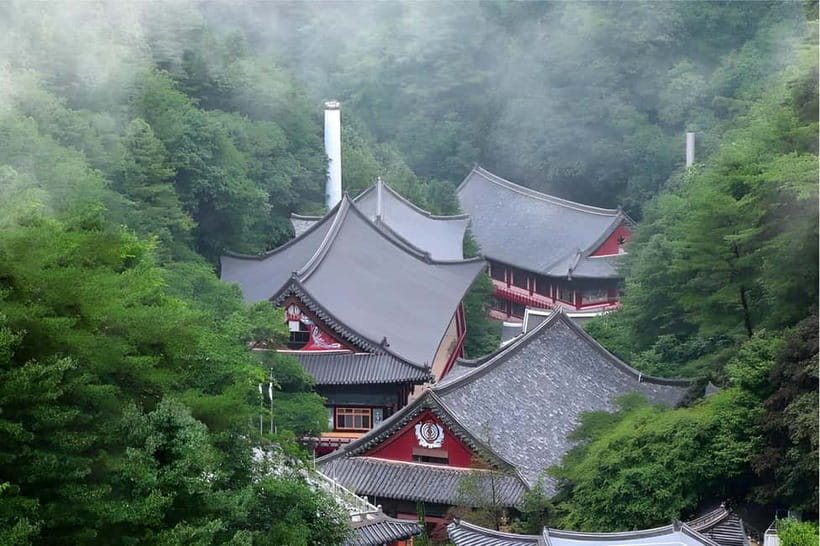
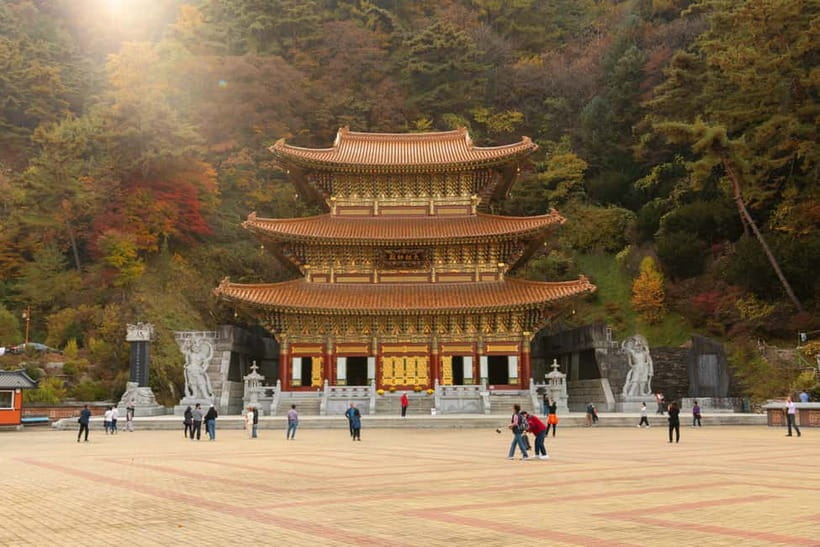
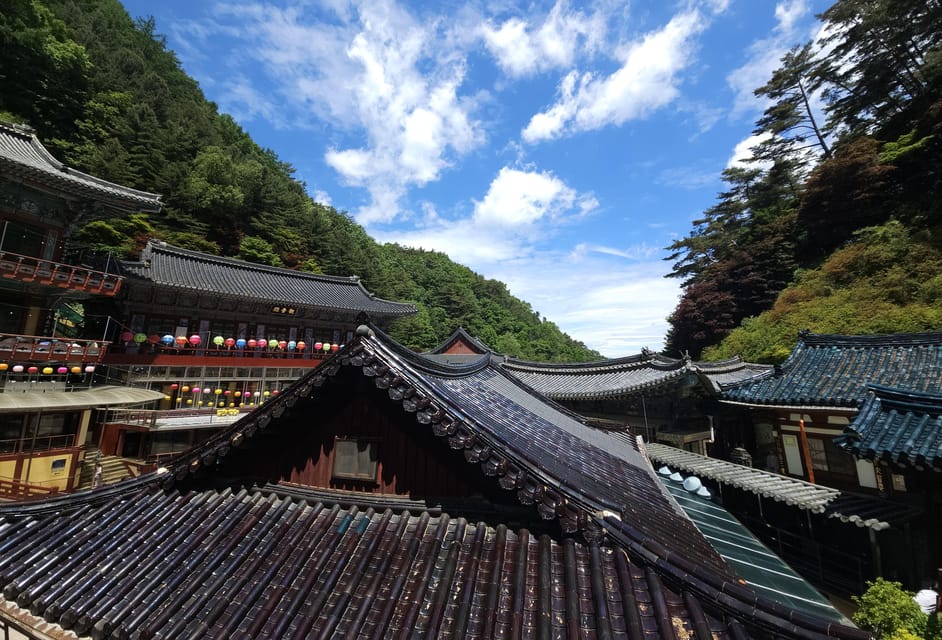
Guinsa Temple is the anchor of this day trip, and it’s special for two reasons. First, it’s Korea’s largest temple—so you’re not doing a quick curbside temple photo. You’re walking through a real temple world with multiple buildings, viewpoints, and quiet corners that make it feel bigger than a standard stop.
Second, the setting changes your pace. The route and atmosphere push you to slow down. Even if you arrive with a tight schedule, Guinsa naturally makes you linger—especially around the parts where you can take in views from the temple grounds. People remember this place most, and it makes sense: it’s the kind of site where you look up, then you look back, then you look again because there’s always another angle.
Practical reality check: you’ll be on your feet. Some parts involve stairs, and temple steps can be uneven. I’d bring comfortable shoes you can walk in for a few hours, not just stylish sneakers.
Vegetarian Temple Food: A Simple Meal Worth Planning Around
This tour includes free vegetarian temple food, and that matters more than you might think. Temple-style meals tend to be plain, seasonal, and practical—food designed for monks and temple life, not for performance. The bonus here is access: you get to try it without having to hunt for a separate place to eat.
How to make it easier on yourself:
- Go with a curious mindset. It’s not meant to be heavy comfort food.
- If you’re picky about texture, try a small amount first.
- Bring water if you know you get thirsty after stairs and walking (meals aren’t listed as included beyond this food).
This is also where the tour can feel more human. One of the most liked moments is getting to eat like the monks, which gives the day an extra layer beyond temples and cable cars.
You can also read our reviews of more tours and experiences in Seoul.

Bobaljae Observatory: Photo Time That Actually Pays Off
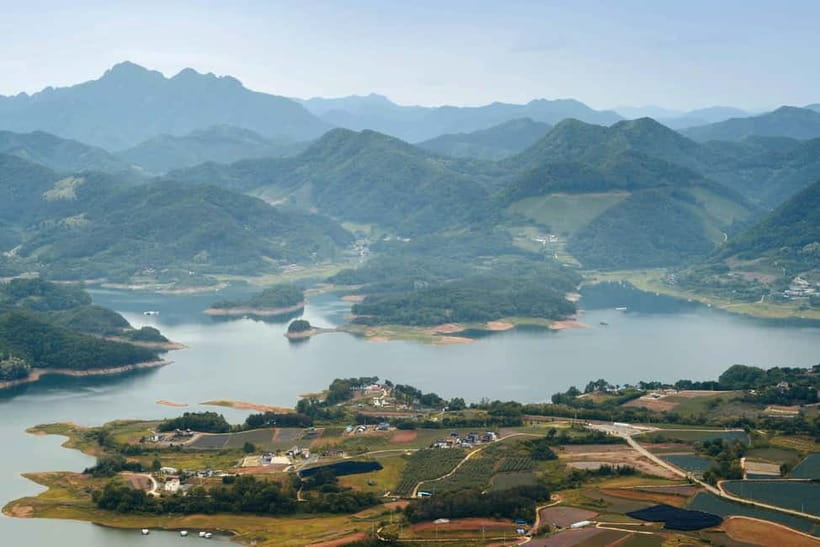
After Guinsa, you head toward the Bobaljae area—part drive, part viewpoints. The Bobaljae Observatory is where you stop for photos, and the point is simple: you get a high, scenic perspective that turns the ride into something you can remember.
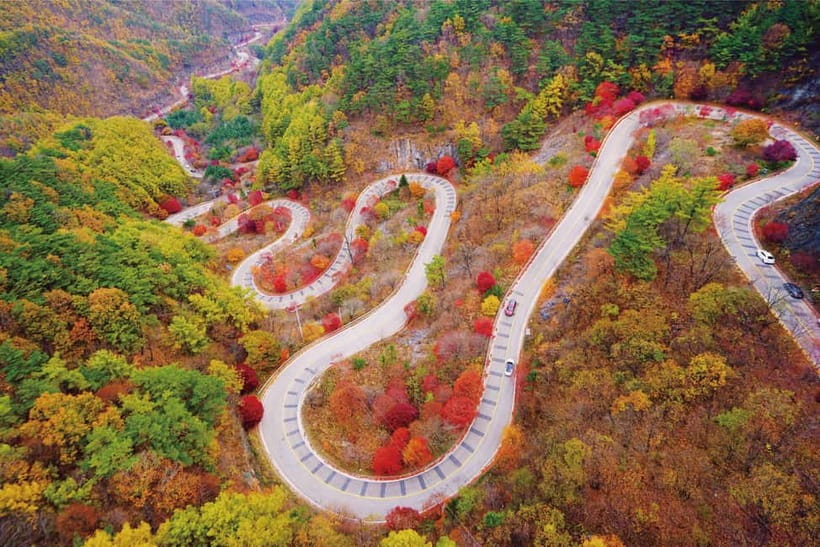
You’ll also drive along Bobaljae Road, and in fall it’s especially striking thanks to autumn leaves. Even if you’re not a leaf-spotter, this kind of scenic drive helps break up the day. It’s not just between stops; it’s part of the experience.
Two tips so you get the most out of your observatory time:
- Think about where the light hits. If you’re photographing, pause before you raise your camera and check your angle.
- Don’t treat it like a 30-second stop. Give yourself time to look around first, then shoot. The views are the point.
Cheongpung Hoban Cable Car Over Cheongpungho Lake: The Best Use of a Day Trip
The cable car ride is the other big highlight, and it’s where the trip shifts from cultural site to pure scenery. Cheongpung Hoban Cable Car takes you over Cheongpungho Lake, and the view keeps unfolding as you move. During autumn, the foliage adds color to everything below, so the scenery feels layered: lake first, then trees, then hills in the distance.
What I like about this segment is how it balances the walking you did at Guinsa. Temple stairs are work. The cable car is lift-and-look. You get a break without losing the sense of place.
A few practical things to keep in mind:
- Bring a camera strap. This is the kind of ride where you’ll want both hands for steady shots.
- Wear a layer you can adjust. Cable cars can feel cooler when you’re moving.
- If you like motion photography, take a few shots early so you don’t spend the whole ride deciding later.
If your group includes anyone who struggles with stairs, this ride is often the moment that turns a tiring day into a satisfying one. It’s also the part where people tend to say the views are unforgettable.
Why This Works from Seoul: Less Hassle, More Time on Site
A big reason to book a guided tour like this is location. Danyang and these specific stops are difficult to reach by public transportation from Seoul. That’s not just a convenience issue—it’s a time issue.
When you’re on a guided day trip with round-trip transfers, you’re doing more of what you came for: temple time, observatory time, and the cable car. You’re not spending half the day figuring out connections, transfers, and schedules you don’t control.
Also, the tour provides an English and Chinese speaking guide. That matters at places like Guinsa Temple where buildings and symbols can feel confusing if you don’t have context. You don’t need a long lecture—just enough explanation to help you notice what’s worth noticing.
From the guide names that show up in this tour’s experience, you might travel with people such as Yohan, Jun, Edward, Michael, Mario, or Johann. In practice, that human touch shows up most with helpful photo support and clear site explanations.
Price and Value: What $105 Really Buys You
At $105 per person, this day trip isn’t a budget bargain, but it also isn’t a premium splurge once you break it down.
Here’s what the price covers:
- Round-trip transfers from Seoul
- Admission to the attractions
- A bilingual guide in English and Chinese
What’s not included:
- Meals and beverages (though you do get free vegetarian temple food at the temple)
So you’re paying for logistics and guided access. If you were trying to DIY this, you’d likely pay for transport anyway, and you’d spend extra time coordinating. The guided structure is what makes it feel like a smooth day instead of a complicated day.
My rule: If you want to do Guinsa + a cable car + scenic stops in one shot, guided value usually makes sense. If you’re already planning multiple Danyang days, then DIY could be cheaper—but this tour is built for a one-day hit.


Who Should Book This Trip (and Who Might Rethink It)
This tour fits best if you want:
- A major temple visit without planning headaches
- A scenic cable car ride over Cheongpungho Lake
- Fall views along Bobaljae Road
- A day trip that includes guided explanations in English or Chinese
It may be less ideal if:
- You dislike stairs and long walking days
- You want a slow, relaxed itinerary with no tight schedule
- You’re hoping for a meal-heavy day (meals and drinks aren’t included beyond the temple food)
If you’re traveling with teens or active adults, it’s a strong mix of culture and views. If you’re older or less mobile, I’d take the walking warning seriously and consider whether you can comfortably handle temple steps.
Should You Book the Guinsa Temple, Bobaljae, and Cable Car Day Trip?
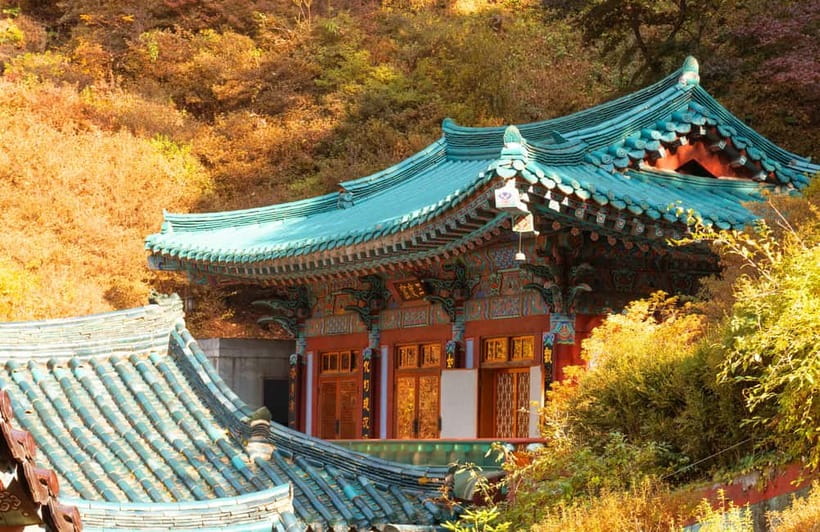
Yes, I think you should book it if you want a well-packaged Danyang day and you’re excited by the idea of combining Korea’s largest temple with a lake cable car view. The day makes sense: temple first, then photo viewpoints, then a scenic ride that gives your legs a break.
If you’re sensitive to stairs or you hate rushing between places, you might feel worn out. But if you can handle some walking and you’re ready for big scenery, this tour gives you a lot of memory per hour.
FAQ
What’s included in the tour price?
The tour includes admission to the attractions, an English and Chinese speaking guide, and round-trip transfers from Seoul.
What’s not included?
Meals and beverages are not included, and you’ll also want to budget for other personal expenses.
Is there free food?
Yes. You can try vegetarian temple food for free at Guinsa Temple.
How much walking and how many stairs should I expect?
Some attractions involve considerable walking and stairs. Comfortable shoes are strongly recommended.
What languages are the guides?
Guides are available in English and Chinese.
Do I need a minimum number of people to run the tour?
Yes. A minimum of 4 participants is required. If that minimum isn’t met 48 hours before departure, the tour will be cancelled and you’ll be notified.
What is the cancellation policy?
You can cancel up to 24 hours in advance for a full refund.
![The Seoul Pub Crawl [official] - Skip-the-line club entry: what VIP access changes in Seoul](https://1.visitseoulkorea.com/wp-content/uploads/the-seoul-pub-crawl-official-400x267.jpg)