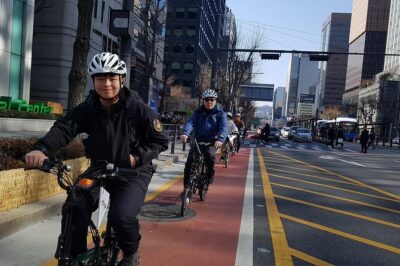
Old Seoul looks different on a bike.
This Joseon-era ride threads through central Seoul’s palaces, streams, and nearby back streets, with stories that connect what you see today to how the city worked centuries ago. It’s timed for comfortable temperatures, and the route is built to feel like a living timeline, not a list of monuments.
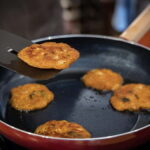
I like that it’s easygoing and not a workout. I also love the mix of grand gates and human-scale streets, plus the included street snacks (hotteok, fish-shaped red bean pastries, and Korean corn-dog are typical). The one thing to consider is that it needs good weather and requires moderate fitness for cycling through central Seoul for a few hours.
In This Review
- Key Things I’d Plan for on This Old Seoul Bike Tour
- A Joseon-Era Bike Start Point at Euljiro 2(i)-ga
- Why Two Wheels Work Better Than Just Standing in Front of Gates
- Cheonggyecheon Stream: Feng Shui Water and a Capital’s Choice
- Seoul City Hall to Deoksugung: From Power Now to Power Then
- Jong-dong Churches and Gyeonghuigung Palace’s Twisty Joseon Story
- Gwanghwamun Square to Gyeongbokgung: Big Names, Big Gates
- Samcheongdong-gil and Jongno 3 Stalls Alley: Seoul After the History Talk
- Snacks, Safety Gear, and the Tour’s Weather Reality
- Price and Value: What $76.99 Covers in Real Terms
- Who This Old Seoul Bike Tour Fits Best
- Should You Book It? My Simple Decision Guide
- FAQ
- How long is the bike tour?
- What’s the meeting point and where does it end?
- What time does the tour start?
- What’s included in the price?
- Do I get dinner on this tour?
- Is the tour strenuous?
- What happens if the weather is bad?
- How many people are in a group?
- Can I get a refund if I change my plans?
Key Things I’d Plan for on This Old Seoul Bike Tour
- Small group (max 8) means more attention from a guide and less awkward weaving through crowds.
- Helmets and lights are included, which is a practical plus for a tour that runs in low-light hours.
- Street food is part of the deal, so you don’t have to hunt for a snack mid-ride.
- Palaces plus alley streets: you get big architecture moments and then the everyday Seoul vibe.
- English guidance from UCANKOREA (guides like Sangwoo and Hyun have been praised for keeping things relaxed and safe).
- Bad-weather backup: if conditions are rough, the ride can shift to a walking tour.
A Joseon-Era Bike Start Point at Euljiro 2(i)-ga
Your day starts and ends at 123 Euljiro 2(i)-ga, Jung District. The listed start time is 10:00 am, but the tour concept is built around riding when the air is cooler and you can catch sunset light. That means the exact feel may vary by day, so when you get your mobile ticket, double-check your confirmation for the actual timing.
This is a small-group experience with a maximum of 8 travelers. That matters more than you might think. In a city like Seoul, a bigger group can turn a “slow story ride” into a traffic problem. Here, you can actually hear the guide’s explanations and take photos without constant stop-and-go stress.
There’s also a “moderate physical fitness” requirement. The route is designed as a gentle loop, and multiple guides have been praised for keeping cycling relaxed, but you still need to be comfortable riding long enough for a 3-hour tour.
You can also read our reviews of more cycling tours in Seoul
Why Two Wheels Work Better Than Just Standing in Front of Gates
Palaces are easy to see from the sidewalk. Understanding how they connected to daily power and city layout is harder. That’s where biking earns its keep.
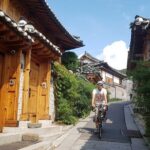
On this tour, you move at a pace where you can stop, listen, and then glide to the next scene. It’s the difference between reading about Joseon and actually feeling how the city “moves” around you. You’ll also pass through areas that aren’t only tourist highlights, including older streets and local hangout roads where Seoul’s modern life sits close to the historical layers.
I also like the way the tour’s stories are framed around the why/how of the Joseon era and how people live today. You’re not only collecting facts about buildings; you’re learning context behind choices—where water mattered, why central Seoul was important, and how key figures shaped the state.
Cheonggyecheon Stream: Feng Shui Water and a Capital’s Choice
One of the first stops is Cheonggyecheon Stream. This isn’t just a pretty ribbon of water. The guide framing here is practical: the stream ties to feng shui, and it’s described as water Korean ancestors selected as central to the capital.
You’ll also learn that Cheonggyecheon looked very different in the past. Until 1960, the stream area had a rougher reality, associated with homeless people and beggars. It’s a useful reminder that Seoul’s “image” has changed over time, and urban renewal doesn’t erase human stories—it rewrites where they show up.
If you’re the type who loves city history that isn’t only palace walls, this stop hits the sweet spot: a natural feature that became political and symbolic.
Tip: take a slow moment here for photos. This is one of those places where you’ll want a clear view before you start riding again.
Seoul City Hall to Deoksugung: From Power Now to Power Then
The tour then heads toward Seoul City Hall. The prompt is simple and fun: where do you think rich and powerful people live now? Names like Gang-nam or Han-nam may come up—but the guide uses that question to jump backward in time to where power sat in the dynasty period.
That contrast is the theme: Seoul’s geography keeps echoing old patterns even when neighborhoods change.
Next up is Deoksugung, described as linked to the end of the Joseon era. The story centers on the last king living there and the sense of a kingdom fading away. It’s one of those stops where the architecture feels different from the “mainstream palace postcard.” Even when you only stay for a short stretch, you can feel why the location matters.
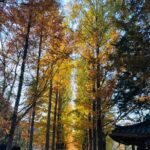
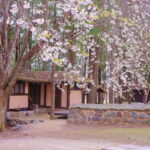
After Deoksugung, you’ll also get Deoksugung Doldam-gil, a stone-wall street known for seasonal change—cherry blossoms in spring, bright green in summer, and autumn leaves in fall. You’ll hear a local legend too, tied to the street’s reputation. Short stop, but it’s a good palate cleanser between bigger palace moments.
One practical note: these palace-side neighborhoods are walk-and-stand heavy. You’re on a bike, but you’ll still spend real time pausing at viewpoints and gates.
Jong-dong Churches and Gyeonghuigung Palace’s Twisty Joseon Story
The route continues into Jung-dong, where the vibe shifts from palace grandeur to a calmer neighborhood atmosphere. The standout detail here is the presence of western churches linked to the enlightenment movement, described as among the first built at the end of the Joseon era.
That’s a powerful idea to keep in mind while you ride: Joseon wasn’t only about tradition and isolation. You’ll see how new ideas and new religious architecture appeared even as the era was shifting.
Then the tour takes you to Gyeonghuigung Palace, with one of the more character-driven stories on the route. You’ll hear about Gwanghae, who is framed around two things: leadership during the Japanese invasions in the late 1500s and the insecurity connected to his origins. It’s a reminder that “kings” weren’t only titles; they were humans navigating legitimacy and survival.
You’re not going to read a whole biography in 15 minutes, but the guide’s framing makes the place feel like a stage where politics and personality mattered.


Gwanghwamun Square to Gyeongbokgung: Big Names, Big Gates
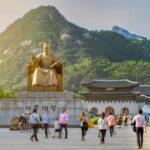
At Gwanghwamun Square, the guide asks a sharp question: who do you think you are? The idea is that this square was a power center in the past, and the people passing through it were meant to understand their place in the system.
You’ll also learn that two of Korea’s most respected historical figures are connected to what you see here. That kind of storytelling helps you connect today’s public space with old state symbolism.
From there, the tour heads to Gyeongbokgung Palace, one of the most famous names on the Seoul palace list. What I like is that the stop isn’t only about “look at the gate.” You’re encouraged to pause at entrances to feel the era’s energy and to notice the architecture built centuries ago.
Gyeongbokgung tends to impress even if you’re not a palace fanatic. But the guide’s pace makes it easier to appreciate why it was built the way it was—without turning the stop into a silent photo marathon.
Samcheongdong-gil and Jongno 3 Stalls Alley: Seoul After the History Talk
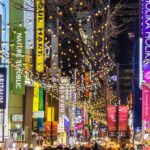
After palaces, the tour becomes more everyday. You’ll ride through Samcheongdong-gil Road, a small-road stretch described as local hangout territory with cafes, boutiques, and restaurants. This is where the tour feels most like Seoul living, not only Seoul museum time.
Then comes Jongno 3 Stalls Alley, a spot where the pacing changes slightly. The focus is conversation at each stop, plus time to rest and admire the surroundings. It’s also the stop where the tour notes a weather backup: if conditions are bad, the plan can shift to a walking tour.
That matters because it affects your expectations. In perfect weather, you’re cycling and listening. In rough weather, you’re still getting the stories, just without the bike segments. Either way, you’re not left without the historical walking experience.
If you like your Seoul with a side of street life, this closing stretch is the part that often sticks.
Snacks, Safety Gear, and the Tour’s Weather Reality
The tour includes practical add-ons that make the whole experience smoother. You get:
- Helmets and lights for safety
- Bottled water
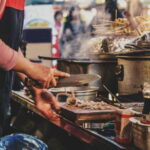
- A street snack stop with local favorites like hotteok, fish-shaped red bean pastries, and Korean corn-dog
A couple of people noted that the snack portion can feel like more of a taste than a full meal. That’s not a surprise since dinner is not included. So if you know you’re hungry after cycling, plan to eat afterward nearby.
The company also lists a weather requirement. This experience is designed for good weather, and if it’s canceled due to poor conditions, you’re offered an alternative date or a full refund. If the day turns only mildly unpleasant, the plan can shift to walking. Either way, you should dress for comfort and bring layers if Seoul is swinging between cool and warm.
Price and Value: What $76.99 Covers in Real Terms
At $76.99 per person, this sits in a category where you usually start thinking: what am I actually paying for?
Here, a big chunk of the value is in what you don’t have to arrange yourself:
- a guide in English
- the bicycle
- safety equipment (helmets and lights)
- water
- at least one street-food snack segment
You’re also paying for time efficiency. In 3 hours, you’re seeing several major areas—streams, government/power sites, multiple palaces, and local streets—without the stop-and-start that often kills energy on public transport.
It’s also worth noting the group size. With a max of 8, you’re not likely to get the “herded and rushed” vibe that happens on larger tours. Multiple guides have been praised for keeping the ride safe and relaxed, including Sangwoo and Hyun, which signals a strong emphasis on comfort over speed.
One tradeoff: since dinner isn’t included, you’ll still need to budget for a proper meal after. Think of this tour as a history + street snack experience, not a full culinary day.
Who This Old Seoul Bike Tour Fits Best
This tour is a great match if you want:
- a gently paced ride that doesn’t feel like training for a race
- palaces plus local streets, not just monuments
- an English-speaking guide who explains why the places mattered, not only what they look like
It’s also a nice option for first-timers in Seoul who feel overwhelmed by all the palace choices. Instead of picking one site and calling it a day, you get a connected route through central Seoul.
I’d be more cautious if you:
- hate biking in traffic-adjacent city areas (even at a slow pace)
- expect a long, food-focused market session (the snack is a taste, not a full meal)
Should You Book It? My Simple Decision Guide
If your ideal Seoul day is part time-travel storytelling and part real neighborhood walking/biking, I’d book this. The best reasons are straightforward: you get an easy rhythm, multiple major palace stops in a short window, and helpful safety gear that lets you focus on the sights.
Skip it only if you’re uncomfortable cycling for a few hours or you strongly prefer a purely indoor, fully seated sightseeing plan. Otherwise, it’s a smart way to see central Seoul and connect today’s city to Joseon-era logic—on two wheels.
FAQ
How long is the bike tour?
The tour lasts about 3 hours.
What’s the meeting point and where does it end?
It starts at 123 Euljiro 2(i)-ga, Jung District, Seoul, South Korea and ends back at the meeting point.
What time does the tour start?
The listed start time is 10:00 am. The concept is designed for cooler conditions and sunset light, so check your confirmation for the exact timing.
What’s included in the price?
The tour includes a bicycle, helmets and lights, bottled water, and street snacks. A guide is included and the tour is conducted in English.
Do I get dinner on this tour?
No. Dinner is not included.
Is the tour strenuous?
The tour is described for travelers with moderate physical fitness and is generally presented as a gentle cycling experience, but it does require riding.
What happens if the weather is bad?
The experience requires good weather. If it’s canceled due to poor weather, you’ll be offered a different date or a full refund. If conditions are bad during the tour, the route can be replaced by a walking tour.
How many people are in a group?
There is a maximum of 8 travelers.
Can I get a refund if I change my plans?
Yes. There is free cancellation up to 24 hours in advance for a full refund.