REVIEW · GYEONGBOKGUNG PALACE & HANBOK TOURS
Small-Group Seoul Tour with Gyeongbokgung Palace (hotel pick-up)
Book on Viator →Operated by Seoul N Tour · Bookable on Viator
Seoul’s palaces in one focused morning. This small-group tour strings together Jogyesa Temple and palace highlights with a guided walk that helps everything make sense fast. You’ll also catch the royal guard changing ceremony at Gwanghwamun Gate, plus smart stops like the National Folk Museum.
I especially like the convenience factor: the hotel pickup and climate-controlled ride keep your morning from turning into a subway scavenger hunt. And I like the way the guide ties each stop to Korean life, not just photo backdrops. One thing to consider: the ginseng stop can feel sales-heavy, and the time there is noticeable compared to the other cultural stops.
In This Review
- Key things that make this tour worth your time
- How the morning starts: pickup, pace, and why 3.5 hours works
- Jogyesa Temple: a Zen-style pause in the middle of the city
- Blue House photo stop: what you can see (and what you can’t)
- Gwanghwamun Gate guard changing: the moment everyone points their camera at
- Gyeongbokgung Palace: learning what court life looked like
- Tuesday reality check: when Gyeongbokgung is closed
- National Folk Museum: the timeline you didn’t know you needed
- Cheongha Korea Ginseng Museum: tea, timing, and how to handle the sales energy
- Where you end up: City Hall or Insadong, and why it matters
- Price and value: is $39.73 a fair deal?
- Who should book this, and who might skip it
- Should you book this Seoul small-group palace and temple tour?
- FAQ
- What time does the tour start, and how long is it?
- Does the tour include hotel pickup and bottled water?
- Is admission included for the main attractions?
- Can I visit inside the Blue House?
- Will I see the changing of the guard at Gwanghwamun Gate?
- What happens if I’m traveling on a Tuesday?
- Where will the tour drop me off?
Key things that make this tour worth your time
- Hotel pickup in central Seoul saves you planning energy before the walking starts
- Royal guard changing at Gwanghwamun Gate is built into the schedule (with some weather caveats)
- Gyeongbokgung Palace storytelling focuses on how court life actually worked
- National Folk Museum context gives you a timeline for daily life across dynasties
- A Tuesday-friendly palace swap uses Changdeokgung and the Secret Garden when Gyeongbokgung is closed
- Ginseng center stop includes tea tasting, but you’ll want to go in with a plan
How the morning starts: pickup, pace, and why 3.5 hours works
The tour is designed for a single morning: about 3.5 hours, starting at 9:00 am. You meet at 55 Ujeongguk-ro, Jongno District (then you’re picked up from central hotels). That matters because Seoul mornings can get hectic fast, and this itinerary covers several different zones.
Once you’re in the van, expect a straightforward rhythm: ride to the next stop, small guided segment, then more walking on foot. The pace works for most people because it doesn’t ask you to master Seoul logistics while you’re jet-lagged. Just don’t treat it like a sit-down sightseeing cruise. The palace grounds can mean uneven surfaces, gravel and steps, and crowds.
The group is kept small, with a maximum of 15 travelers. That size is big enough to feel social, but small enough that you usually get answers to questions instead of shouting into the void.
If you get lucky with your guide, this tour can feel personal. Past groups have had guides such as Sookhee, Young, Junie, Lua, Brian, and Suki, and the common thread is clear explanations paired with good photo timing.
You can also read our reviews of more tours and experiences in Seoul.

Jogyesa Temple: a Zen-style pause in the middle of the city
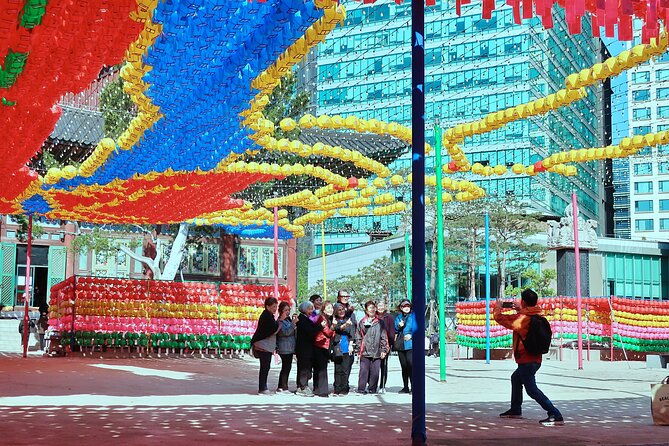
Your first major cultural stop is Jogyesa Temple, Seoul’s best-known center for Zen Buddhism. You’re not just dropped at a gate. You’ll hear about how Zen is practiced in Korea and then stroll key parts of the colorful compound.
A practical heads-up: access inside the temple areas can vary depending on worship schedules. If you arrive during restricted times, you may find parts of the visit are more self-guided than fully explained. That’s not a deal-breaker, but it does mean you’ll get the most out of Jogyesa if you pay attention to your guide’s orientation at the start.
What you’re looking for here is mood. Jogyesa is a living religious site right in the middle of urban Seoul. The contrast is the point: busy streets outside, calmer rhythms inside, with symbolism you’ll start spotting once someone points it out.
Best for: people who want more than “pretty temple photos” and like learning what they’re seeing.
Watch-outs: if your walking tolerance is limited, you may want to go slow on uneven paths and curb steps around the compound.
Blue House photo stop: what you can see (and what you can’t)
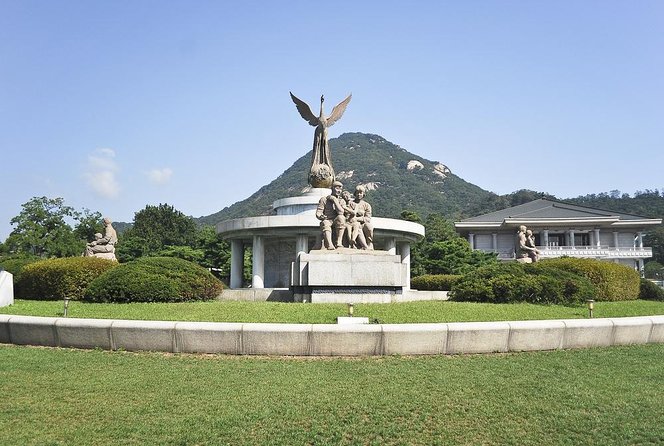
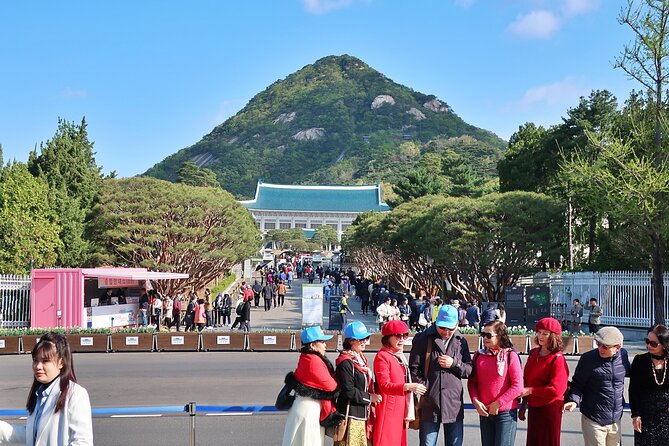
Next comes Cheong Wa Dae, often called the Blue House because of its blue-tiled roof. You won’t go inside. You’ll get photo ops from Blue House Square and pass along the front road area while Mt. Bukak sits in the background.
This stop is short, but it’s a useful one for first-time Seoul visitors because it gives you a real sense of modern Korean political geography—right between historic neighborhoods and palace districts.
Pro tip: treat this like a “window” stop, not a full attraction. Once you understand what you’re looking at, you’ll move on without losing momentum.
Gwanghwamun Gate guard changing: the moment everyone points their camera at
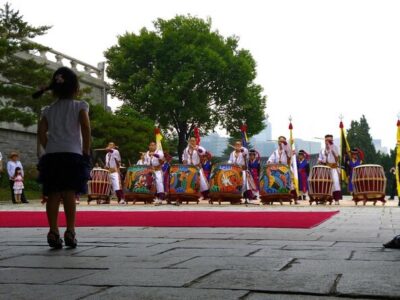
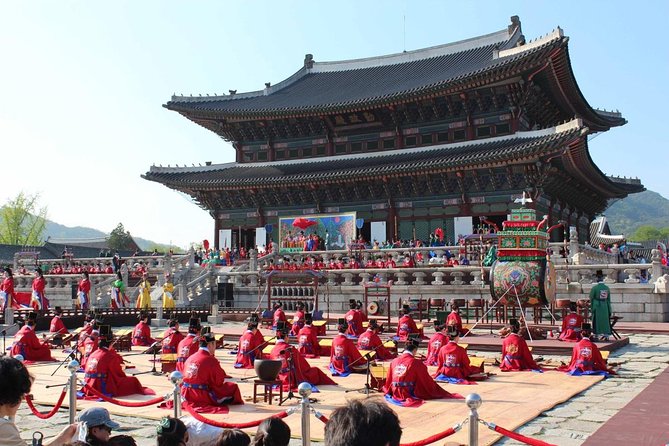
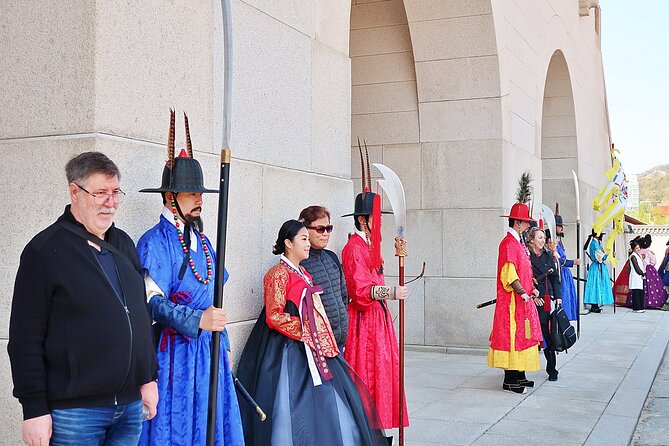
From the Blue House area you head to Gwanghwamun Gate for the changing of the royal guards ceremony. This is the show people come for: formal movements, strong visual staging, and a crowd that knows exactly when to lift phones.
Your time here is about 20 minutes, so the key is positioning. Your guide helps place you for a better view, which makes a big difference when the ceremony starts quickly and crowds surge.
Two practical considerations:
- Weather can affect the ceremony. On rainy days, it may be canceled, and you’ll shift to other palace time or alternate moments.
- Even when it runs, the ceremony is still a fixed “spot moment.” If you love slow travel, you’ll want to stand, watch, and then let the guide pull you back into the bigger story.
Best for: anyone who wants one unmistakably “Seoul” spectacle without spending the whole day hunting for it.
Gyeongbokgung Palace: learning what court life looked like
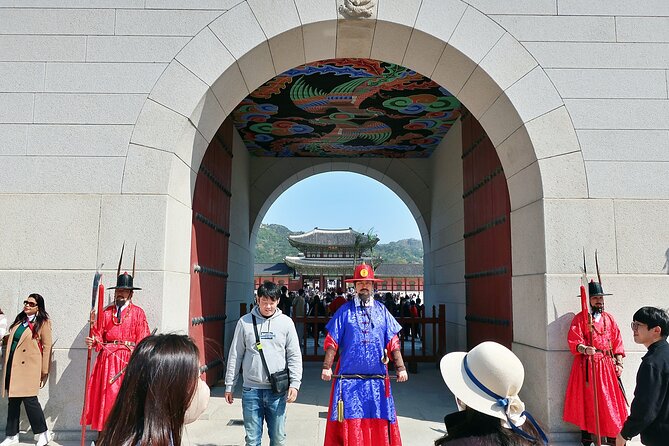
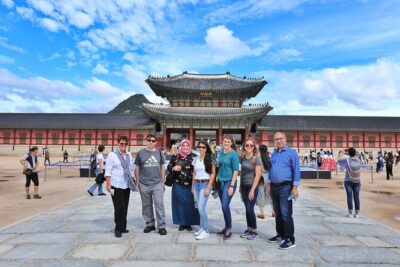
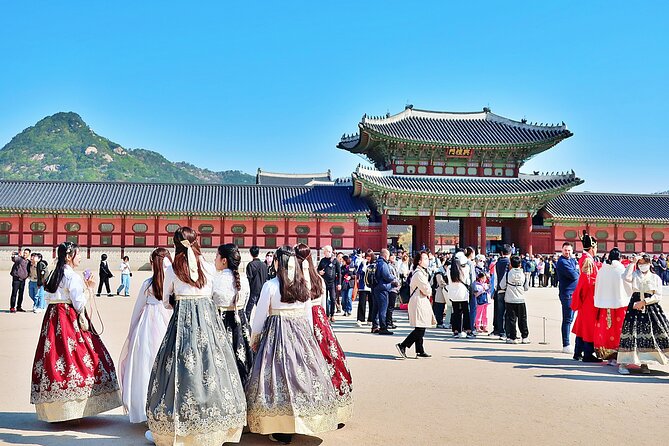
After Gwanghwamun, you’ll go to Gyeongbokgung Palace, the biggest and most famous of Seoul’s royal palaces. Expect about 1 hour for the palace portion on this tour, with a guide explaining how royal families and court attendants lived.
The palace isn’t small. Even with guided focus, you’ll feel the scale once you’re inside. Crowds can be part of the experience too—this is a top destination. That can make it feel “touristy,” but it also means the palace is alive with activity, signage, and visible structure.
This is also where your guide’s job is the most important. In a short time, you can easily wander past key spots without realizing what they are. A good guide turns the route into a story, so you leave thinking, I understand how the place worked—not just I saw buildings.


Tuesday reality check: when Gyeongbokgung is closed
If you’re visiting on a Tuesday, there’s a planned swap: Gyeongbokgung Palace is closed, so the guard changing ceremony won’t be available. Instead, you go to Changdeokgung Palace and the Secret Garden (Huwon).
This can actually be a great trade. Changdeokgung and the Secret Garden carry a different vibe—less of the same crowded “main palace” feel, and more of an experience you’ll talk about later because it’s distinct.
So if you’re locked into a Tuesday, don’t treat the swap like a downgrade. It’s a different kind of palace day.
National Folk Museum: the timeline you didn’t know you needed
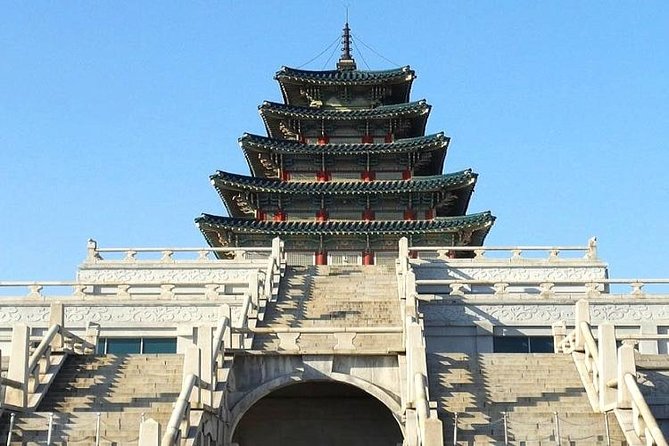
Next up is the National Folk Museum of Korea, with about 20 minutes on the schedule. The value here is pacing: you get quick context for Korean daily life across major eras, from the Goryeo dynasty (918–1392) to the Joseon dynasty (1392–1910).
For many visitors, the palaces can feel like they float above ordinary life. The museum anchors everything. Suddenly you see how clothing, tools, housing, and everyday customs fit into the same story as royal spaces.
A heads-up though: 20 minutes is fast. If museums are your thing, you might wish you had more time to explore displays on your own afterward. But as a first taste, it works well, especially after the palace.
Cheongha Korea Ginseng Museum: tea, timing, and how to handle the sales energy
Before drop-off, there’s a stop at a Korean ginseng center (listed as Cheongha Korea Ginseng Museum). You’ll get a chance to taste Korean ginseng tea and sample products, and the stop is about 30 minutes.
Here’s the balanced take: ginseng is genuinely representative of Korea, and many people enjoy learning how it’s used and marketed. But in practice, this stop can feel like a “sales pitch” more than a museum visit. Some visitors find the product presentation heavy, and the time allocation can crowd out slower enjoyment of other areas.
You don’t have to get caught in that pressure. If you’re not buying, treat it as a cultural pause and a tea tasting moment—then keep your priorities in mind for the rest of your day.
Best approach: decide in advance whether you want to buy ginseng. If the answer is no, you’ll likely feel the stop more mildly instead of being annoyed by the pitch.
Where you end up: City Hall or Insadong, and why it matters
You finish with drop-off at City Hall or Insadong. The tour summary you’ll see uses Insadong as the end point, and Insadong is a handy place to wander after your morning activities because it’s known for traditional shops and street-level exploring.
This ending matters if you’re planning lunch or an afternoon activity. If you’re heading to a neighborhood next, getting dropped near a walkable area beats trying to cross town after a morning of standing and stairs.
Price and value: is $39.73 a fair deal?
At $39.73 per person, the tour feels like a bargain—mainly because you’re paying for more than sightseeing. Your ticket covers:
- a professional guide
- hotel pickup in central Seoul
- entrance fees for the included attractions
- bottled water
That combo matters in Seoul. Once you start adding up palace entry fees, museum entry fees, and transport, DIY planning can cost more than you expect. And the guide component isn’t just “talking.” It’s route decisions and timed viewing, like positioning for the guard ceremony.
If you’re the type who likes to understand what you’re seeing, the value is stronger. If you’re purely chasing maximum time at monuments with zero guidance, the short durations may feel limiting. But for most first-timers, this is good value for a tight schedule.
Who should book this, and who might skip it
This tour is a great match if you:
- want a first-morning orientation to Seoul’s royal and cultural landmarks
- appreciate guided context more than solo wandering
- like a structured route with minimal planning
- want a group under 15 with pickup convenience
You might skip (or at least adjust expectations) if you:
- strongly dislike any shopping or product-heavy stops
- need longer museum time than you’ll get at 20-minute duration
- have mobility concerns, since palaces can mean uneven surfaces and steps
Should you book this Seoul small-group palace and temple tour?
Yes, if you want a smart, time-efficient morning that links Jogyesa Temple, palace life at Gyeongbokgung Palace (or the Tuesday swap to Changdeokgung and Huwon), and a museum context stop into one trip. The guide-driven pacing is the secret sauce, and the included entrances plus pickup makes the price easier to swallow.
Just go in with two expectations: the ginseng center can feel pushy, and the guard ceremony is weather-dependent. If you’re okay with that, you’ll come away feeling like Seoul clicked into place faster than you could have done alone.
FAQ
What time does the tour start, and how long is it?
The tour starts at 9:00 am and runs for about 3 hours 30 minutes.
Does the tour include hotel pickup and bottled water?
Yes. It includes hotel pickup in central Seoul and bottled water, along with a professional guide.
Is admission included for the main attractions?
Yes. Entrance fees are included for the stops where admission tickets apply, such as Gyeongbokgung Palace and the National Folk Museum of Korea.
Can I visit inside the Blue House?
No. You won’t enter inside. You’ll pass through the front road area for photo opportunities.
Will I see the changing of the guard at Gwanghwamun Gate?
Yes, the tour includes the changing of the royal guards at Gwanghwamun Gate as part of the schedule, but it can be affected by conditions like weather.
What happens if I’m traveling on a Tuesday?
Gyeongbokgung Palace is closed on Tuesdays, and the changing of the guard ceremony won’t be available. The tour swaps in Changdeokgung Palace and the Secret Garden (Huwon).
Where will the tour drop me off?
You’ll be dropped off at City Hall or Insadong, with Insadong listed as the tour end location.