REVIEW · GHOST & DARK HISTORY TOURS
Seoul: Korea Dark History Tour at Seodaemun Prison
Book on GetYourGuide →Operated by Mutual Trip · Bookable on GetYourGuide
This walk starts with silence and purpose, and the Seodaemun Prison story hits with clarity and weight. I like the way the tour links the Independence Gate symbolism to what happened to independence activists afterward, and I especially like the human focus, including the story of Yu Gwan-sun, a 17-year-old student who became a national symbol of courage. When the guide is Bae Jung-hui, the explanations feel personal and carefully ordered, with plenty of time to understand the details.
A possible drawback: this is emotionally intense, and you should be ready for darker material and a fair amount of walking on site. Comfortable shoes help a lot, because you’ll be moving between two major stops during a 2-hour format.
In This Review
- Key things you’ll notice on this Seoul dark history tour
- From Independence Gate to Seodaemun Prison: the right order matters
- Dongnimmun Gate stop: quick orientation, big symbolism
- Seodaemun Prison History Hall: where the preserved cells do the teaching
- The Independence Gate connection: self-determination meets resistance
- Yu Gwan-sun: why one story makes the whole era easier to hold
- Expert local guiding with room for questions
- Timing and pacing: how to make 2 hours feel worth it
- Price and value: $31 for guidance plus admission
- Who this tour suits best (and who should reconsider)
- Small-group details you’ll feel during the tour
- Should you book this Seodaemun Prison tour?
- FAQ
- How long is the tour?
- What does the tour cost?
- What language is the tour guided in?
- Is admission included?
- Is this tour suitable for wheelchair users?
- Is a meal included?
Key things you’ll notice on this Seoul dark history tour
- Independence Gate context first, so the prison doesn’t feel random or disconnected
- Seodaemun Prison History Hall for about 100 minutes, with a guided walkthrough that keeps the story coherent
- Yu Gwan-sun brought into focus, so the history has names and ages, not just dates
- Small group limited to 10, which makes questions easier and the pacing less rushed
- English and Japanese (Japanese optional), so you can choose what you’re most comfortable with
From Independence Gate to Seodaemun Prison: the right order matters
This tour is set up like a story with a spine. You start at Dongnimmun Gate, then move toward the prison grounds, and you only truly understand the danger and sacrifice after you’ve seen the symbolic “why” at Independence Gate.
That order matters. Independence Gate is described as Korea’s first monument to self-determination, which means you’re not just admiring stone and structure. You’re being coached to notice what it represents: the idea that people should be allowed to choose their own future. Then you walk into Seodaemun Prison, where preserved cells and site details turn that idea into something more costly—what it can cost when a colonial power tries to crush independence and suppress dissent.
Even if you’ve read a little about Korea’s modern history, this sequence helps you connect the dots fast. You end up thinking less in terms of separate “events” and more in terms of cause and effect.
You can also read our reviews of more historical tours in Seoul

Dongnimmun Gate stop: quick orientation, big symbolism
Your first guided moment is at Dongnimmun Gate, around 20 minutes. This is a short stop, but it isn’t filler. It’s meant to give you a mental map before you face the darker site.
Here’s what to watch for: the tour treats this area as an entry point into Korea’s fight for independence and democracy. That framing is helpful. If you show up cold and only focus on what you’re seeing at the prison, it can feel like you’re touring a museum of suffering. With the Independence Gate message up front, the prison becomes part of a broader narrative about resistance—how people organized, endured, and refused to disappear.
In practice, this stop also helps you settle into the rhythm of the guide. You’ll hear the story in a guided, chronological way, so you don’t have to work to connect details later.
Seodaemun Prison History Hall: where the preserved cells do the teaching
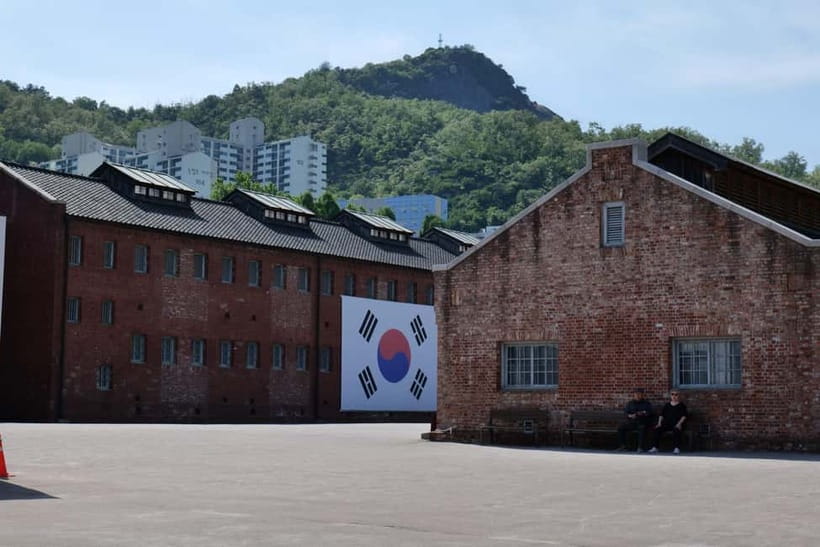
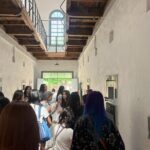
The heart of the experience is the Seodaemun Prison History Hall, where the guided portion lasts about 100 minutes. This is not a quick glance at a few artifacts. You’re guided through preserved spaces where independence activists were held, and you’re given the kind of explanation that helps you understand what you’re looking at, not just that it’s old.
Expect an emotionally intense experience. The tour is built around courage and sacrifice, but it’s also built around the reality of imprisonment—what it meant to be detained for resistance. That’s why the guidance includes personal stories and reflection, not just site facts.
What I like about this style is the balance. You get “what happened” and “why it mattered,” which is exactly what most people want from dark history tours. And because the guide is doing the explaining, you’re less likely to miss crucial context while trying to read signs or figure out what each cell space represents.
A practical note: the tour recommends comfortable walking shoes. Even though the main time is inside a guided history hall portion, you will still move between points on the property. Give yourself the physical comfort to stay present for the heavier parts.
The Independence Gate connection: self-determination meets resistance
Independence Gate isn’t just a landmark to photograph. It’s used as the tour’s thematic anchor. You learn about its symbolism as Korea’s first monument to self-determination, and then you carry that meaning into the prison.
That link changes how you experience the site. After hearing that the gate represents self-determination, the prison spaces read differently. Instead of thinking only about punishment, you can see the broader mechanism: the struggle to protect freedom and political identity against forces that tried to control it.
For me, that’s one of the tour’s best values. A lot of tours present history as a catalog. This one nudges you into understanding identity as something shaped through struggle, not something that arrived neatly and on time.
Yu Gwan-sun: why one story makes the whole era easier to hold
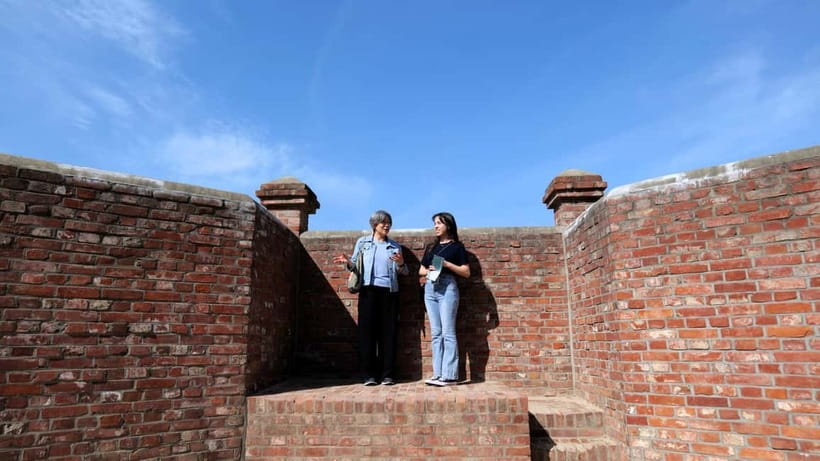
A standout element is the story of Yu Gwan-sun. You’re introduced to her as a 17-year-old student who became a national symbol of courage. The tour uses her as a way to make the larger resistance movement feel human.
This is important because modern history can turn into a blur of institutions, dates, and names. When the guide gives you a specific person with an age and a role, your brain can actually store the narrative. It becomes something you can remember later, which is the point of all good guiding.
And because the tour includes architecture, personal stories, and reflection, Yu Gwan-sun doesn’t feel tacked on as an extra. She functions like a thread tying together what people endured and what they refused to surrender.






Expert local guiding with room for questions
This is a small-group tour, limited to 10 participants. That matters more than it sounds. In a bigger crowd, you often get swept along. Here, the pacing stays manageable, and it’s easier to ask follow-up questions when something doesn’t click.
The guides are also described as experienced and skilled at making details understandable. If you’re lucky enough to get Bae Jung-hui, the style is especially people-focused—warm, welcoming, and clear, with answers that help you grasp the order of events rather than just the headline summary.
Language-wise, the tour runs in English with Japanese optional. That’s useful if you’re comfortable in English but want the option to switch when a concept gets tricky. One extra perk: a few people noted the guide’s kindness in small practical ways, like helping someone with weather-related comfort.
Timing and pacing: how to make 2 hours feel worth it
At about 2 hours total, this isn’t a half-day commitment. That makes it easier to fit into a Seoul itinerary without turning your day into logistics and tired feet.
The pacing is split in a sensible way:
- a shorter orientation segment near the gate
- the longer guided time inside the prison hall where you’ll need the explanation
Because the format is tight, come prepared to focus. The tour asks you to be present for emotionally intense material. If you show up rushing and hungry and distracted, you’ll feel it.
What to bring:
- comfortable walking shoes (this isn’t a sit-and-watch experience)
- something for weather comfort, since Seoul can surprise you
Price and value: $31 for guidance plus admission
The price is about $31 per person for a 2-hour guided tour with admission to Seodaemun Prison included. On paper, that’s straightforward. In real travel terms, it’s good value because you’re paying for expertise and time at a site that benefits from interpretation.
You’re not just paying for entry. You’re paying for a guided explanation that helps you understand what the preserved spaces mean, and you’re getting narrative context tied to independence and democracy, plus the specific story of Yu Gwan-sun. The small-group size also adds value: you’re less likely to feel like a number.
If you’re the kind of traveler who reads signs slowly, you might think you could do it on your own. But prison sites like this are exactly where good guiding helps most, because meaning isn’t always obvious at a glance.
Who this tour suits best (and who should reconsider)
This tour is a strong fit if you want:
- a guided understanding of Korea’s path to independence and democracy
- stories of resistance and sacrifice that go beyond broad summaries
- a structured experience at Seodaemun Prison and Independence Gate in a short time window
It may be less suitable if you:
- need a fully accessible route, since it isn’t suitable for wheelchair users
- are sensitive to darker themes and want a lighter historical outing
Also, the tour does not allow alcohol and drugs on site. It’s part of keeping the experience respectful, and it supports the sober tone the subject requires.
Small-group details you’ll feel during the tour
Because the group is capped at 10 people, the guide’s attention is easier to get. You’re more likely to hear your questions answered, and the guide can adjust the pacing if the group needs clarification.
If you care about language, it’s helpful that the tour is conducted in English and Japanese optional. That gives you flexibility without forcing you to rely on one language entirely.
And emotionally, the small group format tends to help. Dark history is easier to process when you’re not squeezed into a loud crowd competing for attention.
Should you book this Seodaemun Prison tour?
Book it if you want a focused 2-hour walk that connects Independence Gate symbolism to what happened to independence activists at Seodaemun Prison. The strongest reason is the storytelling approach: you get guided explanation plus human stories, especially Yu Gwan-sun, and the experience is structured so you can follow the logic of the era.
Skip it or choose a lighter alternative if you know you’ll struggle with emotionally intense material. Also, if mobility access is a concern for you, this isn’t the right fit because it isn’t suitable for wheelchair users.
If you’re hoping for a meaningful, well-explained introduction to Korea’s modern identity—built through struggle—this is the kind of tour that stays with you after the photos are done.
FAQ
How long is the tour?
The tour duration is 2 hours.
What does the tour cost?
It costs $31 per person.
What language is the tour guided in?
The tour is guided in English, with Japanese optional.
Is admission included?
Yes. Admission to Seodaemun Prison is included.
Is this tour suitable for wheelchair users?
No, the tour is not suitable for wheelchair users.
Is a meal included?
No. Meals and drinks are not included.