REVIEW · EVENING EXPERIENCES
Seoul: Deoksugung Palace Night Tour
Book on Viator →Operated by koreaguidetour · Bookable on Viator
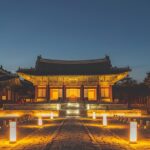
Night falls, and Deoksugung wakes up. This 2-hour evening walk brings you to lit palace buildings and the rare mix of traditional and western-style architecture, with explanations in English and Chinese so the Korean Empire era makes sense instead of feeling like random stone and wood.
One planning detail: Deoksugung Palace is closed on Mondays, so you’ll need their Gyeongbok Palace night option that day instead.
In This Review
- Key highlights you should care about
- Why Deoksugung at night hits differently
- Price and what you’re really paying for
- Meeting near City Hall: the convenience factor
- The guide experience: English/Chinese storytelling and real Q&A
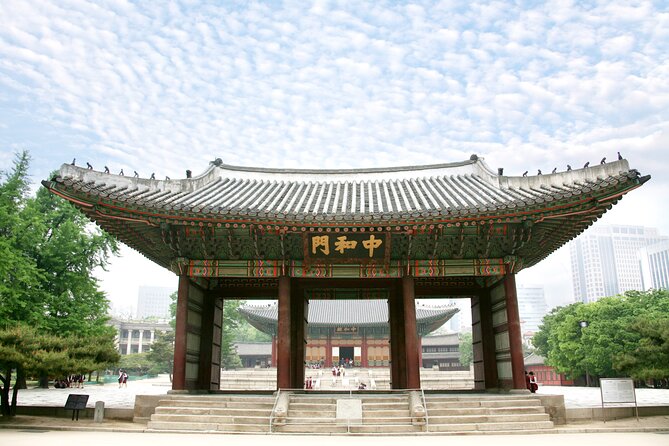
- Stop-by-stop: Junghwajeon as the mood-setter
- Seokjojeon: where the western-style contrast becomes obvious
- Seokeodang and Hamnyeongjeon: the more personal side of power
- Jungkwanhun: wrapping up with a calmer pacing moment
- The bigger story: Korean Empire modernization and the hard parts
- Who this tour is best for (and who might want something else)
- Should you book the Deoksugung Palace Night Tour?
- FAQ
- Where do I meet for the Deoksugung Palace Night Tour?
- What time does the tour start?
- How long is the tour?
- Is admission included?
- Are mobile tickets used?
- What languages does the guide speak?
- Is recording or filming allowed during the tour?
- Is Deoksugung Palace open on Mondays?
- What happens if weather is bad?
- Is there a minimum or maximum group size?
- What is the cancellation rule?
Key highlights you should care about
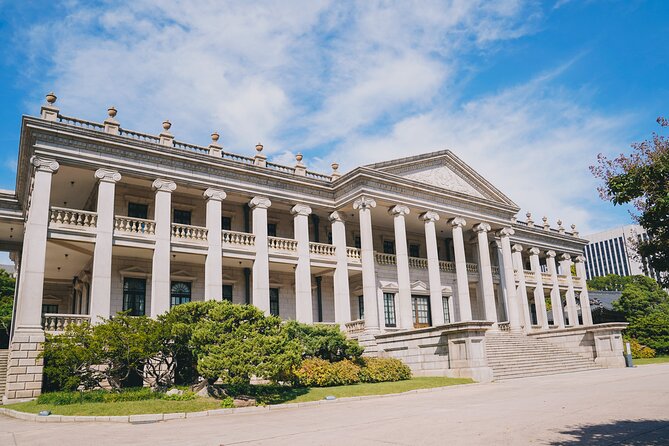
- Night lighting at Deoksugung makes the palace feel calmer and more atmospheric than daytime crowds
- English and Chinese explanations plus real time Q&A help you understand what you’re seeing
- Small group size (up to 20) keeps the tour from feeling rushed
- Targeted stops cover Junghwajeon, Seokjojeon, Seokeodang, Hamnyeongjeon, and Jungkwanhun
- Easy meeting point near City Hall Station (Exit 1 on Line 1/2) and a straightforward end at Jeonggwanheon
Why Deoksugung at night hits differently
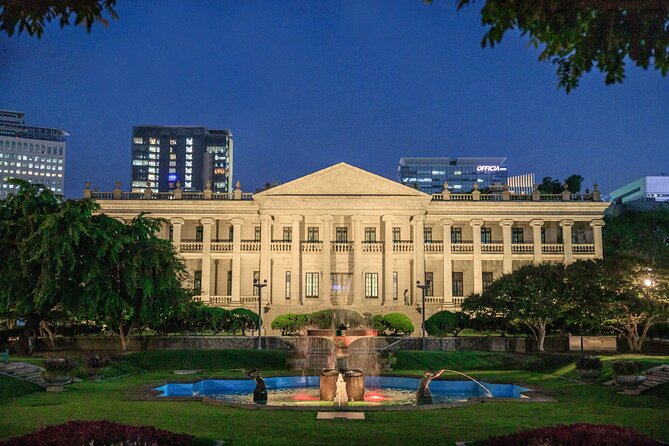
Deoksugung Palace isn’t your typical “look at the gates and keep walking” kind of stop. This palace served as the main palace during a major turning point in Korean history, when the country was trying a first wave of modernization after centuries of older rule and tradition. It’s also one of the few places where you can see traditional palace structures and western-style buildings together.
At night, that mix changes its mood. The buildings are lit after dusk, and the whole site tends to feel quieter and more peaceful than a daytime visit. For me, that matters because palace architecture is easier to notice when you’re not constantly fighting the flow of people and tour groups.
There’s also a heavier side to Deoksugung. The palace period linked to the Korean Empire and the era around Japanese invasion is part of the story, not just a background footnote. This tour aims to connect those themes to the spaces you’re standing in, instead of treating history like a lecture with no location.
You can also read our reviews of more evening experiences in Seoul
Price and what you’re really paying for
It costs $35 per person for about 2 hours, and the pace is designed around guided viewing rather than a long, wandering route. The palace admission is listed as free, which is a big deal for value—your money is paying mainly for interpretation: the guide, the stop-by-stop structure, and the fact that you can ask questions.
If you’ve ever done palace sites on your own, you know the problem: you can read a sign, but you miss why one building matters more than another. Here, the tour’s structure pushes you toward the key rooms and styles—especially the contrast between throne-hall Korea and the western-influenced additions—so the site becomes understandable in a short window.
At the same time, this isn’t a full-day “deep study” format. If you want to linger for hours on every detail, you might find the timing a bit tight. But if you want a smart evening overview with conversation and context, this price lines up well with what you get.
Meeting near City Hall: the convenience factor
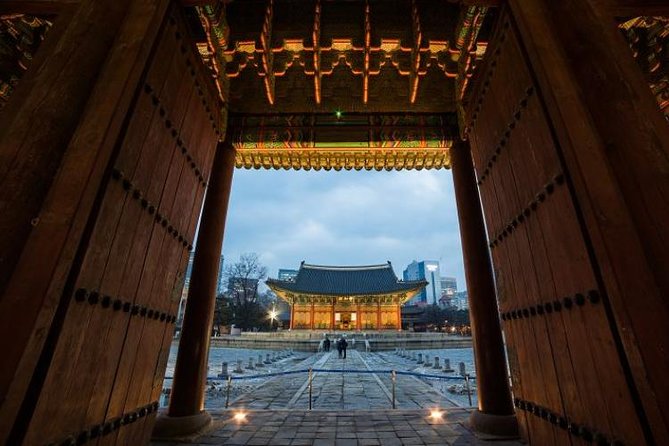
The tour starts in a very workable spot: you meet in front of Exit 1 of City Hall Station on Line 1/2, around 6:20 pm, with the tour starting at 6:30 pm. That’s ideal if you’re already planning to be around City Hall and Gwanghwamun before dinner.
You’ll end near Jeonggwanheon (the address given is Jeonggwanheon99 on Sejong-daero). The end point is also in the central area, so you’re not stuck at the edge of Seoul with no easy way to continue your evening.
Two more practical notes make a difference:
- You get a mobile ticket, which keeps things simple when you’re juggling subways and street food.
- The group is kept to a maximum of 20 people, which helps you actually hear the guide and ask follow-up questions.
The guide experience: English/Chinese storytelling and real Q&A
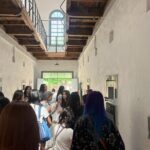
This is where the tour earns its keep. The walkthrough includes explanations in English and Chinese, and the pace is set so you can stop and ask questions. That interaction is the difference between reading about a palace and understanding what you’re seeing while you’re there.
In the feedback, guides are praised for being punctual and for giving clear historical context tied to architecture. One guide named Alan Han is specifically mentioned for explaining the Korean Empire era and the end of the Joseon dynasty, with plenty of story-based insight that makes the buildings feel connected rather than isolated.
Another guide named Sr. Lee is also noted for being a strong narrator and keeping the experience engaging and well organized. When a guide can answer questions on the spot, you tend to leave with fewer “I saw it, but I’m not sure what it was” moments.
There are also some on-the-ground rules to note: recording or filming the tour isn’t allowed. If you like taking video, plan on using your eyes and photos as normal outside the guided storytelling segments.
Stop-by-stop: Junghwajeon as the mood-setter
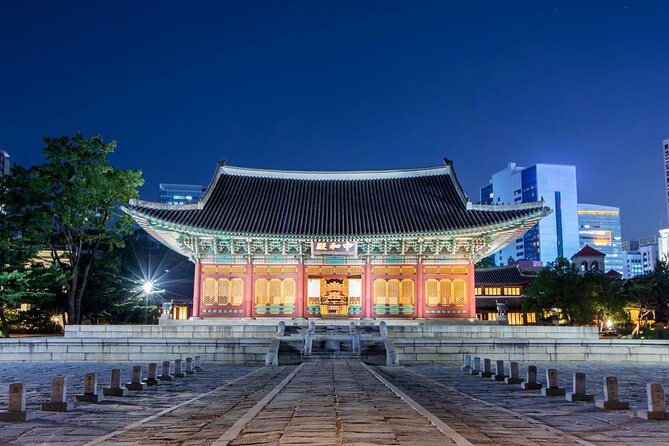
The evening route begins at Deoksugung and quickly moves you toward the main throne-hall space: Junghwajeon. This is the kind of building where context matters. The throne hall isn’t just big and dramatic—it’s the center of royal authority in the architectural plan, and it shapes how everything around it works.
At night, you’re more likely to notice the structure’s lines and proportions because the lighting draws your attention to edges and surfaces instead of being overwhelmed by movement and crowds. The guide’s job here is to connect the hall’s purpose to what you’re looking at, so you don’t just see a ceremonial room—you understand why it’s positioned the way it is.
This is also a strong early stop because it sets the tone for the rest of the tour. Once you grasp the role of a throne hall, the later western-style comparisons feel less random and more like a deliberate shift in how the Korean court functioned and represented itself.




Seokjojeon: where the western-style contrast becomes obvious
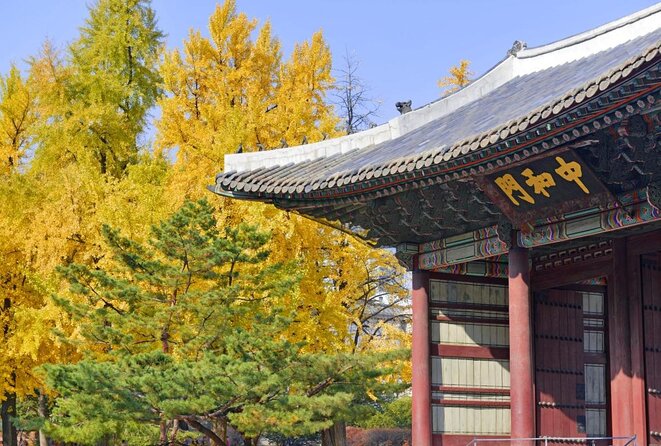
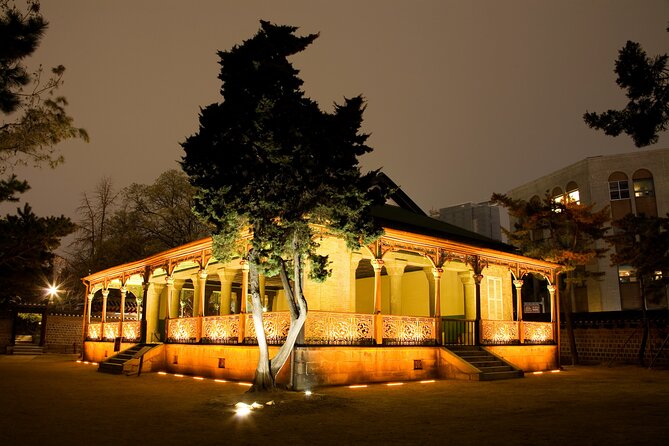
Next up is Seokjojeon, a western-style building. This is one of Deoksugung’s biggest draws for people who like architecture, because it’s part of the palace’s rare pairing of building languages.
Even if you’re not an architecture nerd, you’ll likely feel the contrast quickly. Traditional Korean palace design and western-influenced design have different visual signals—roofing lines, façade rhythms, and overall form. Seeing them inside the same palace grounds gives you a chance to compare in real time rather than reading comparisons in a book.
This stop is also where the bigger historical themes show up. Deoksugung becomes a stage for modernization-era changes, and the guide’s explanations help you understand how that shift relates to the Korean Empire period. The western-style pieces aren’t just decorative; they’re part of a broader cultural and political turning point.
Seokeodang and Hamnyeongjeon: the more personal side of power
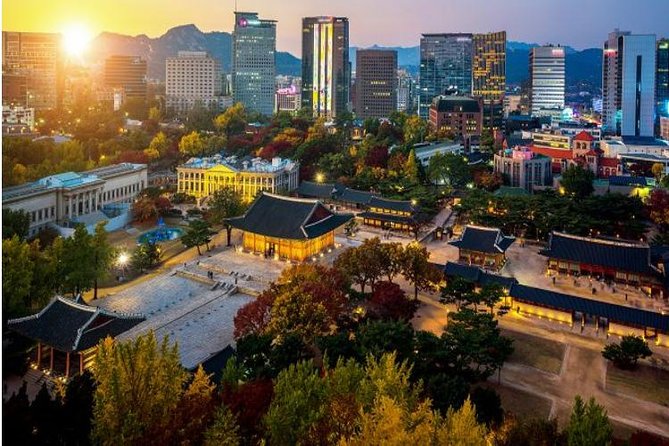
Then the tour moves to Seokeodang, described as the building most beloved by King Gojong. That detail matters because it shifts your focus from public ceremony to personal preference and the king’s lived experience. A palace isn’t only a stage for ceremonies—it’s also a place where daily royal life happened.
After that comes Hamnyeongjeon, the king’s bed-chamber. This stop usually changes how people see the site. Standing in a space associated with rest and private time makes the palace feel less like a monument and more like a home with strict roles and routines.
At night, these “more intimate” buildings can feel especially reflective. The guided story helps you connect architecture to human life—who used which spaces, what those spaces signaled, and how court life was organized.
Jungkwanhun: wrapping up with a calmer pacing moment
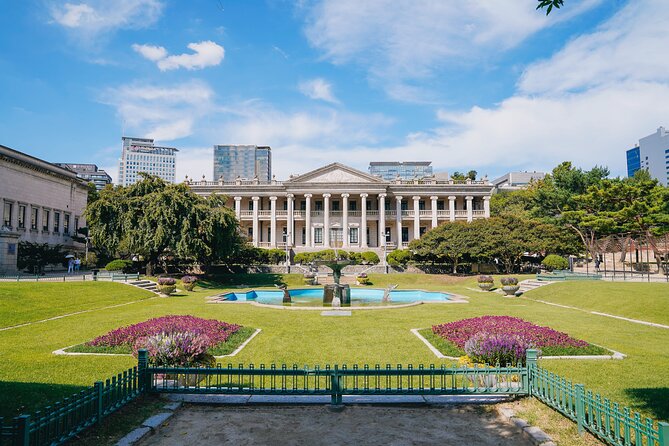
The final stop listed is Jungkwanhun, identified as a cafeteria. Even without a heavy emphasis on food, this stop is useful in practice. It’s a moment to slow down, check what you’ve learned, and ask any last questions before the tour finishes.
In a short, structured tour like this, the wrap-up stop can make the experience feel complete. You’ve moved through ceremonial authority, architectural contrast, and more personal court spaces. Ending with a practical location helps the story land before you step back into Seoul’s evening flow.
Also, there’s a tip you shouldn’t ignore: the stone wall next to Deoksugung Palace is famous for its beauty. Even if you don’t spend ages on it, it’s worth looking as you pass.
The bigger story: Korean Empire modernization and the hard parts
Deoksugung is tied to a key phase in Korean history. It was the main palace during the Korean Empire period, when the country’s modernization efforts were taking shape after long centuries of older patterns. The tour frames Deoksugung as the one where you can see that transition in the built environment.
The tour also doesn’t dodge the darker context. It refers to the pain and legacy around Japanese invasion as part of what the palace period represents. For you, that means the evening isn’t only about pretty buildings. It’s about learning how architecture can carry political shifts and national trauma.
If you like history, this is the kind of tour where the guide’s explanations help you connect what’s in front of you to why it exists. If you prefer pure sightseeing, you can still enjoy it visually—but your best experience will come when you lean into the stories and ask questions.
Who this tour is best for (and who might want something else)
This night tour fits well if you’re:
- interested in the Korean Empire and how it differs from earlier dynastic eras
- curious about why Deoksugung is special for mixing traditional and western-style architecture
- the type of person who likes explanations and Q&A more than reading alone
It’s less ideal if you:
- want lots of free time to wander without guidance
- plan to record or film during the tour (it isn’t allowed)
- need a Monday plan that depends specifically on Deoksugung (it’s closed on Mondays)
It also tends to work well for people who want a simple evening rhythm: meet by subway, do a structured 2-hour palace visit, and then roll right into the rest of Seoul.
Should you book the Deoksugung Palace Night Tour?
I’d book this tour if your priority is a guided understanding of Deoksugung in a short, well-timed evening window. The value is strong because the palace admission is listed as free, and the price is focused on the guide-led storytelling in English and Chinese—plus the chance to ask questions as you move between major buildings.
I’d skip or consider alternatives if you’re traveling on a Monday or if you’re hoping for a fully self-paced photo session. Also remember the site visit is weather-dependent, so if conditions are rough, you may need to accept changes offered by the operator.
If you want Deoksugung to make sense fast—especially the contrast between throne-hall power and the western-style additions—this night tour is a practical way to get there.
FAQ
Where do I meet for the Deoksugung Palace Night Tour?
Meet in front of Exit 1 of City Hall Station (Line 1/2) around 6:20 pm.
What time does the tour start?
The tour starts at 6:30 pm.
How long is the tour?
It’s about 2 hours.
Is admission included?
The palace admission ticket is listed as free.
Are mobile tickets used?
Yes, this tour uses a mobile ticket.
What languages does the guide speak?
The tour includes explanations in English and Chinese.
Is recording or filming allowed during the tour?
No. Recording or filming the tour is not allowed.
Is Deoksugung Palace open on Mondays?
No. Deoksugung Palace is closed on Mondays, and you can book their Gyeongbok Palace tour instead.
What happens if weather is bad?
The experience requires good weather. If it’s canceled due to poor weather, you’ll be offered a different date or a full refund.
Is there a minimum or maximum group size?
Maximum is 20 travelers. If the number of participants is under 4, the tour may be canceled.
What is the cancellation rule?
Free cancellation is available up to 24 hours in advance for a full refund. If you cancel less than 24 hours before the start, the amount paid isn’t refunded.