REVIEW · SEOUL
From Seoul: Seoraksan Mountain with Cable Car- Shuttle Bus
Book on GetYourGuide →Operated by S.A. Seoul · Bookable on GetYourGuide
Autumn in Korea hits different when the views come with a cable car. This Seoraksan day trip pairs Mount Seorak scenery with a guided stop at Sinheungsa Temple, so you get nature and culture in one shot.
I love the way the route is built around the big sights: the cable car for long mountain panoramas, and Sinheungsa for the towering bronze Buddha you can’t really miss. The temple is also surrounded by pine and maple trees, which makes it easy to feel that fall mood without needing to be a hardcore hiker.
One possible drawback: the day can feel rushed if road traffic or weather squeezes timing, so your hiking time may shrink. If you’re going for long trails, go in knowing the schedule is shared and weather can change the plan fast.
In This Review
- Key things I’d circle before you book
- Seoraksan National Park in October: Mount Seorak’s autumn views
- From Seoul with air-conditioned transport: why timing matters
- Sinheungsa Temple and the 14-meter Gwaneumjeon Buddha
- Cable car to Gwongeumseong Fortress: trading steep climbs for panoramas
- A practical walk-through of the day’s flow
- Price and value: where the $67 really goes
- Who this tour suits best (and who should skip it)
- Quick tips to make your Seoraksan day feel calm
- Should you book this Seoraksan cable-car day trip from Seoul?
- FAQ
- How much does the Seoraksan Mountain with Cable Car and Shuttle Bus tour cost?
- What’s included in the price?
- What isn’t included?
- Where does the tour start and end?
- Do I need to bring anything?
- Is the cable car ticket included?
- Is the tour wheelchair accessible?
- What if the tour can’t run or I need to cancel?
Key things I’d circle before you book
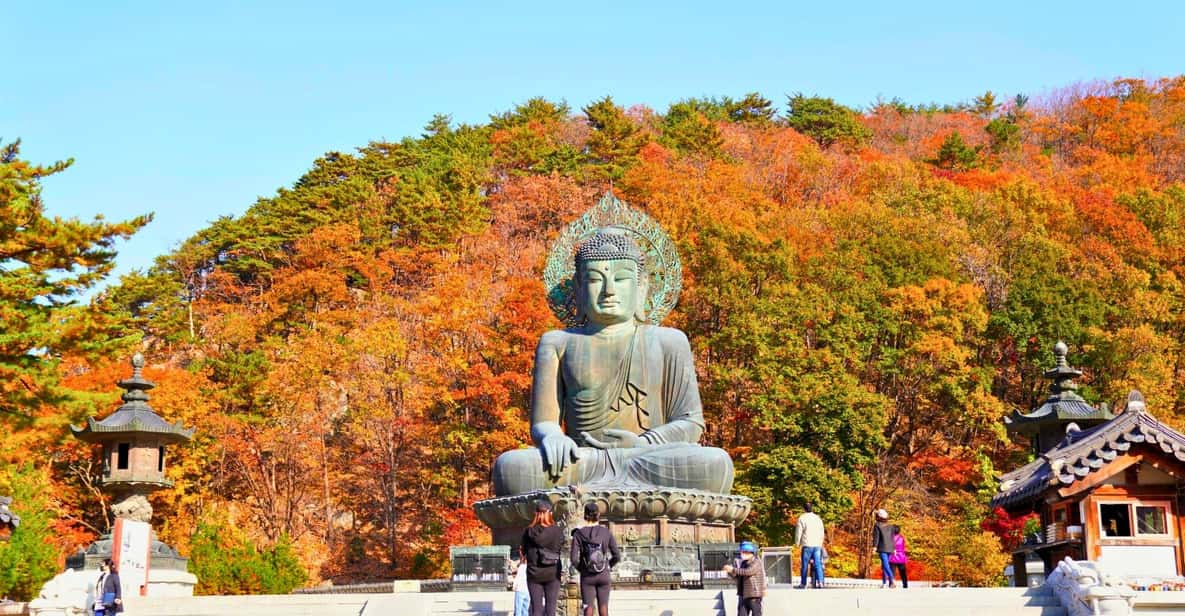
- Mount Seorak (third-highest in Korea): the main reason to come, especially when leaves start changing in October
- Sinheungsa Temple’s Gwaneumjeon: a bronze Buddha statue that reaches 14 meters high
- Cable car to Gwongeumseong Fortress: fewer steep steps and more time for viewpoints
- Guided interpretation: the tour uses a professional guide fluent in English and Chinese
- Autumn color is weather-dependent: the leaf show isn’t guaranteed, and strong wind can affect trails
Seoraksan National Park in October: Mount Seorak’s autumn views
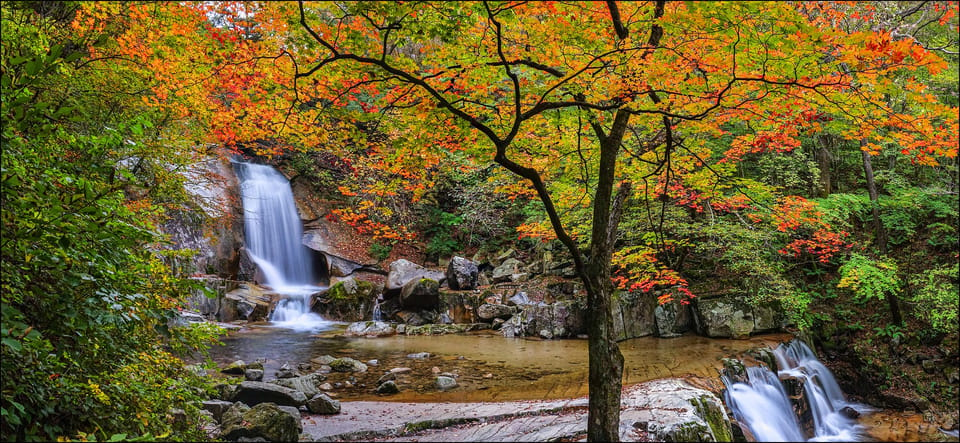
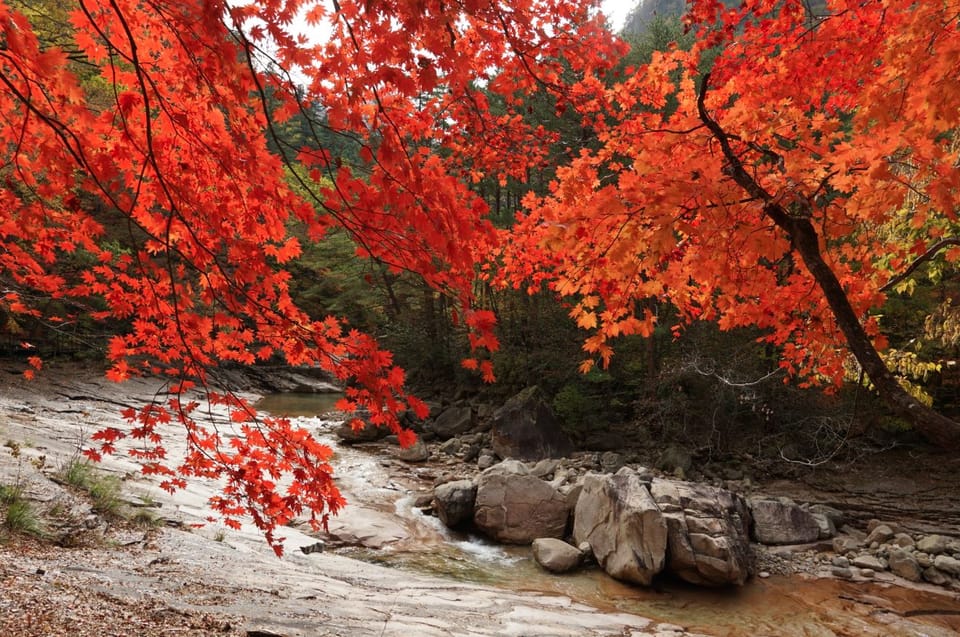
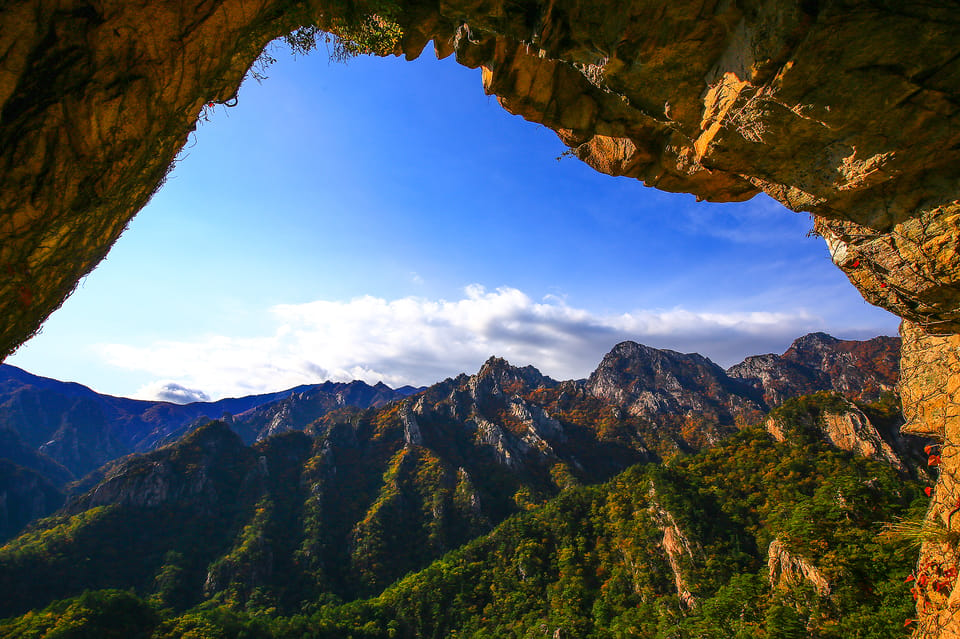
Seoraksan National Park is one of those places where the scenery does most of the talking. The centerpiece is Mount Seorak, the third-highest mountain in South Korea, so even when you’re not climbing for hours, the scale is still there.
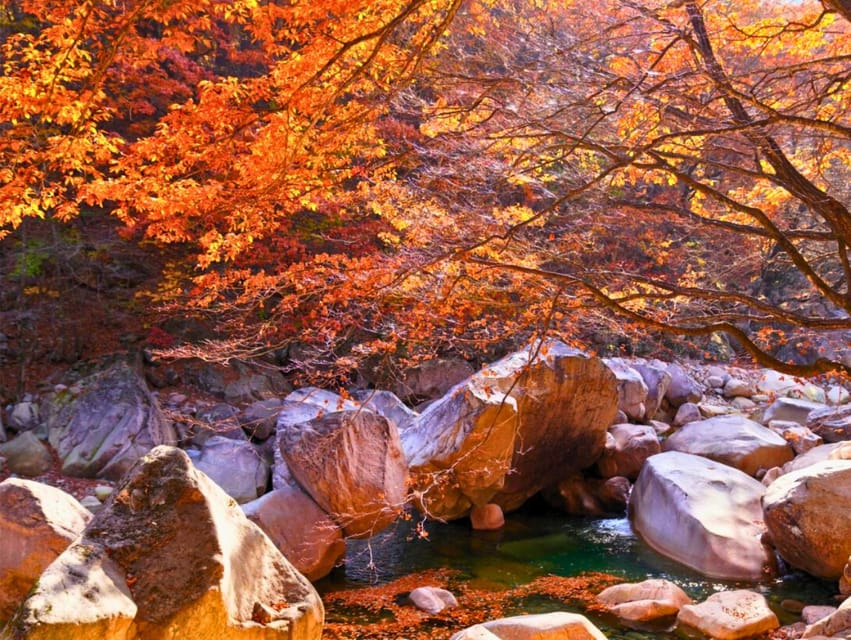
Autumn here is usually a big draw in October, with maples starting to turn. The practical catch is that timing can shift based on weather and leaf conditions, so you should treat the October color forecast as a hope, not a promise.
You can also read our reviews of more tours and experiences in Seoul.

From Seoul with air-conditioned transport: why timing matters
This is a guided day trip that starts in Seoul and uses round-trip air-conditioned transportation. Meeting points can vary depending on what you book, and the trip generally returns you back to the same meeting spot.
The biggest “real life” factor is timing. I’d plan for the fact that Seoul traffic can get heavy, and if the drive eats up extra time, you may end up with less room for hiking once you arrive.
If you’re the kind of traveler who likes to snack, stretch, and settle in slowly, build that buffer into your expectations. Also, eat breakfast before you go, because food isn’t included and you’ll want energy once you’re walking around the park and temple areas.
Sinheungsa Temple and the 14-meter Gwaneumjeon Buddha
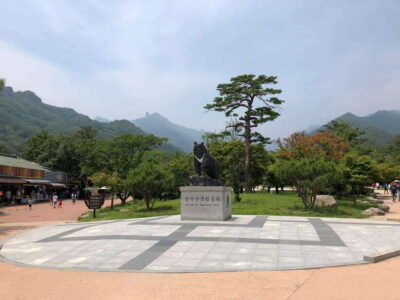
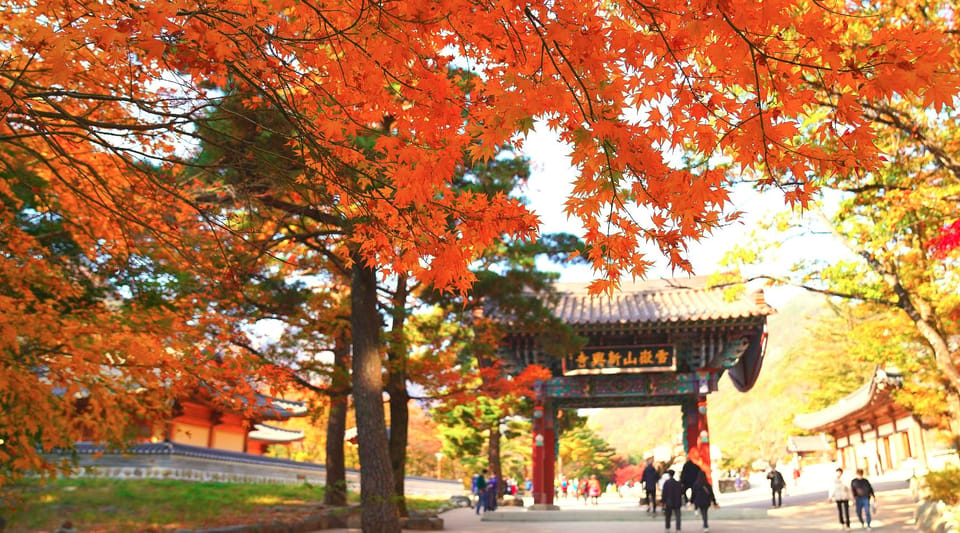
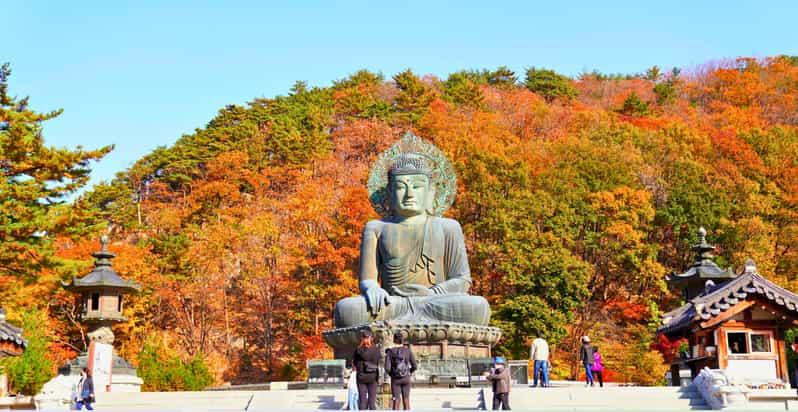
Sinheungsa Temple is the cultural anchor of this day. The standout is the Gwaneumjeon—a bronze Buddha statue that’s about 14 meters tall—so the moment you see it, you get the sense that you’ve arrived at something major.
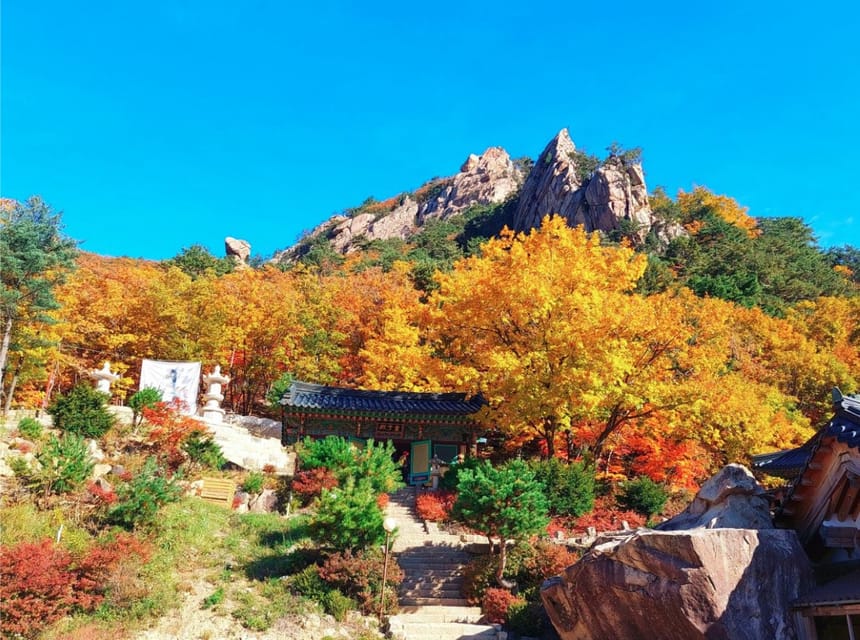
What makes it more than a photo stop is the setting. The temple complex sits with pine and maple trees around it, which means the fall scenery naturally frames the statue rather than feeling like an afterthought. On clear days, it’s a calm, spiritual contrast to the mountain views.
There’s also a historical angle built into the visit. The statue is said to have been built during Queen Jindeok’s era, and your guide helps explain the significance so you’re not just looking at a monument—you’re learning what it represents.
If you get a guide like Peter Park, the commentary tends to land well and keep the experience smooth and understandable. If Yami is leading, the vibe is often described as fun, which matters when you’re spending a full day on the move.
Cable car to Gwongeumseong Fortress: trading steep climbs for panoramas
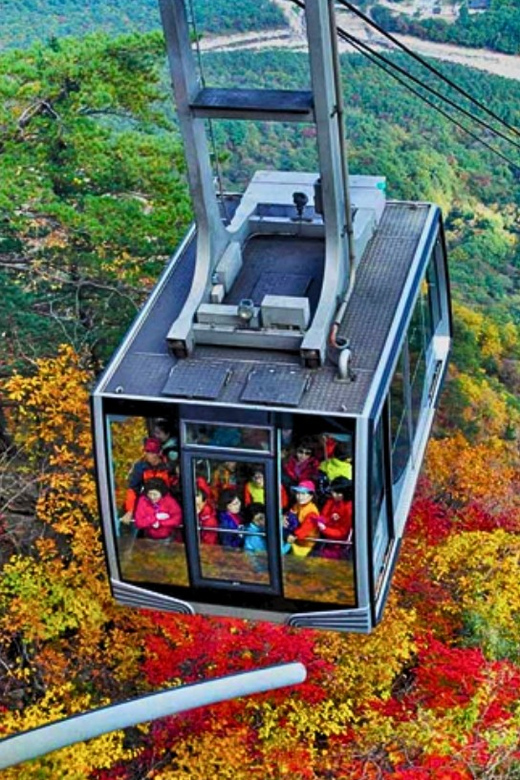
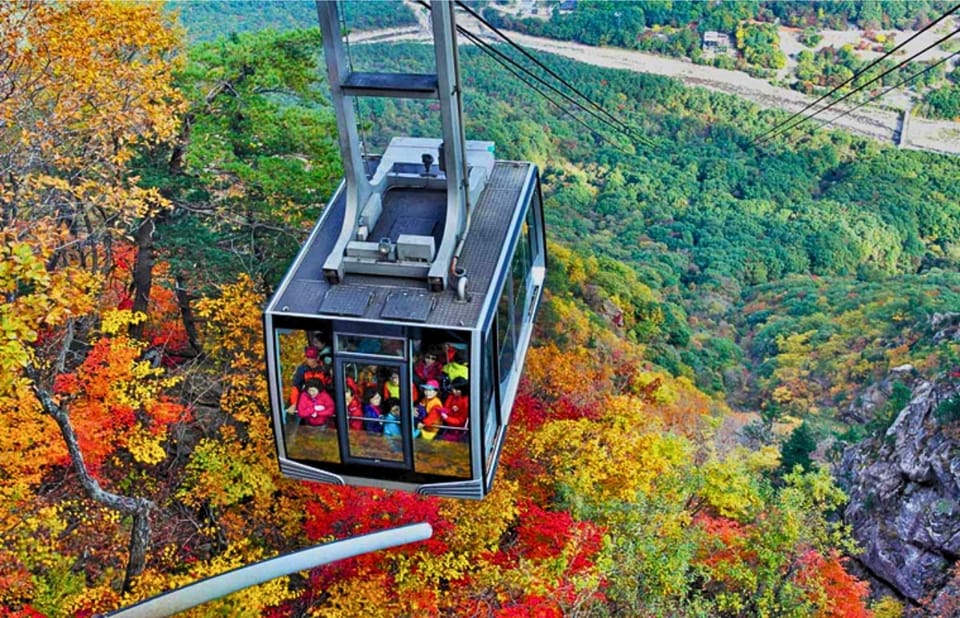
After Sinheungsa, you’ll head toward Gwongeumseong Fortress via a scenic cable car ride. The point of this part of the tour is smart: you get big mountain views without spending the whole day on the steepest routes.
Cable car rides also change how you see the park. Instead of working up to a viewpoint through foot travel alone, you start with a high-angle look at the surrounding valleys and ridges. For many people, that’s the best way to appreciate why Seoraksan is so famous.
One thing to keep in mind: conditions can shift. On strong-wind days, trails may close, which means you could spend more time at open areas and viewpoints rather than pushing deeper into hikes. It’s nobody’s fault, but it does affect what you’ll actually be able to walk that day.
A practical walk-through of the day’s flow
Here’s the rhythm you can expect, and why it works for most visitors coming from Seoul.
First, you start with hotel pickup and round-trip transport, handled as part of the tour. The tour includes admissions and the cable car ticket, so once you’re at the park, you’re mostly focused on walking and listening rather than figuring out ticket lines.
At Seoraksan’s entrance area, the itinerary shifts from bus mode to walking mode. This is where comfortable shoes matter. Even if you’re using the cable car, you’ll still cover temple paths and park walkways.
Then comes Sinheungsa Temple. You’ll see the Gwaneumjeon bronze Buddha (14 meters tall) and get context around it, including its connection to Queen Jindeok’s era. Because the temple is surrounded by pine and maple trees, you’re seeing the architecture and the season together, which makes the stop feel natural rather than rushed.
Next, you ride the cable car toward Gwongeumseong Fortress. Expect viewpoints and the kind of wide views that make the day feel worth it even if the hiking portion is shorter than you hoped.
Finally, you return back the way you came, ending back at the meeting point. The tour is structured to be one manageable day, not an open-ended expedition.


Price and value: where the $67 really goes
At $67 per person, this trip is priced like a structured Seoul-to-mountain day: you’re paying for convenience, guidance, and the main attractions without extra legwork.
Here’s what’s included that usually costs money separately:
- Round-trip air-conditioned transportation
- A professional guide fluent in English and Chinese
- Admission fees
- The Seoraksan cable car ticket
When you add those pieces up, the value is clearer. You’re not only buying a viewpoint—you’re buying a complete plan: transport, tickets, and an interpretive guide who helps you understand what you’re seeing at Sinheungsa.
What’s not included is also important. Food and beverage are on you, so you’ll want breakfast beforehand and a plan for snacks or a meal later if time allows. Personal expenses are also not included, so keep a little buffer for water, restrooms, or small purchases once you’re on the ground.
Who this tour suits best (and who should skip it)
This day trip fits best if you want the headline sights of Seoraksan without dealing with the logistics of buses, transfers, and ticket coordination.
It’s a strong match for:
- First-timers who want a guided overview of Mount Seorak and Sinheungsa Temple
- Travelers who like guided explanations and don’t want to figure everything out alone
- People who want mountain views but don’t want to spend the whole day on the steepest hiking paths, thanks to the cable car
It’s less ideal if:
- You need wheelchair accessibility (the tour is not suitable for wheelchair users)
- You’re hoping for long, uninterrupted hiking time regardless of weather or traffic
- You’re extremely picky about autumn leaf timing, since the maple situation isn’t guaranteed and may be adjusted by weather
Quick tips to make your Seoraksan day feel calm
A few small moves can make a big difference on a busy guided day.
- Wear comfortable shoes. Paths around temples and park areas can add up faster than you think.
- Eat breakfast before pickup, since food isn’t included.
- Keep expectations flexible on autumn color. The tour adjusts according to conditions, and maple leaves may not be at peak.
- If it’s windy, know that trails can close. You’ll still see major sights, but the hiking portion may be reduced.
And if you’re booking, try to keep your group together by making one booking if you want to avoid splitting into different groups.
Should you book this Seoraksan cable-car day trip from Seoul?
I’d book it if your goal is a well-paced, guided introduction to Seoraksan that includes the biggest highlights: Mount Seorak views, the 14-meter bronze Buddha at Sinheungsa, and a cable car ride to Gwongeumseong Fortress. The included transportation, guide, admissions, and cable car ticket make it feel like real value for a one-day outing.
I would think twice if you’re coming only for long hikes or if your entire trip depends on peak maple color. Traffic and weather can squeeze the schedule, and in strong wind, trails may close.
If you’re okay with a “best-of” day—views plus temple culture, with some walking and flexible expectations—this is a practical way to experience Seoraksan without turning your Seoul visit into a full vacation inside a national park.
FAQ
How much does the Seoraksan Mountain with Cable Car and Shuttle Bus tour cost?
It costs $67 per person.
What’s included in the price?
The tour includes round-trip air-conditioned transportation, a professional guide fluent in English and Chinese, admission fees, and the Seoraksan cable car ticket. Hotel pickup and drop-off is included if you select the private option.
What isn’t included?
Food and beverage are not included, along with personal expenses.
Where does the tour start and end?
The tour meeting point can vary depending on the option booked, and it ends back at the meeting point.
Do I need to bring anything?
You should wear comfortable shoes. Also, make sure to eat breakfast before you start the activity.
Is the cable car ticket included?
Yes, the Seoraksan cable car ticket is included.
Is the tour wheelchair accessible?
No, it is not suitable for wheelchair users.
What if the tour can’t run or I need to cancel?
A minimum of 6 people is required; if that isn’t met, the tour may be canceled with notification about 1 day prior. You can cancel up to 24 hours in advance for a full refund.