REVIEW · NATIONAL PARKS
Bukhansan National Park: The Summit Course
Book on Viator →Operated by Sam LEE · Bookable on Viator
Morning mountains in Seoul hit different. This Bukhansan National Park Summit Course guides you to Baek-un-dae, the highest peak in Seoul at 836 m / 2,743 ft, with a route designed to save serious time, led by Koa and Sam. I like that it treats safety as a real part of the hike, not an afterthought.
In This Review
- What I Like: Time saved without cutting the goal
- A Consideration: This is steeper than casual hiking
- Key Takeaways Before You Go
- Why Bukhansan’s Highest Peak Is Worth Your Morning
- The Route Strategy: How the course compresses a long hike
- The Climb Up: What to expect in the steepest stretch
- Baek-un-dae Peak: The steep angle with ropes (and how to handle fear)
- Safety First, Not Just Pretty Views
- Timing and Getting There: 8:00 am and the half-day format
- Gear That Actually Helps: Hiking poles, knees, and pacing
- Optional Lunch After the Summit: Tofu-focused, with meat too
- Price and Value: What $64.89 buys you
- Who This Tour Fits Best (And Who Should Rethink It)
- Final Call: Should you book the Bukhansan Summit Course?
- FAQ
- What is the duration of the Bukhansan National Park Summit Course?
- What time does the tour start?
- Where does the hike start and end?
- How long does it take to reach the summit on this course?
- How difficult is the climb?
- Is the rope-assisted section required?
- Are hiking poles included?
- Is lunch included in the price?
- What size is the group?
- What happens if the weather is poor?
What I Like: Time saved without cutting the goal
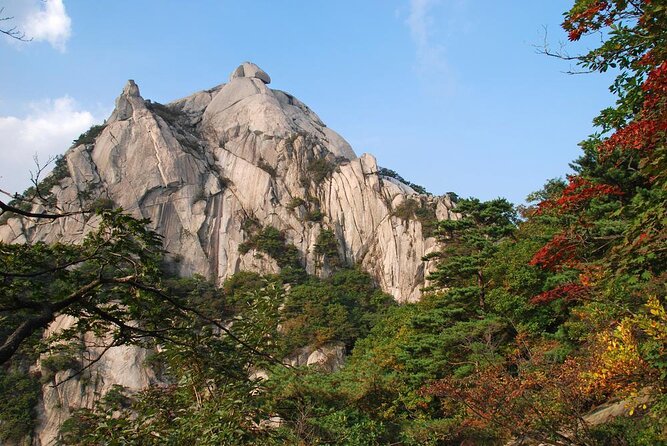
The big win is the climb plan. The ascent is about 600 m of elevation gain within roughly 2.1 km (1.3 miles), and this course targets around 4 hours to reach the summit instead of the more typical 6 hours. If you’re short on vacation time, this is the kind of efficiency you’ll feel in your legs and your schedule.
A Consideration: This is steeper than casual hiking
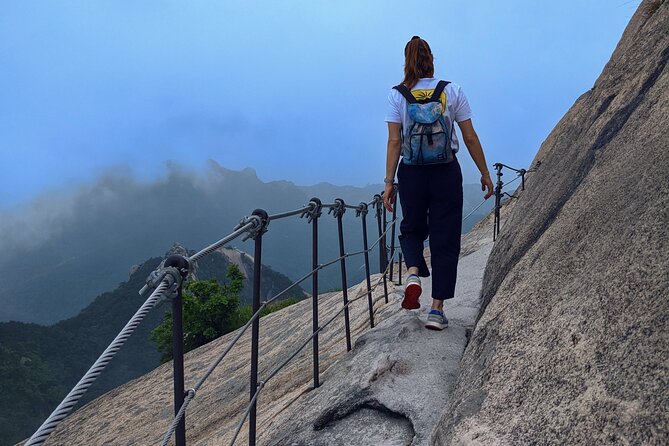
You should be ready for the steep stuff, including a 25–45 degree section aided by ropes near Baek-un-dae. If you have knee issues, this is not recommended, and if heights make you tense, you’ll want to manage it with the guide early and deliberately.
You can also read our reviews of more tours and experiences in Seoul.

Key Takeaways Before You Go
- Fast summit route: Designed for about 4 hours to the top instead of the usual longer hike
- Real vertical work: ~600 m gain in ~2.1 km, like climbing about 200 floors
- Ropes on the steep angle: A 20–30 minute part with 25–45 degrees climbing support
- Small group feel: Max 20 travelers, so you’re not just a number
- Lunch option: Optional tofu-focused meal after the hike (9,000–15,000 KRW)
- Poles are conditional: You can rent poles, but only if you request in advance
Why Bukhansan’s Highest Peak Is Worth Your Morning
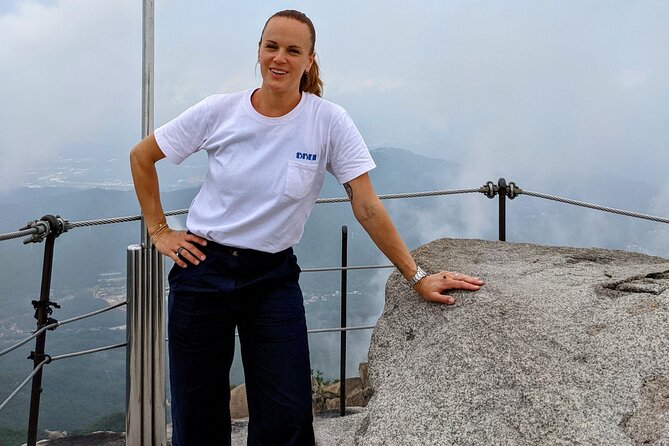
If you want a hike that feels like a real escape from the city, Bukhansan does the job fast. It’s right on the edge of Seoul, so you get that mountain mood without a long transfer day. This course is built for people who want the big payoff: reaching the highest peak in Seoul and feeling how the season changes as you climb.
The course also makes a smart promise: you’ll conquer the summit without the slower, longer routes that burn up your day. The timing matters. A 4-hour hike inside a half-day window lets you still see Seoul afterward, instead of spending the rest of the day walking like a malfunctioning robot.
And yes, it’s popular. That’s exactly why I like the emphasis on going safe and sound. Bukhansan sees rescue incidents every year, and the whole point here is to reduce the chances of turning a hike into an ordeal.
The Route Strategy: How the course compresses a long hike
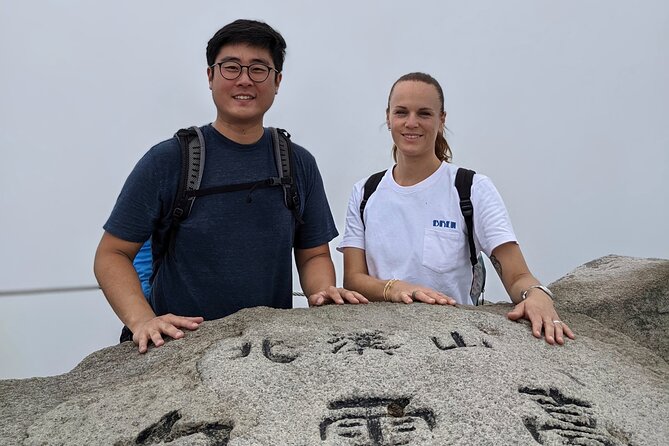
Most people don’t realize how much time varies on mountain trails until they’re staring at a “typical” duration and doing math in their head. This course is based on route research to find the simplest, fastest path to the summit, targeting about 4 hours rather than the normal 6 hours.
Here’s the practical part: you’re not just saving time on flat ground. The climb includes a steep elevation push. You’re looking at around 600 meters of gain within about 2.1 km. That normally takes on the order of 100–120 minutes for the uphill portion, depending on pace and conditions.
So what does that mean for you? Plan to move steadily, not heroically. The course asks for moderate fitness. Think of it like tackling a vertical stair climb at hiking speed. If you pace yourself well, the summit comes sooner than you expect. If you start too fast, the last part feels longer than it should.
The Climb Up: What to expect in the steepest stretch
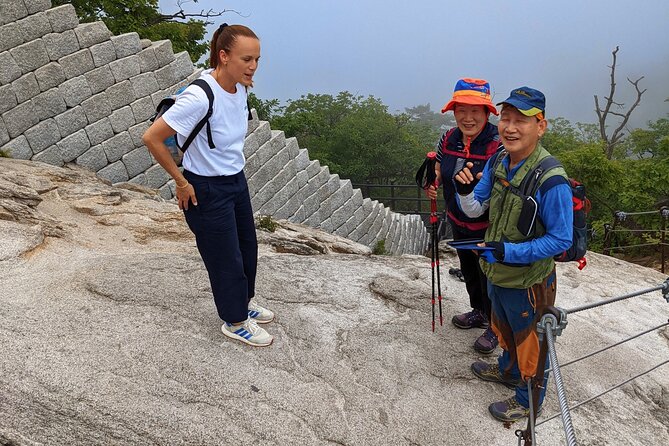
The hike begins at Bukhansan UiSeoul (and returns there). You start at 8:00 am, which is a good call for comfort and trail conditions. Early light also makes it easier to judge footing on uneven ground, especially when the slope gets steeper.
As you ascend, you’ll feel the incline ramp up quickly. That 2.1 km uphill with 600 m elevation gain is why this course feels like a workout. You’re gaining altitude fast, so your breathing will change early. The upside is that once your body adjusts, the summit time feels realistic.
The guide-led approach matters here. You’re not left to figure out the whole mountain alone. The course is designed to keep you moving along a safe path and managing pace so you can actually reach the peak within the time window.




Baek-un-dae Peak: The steep angle with ropes (and how to handle fear)
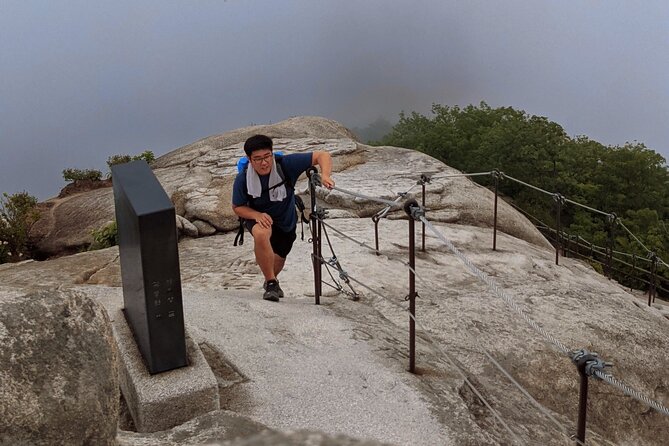
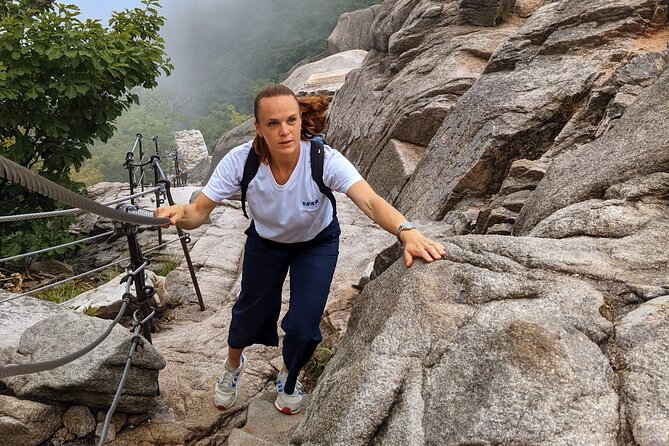
The highlight is Baek-un-dae, the summit portion that makes Bukhansan famous. Near the top, you’ll hit a section requiring about 25–45 degree-angle climbing. The trail uses ropes for assistance, and that rope support is there for a reason: it’s steep enough that hand-and-foot placement needs to be deliberate.
This part takes around 20–30 minutes, so it’s not some all-day grind. But it can be intimidating if you’re sensitive to heights. The course notes a helpful option: if fear of heights is an issue, this section can be avoided by having a break. The key is to talk with the guide early so you can set your comfort plan before you’re already committed to the most exposed moments.
If you don’t like climbing on steep angles, this is the moment where your mindset matters most. Take it slow, grip the ropes when you need to, and focus on the next step—not the view ahead.
Safety First, Not Just Pretty Views
One of the most consistent reasons people recommend this course is that the guide keeps things organized and safety-conscious. I like that the vibe is supportive: a group small enough to feel coordinated, with a guide who stays attentive and keeps everyone on track.
That matters because Bukhansan is not a theme-park slope. It’s an active mountain trail with steep segments and changing conditions. The course targets a “safe and sound trail” concept, and that’s what you should look for if you’d rather spend your time enjoying the scenery than worrying about where to step next.
Also, the payoff is real. You reach the summit quicker than you expect for how steep it is, which makes the final view feel earned. The top is where the morning turns from effort to reward.
Timing and Getting There: 8:00 am and the half-day format
This hike runs about 4 hours 30 minutes total. It starts at 8:00 am and ends back at the meeting point at Bukhansan UiSeoul. That structure is a big deal if you’re touring Seoul on a tight schedule.
Another practical note: the meeting point is near public transportation. That reduces stress on arrival day and makes it easier to pair with other plans after the hike. And since this is booked around 14 days in advance on average, it’s worth reserving with some lead time, especially for popular dates or peak travel weeks.
Gear That Actually Helps: Hiking poles, knees, and pacing
You’re allowed to rent hiking poles, but there’s a catch. The poles cost extra and can only be rented if you inform in advance. The course also makes a clear point: poles are usually not necessary unless you have bad knees. If your knees are fine, you might skip this extra cost and keep things simple.
If you know your knee joints complain on descents, poles can be a practical tool. But even with poles, the course is not recommended for people with knee issues. That’s not a scare tactic; it’s a fit-for-purpose warning. This hike includes steep angles and sustained uphill effort, and it’s best to be honest about what your body handles.
The smartest approach is pacing. Don’t sprint uphill. You want enough energy to safely handle the rope-assisted section. If you arrive at the steep part tired and rushed, it becomes harder than it needs to be.
Optional Lunch After the Summit: Tofu-focused, with meat too
If you want food after a climb, you can add lunch. It’s optional and paid separately, typically 9,000–15,000 KRW. After the hike, you’ll eat at a place specializing in tofu dishes.
The useful detail here is choice. The restaurant makes items from scratch and includes meat options while still being vegan/vegetarian friendly. That means you can pick something that matches your diet without turning lunch into a separate mission.
Timing-wise, lunch is after the hike, so it’s the classic recovery move: calories in, legs thankful, then you head back into Seoul life.
Price and Value: What $64.89 buys you
At $64.89 per person, this isn’t an “automatic bargain” or a luxury tour. It’s a practical guided hike. The value comes from three things you feel during the experience:
- Time saved: The course targets about 4 hours to the summit instead of the usual longer hike. That’s hard value if you’ve only got limited days.
- Safety guidance on steep terrain: Rope-assisted climbing near Baek-un-dae can be manageable when you’re coached and supported. You’re not just paying for a guide’s presence, but for how they help you move safely.
- Small group size: With a max of 20 travelers, you’re more likely to get attentive guidance and a smoother pace than in huge groups.
If you already love planning your own hikes and you’re comfortable navigating steep trails, you could technically hike independently. But if you want the mountain experience with less decision stress, this course is a solid way to spend your energy on the climb, not on guessing.
Who This Tour Fits Best (And Who Should Rethink It)
This is best for you if:
- You have moderate physical fitness
- You can handle steep uphill effort and a steep rope-assisted segment
- You want a guided plan that keeps the summit within a half-day window
- You like small-group hikes where the guide can actually manage the group
You should rethink it if:
- You have knee issues (the course explicitly isn’t recommended)
- You’re uncomfortable with steep angled climbing and heights. You may be able to manage the rope-assisted section by taking a break, but the hike still includes challenging terrain.
It’s also a great fit for early risers. Starting at 8:00 am gives you a calmer trail and a better rhythm for a summit-focused morning.
Final Call: Should you book the Bukhansan Summit Course?
I think you should book this course if you want the best parts of Bukhansan without turning your day into a long, uncertain hike. The time-saving route, the structured approach, and the safety focus on the rope-assisted section are exactly what make this worth the guided cost.
Skip it if your knees won’t cooperate or if you know you can’t handle steep, exposed terrain even with rope support and pauses. In that case, you’ll enjoy Seoul more by choosing a less demanding route.
FAQ
What is the duration of the Bukhansan National Park Summit Course?
It runs for about 4 hours 30 minutes (approx.).
What time does the tour start?
The start time is 8:00 am.
Where does the hike start and end?
It starts at Bukhansan UiSeoul, South Korea, and ends back at the same meeting point.
How long does it take to reach the summit on this course?
With the researched fastest route, it’s designed to take about 4 hours instead of the normal 6 hours.
How difficult is the climb?
You’ll gain about 600 meters (2,000 ft) in roughly 2.1 km (1.3 miles). You should have a moderate physical fitness level.
Is the rope-assisted section required?
There is a steep section near Baek-un-dae that uses ropes for climbing support. The course notes that if you fear heights, that 20–30 minute part can be avoided by having a break.
Are hiking poles included?
No, hiking poles are not included. They can be rented for a cost, but only if you inform in advance. Poles are said to be not really necessary unless you have bad knees.
Is lunch included in the price?
Lunch is optional and not included. It’s paid by individuals (typically 9,000–15,000 KRW).
What size is the group?
The maximum group size is 20 travelers.
What happens if the weather is poor?
This experience requires good weather. If it’s canceled due to poor weather, you’ll be offered a different date or a full refund.