REVIEW · GYEONGBOKGUNG PALACE & HANBOK TOURS
Tour Seoul’s oldest district with a storyteller from Bukchon
Book on Viator →Operated by Owl Tour · Bookable on Viator
Bukchon gets personal when the storyteller grew up here. This 2–3 hour walk through Bukchon (from 1392 to the 1980s) turns Seoul history into something you can follow street by street, with a guide born and raised in Bukchon. I especially like the unhurried pace and the way the tour links big political and cultural shifts to places you can actually stand in. The only real drawback: it’s still a walking tour in older streets, so kids under 12 may find it challenging and you’ll want moderate fitness.
You start at Anguk Station Exit 4 (Unni-dong, Jongno District) at 10:00 am and finish in a different spot, so plan to end your day calmly nearby. It’s a private experience for just your group, with a mobile ticket and even a group-discount option, and most stops don’t charge admission—meaning your money goes mostly to the storytelling and the local context.
In This Review
- Why Bukchon Storytelling Beats a Standard Hanok Stroll
- Anguk Station Exit 4: Easy Start, Slightly Different Finish
- Unhyeongung: The Child Who Became King
- Cafe Onion Anguk: Architecture That Spans Centuries
- Bukchon Traditional Culture Center: Hanoks of the Yangban Ruling Class
- Seokjeong Boreum Well: The Story Behind a Well You Might Have Heard About
- Choong Ang High School: Winter Sonata Isn’t the Whole Story
- Samcheongdong / Bukchon: Feng Shui, Power, and a Capital Chosen on Purpose
- Bukchon Hanok Village: The 1920s–30s Turning Point
- The Storyteller Factor: Why Dong’s Perspective Changes Everything
- Price and Value: Why $39.20 Can Make Sense in Seoul
- What to Expect Day-Of: Pace, Walking, and Practical Comfort
- Who Should Book This Bukchon Tour (and Who Might Skip)
- Should You Book Bukchon’s Oldest-District Story Tour?
- FAQ
- How long is the Bukchon storytelling tour?
- Where does the tour start, and what time is it?
- How does the tour end?
- Is admission included for the stops?
- Is this a private tour?
- What’s included in the price?
- What isn’t included?
- Is it okay for children?
- What happens if the tour is canceled or if there aren’t enough guests?
- Can I cancel for a refund?
Why Bukchon Storytelling Beats a Standard Hanok Stroll
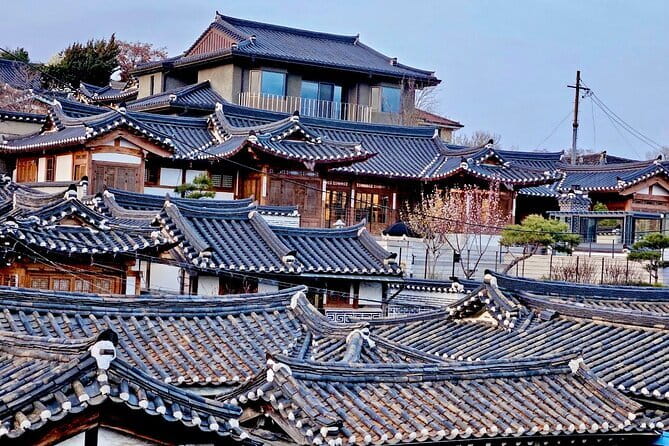
This isn’t a checklist of pretty houses. It’s a guided narrative of how Bukchon shaped Korea’s power, culture, and everyday life across centuries. The storyteller guiding you isn’t just reading facts from a screen—this is a person who grew up in Bukchon and later became a filmmaker and university screenwriting professor, which helps explain why the stories feel arranged like scenes rather than random notes.
Two things make it work for real travel days:
- You get context you can carry. You’ll hear how Joseon court life, elite yangban living, and later political shifts connect to specific buildings and landmarks.
- You’re not rushed. The tour is built around short stops (often 10–20 minutes each), so you can look, listen, and absorb without feeling dragged.
The tour may be canceled if fewer than 2 guests join, so keep an eye on your plans if you’re traveling in a quieter season.
Anguk Station Exit 4: Easy Start, Slightly Different Finish
Meeting is simple: head to Anguk Station Exit 4 in Unni-dong, Jongno District. The tour starts at 10:00 am, and you’ll end somewhere else afterward (details are provided after booking).
That end-location detail matters more than it sounds. If your next commitment is far away, give yourself buffer time. I also like that the start is near public transportation, because Bukchon can be a little awkward to reach if you’re relying only on taxis.
You can also read our reviews of more tours and experiences in Seoul.


Unhyeongung: The Child Who Became King
The tour kicks off at Unhyeongung, where a story unfolds around royal succession. When the king dies without a crown prince, an 11-year-old royal boy born and raised in this area becomes the 26th king of Joseon. The guide explains how his father would rule from this place for the following decade.
What I like here is the storytelling hook. You’re not just looking at a landmark—you’re learning how the political system worked when power had to shift fast. It’s a good opening stop because it sets the tone: Bukchon wasn’t only a scenic neighborhood. It was a stage for governance, family, and crisis.
Practical tip: Give your eyes a moment here. Even if you’re walking later through denser alleys, this stop helps you understand what you’ll keep noticing later: how space and authority overlap.
Cafe Onion Anguk: Architecture That Spans Centuries
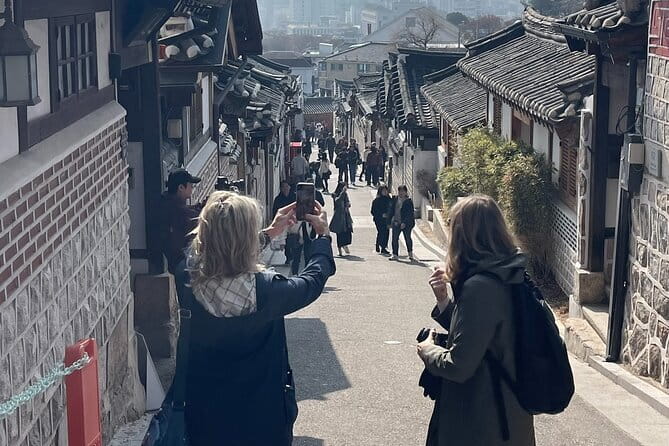
Next comes Cafe Onion Anguk, a stop built around historic architecture. You’ll admire buildings associated with different eras—about 600, 100, and 50 years old—and learn the stories behind them.
This is where the tour rewards slower looking. Instead of just snapping photos, you’ll get context for why certain structures survived, what changed, and how people have re-used old spaces over time.
One caution: this stop is brief, so don’t plan a long break here. It’s meant as a quick visual and story stop to keep the flow going.
Bukchon Traditional Culture Center: Hanoks of the Yangban Ruling Class
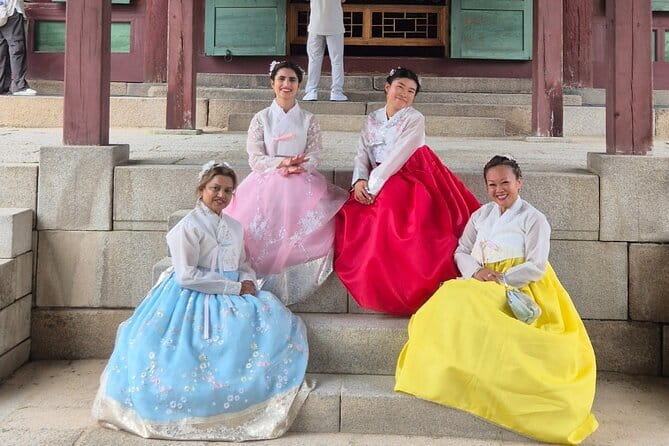
At the Bukchon Traditional Culture Center, you’ll learn about hanoks connected to the yangban, the ruling class who typically lived in Seoul.
This stop is valuable if you want to understand who lived where and why. Bukchon is often described as traditional, but the tour pushes past the surface and explains the social role of those houses—how elite living shaped the neighborhood and how that legacy is visible even today.
If you’re the kind of traveler who likes to know what daily life might have looked like for different social ranks, this is one of the most useful stops.
Seokjeong Boreum Well: The Story Behind a Well You Might Have Heard About
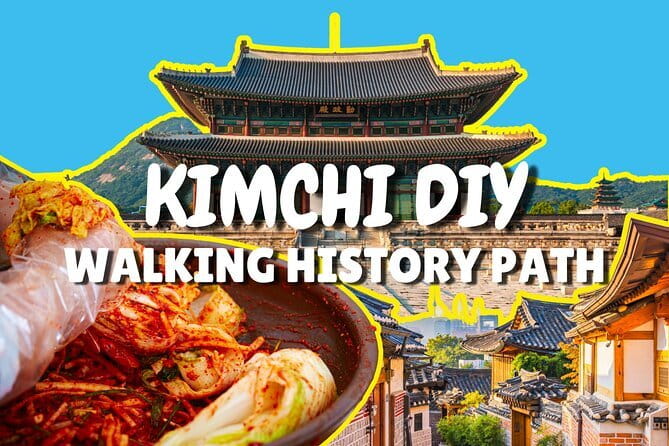
Then you’ll head to Seokjeong Boreum Well, where the guide ties childhood memories to what history reveals. This isn’t just a “look at a well” stop. The point is how wells functioned in life, and how stories about them can carry cultural meaning long after the original reasons fade.
I like this stop because it adds an everyday layer to all the court and politics talk. It reminds you that Bukchon wasn’t only built by rulers—it was lived in by people doing ordinary things like fetching water, keeping households running, and passing down local knowledge.





Choong Ang High School: Winter Sonata Isn’t the Whole Story
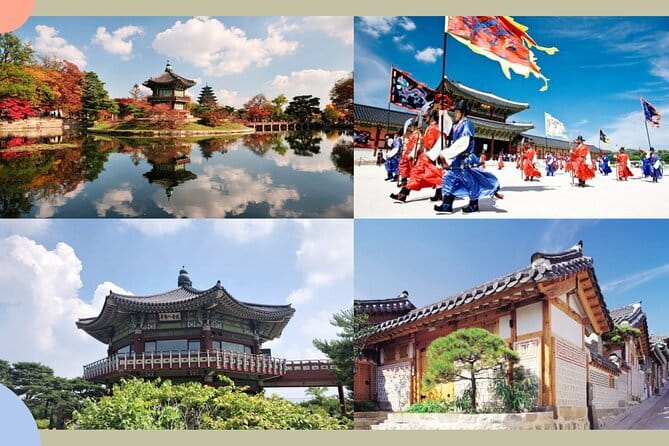
The tour includes Choong Ang High School, known for filming locations like Winter Sonata. But the guide focuses on what’s behind that fame: it’s also a historic space tied to how Korea took shape into the country it became.
This is a smart inclusion because it helps you avoid the common trap of treating famous filming spots as pure pop culture trivia. You’ll get the sense that TV locations often sit on older groundwork—political, educational, and social.
If you’re a fan of Korean dramas, you’ll enjoy the recognition. If you’re not, it still works because the stop is about history and the forces that shaped modern Korea.
Samcheongdong / Bukchon: Feng Shui, Power, and a Capital Chosen on Purpose
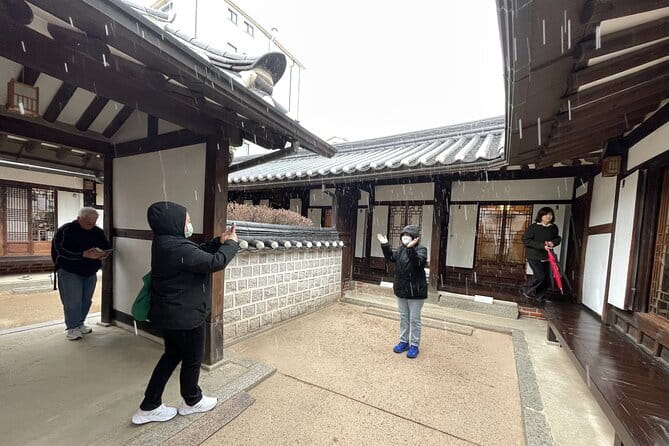
One of the most interesting segments is Samcheongdong / Bukchon, where you trace the rise and fall of powerful politicians and business tycoons who once held land in Bukchon. The tour connects this to the logic behind Bukchon being chosen as a capital area using feng shui principles—seen as an auspicious site.
You’ll hear a narrative that mixes architecture, superstition-to-policy thinking, and real power. That combo is why people leave this tour feeling like Bukchon is more than “old Seoul.” It’s a neighborhood designed for authority, and later, contested by people who wanted to control what it meant.
Also, this segment is where the tour’s time span (Joseon onward) starts to feel like one continuous story instead of separate eras.
Bukchon Hanok Village: The 1920s–30s Turning Point
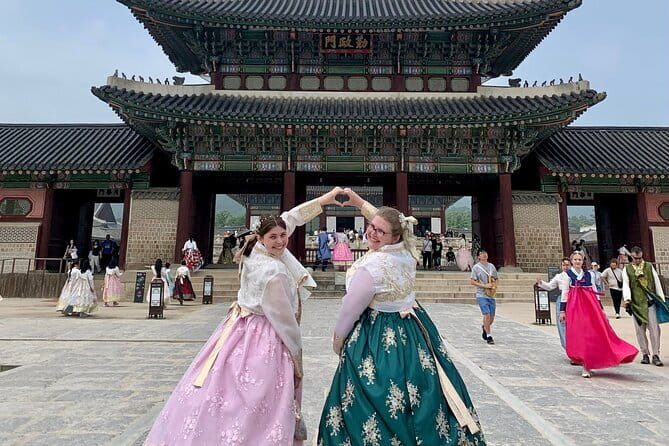
The last stop is Bukchon Hanok Village, with a focus on the man who changed the face of Bukchon in the 1920s and 30s.
This finale matters because it shifts the lens to change. Bukchon isn’t frozen in time. It evolved, and the neighborhood you see now is the result of decisions made in the last century as well as the earlier centuries that visitors often imagine.
If you’ve been thinking this whole time that Bukchon equals tradition only, this ending brings you back to the real world: neighborhoods adapt, preserve, and transform depending on who is shaping them.
The Storyteller Factor: Why Dong’s Perspective Changes Everything
The biggest praise in the experience is about the guide—often introduced as Dong, a storyteller who grew up in Bukchon. That firsthand perspective shows in the details: small local insights, personal anecdotes, and connections between past and present.
I also appreciate the tone that comes through in the way the tour is described: it feels low-key and human. People mention that the pace never feels rushed, and that the tour helps you notice quieter features you might otherwise miss.
One more nice touch from some groups: the guide doesn’t stop at the tour route. You can come away with extra recommendations for how to enjoy Seoul based on your interests, and at least one guest noted receiving a short film suggestion for after the tour.
Price and Value: Why $39.20 Can Make Sense in Seoul
At $39.20 per person for 2 to 3 hours, the value depends on what you’re comparing it to. If you’re paying for a guide who only points at big sights, this price can feel high. But here, most stops are free admission, and the cost largely covers guided interpretation of dozens of details you’d never piece together alone.
What you’re paying for:
- a professional storyteller from Bukchon
- structured walking time across major story stops
- local context for politics, culture, and everyday life
- a private format where only your group participates
It also helps that you can use a mobile ticket, and there’s a group discount option if you’re traveling with others. If you like tours that teach you how to see a place—not just where to stand—this price fits.
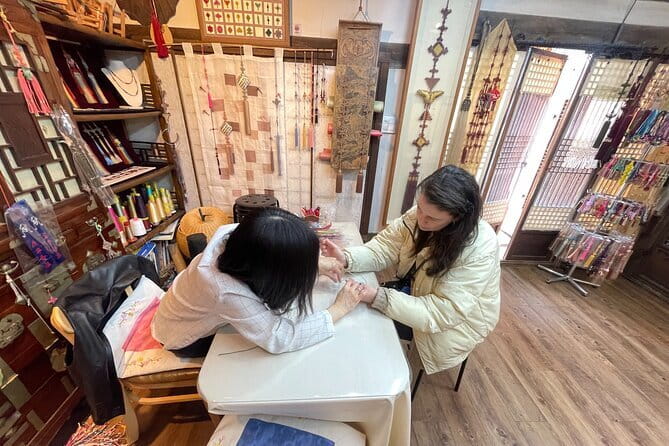
There is also a Plus option in play: the traditional Korean handicraft experience is available with the Plus Tour only. Some guests highlight making hopae tags, which adds a tangible piece of history alongside the walking.
What to Expect Day-Of: Pace, Walking, and Practical Comfort
This is a walking tour with multiple short stops, typically 10–20 minutes each, and it runs about 2 to 3 hours. The physical requirement is described as moderate fitness, which tells you to plan for uneven paths and the normal strain of walking more than you might on a museum-only day.
What I’d do to make it smooth:
- wear comfortable shoes you don’t mind getting a little dusty
- bring water (coffee/tea isn’t included)
- think of it as a listening day, not a shopping day
Also, it’s recommended for ages 12 and above, since the storytelling walking style may be challenging for younger kids.
Who Should Book This Bukchon Tour (and Who Might Skip)
Book this tour if you:
- want a guided understanding of Bukchon’s role in Korean politics, economy, and culture
- like stories told by a local who grew up in the neighborhood
- want history that connects to streets, buildings, and specific landmarks
- enjoy an easy pace that lets you absorb without feeling hurried
You might skip it if you:
- want a tour heavy on museums and indoor time
- need a fully accessible route (the tour calls for moderate fitness)
- are traveling with kids under 12 who may find the walking and storytelling format tough
Should You Book Bukchon’s Oldest-District Story Tour?
If you’re spending a day in Seoul and you’d like your time to turn into something you remember, I think this is a strong choice. The cost is reasonable for what you get because the guide effort does the heavy lifting: connecting Unhyeongung’s royal succession story, yangban hanok life, a well tied to local memory, drama-famous Choong Ang High School, feng shui thinking in Samcheongdong, and the 1920s–30s reshaping of Bukchon Hanok Village.
My final take: if you’re willing to walk, listen, and look slowly, you’ll get more than photos. You’ll get a sense of why Bukchon became important—and how the layers keep showing up in Seoul’s present.
FAQ
How long is the Bukchon storytelling tour?
The tour runs about 2 to 3 hours.
Where does the tour start, and what time is it?
It starts at Anguk Station Exit 4 in Unni-dong, Jongno District, with a start time of 10:00 am.
How does the tour end?
The tour ends in a different location than where it starts, and the specific end location is provided with the activity details.
Is admission included for the stops?
Admission is listed as free at the stops included in the tour.
Is this a private tour?
Yes. It’s a private activity, and only your group participates.
What’s included in the price?
You get a professional guide from Bukchon. A traditional Korean handicraft experience is available with the Plus Tour only.
What isn’t included?
Not included are travel insurance, hotel pick-up service, personal expenses, and coffee and/or tea.
Is it okay for children?
It’s recommended for participants aged 12 and above. The storytelling walking tour may be challenging for children aged 12 and under.
What happens if the tour is canceled or if there aren’t enough guests?
The tour may be canceled if fewer than 2 guests join.
Can I cancel for a refund?
Yes. You can cancel up to 24 hours in advance for a full refund.