REVIEW · HISTORICAL TOURS
Seoul History Walking Tour
Book on Viator →Operated by CompassTour · Bookable on Viator
Seoul history, told one street at a time. This guided walk threads together 630 years of Seoul, from the Joseon Dynasty to Korea’s modern push for democracy, with a clear, story-by-story route through the historical center. I like that the tour doesn’t just point at buildings. It gives you the why behind what you’re seeing.
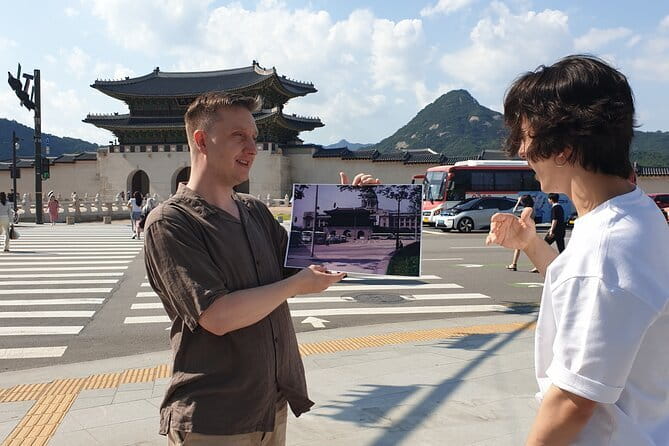
What I really enjoy is how the stops turn into quick questions you can remember after you leave. Think bell rituals at Bosingak, the meaning of Cheonggyecheon Stream in different eras, and what Gwanghwamun Square and the Embassy of Japan symbolize. I also love the practical small-group feel (max 8 travelers) paired with an Australian guide who answers questions as you walk.
One consideration: it’s a fast, compact route (about 10–25 minutes at many stops). If you like to linger in places or want deep indoor time everywhere, you may wish you had more hours.
In This Review
- Key highlights at a glance
- How This 3.5-Hour Seoul History Walk Actually Feels
- Bosingak Bells to Cheonggyecheon Stream: Daily Life in Two Worlds
- City Hall, Seoul Plaza, and Jeongdong Observatory: Power With a View
- Deoksugung Doldam-gil and Jungmyeongjeon Hall: Legends and Pressure
- Ewha Museum and the Former Russian Legation: Education, Flight, and What Survives
- Admiral Yi Sun-sin and King Sejong: The Statues That Do the Teaching
- Gwanghwamun Square to the Embassy of Japan: Democracy and the Long Protest Trail
- Museum Rooftop, Jogyesa Temple, and Why the Bells Matter
- What You’ll Get for $26.60, and What to Plan For
- Should You Book This Seoul History Walking Tour?
- FAQ
- Where does the tour start?
- How long is the Seoul History Walking Tour?
- What stops are included?
- Is admission included for the stops?
- What is included in the price?
- What is not included?
- What is the cancellation policy?
Key highlights at a glance
- Small group, big timeline: up to 8 travelers over about 3.5 hours, moving through major eras of Seoul’s story
- Most stops cost nothing: all the listed sights have free admission on this route
- Snack + memento included: traditional Korean snacks and a keepsake are part of the deal
- Icons you can actually locate: King Sejong and Admiral Yi Sun-sin appear as statues you’ll visit in context
- Democracy and protest themes: Gwanghwamun Square and the Embassy of Japan are built into the walking narrative
How This 3.5-Hour Seoul History Walk Actually Feels
This tour is built for the sweet spot between sightseeing and learning: you cover a lot of ground without feeling like you’re rushing through blur. You’re moving on foot through Seoul’s historical center with an Australian guide, and the pace is set for a group size that stays small enough to ask questions.
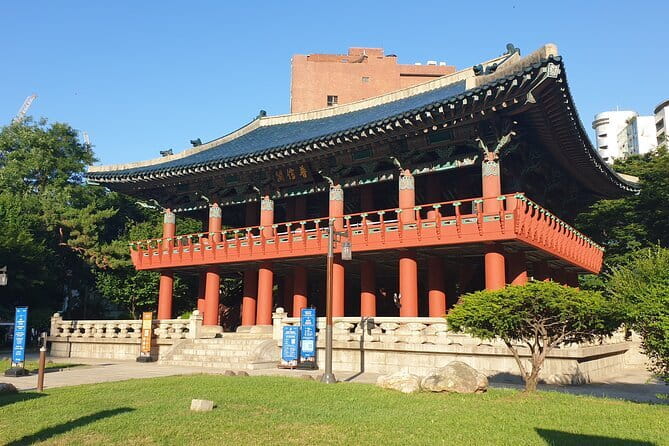
You’ll start at Bosingak Bell Pavilion (54 Jong-ro, Jongno District) at 2:30 pm, then finish at Jogyesa Temple. Even better, the tour ends right near where it begins, and the guide helps with directions so you don’t end up hunting for your next plan.
It’s also a smart format for people who prefer structure. Many stops are short on purpose, but the “what does it mean?” angle helps you connect dots fast. Each location is paired with a specific question, so you’re not just reading signs.
You can also read our reviews of more walking tours in Seoul

Bosingak Bells to Cheonggyecheon Stream: Daily Life in Two Worlds
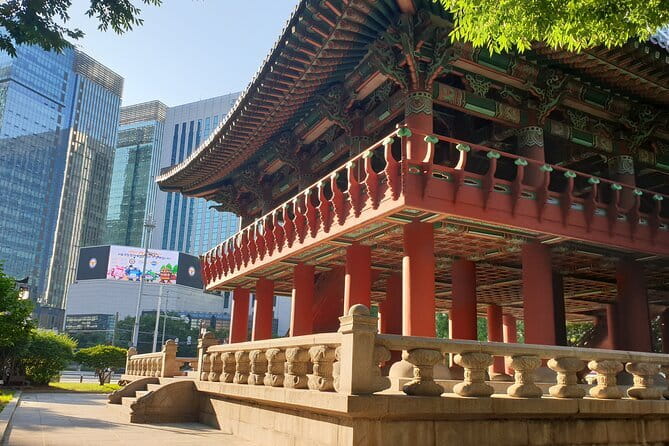
The opening stop sets the tone: Bosingak Bell Pavilion is all about timing and tradition. You’ll hear the idea that the city bells ring 28 times at night and 33 times in the morning, and you’ll explore why that mattered to Seoul as the city changed over time.
Next comes Cheonggyecheon Stream, one of the tour’s longer pauses (about 40 minutes). The focus isn’t just scenery. You’ll learn what the stream provided Seoul across multiple eras, including the Joseon Dynasty and the Korean War, plus what it represents today.
If you’re the type who likes to understand how people lived, this pairing works well. Bells explain ritual time. A stream explains practical time—water, movement, and how city life adapts when eras shift. It’s also a nice break before the tour turns back toward built spaces and power symbols.
City Hall, Seoul Plaza, and Jeongdong Observatory: Power With a View
After the stream, you move to Seoul City Hall, where the tour frames it as an architectural standout both outside and in. Even with only a brief stop (about 5 minutes), the intent is to teach you how the building fits into Seoul’s identity, not just how it looks from a street photo.
Then it’s onto Seoul Plaza (about 10 minutes). The guide’s angle here is civic emotion—how the plaza reflects the hearts of modern citizens. It’s a small stop, but it helps connect modern Seoul’s public spaces to the larger story of governance and participation.
The walk also includes Jeongdong Observatory (about 10 minutes), presented as a place where you can judge how much of the palace and cityscape is revealed from a perch. This is the part of the tour that gives you a “sense of place” moment. You look out, then you understand what you’ve been moving through.
Deoksugung Doldam-gil and Jungmyeongjeon Hall: Legends and Pressure

The tour adds a lighter, human element at Deoksugung Doldam-gil (about 10 minutes). You’ll hear the well-known local-style superstition: walk along the stone wall with your spouse, and Koreans say you’ll soon be divorced. Whether you buy it or not, this stop works because it shows history isn’t only formal monuments. It’s also everyday stories people pass along.
Next is Jungmyeongjeon Hall (about 10 minutes), where the theme turns heavier. You’ll learn how Imperial Japan forced Korea to surrender its independence. The tour keeps the explanation tied to what you can see here, so it doesn’t feel like abstract politics.
That contrast is smart. Humor and myth at one stop, then the reality of loss and coercion at the next. It helps you feel the emotional range of Seoul’s past without it turning into a single sad mood the whole walk.
Ewha Museum and the Former Russian Legation: Education, Flight, and What Survives
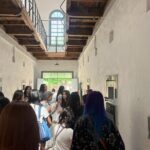
The tour shifts into people’s lives at Ewha Museum (about 10 minutes). The guiding question is how Korea’s first school for girls changed societal views on women’s roles. For many visitors, that stop becomes a turning point because it reframes history around education and social change rather than only rulers and wars.
Then you’ll visit the Former Russian Legation (about 20 minutes). The story centers on why Korea’s penultimate monarch fled his palace in the middle of the night and stayed here for a year. That kind of narrative makes the building feel less like a museum object and more like a survival decision.
If you’re worried the tour will be too centered on royal names, these two stops help balance it. You get social change and personal risk, not just monuments.
Also note: there’s a lot to remember here. If you like taking notes, consider jotting down the key question for each stop, not just the location names. Your brain will thank you later.
You can also read our reviews of more historical tours in Seoul


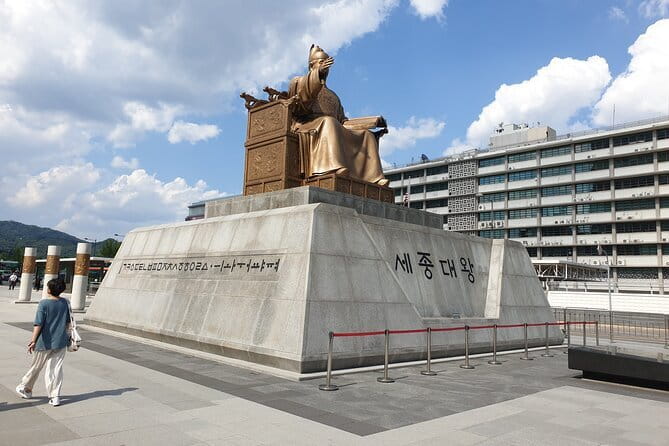
Admiral Yi Sun-sin and King Sejong: The Statues That Do the Teaching
Two stops do standout work for the tour’s momentum: the Statue of Admiral Yi Sun-sin and the Statue of Sejong the Great, each about 10 minutes.
At Yi Sun-sin’s statue, the tour’s framing is direct: how this general saved Korea and changed the course of world history. Even if you already know the name, the value here is where you learn the story in place, as part of a route that moves from dynasty to modern identity.
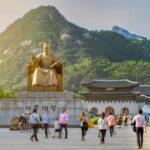
With Sejong, the guide explains why he’s considered the greatest king of the Joseon Dynasty. Again, the point isn’t memorizing a lecture. It’s understanding why these figures get honored so visibly.
What I like about ending up here is that you stop treating history as distant. You’re literally walking alongside the names that Seoul chose to memorialize.
Gwanghwamun Square to the Embassy of Japan: Democracy and the Long Protest Trail
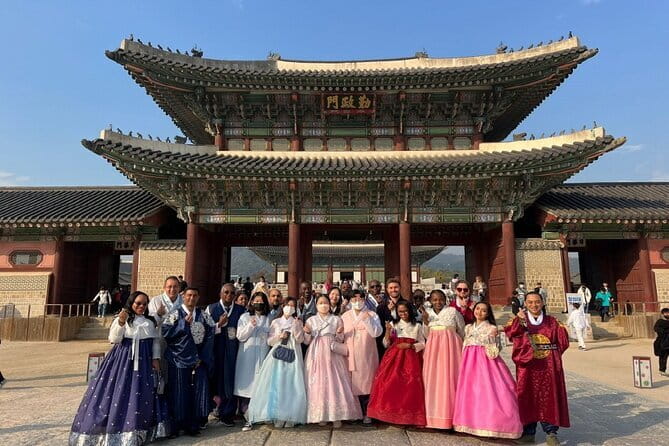
The tour’s modern chapter focuses on public action. Gwanghwamun Square (about 25 minutes) is used to ask a sharp question: how many protests does it take to change a democracy? That’s not a trivia question. It’s a prompt that helps you connect South Korea’s struggle for democracy against dictatorship to what you see in modern public space.
Then the route heads to the National Museum of Korean Contemporary History (about 15 minutes), where the guide’s focus is how much history you can see from the rooftop. This gives you a broader view, literally and conceptually, without forcing you into a long indoor museum day.
Next is the Embassy of Japan (about 10 minutes). The tour frames it as the site of the world’s longest running protest. I’d treat that as the tour’s guiding claim, but even then, the stop is useful because it shows how one location can carry decades of civic memory.
Museum Rooftop, Jogyesa Temple, and Why the Bells Matter
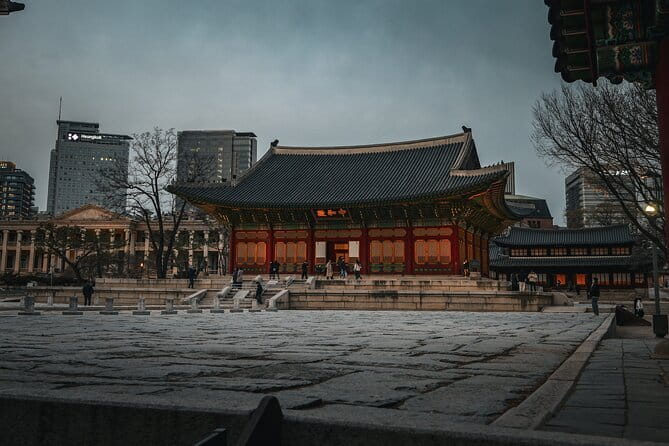
To finish, the tour includes Jogyesa Temple (the endpoint, with a dedicated stop at the end of the walk). The closing question ties into the ringing of bells and how it connects us with the universe. It’s a calm, reflective note after the more political stops.
Before that final bell moment, you’ll also visit National Museum of Korean Contemporary History for a rooftop viewpoint and then stop at the Japan embassy for the protest story. That order matters. It moves from present-day memory (protest and museum outlook) into something more spiritual and symbolic (temple bells).
Because the endpoint is right near the start, you can keep your day simple. Get off with your thoughts still fresh, then head to dinner without navigating a totally new neighborhood blind.
What You’ll Get for $26.60, and What to Plan For
At $26.60 per person, this is priced like a budget-friendly way to get structure, multiple landmarks, and a guide who ties it together. The big value is that admission is free for every listed stop, so your money goes toward interpretation, not entry fees.
You’ll also receive traditional Korean snacks and an informative memento. That helps, especially on a 3.5-hour walk when you don’t want to spend time buying food mid-route.
Two practical notes:
- Bottled water is not included, so plan to bring some or buy along the way.
- Many stops are short, so wear shoes you trust. You’ll be moving between points for the whole session.
If you’re traveling solo, with friends, or with a low-key group (remember the max 8 cap), you’ll get a good balance of variety and focus.
Should You Book This Seoul History Walking Tour?
You should book if you want a guided route that connects major Seoul landmarks to specific questions about identity: dynasty rule, education, imperial pressure, and modern democracy. It’s also a great fit if you like your sightseeing organized, with a guide who can answer questions while you walk.
Skip it if you dislike fast pacing and want long stays in interiors. This route is designed for multiple stops in one afternoon, not for museum-style wandering.
If you’re choosing between “random wandering” and “planned meaning,” this is the one that helps you do both. You’ll see the places, and you’ll also understand why they’re remembered.
FAQ
Where does the tour start?
The tour starts at Bosingak Bell Pavilion, 54 Jong-ro, Jongno District, Seoul, South Korea. The start time is 2:30 pm.
How long is the Seoul History Walking Tour?
It runs for about 3 hours 30 minutes.
What stops are included?
The tour includes Bosingak, Cheonggyecheon Stream, Seoul City Hall, Seoul Plaza, Jeongdong Observatory, Deoksugung Doldam-gil, Jungmyeongjeon Hall, Ewha Museum, Former Russian Legation, Statue of Admiral Yi Sun-sin, Statue of Sejong the Great, Gwanghwamun Square, National Museum of Korean Contemporary History, Embassy of Japan, and Jogyesa Temple.
Is admission included for the stops?
All listed stops show admission as free for this tour.
What is included in the price?
Included items are traditional Korean snacks and an informative memento. It also uses a mobile ticket.
What is not included?
Bottled water is not included.
What is the cancellation policy?
Free cancellation is available up to 24 hours in advance for a full refund. If you cancel less than 24 hours before the start time, the amount you paid will not be refunded.