REVIEW · PERFUME-MAKING WORKSHOPS
Seoul: Create Your Own Natural Perfume with a Perfumer
Book on GetYourGuide →Operated by AROMIND · Bookable on GetYourGuide
Your own scent begins in a calm hanok room. This Seoul perfume workshop lets you craft a bespoke fragrance from 100% natural essential oils and absolutes, guided step-by-step in English. You’ll also leave with bottles to actually use back home, not just a souvenir.
What I like most: the serene traditional setting and the relaxed small-group pace (max 8). Second, you get real creative control, choosing from 30 perfume bases and building your custom formula with a professional perfumer’s guidance, then taking home a 50ml Eau de Parfum plus a 10ml traveler size.
One thing to consider: if you already know perfumery well, the experience may feel a bit “guided” rather than totally open-ended, and you might wish the scent selection were broader.
In This Review
- Key points before you go
- Perfume in a Korean hanok: the vibe and what you’re making
- Price and value: what $55 buys you (and why it’s not just a class)
- Getting there near Anguk Station and how the timing works
- Inside the hanok: what happens once you arrive
- The scent journey: 30 bases, top/middle/base structure, and your choices
- Natural oils and absolutes: what that means for your final perfume
- Your take-home set: 10ml traveler bottle, 50ml EDP, and the box-and-bag bonus
- Small group English instruction: why it feels personal
- Who should book this Seoul perfume workshop (and who should skip it)
- Practical tips: what to bring, what not to do, and how to get the best blend
- Pair it with nearby hanok time in Seoul
- Should you book this perfume workshop in Seoul?
- FAQ
- How long is the perfume workshop?
- What ingredients do you use to create the fragrance?
- What take-home bottles are included?
- Is the instructor in English, and how big is the group?
- Where do we meet near Anguk Station?
- What should I bring and what is not allowed?
- Who isn’t this experience suitable for, and can I cancel?
Key points before you go
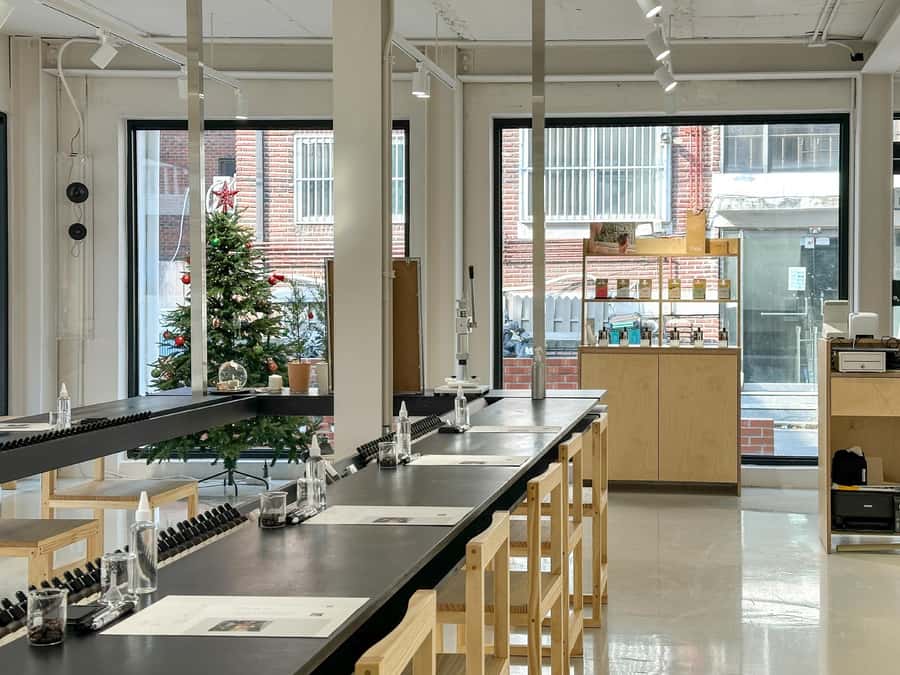
- Traditional hanok workshop: preserved setting, calm and focused.
- 100% natural ingredients: essential oils and absolutes used in your blend.
- 30 scent bases to choose from: you build your own formula with expert support.
- Small group (up to 8): more time to ask questions and smell at your own speed.
- Take-home set: a 50ml EDP plus a 10ml traveler bottle, with box and bag.
- Bring your memory triggers: you’ll pick scents that match Korea memories and images.
Perfume in a Korean hanok: the vibe and what you’re making
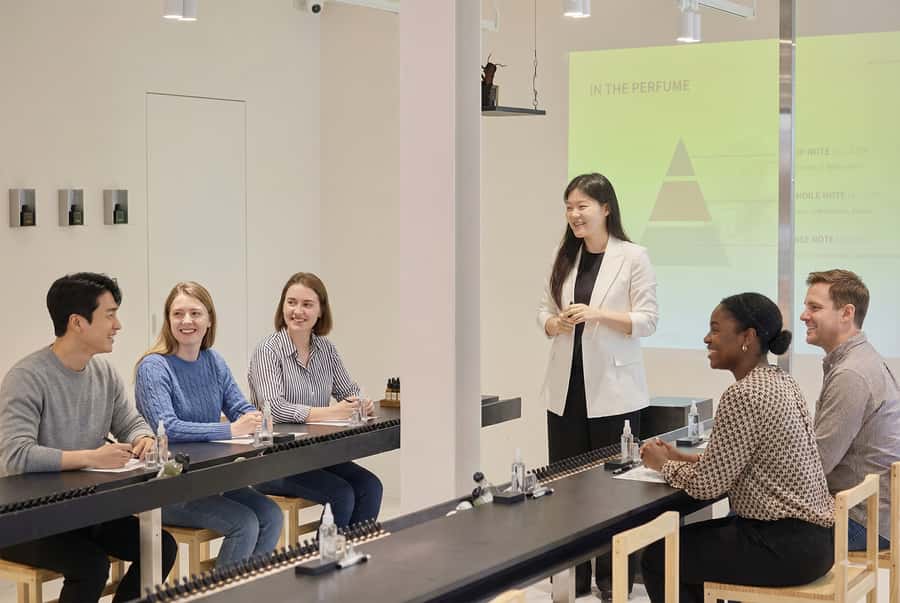
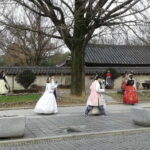
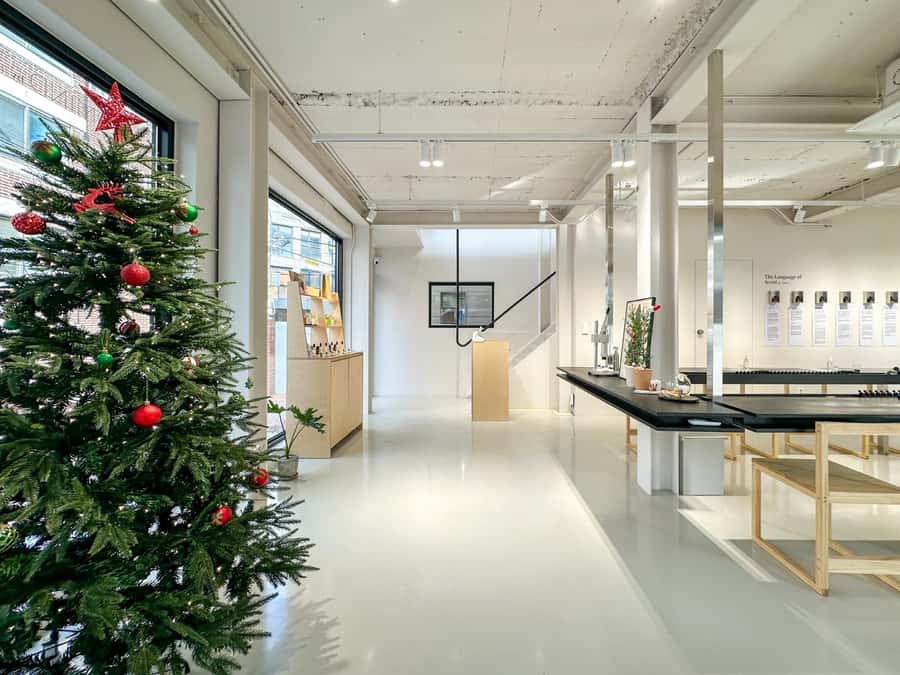
This experience is exactly what it sounds like, just done with real care. You meet and work inside a traditional Korean hanok, where the setting does half the job of getting you in the right mood. Instead of a loud showroom or a rushed class, you get a quiet space designed for smelling and blending.
Your end product is also straightforward: you create a custom fragrance formula using essential oils and absolutes, then you receive bottles that reflect what you chose. The goal is not to learn perfume theory for its own sake. It’s to make something personal that feels like a keepsake from your trip.
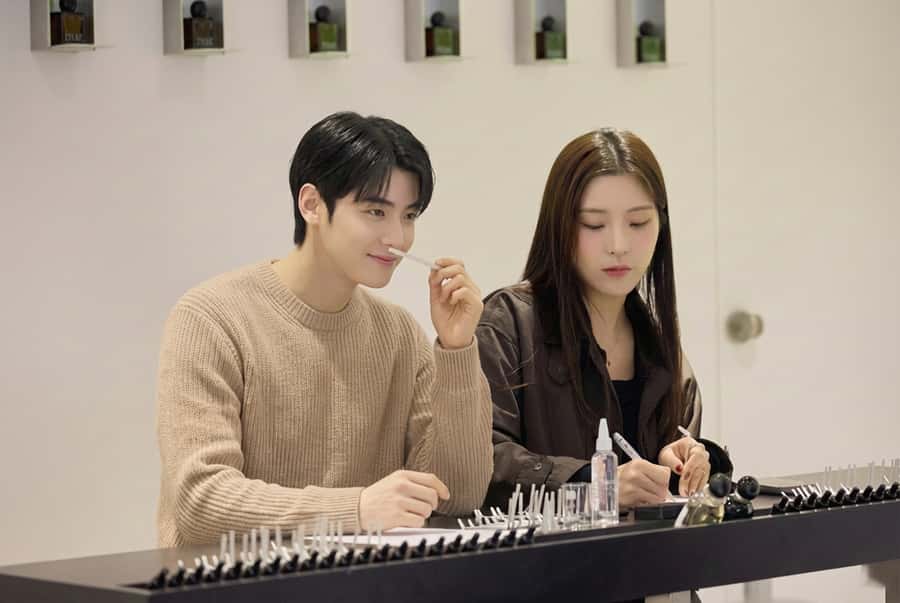
In practice, the workshop is structured. The perfumer guides you through composing your blend, and you’ll be sampling from a set of fragrance bases. You’ll feel the “top, middle, base” rhythm as you choose, adjust, and lock in the final version—so the fragrance changes as it settles, not just smells one-note from the first sniff.
You can also read our reviews of more tours and experiences in Seoul.

Price and value: what $55 buys you (and why it’s not just a class)
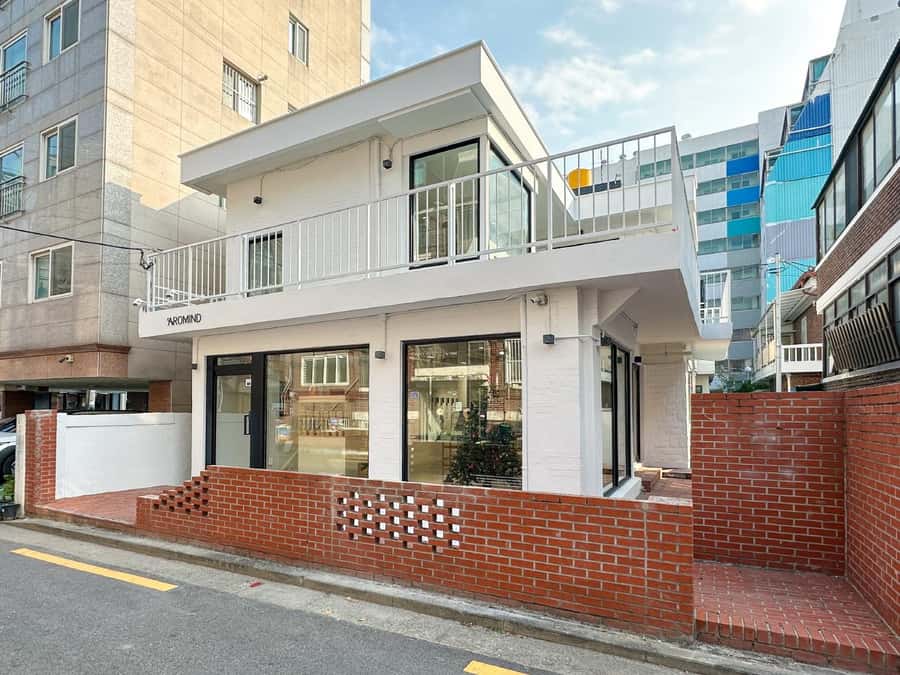
At $55 per person, you’re paying for more than a one-off activity. You’re paying for:
- Professional guidance from a perfumer
- Access to 30 kinds of perfume bases
- The time and care to create a custom fragrance
- A take-home set: 10ml traveler size + 50ml EDP, plus a box and bag
That take-home part matters. Plenty of “souvenir” workshops give you a small sample that looks cute but doesn’t get used. Here, the 50ml EDP is the kind of size you can wear regularly, and the 10ml bottle is perfect for your bag or travel kit.
There’s also a practical value angle for anyone who’s ever bought perfume in a store and then regretted it later. When you create the scent, you understand what you chose. You start to recognize the notes you like, and you’re more likely to repurchase something you can actually match to your taste.
Getting there near Anguk Station and how the timing works
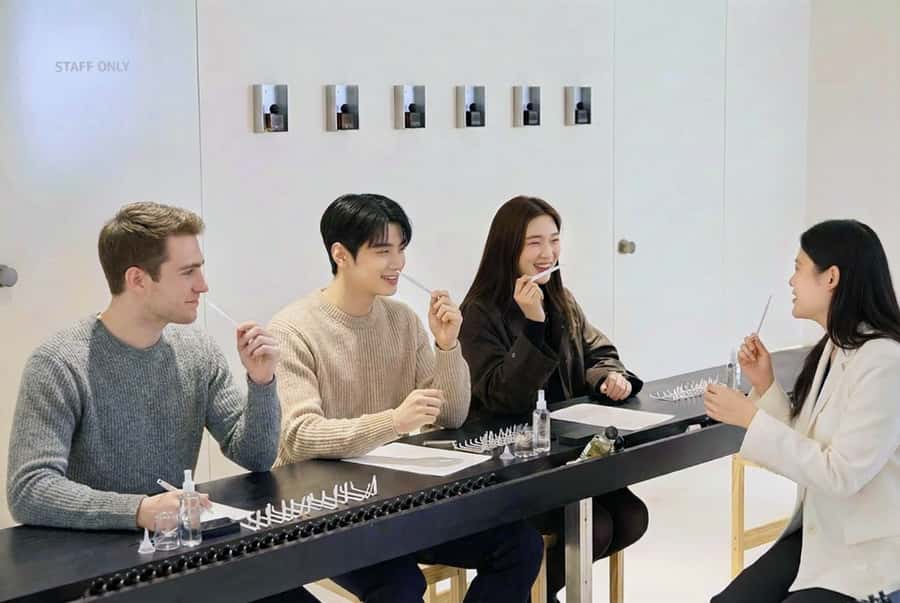
The meeting point is easy to find if you’re already in central Seoul. You start with a short walk—about 5 to 8 minutes from Exit 2 of Anguk Station (Line 3). From there, the activity ends back at the same meeting point.
The total duration is 1.5 hours. That’s long enough to go from smelling and choosing to creating a blend, but short enough that you can fit it into a day of neighborhoods. If you like planning with breathing room, this length is a sweet spot: you won’t feel like you’re losing half a day to one workshop.
English instruction is available, which matters because this is one of those activities where small wording differences can change how you choose scents. With English support, you can ask for clarification and adjust your approach without guessing.
Inside the hanok: what happens once you arrive
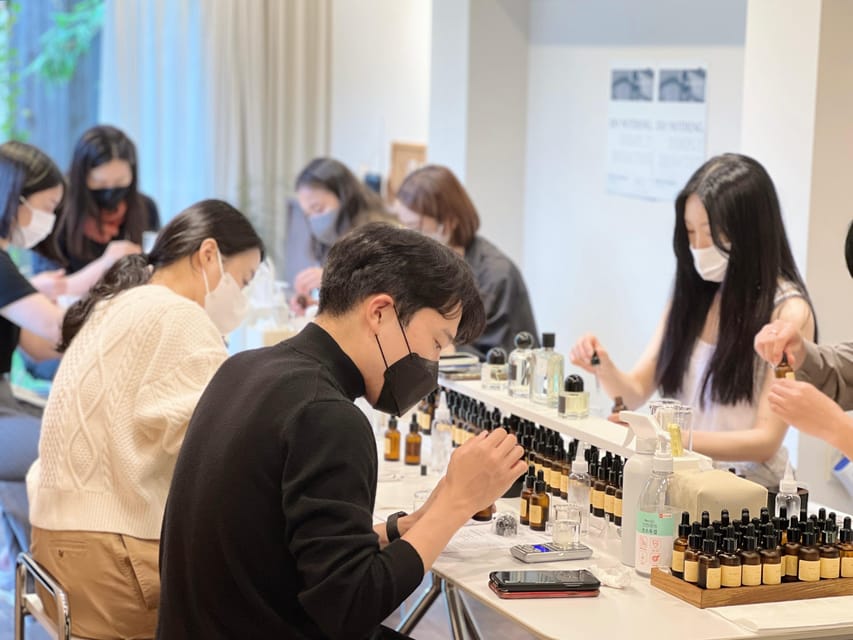
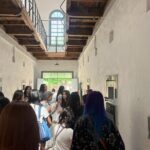
When you arrive, the vibe is calm and purposeful. You’re not thrown into a frantic DIY sprint. Instead, you settle in and begin the process of exploring scents and building your formula.
From the start, you’ll get guidance on how to think about your blend. Since you’re working with 100% natural essential oils and absolutes, the process is more about careful selection than mixing random fragrance liquids. Your perfumer walks you through the steps so you know what you’re smelling and why you’re picking it.
You’ll spend time working through different scent options. The workshop is hands-on, but it’s not chaotic. The small group size (max 8) helps keep it personal. You get room to compare notes, ask questions, and take your time with the sampling.
And yes, you get story context too. The workshop is designed to help you connect scents with Korean emotions and travel memories, so it’s not only technical. You’ll be guided to evoke images and associations that make the scent feel like your trip, not just a formula you copied.
The scent journey: 30 bases, top/middle/base structure, and your choices
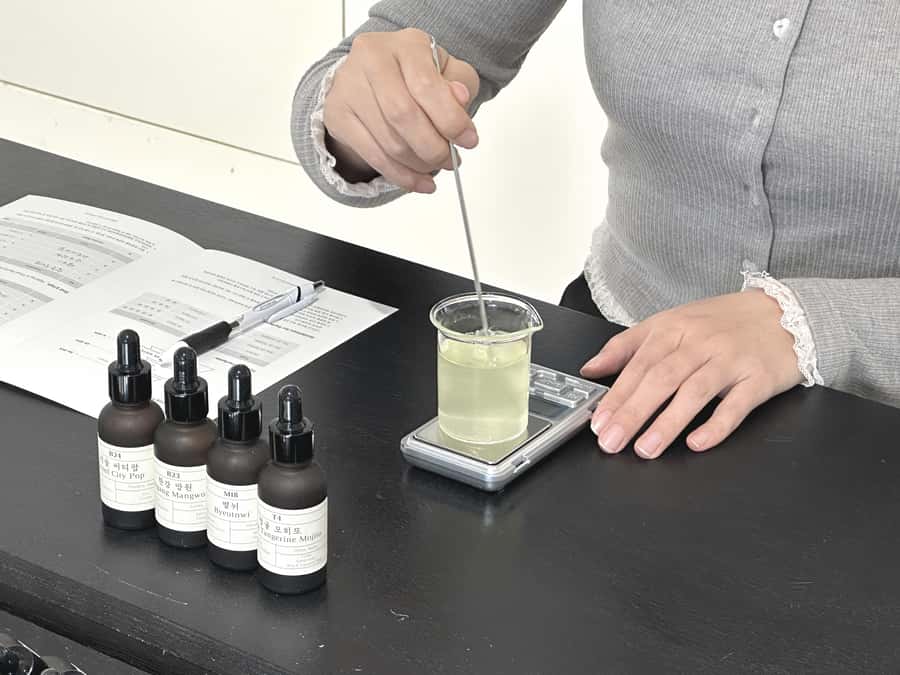
Here’s the fun part: selecting what goes into your fragrance.
You’ll have 30 kinds of perfume bases to work with, then blend them with the natural oils and absolutes. That range is a big deal because it lets you steer the final feel. You’re not stuck with a handful of preset combinations.
The process also follows a fragrance structure: you’re essentially creating layers. You can sample and build top, middle, and base notes so the fragrance develops over time. If you’ve ever sprayed perfume at a store and only liked it for the first 10 minutes, this is why this structure helps. Your blend is designed to evolve as it settles.
What I like for you: you get to make something you’d actually wear. You’re encouraged to choose scents that trigger memories of Korea—so if you want a “street stroll in winter air” mood, you can aim for something crisp and cool. If you want a “warm tea room” feeling, you can steer toward softer, rounder profiles. The workshop gives you the language and the options to do that.
One caution: avoid rushing your smelling. Natural oils can feel intense, especially when you’re switching between options quickly. Slow down, clear your nose between samples if you need to, and trust your instincts.




Natural oils and absolutes: what that means for your final perfume
The key promise here is 100% natural essential oils and absolutes. That’s not marketing fluff; it changes how the fragrance behaves.
Essential oils tend to be vivid and aromatic. Absolutes often add depth and character, sometimes with a more complex, rounded feel than you’d get from simple aroma ingredients. When you combine them thoughtfully with the bases, you end up with a custom Eau de Parfum that’s more nuanced than a basic “scent craft” product.
In a workshop like this, the perfumer’s job is to help you balance those components so your blend doesn’t end up too sharp, too flat, or overly heavy. That’s why the professional guidance is included. You get to experiment, but you’re also not left alone with a chemistry problem.
And because your final product is a 50ml EDP, you’ll notice the real-world difference. It’s not just a scent you can sniff once. It’s something you can wear, evaluate, and actually live with.
Your take-home set: 10ml traveler bottle, 50ml EDP, and the box-and-bag bonus
You don’t leave empty-handed. Your package includes:
- 10ml traveler size
- 50ml Eau de Parfum
- Box and bag
This is a practical set. The 10ml bottle is ideal for daily travel or testing at home. The 50ml bottle is the one you can use as your “regular” perfume, so your Korea memory isn’t stuck in a drawer.
Some participants also describe getting a final tester process as adjustments are made, then receiving the final full bottle afterward. That’s a good sign. It suggests the workshop isn’t just take-your-best-guess and move on. It aims to land on a version you’re happy to wear.
There’s another smart detail: the experience also gives you the recipe. Even if you don’t plan to recreate it yourself, having the formula helps you remember what you picked and what to look for later if you want variations.
Small group English instruction: why it feels personal
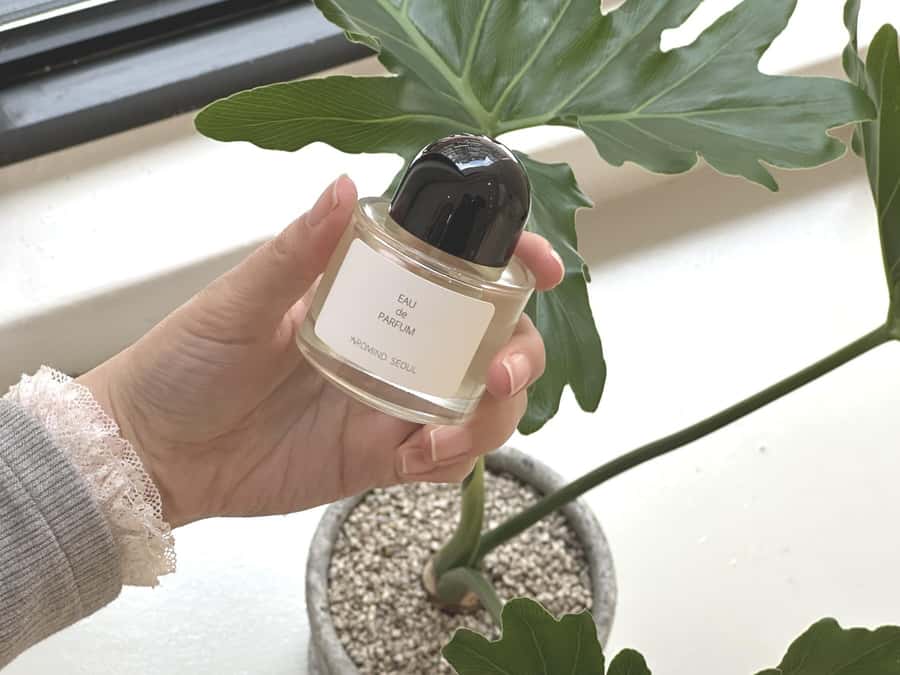
This is a small group workshop with a maximum of 8 participants. That size matters more than you might think. When you can pause, ask questions, and compare options, your final perfume improves. You don’t feel like you’re competing for attention.
The instructor speaks English, and the pace is set so you can keep up without feeling lost. If you’re brand-new to perfumery, you’ll still know what’s going on because the instructions are given clearly. If you already have scent preferences, you can communicate what you want and get help translating that into a blend.
You also get a structured but not stiff flow. It’s educational, yes, but the “why” is tied directly to what you’re doing with your hands and your nose.
Who should book this Seoul perfume workshop (and who should skip it)
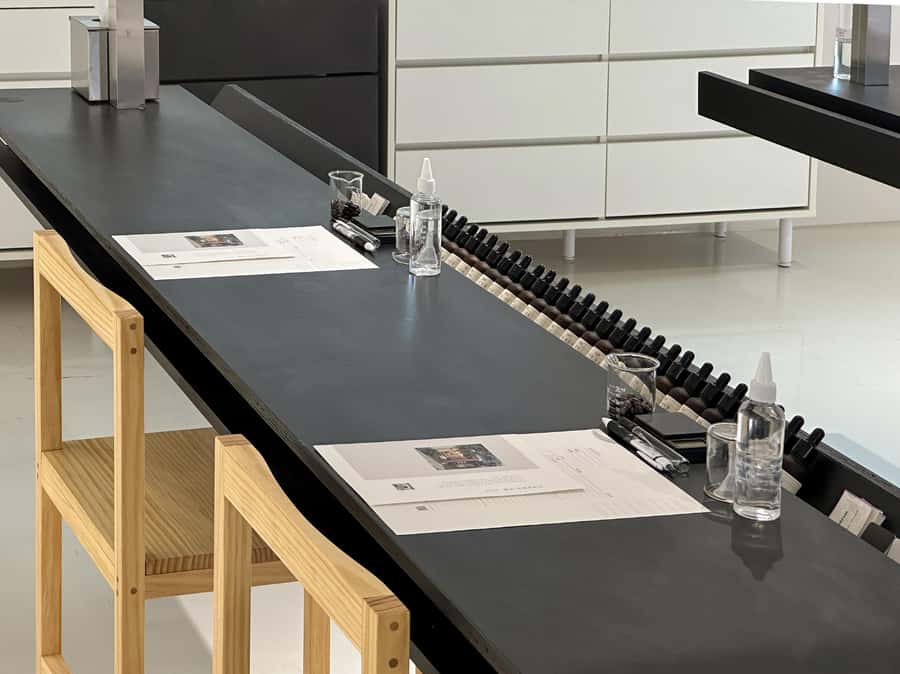
This is a strong fit if you want:
- A meaningful, hands-on Seoul activity
- A wearable souvenir (not a tiny trinket)
- A calm, culturally rooted workshop in a hanok setting
- A chance to use natural ingredients and learn by doing
It’s especially good for couples or solo travelers who like creative activities and want a personal result.
On the other hand, the experience is not suitable for children under 10, and it’s also not recommended for pregnant women. It may not be a good idea for people with back problems, likely because of workshop conditions and seated standing tasks that come with hands-on blending.
Also, skip it if you plan to show up with heavy perfume on. You’re asked to refrain from wearing perfume before the workshop so your nose can detect subtle differences.
Practical tips: what to bring, what not to do, and how to get the best blend
For a smooth session, bring a camera. You’ll likely want photos of the space and the final bottles, since you’ll be taking home something you created.
You should avoid:
- Smoking
- Food during the experience
- Strong fragrances
- Audio recording
Before you arrive, do yourself a favor: don’t wear perfume. This workshop is about smelling natural oils and absolutes. If you show up with your usual scent, it can overpower the subtle notes you’re trying to build.
Also plan to be on time. Arriving late is not great in a workshop where the flow depends on sampling and blending in the right order.
Pair it with nearby hanok time in Seoul
This activity is in the Anguk area, close to the hanok neighborhood feel. If you like day itineraries that mix craft with wandering, you can pair your perfume session with a visit to Bukchon Hanok Village afterward. The timing works because the workshop is only 1.5 hours, and the hanok theme naturally continues as you explore.
Think of it like this: you spend an hour and a half building a scent memory, then you spend the rest of the day building visual memory. Both feed the same part of your brain.
Should you book this perfume workshop in Seoul?
Book it if you want a wearable souvenir that feels personal. The mix of natural ingredients, professional guidance, and real take-home bottles makes it good value for the price. The small-group setting and calm hanok environment also make it a nice break from the usual sightseeing grind.
Skip it if you’re already deeply trained in perfumery and crave a more advanced, less guided lab-style experience. And if you’re sensitive to strong smells, plan carefully and let the instructor know your comfort level, since the workshop involves sampling multiple natural notes.
If you want one Seoul experience that combines hands-on creativity with a quiet cultural setting, this is an easy yes.
FAQ
How long is the perfume workshop?
It lasts about 1.5 hours, and starting times vary by availability.
What ingredients do you use to create the fragrance?
You create your perfume using 100% natural essential oils and absolutes plus 30 kinds of perfume bases.
What take-home bottles are included?
You receive a 10ml traveler-size bottle and a 50ml Eau de Parfum, along with a box and bag.
Is the instructor in English, and how big is the group?
Yes, instruction is in English. The group is kept small, limited to 8 participants.
Where do we meet near Anguk Station?
You meet at a point that’s a 5–8 minute walk from Exit 2 of Anguk Station (Line 3), and the activity ends back at the meeting point.
What should I bring and what is not allowed?
Bring a camera. You should not smoke, bring food, use strong fragrances, or record audio. You should also refrain from wearing perfume before the workshop.
Who isn’t this experience suitable for, and can I cancel?
It isn’t suitable for children under 10, pregnant women, or people with back problems. You can cancel up to 24 hours in advance for a full refund.