REVIEW · SUWON HWASEONG FORTRESS TOURS
Private Day Trip to Korean Folk Village and Hwaseong Fortress
Book on Viator →Operated by Top Korea Tour · Bookable on Viator
A day that mixes old Korea with real Suwon takes work off your plate. This private trip pairs Korean Folk Village life-stories with Hwaseong Fortress sights that make the city feel bigger than a one-stop photo. You get front-door hotel pickup and a guide who turns the day into a clear story, not a checklist.
I love the way this tour gives you context and hands-on moments. The folk village shows how people lived like Korea did into the 1970s, and the day includes a traditional performance, plus time for you to grab lunch with a local recommendation.
One thing to consider: there’s a moderate amount of walking, and lunch isn’t included. Wear comfy shoes and plan to eat during the built-in break, not before you arrive.
In This Review
- Key Highlights You’ll Actually Feel During the Day
- A Private Day Trip That Turns Suwon Into a Story
- Korean Folk Village (Min Sok Chun): Everyday Korea Into the 1970s
- Haenggung Palace: Why the Fortress Was Built
- Yeonmudae (Dongjangdae): Military Fortress Energy, Plus Archery Options
- Banghwasuryujeong Pavilion: Fortress Views and Nature
- How the Private Format Shapes the Whole Day
- Pace, Walking, and Timing: What You Should Plan For
- Price and Value: Is $210 Per Person Fair?
- Who This Tour Fits Best (And Who Might Want a Different Plan)
- Should You Book This Private Trip to Korean Folk Village and Hwaseong Fortress?
- FAQ
- How long is the private day trip?
- Is hotel pickup and drop-off included?
- Are entrance fees included?
- Is lunch included?
- Is it a private tour?
- Is there a minimum number of travelers?
Key Highlights You’ll Actually Feel During the Day
- Front-door hotel pickup and drop-off in an air-conditioned minivan, so you don’t fight Seoul transport
- Min Sok Chun-style Folk Village that recreates everyday life in Korea through the 1970s
- Haenggung Palace makes the fortress story click: why it was built in the first place
- Military-fortress sites (Yeonmudae) where archery can be part of the fun
- Local restaurant guidance from your guide, with real-world suggestions for where to eat
A Private Day Trip That Turns Suwon Into a Story
This is the kind of tour that works because it stays organized but doesn’t feel rushed. You start at 9:00 am and move through four focused stops, with guides who explain what you’re seeing and why it mattered.
The private format is the big value play. You’re not sharing the day with a random crowd, so your guide can pace you and answer questions as you go. In the reviews, guides like Juno and Miae stand out for their calm, friendly approach and strong English, plus the ability to connect history to how Korea feels today.
You’ll also get the practical wins: bottled water, transport by air-conditioned minivan, and an experience that includes entrance fees where needed. That means less paperwork on your end and more time in the sites.
You can also read our reviews of more private tours in Seoul

Korean Folk Village (Min Sok Chun): Everyday Korea Into the 1970s
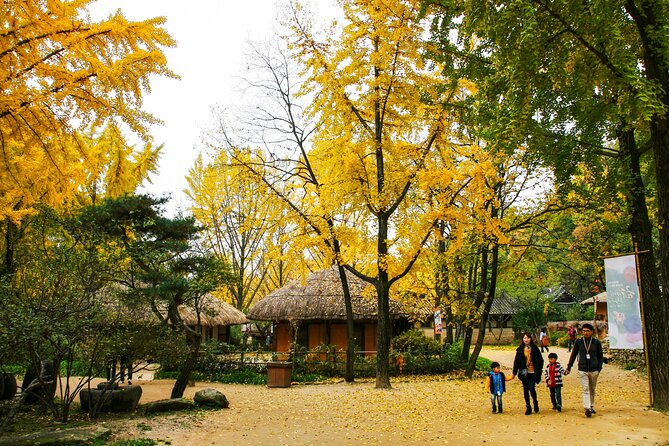
The Korean Folk Village is where the day earns its name: it’s not just monuments, it’s daily life. You step into an old-style setting that covers how Korea was lived in olden times, including details that reach into the 1970s.
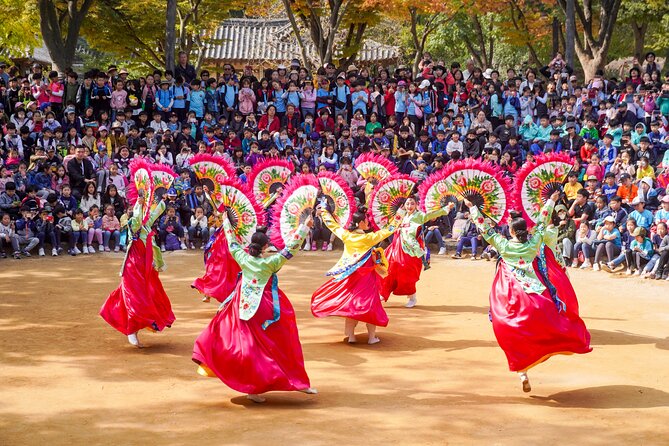
What makes it worth your time is the “walk-through meaning.” Instead of only looking at buildings, you’re learning how spaces worked—homes, routines, and the kinds of crafts and activities that shaped everyday life. And there’s typically a cultural show element, with reviews pointing to a dance and music performance as a real highlight.
If you like culture that feels human, not just historical, this stop usually lands well. It’s the part of the day that helps you understand why the later fortress sections weren’t built in a vacuum. You’re seeing both lifestyle and the systems that protected communities.
Practical note: plan to take your time inside. Even at a steady pace, it’s easy to skim and miss small details.
Haenggung Palace: Why the Fortress Was Built
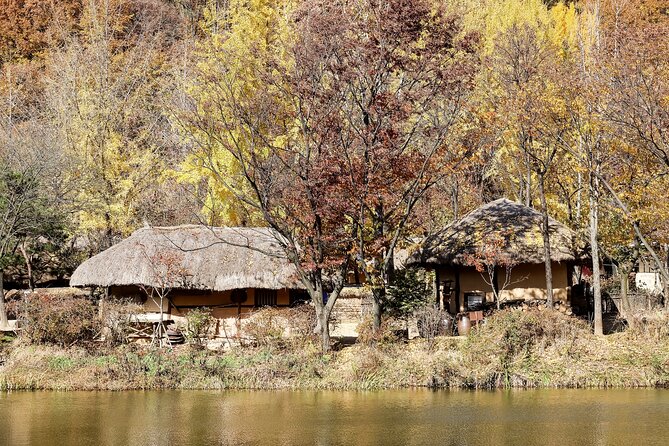
Next comes Hwaseong Haenggung Palace, a stop that reframes everything you’ve just seen. This is where the day moves from how people lived to why certain structures existed at all.
You learn the reasoning behind the palace and the fortress—what they were built for and the purpose tied to the larger defensive idea of Hwaseong. The guide explanation is the difference here. Without context, it can look like “another palace building.” With context, it becomes a system: royal presence, governance, and protection working together.
You also get a classic palace-site vibe: a sense of scale, strong viewpoints, and rooms/spaces that help you imagine the day-to-day feel of power and security. For anyone who likes history that has a cause-and-effect chain, this stop is the anchor.
Yeonmudae (Dongjangdae): Military Fortress Energy, Plus Archery Options
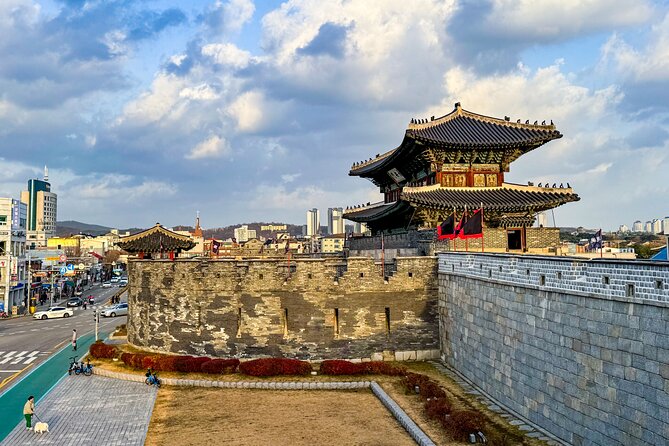
If you want the day to feel more active, Yeonmudae is the right stop. This is tied to the military-fortress side of Hwaseong, so the tone shifts from palace life to defense.
At Yeonmudae, the big focus is understanding how the site worked within the broader fortress logic. And if you’re up for it, there’s an option to experience Korean archery. Even if you don’t treat it as a serious skill test, it’s a fun way to connect history to physical practice.
This stop also helps you appreciate the fortress as more than walls. It’s a designed space for movement, signals, and action, not just scenery.
Tip: if archery appeals to you, be ready for it to affect timing. You’ll want enough energy to participate without rushing.
Banghwasuryujeong Pavilion: Fortress Views and Nature
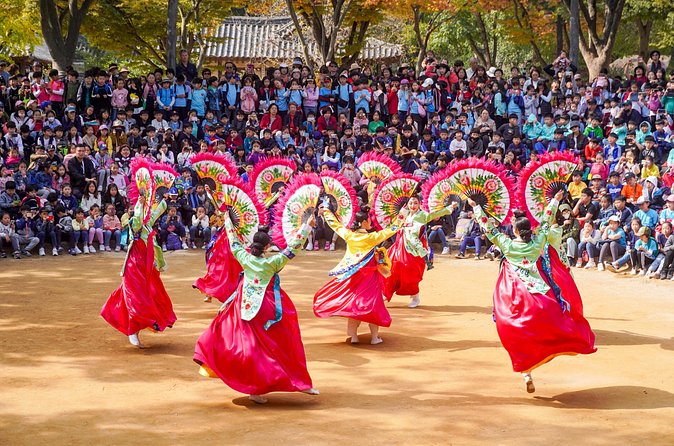
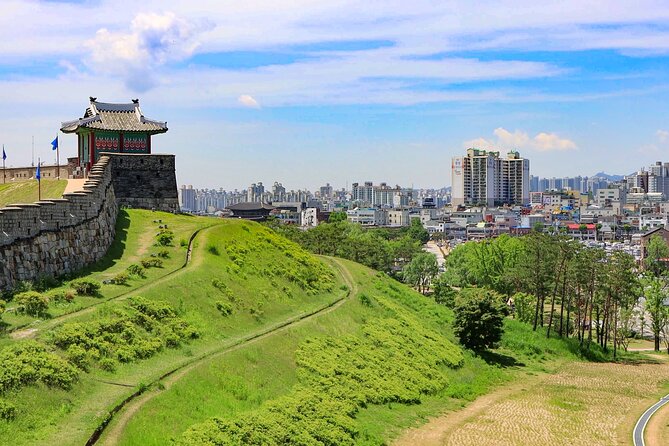
Banghwasuryujeong Pavilion is where the day slows down just enough to breathe. This site helps you see how the fortress fits into the surrounding terrain and how people enjoyed the relationship between architecture and nature.
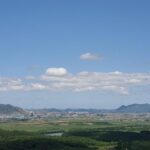
The pavilion stop is useful because it gives your brain a rest between “story stops.” It’s beautiful in a practical sense: you get wide views and a chance to understand the strategic placement of the fortress lines.
If you’re the type who likes to take photos, this is one of your better moments. But even if you’re not, it’s still worthwhile because it clarifies why those locations were chosen, not random built.
A simple suggestion: pause more than you normally would. Looking from a pavilion is one of those moments where standing still actually teaches you something.
You can also read our reviews of more tours and experiences in Seoul

How the Private Format Shapes the Whole Day
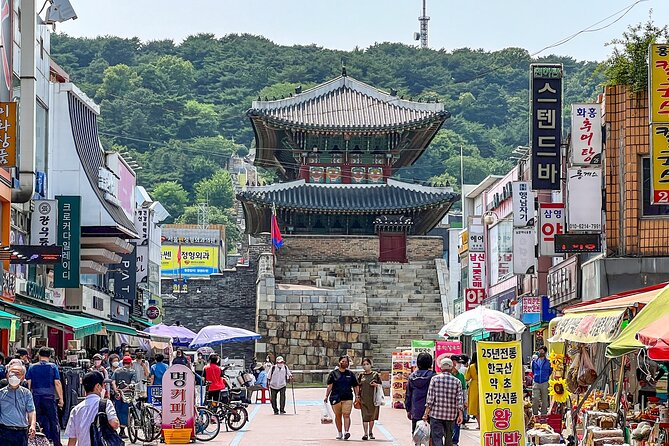
This tour works because the structure supports good guiding. You have a driver and guide traveling with you in an air-conditioned minivan, plus the day is organized into a four-stop flow.
Guides like Juno and Miae are repeatedly described as attentive and very knowledgeable, with English that makes history understandable even if you’re not up on Korean dynasties or palace timelines. That matters because Hwaseong can overwhelm you if you only see it as stone and walls.
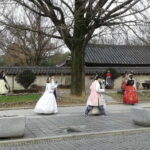
The private setup also means you can ask for what you care about most. In reviews, guides helped with practical cultural extras, like hanbok rental and photo-taking, which turns the day from sightseeing into a lived-in memory.
Another practical win: the guide gives personalized restaurant recommendations, and you get free time for lunch. Reviews also point to off-the-beaten-path choices like Korean BBQ that feels properly local rather than touristy.
Pace, Walking, and Timing: What You Should Plan For
The tour runs about 6 hours and starts at 9:00 am. That’s long enough to feel like a real day, but not so long that you lose the plot.
Walking is described as moderate. That usually means you should expect some uneven surfaces and steady movement between points. If you’re sensitive to stairs or long distances, choose good footwear and keep your expectations realistic.
Lunch is not included, but you do get a scheduled window to eat. Bottled water is included, which helps you handle the pace without scrambling.
Also, you’ll move through multiple sites in one day, which is exactly what makes this efficient if you’re based in Seoul and don’t want to plan transport yourself.
Price and Value: Is $210 Per Person Fair?
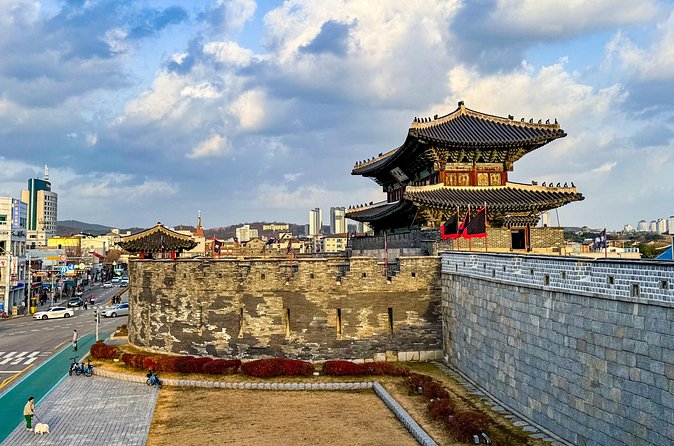
At $210 per person, you’re paying for a private vehicle, a guide, and included entrance fees. The price can feel high if you only think in terms of “tickets.” But if you look at what’s included, it makes more sense.
You get:
- Hotel pickup and drop-off
- Transport in an air-conditioned minivan
- A driver and guide for the day
- Entrance fees for the paid stops
- Bottled water
- Mobile ticket access
For many people, the real value is the guide time. The fortress and folk village can be confusing if you only have a signboard and a map. A strong guide (the kind highlighted by Juno and Miae) helps you connect what you’re seeing, and that usually makes the day feel worth the cost.
If you’re traveling as a couple or small group, the minimum of 2 people per booking often makes it easier to justify. And because it’s private, you don’t have to compromise on your pace or interests.
Who This Tour Fits Best (And Who Might Want a Different Plan)
This tour is a great match if you want:
- A guided history that explains what you’re seeing, not just where to stand
- A blend of culture and defense-related fortress sites in one outing
- Hotel convenience from Seoul without the stress of transfers
- Time to eat lunch without locking you into a specific restaurant
It may be less ideal if you:
- Hate walking at all, since the day includes a moderate amount
- Prefer to spend your day with lots of independent wandering rather than structured stops
- Want lunch fully included in the price (since it isn’t)
If you like the idea of mixing lived-in culture (folk village) with structured viewing (fortress/palace sites), this one fits like it was designed for you.
Should You Book This Private Trip to Korean Folk Village and Hwaseong Fortress?
Yes, if you want a smooth, guided day that makes Suwon feel understandable. The combo of Korean Folk Village life details plus Hwaseong Fortress context is exactly the pairing that turns a long drive into a meaningful day.
Book it especially if you’ll benefit from a guide who can translate history into everyday sense and help you plan lunch. Guides like Juno and Miae are repeatedly praised for friendliness, clear explanations, and practical extras like restaurant ideas and cultural options.
Skip it or reconsider only if you don’t like moderate walking or you strongly prefer to control every minute yourself with no guidance. Otherwise, this is a very solid way to see more than just one landmark and leave with a real story in your head.
FAQ
How long is the private day trip?
It runs for about 6 hours (approx.) and starts at 9:00 am.
Is hotel pickup and drop-off included?
Yes. You get front-door hotel pickup and drop-off in Seoul.
Are entrance fees included?
Entrance fees are included. The Korean Folk Village and Hwaseong Haenggung Palace have admission tickets included, while stops like Yeonmudae (Dongjangdae) and Banghwasuryujeong Pavilion (Dongbukgakru) are listed as admission ticket free.
Is lunch included?
No. Lunch isn’t included, but you’ll have free time for a meal and you’ll receive restaurant recommendations.
Is it a private tour?
Yes. It’s private, and only your group participates.
Is there a minimum number of travelers?
Yes. A minimum of 2 people per booking is required.