REVIEW · MT SEORAK DAY TRIPS
Mount Seorak and Naksansa Temple One Day Tour from Seoul
Book on Viator →Operated by TOURSTORY · Bookable on Viator
Mount Seorak is worth the long ride. This one-day route strings together two very different atmospheres: the big-gauge scenery of Seoraksan National Park and the calmer, coastal mood at Naksansa Temple. I like how the day is built around views first, with time to choose how much walking you want.
I also like that you’re not stuck with a DIY headache. You get an air-conditioned coach/minivan and English/Chinese-speaking support, plus the park and temple entrance fees are handled for you. One drawback to plan for: the cable car is extra, and it can be shut down for maintenance or bad weather, and both stops involve plenty of uphill and steps.
In This Review
- Key things to know before you go
- Seoraksan and Naksansa: why this combo works in one long day
- Price and what you actually get for $71.43
- Riding out of Seoul: timing, pickup stops, and rest breaks
- Seoraksan National Park (about 3.5 hours): the views, the walking, and the real tradeoffs
- Cable car reality: how to choose your Mount Seorak plan
- Naksansa Temple by the sea (about 1.5 hours): calm, historic, and step-heavy
- Guides, communication style, and how the day stays organized
- What to pack (and how to pace yourself) for an 11–12 hour day
- Who should book this Seoraksan and Naksansa day trip?
- Should you book this tour?
- FAQ
- How long is the Mount Seorak and Naksansa Temple one-day tour?
- What’s included in the tour price?
- Is the cable car included?
- What if the cable car doesn’t operate on the day?
- How many people are in the group?
- Do I need to pay for meals separately?
- What languages will the staff or guide use?
- Is free cancellation available?
Key things to know before you go
- Park and temple tickets are included, so you can spend energy on the scenery, not ticket counters
- Air-conditioned round-trip transport from central Seoul keeps the travel stress low
- You get real choices at Seoraksan: cable car option or hiking options depending on your pace
- Naksansa is peaceful but step-heavy, so wear shoes you trust
- Cable car is not guaranteed, so build a Plan B mindset for fog, rain, or closures
- Small-ish groups (max 43) help the day feel organized instead of chaotic
Seoraksan and Naksansa: why this combo works in one long day
This tour is built for people who want the east-coast mountain feel without buying a car or stitching together bus transfers. You’ll spend most of your day at Seoraksan National Park, then shift gears to Naksansa Temple, which sits in a coastal setting and feels more quiet and contemplative than the mountain trails.
What makes the pairing click is contrast. At Seoraksan, you’re chasing altitude, overlooks, and forest scenery. At Naksansa, you slow down for the temple grounds and that sea-view backdrop that turns the whole experience from exercise to a calmer kind of sightseeing.
You can also read our reviews of more tours and experiences in Seoul
Price and what you actually get for $71.43
At $71.43 per person, this isn’t a “cheap and cheerful” ride, but it’s also not trying to upsell you constantly. You’re paying for three big value items: round-trip transport from Seoul, a guided setup with English/Chinese-speaking staff, and admission tickets for both stops.
Meals aren’t included, and the cable car costs extra if you want it. But even with that in mind, you avoid the usual DIY costs and time sinks. If you arrive from another country and want a smooth day with minimal planning, this price starts to make sense fast.
Riding out of Seoul: timing, pickup stops, and rest breaks
This is an 11 to 12 hour day door-to-door. That’s a lot, but the route is long enough that the bus time becomes part of the deal, not an accident.
You can expect multiple pickup/drop points around central Seoul and a long stretch on the road both ways. On a typical run, the drive can be roughly a couple hours each direction, with a shorter hop between the park area and the temple area. There are also rest stops along the way, so you’re not stuck waiting for a bathroom forever.
Traffic and weather can shift the schedule. The tour is built with enough time at each major stop to handle normal delays, but don’t count on a perfectly exact minute-by-minute day.
Seoraksan National Park (about 3.5 hours): the views, the walking, and the real tradeoffs
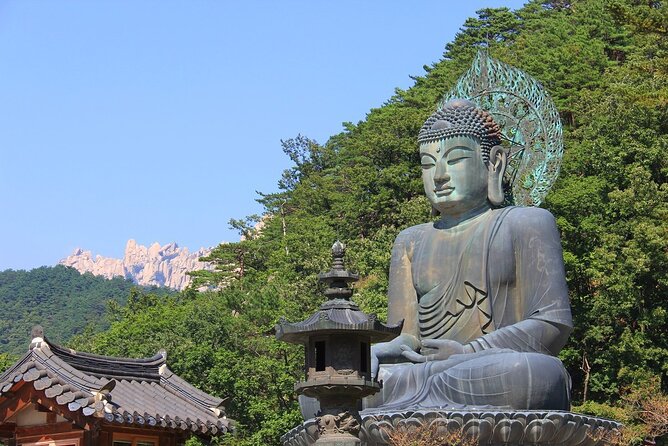
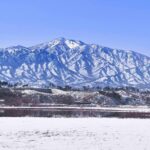
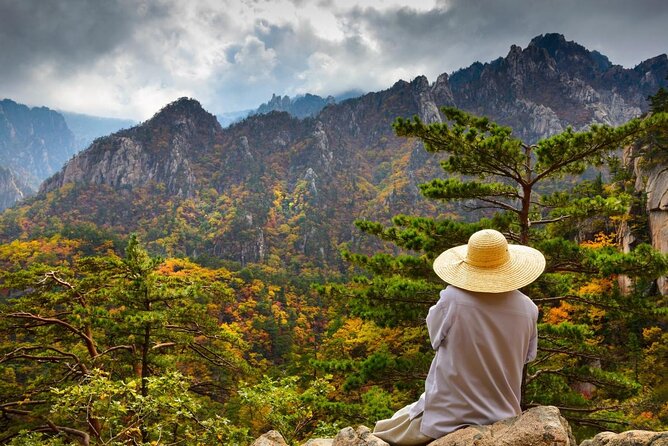
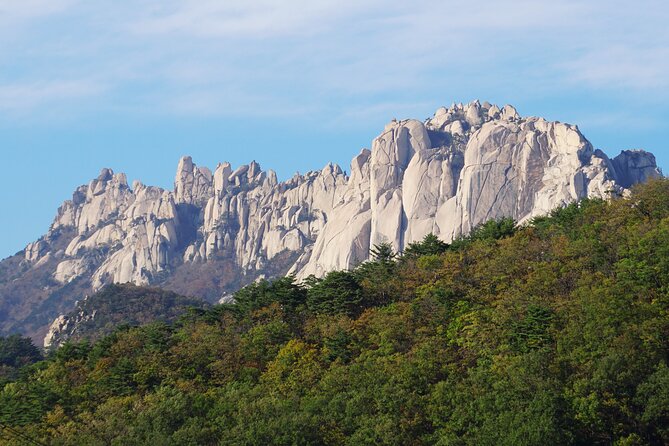
Seoraksan National Park is known for dramatic scenery, and this stop is where the day earns its keep. You get around 3 hours 30 minutes at the park, plus the included Mt. Seorak admission ticket, which is what lets you access the mountain-area sightseeing routes.
Here’s the big tradeoff: the park is not a sit-and-look type of outing. You’ll be doing uphill walking and climbing steps in the broader mountain area. If you want more exercise, the park is friendly to that. If you’d rather keep it light, you’ll still need some stamina for uneven terrain and stairy sections.
In good weather, it’s easy to see why people schedule their trip around clear skies for photos. In fog or rain, you still get the forest and temple-adjacent vibe, but visibility can limit how far you can enjoy the far-distance overlooks.
Cable car reality: how to choose your Mount Seorak plan
The tour gives you the chance to use the mountain cable car, but it’s not included. You can buy it on-site in cash, and it may not run if conditions are poor or maintenance is happening.
So your best strategy is simple: keep your schedule flexible. If the cable car is running, it’s the fastest way to jump up toward major viewpoints without burning your whole day on climbing. If it’s closed, you’ll need to rely on hiking routes and walking time at the park to reach your best-looking areas.
One practical tip: pack your decision-making for this. If you’re traveling with anyone who might tire quickly, make the plan early once you’re at the park, because the day moves as a group and you don’t want to improvise while everyone else is already walking.




Naksansa Temple by the sea (about 1.5 hours): calm, historic, and step-heavy
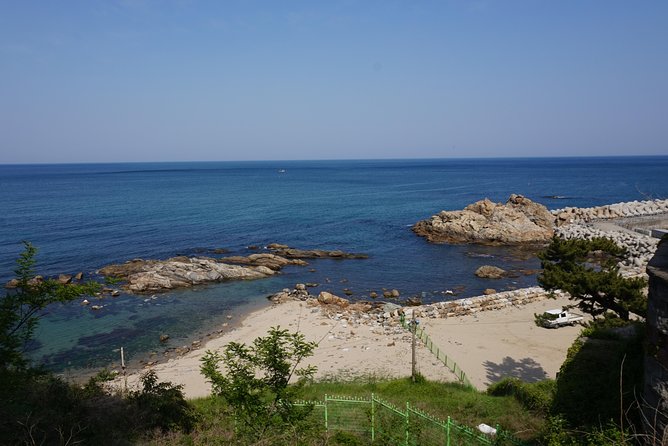
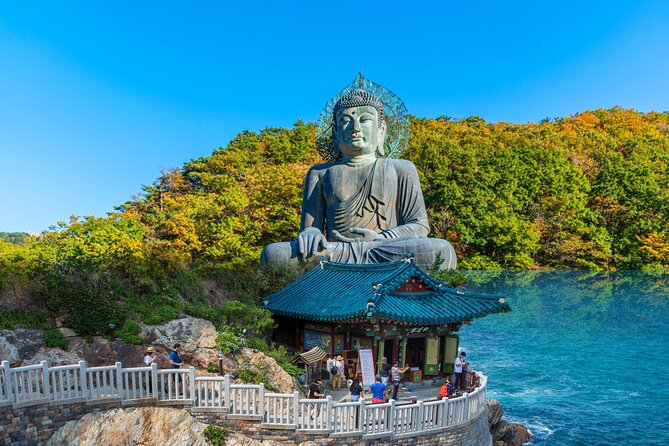
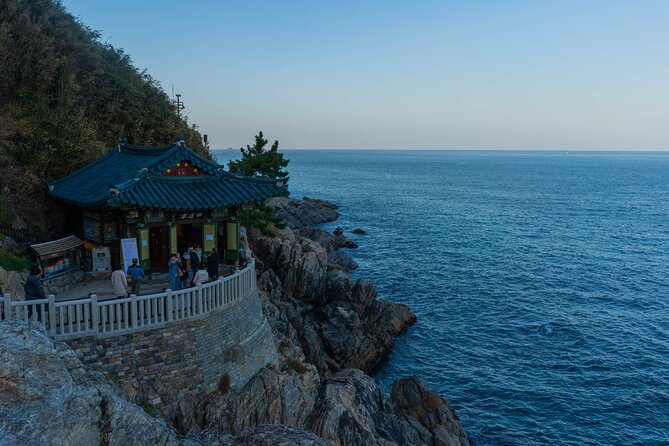
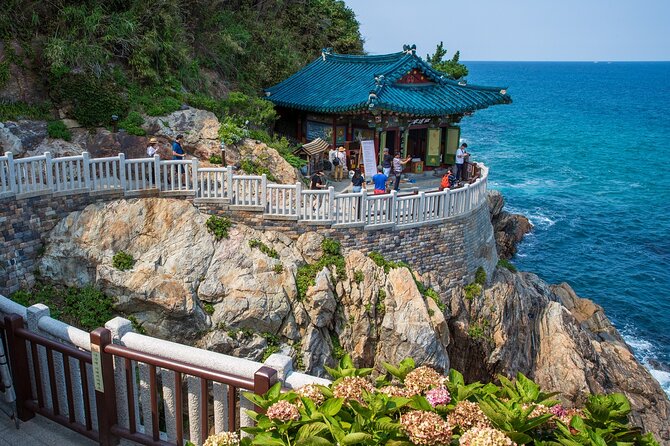
After the mountain, the day slows down at Naksansa Temple, which has a long background (about 1,300 years) and a dramatic coastal setting. You get roughly 1 hour 30 minutes here, including the temple admission ticket, which helps keep the timing smooth.
This is one of those stops where you feel the difference between “photo spots” and “walking-through-the-place” sightseeing. The temple grounds invite a slow stroll, and the sea view factor is a nice change of pace from the mountain forests.
The drawback is that it’s still active sightseeing. Expect steps and steep slopes, and there usually aren’t walking aids provided. If anyone in your group has mobility limitations, you’ll want to think carefully and pick a route that stays manageable. On rainy days, the experience can compress into fewer reachable highlights because slick paths and low visibility reduce what you can comfortably see.
Guides, communication style, and how the day stays organized
This is where the tour often wins people over. Strong guide support is a big part of why the day feels smooth instead of rushed.
You may see guides such as Han, Jason, Stella, David, Lucia, Gina, Shana, or Jiwon. The common thread is clear, repeatable instructions and a focus on pacing. Many guides also handle communication by repeating key points in both English and Chinese, which helps if your group has mixed language comfort.
A small but useful bonus: some guides set up a group chat so you can keep track of meeting points and any schedule changes. That matters on a day like this, because you’ll be out of your usual Seoul routine and you don’t want to lose time figuring out logistics.
The tour format is also what you’d hope for in a long day: you get time at each major site, not a “photo from the bus window” situation. You’ll still have to walk, but you won’t feel like the stops are just placeholders.
What to pack (and how to pace yourself) for an 11–12 hour day
Comfort matters here more than style. This is a day of uphill walking, uneven ground, and temple steps. Bring comfortable shoes with solid grip, especially if there’s rain or mist.
Dress for mountain weather changes. Even if Seoul feels mild, Seoraksan can feel cooler at elevation and can shift fast with fog. A light layer helps, and a rain shell is a good idea if your dates are uncertain.
Snacks are a smart move. The bus ride includes rest breaks, and you’ll likely find lunch options near the mountain area. But meals aren’t included, so don’t show up hungry thinking someone will magically fix lunch for you.
If you plan to do the cable car, remember it’s extra and may be cash-only on-site. Keep a bit of cash available so you’re not stuck searching for an ATM in the middle of sightseeing.
Who should book this Seoraksan and Naksansa day trip?
Book it if you want a guided, low-stress way to see two famous nature-and-culture spots without a car. This tour is a solid fit for hikers who like choosing their pace, and for people who want scenic photos plus a calmer temple stop later.
You should be cautious if you or your group has mobility limits. The day can involve steep routes, stairs, and lots of walking time where you can’t easily pause and rest like you might in a city. If someone needs an accessibility-friendly route, you’ll want to think twice before committing.
If you love mountains but also enjoy quiet places, the park-to-temple rhythm is satisfying. It’s not just a long bus ride; it’s a day with distinct “moods” that keep it from feeling repetitive.
Should you book this tour?
Yes, if you want Seoraksan National Park + Naksansa Temple in one organized day and you’re okay with a full schedule and real walking. The value is strong because tickets and transport are handled, and the best part is the time you get at each stop.
Skip it (or plan a different format) if you rely on the cable car to make the trip feasible and you can’t handle extra walking. Since the cable car can shut down for weather or maintenance, build your expectations around hiking options and step-heavy temple terrain.
If you’re aiming for a photo day, go in with flexible weather expectations and a comfortable-shoes mindset. Then this trip becomes exactly what it promises: mountain views, coastal temple calm, and a guided day that keeps you moving without forcing you to navigate the details alone.
FAQ
How long is the Mount Seorak and Naksansa Temple one-day tour?
It runs about 11 to 12 hours.
What’s included in the tour price?
Transport by air-conditioned coach/minivan, English and Chinese speaking staff, the Mt. Seorak ticket, and the Naksansa Temple ticket.
Is the cable car included?
No. The cable car ticket is not included and is purchased in cash on-site.
What if the cable car doesn’t operate on the day?
The cable car may not run due to bad weather or maintenance, so you should be prepared to hike instead.
How many people are in the group?
The tour has a maximum of 43 travelers.
Do I need to pay for meals separately?
Yes. Meals are not included.
What languages will the staff or guide use?
English and Chinese speaking staff are included.
Is free cancellation available?
Yes. You can cancel up to 24 hours in advance for a full refund.