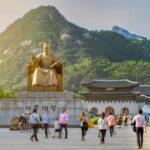
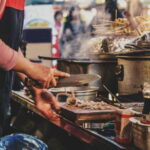
First stop: Seoul snacks. This 3-hour walking food tour is built around how Koreans actually eat—market food, street food, and popular restaurant dishes—so you leave with a real feel for the city’s food culture. You’ll taste 10 different foods while moving through key neighborhoods like Namdaemun Market and Myeongdong.
What I love most is the structure: it’s a true tasting-style plan, even though Korea doesn’t really do the Western tasting-menu thing. You’re not just stopping at places that look good on a map; the tour is designed by a Korean food expert to focus on dishes Koreans genuinely enjoy. I also like that it’s paced for walking—so the experience stays active without feeling rushed.
One consideration: this is a walking tour with multiple stops, and it may not work well if you have leg issues. The tour notes that someone who has leg problems should use a wheelchair and have an accompanying helper.
In This Review
- Key highlights if you’re choosing Heart of Seoul
- Why a Seoul food tour works here (10 tastes, not a set “menu”)
- Meeting point near Bongnae-dong, ending by Myeongdong Cathedral
- Culture Station Seoul 284: the fast “get your bearings” stop
- Seoullo 7017 walkway: your 20-minute breather with views
- Namdaemun Market: where the food stalls do the convincing
- Myeongdong Shopping Street: street food in one of Seoul’s busiest areas
- Myeongdong Underground Shopping Center: the last stop with a more relaxed feel
- What’s actually included in the tastings (and why it’s a good spread)
- Price and value: is $115 for a 3-hour walking tour fair?
- Group size, pace, and who it suits best
- The little details that make the difference on tour day
- Should you book Heart of Seoul?
- FAQ
- How long is the Heart of Seoul tour?
- Where does the tour start and end?
- What time does the tour start?
- Does the tour use a mobile ticket?
- How many foods do I taste during the tour?
- What foods and drinks are included?
- Is extra beer included?
- Is free cancellation available?
Key highlights if you’re choosing Heart of Seoul
- 10 foods in about 3 hours, so you get variety without spending the whole day
- Namdaemun Market + Myeongdong in one route, covering both traditional and modern food vibes
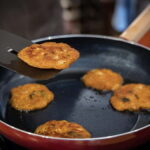
- Kalguksu, naengmyeon, bibimbap, tteokbokki, plus dumplings, fried chicken, and more
- Seoullo 7017 as a scenic walkway break between major food areas
- Small group (max 12), which makes it easier to keep up and ask questions
- Guides like Veronica are praised for connecting food with history and site explanations
Why a Seoul food tour works here (10 tastes, not a set “menu”)
Heart of Seoul is a smart solution to a real challenge: in Korea, you usually don’t get a formal tasting menu the way you might in some Western cities. So the best way to sample widely is to follow a guide through the places locals actually use—markets, casual restaurants, food halls, and popular street-food areas.
This tour does that by turning the experience into a “taste route.” Over roughly 3 hours, you’ll try 10 different foods, which is the right amount for a first visit. It’s enough to notice patterns—like how much Koreans love textures (chewy, crispy, slippery), how sauces do most of the talking, and how cold and hot dishes can both be “comfort food,” depending on the moment.
And because it’s guided by a Korean food expert, you’re less likely to end up with the tourist-version of Korean food. Instead, you’re aiming for the kind of choices you’d expect Koreans to actually queue for. You’ll also get short stop-by-stop context along the way, so you understand what you’re eating and where you are—without turning the whole thing into a lecture.
You can also read our reviews of more tours and experiences in Seoul.

Meeting point near Bongnae-dong, ending by Myeongdong Cathedral
You start at 122-18 Bongnae-dong 2(i)-ga, Jung District, Seoul (near public transportation). The tour begins at 1:00 pm and uses a mobile ticket, which is convenient if you like not digging through paper.
You’ll finish at Myeongdong Cathedral area (Myeongdong-gil, Jung District). The tour route is designed so you end right where it’s easy to keep exploring after you’ve eaten. If you want to add shopping or another snack crawl afterward, Myeongdong is a good place to be standing.
Because this runs on foot, timing matters. If you arrive late, you’ll feel it fast. I’d plan to show up a bit early, especially if you’re still learning Seoul’s subway exits.
Culture Station Seoul 284: the fast “get your bearings” stop
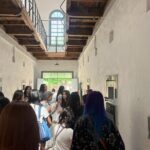
The tour kicks off at Culture Station Seoul 284, with a meeting at the entrance and a quick explanation about the building. This stop is short—about 10 minutes—and there’s no admission ticket required.
Even though it’s not a long museum-style visit, it helps you orient your brain. You’re stepping into a part of the city where old and new intersect. The goal here is simple: get the local context so the rest of the food stops feel grounded, not random.
Practical tip: wear comfy shoes. This tour is light on time for sitting, and you’re moving right after this quick intro.
Seoullo 7017 walkway: your 20-minute breather with views
Next comes Seoullo 7017, where your guide brings you up and you walk along the elevated walkway. This stop is about 20 minutes, and it’s ticket-free.
I like this part because it breaks up the experience. You’ve got market energy coming soon, so this is a mental reset. It’s also a good chance to look around and notice how Seoul’s neighborhoods connect—street level can feel chaotic, but from a walkway you can see patterns.
If it’s bright or hot when you go, keep an eye out for sun exposure. Elevated walkways can feel warmer than you expect.
Namdaemun Market: where the food stalls do the convincing
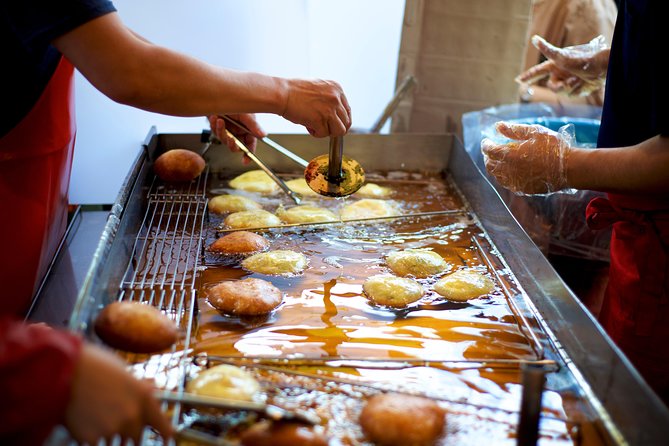
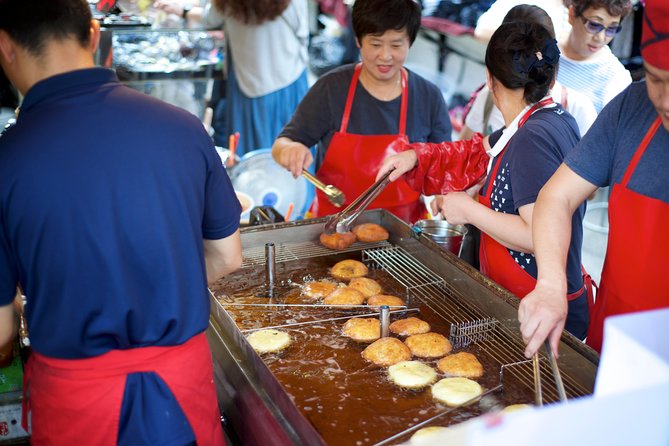
Then you hit Namdaemun Market, with about 1 hour on the ground. Your guide explains the food stalls and restaurant options, and of course, this is where you get a chunk of the tasting.
This is the heart of “local Seoul food” because markets here aren’t just shopping—they’re eating places. You’ll likely notice:
- lots of small bites that are meant to be eaten fast
- a mix of older, classic stalls alongside newer food styles
- crowds that form for specific dishes, not just “because it looks good”
One thing I appreciate is that you’re not wandering aimlessly. With a guide, you don’t have to guess which stall is worth your money and time. Instead, you follow a plan and taste what makes sense for a first-time visitor.
Small drawback: markets can be crowded and loud. If you dislike close-quarters browsing, you may want to keep a steady pace and trust the guide to navigate you through the busy bits.





Myeongdong Shopping Street: street food in one of Seoul’s busiest areas
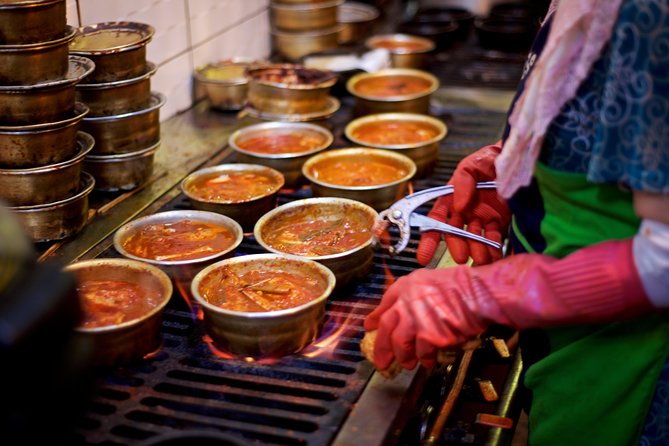
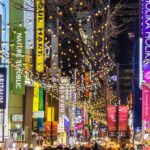
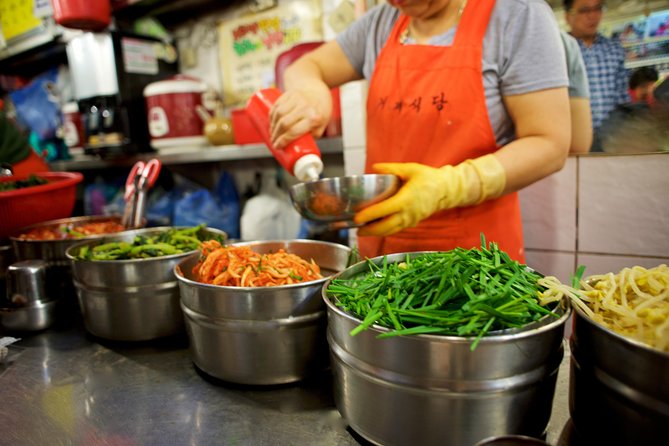
After Namdaemun, the tour heads to Myeongdong Shopping Street for about 1 hour. This is one of Seoul’s biggest zones for cosmetics and street food, which means you get a very modern side of eating culture mixed with mainstream shopping energy.
This stop is ideal if you want the Seoul vibe that most first-time visitors come seeking. It’s not quiet or hidden—it’s popular, and it’s popular for a reason. Street food here is often about bold flavors and quick comfort: hot snacks when you want warmth, chewy bites when you want something satisfying, and sweet treats when you need a break.
What makes this stop feel valuable is variety. You’ve just been in a market context. Now you see how Korean food adapts to street setting and high foot-traffic areas. It’s one thing to taste the food; it’s another thing to learn how it fits into daily life.
Myeongdong Underground Shopping Center: the last stop with a more relaxed feel
The tour wraps with the Myeongdong Underground Shopping Center for about 30 minutes. Admission is included at this stop, and it’s described as having brand shops that people trust and respect—so it’s a bit more comfortable than the chaos of outdoor streets.
This is also where you can spend your final minutes more leisurely, which matters because by now you’ve been walking and tasting for a while. Your guide’s job is still to keep you on track, but this is the portion that feels most like “I’m done eating, now I can look around.”
Since this tour ends in Myeongdong Cathedral area, it’s also convenient for continuing your day. You’ll be close to more cafes and shops without needing to jump across the city.
What’s actually included in the tastings (and why it’s a good spread)
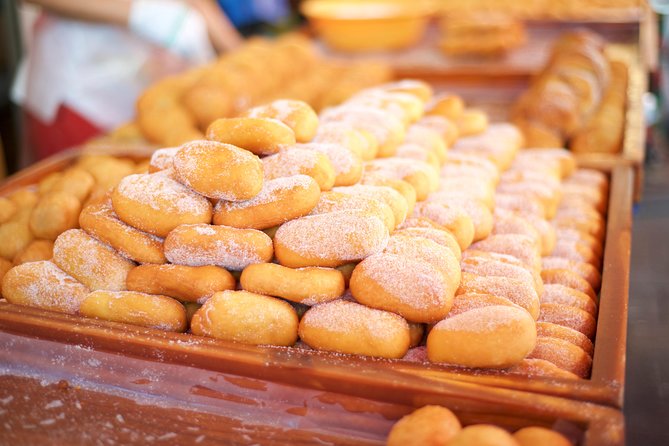
The included foods are a big part of the value. Here’s what you can expect in the tasting set:
- Kalguksu (칼국수)
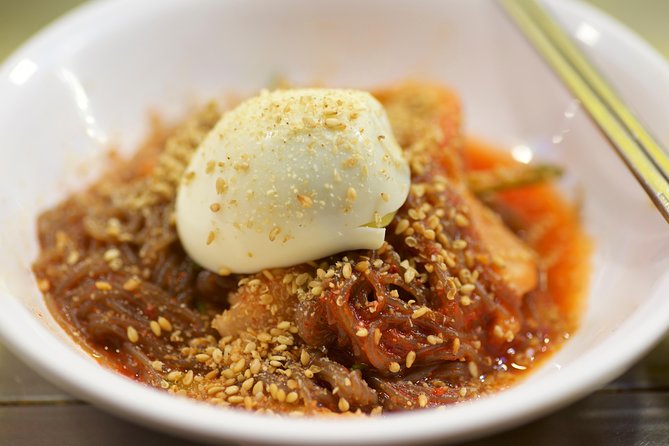
- Naengmyeon (냉면)
- Bibimbap (비빔밥)
- Tteokbokki (떡볶이)
- Eomuk (어묵)
- Old-styled crispy fried chicken (통닭)
- Korean local beer (a glass is included with the fried chicken)
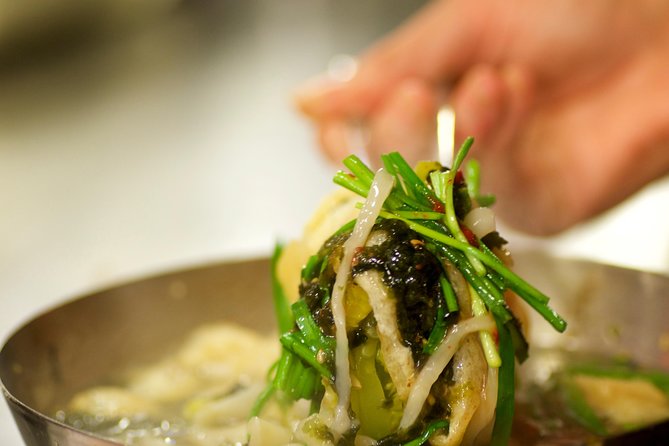
- Mandoo (만두) (Korean dumplings)
- Korean local gelato
This list is a smart mix of familiar classics and “you’ll understand why Koreans keep ordering this” comfort foods. You also get a range of temperatures and textures. Cold and hot dishes together are part of the Korean food experience, and this tour lets you feel that without needing to plan a separate meal.
Portion reality check: these are tastings, not one full sit-down feast where you’ll get a giant plate of everything. The upside is you can sample a lot. The tradeoff is you’ll still probably want a proper dinner later if you’re hungry-hungry.
Alcohol note: only a glass of beer is included with the fried chicken. If you want more drinks, they’re not part of the included package.
And yes—gelato shows up. In Seoul, it’s normal to end with something sweet, and gelato is a simple way to cool down after savory bites.
Price and value: is $115 for a 3-hour walking tour fair?
At $115 per person for about 3 hours, you’re paying for three things:
1) a guided route through high-density food areas
2) a set tasting of 10 different foods
3) included items like local beer (with fried chicken) and gelato
For a food tour, that’s a lot of “done-for-you” planning. Without a guide, you might be able to find a couple of great dishes—but building a tasting route that hits Korean classics across different neighborhoods is harder than it sounds. This tour also keeps the logistics tight, which is worth something on a short trip.
One practical sign of demand: the experience is commonly booked about 29 days in advance. If you’re traveling in peak season or on a weekend, don’t wait until the last minute.
Group size, pace, and who it suits best
The maximum group size is 12 travelers. That’s small enough to feel personal, but big enough for a lively group atmosphere. You won’t be stuck with a huge crowd that makes it difficult to hear explanations or keep moving.
Pace is active. You’re walking between major food areas with stop times that add up quickly. This is excellent if you want to see neighborhoods while you eat. It’s less ideal if you’re hoping for a slow, sit-down food adventure.
Who it suits:
- First-time visitors who want a fast, reliable intro to Korean food
- People who like street markets and busy shopping areas
- Anyone who wants a guided tasting with clear structure
Who might want to rethink it:
- Anyone who struggles with walking long distances or frequent moving between stops
The tour specifically notes that someone who has leg problems should use a wheelchair and have an accompanying helper.
The little details that make the difference on tour day
Even when a tour is only 3 hours, small choices matter. Here are the ones you should plan around:
- Show up ready to walk. There’s no extended break between locations.
- Bring water and a light snack backup mindset. You’ll taste plenty, but you may still want more later.
- Use the mobile ticket so you’re not scrambling at the meeting point.
- Follow your guide closely at markets. Crowds move fast, and you’ll want to keep your place in line.
Also, guides are clearly part of the appeal. A guide named Veronica is specifically mentioned for explaining food and sites in a way that keeps things fun and clear. That kind of interpretation is what turns “eating stuff” into learning how Seoul food culture actually works.
Should you book Heart of Seoul?
If your goal is a first-pass food tour Seoul experience that covers both traditional and modern eating, this is a strong choice. You get 10 distinct tastings, a guided route, and a logical neighborhood sweep—from Namdaemun Market to Myeongdong—without needing to do research and planning yourself.
I’d book it if you:
- want variety in a short window
- enjoy guided walking tours through real city streets
- like eating Korean classics in a structured way
I’d skip or choose something else if you:
- can’t handle a walking-heavy format
- prefer long sit-down meals over quick tastings
- need alcohol fully included (only one included beer glass is part of the package)
FAQ
How long is the Heart of Seoul tour?
It’s about 3 hours long.
Where does the tour start and end?
The start is at 122-18 Bongnae-dong 2(i)-ga, Jung District, Seoul, South Korea, and the tour ends near Myeongdong Cathedral on Myeongdong-gil, Jung District.
What time does the tour start?
The start time is 1:00 pm.
Does the tour use a mobile ticket?
Yes, the tour includes a mobile ticket.
How many foods do I taste during the tour?
You’ll taste 10 different foods.
What foods and drinks are included?
Included tastings cover Kalguksu, Naengmyeon, Bibimbap, Tteokbokki, Eomuk, old-styled crispy fried chicken, Korean local beer (a glass with the fried chicken), Mandoo (Korean dumplings), and Korean gelato.
Is extra beer included?
No. A glass of beer is included with the fried chicken, but extra beer and other drinks must be paid separately.
Is free cancellation available?
Yes. You can cancel for a full refund up to 24 hours before the experience’s start time.