REVIEW · DMZ TOURS
From Seoul: Aegibong Starbucks Observatory & DMZ View
Book on GetYourGuide →Operated by VIP Travel · Bookable on GetYourGuide
A coffee break with a border view. This is the Aegibong Peace Park setup where you get a Starbucks cup while looking out toward the North Korea view side of things, plus a 112-meter suspension bridge walk. One trade-off: food and drinks aren’t included, so budget for what you want to buy on site.
What makes it genuinely worth your time is the way the guide turns the scenery into meaning, from the Jogang River story to the wartime significance of Hill 154. Guides like Eva and Crystal show up in the feedback for clear, engaging explanations that keep the day moving without feeling rushed.
In This Review
- Key things that make this DMZ-view day trip special
- Aegibong Peace Park and Starbucks: the DMZ-view setup in plain English
- Your 5-hour route from Seoul: Eco Park first, Jogang Observatory next
- Inside the Exhibition Hall: panoramic windows, videos, and a coffee break
- Jogang Observatory and the 1.4 km view of Gaepung-gun
- Why Jogang River stories matter (and how the guide explains them)
- Aegibong Peace Park’s Hill 154 myths and Korean War significance
- The suspension bridge and Sky Forest Garden walk: fun with a purpose
- Guides and transport: English explanations, smooth pickup, and calm pacing
- Price and value of the $45 Aegibong Starbucks Observatory tour
- Who this Seoul day trip suits best
- Should you book this Aegibong Starbucks DMZ-view tour?
- FAQ
- How long is the Aegibong Starbucks observatory and DMZ view tour?
- What’s the price per person?
- Is there an English-speaking guide?
- What’s included in the price?
- Are food and drinks included?
- Do I need a passport?
- Where do I get picked up in Seoul?
- Where does the tour end?
- How much time is spent at Aegibong Peace Eco Park and Jogang Observatory?
- Is free cancellation available?
Key things that make this DMZ-view day trip special
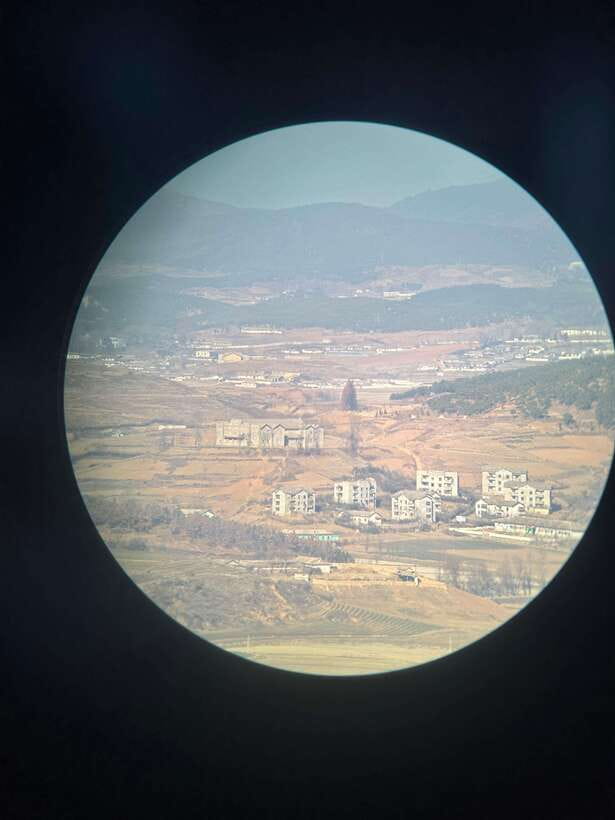
- Top-floor Starbucks at Aegibong Peace Park with big windows facing the Jogang River area
- Jogang Observatory highlighted as the closest observatory for watching Gaepung-gun from 1.4 km away
- 112-meter suspension bridge linking themed gardens to the Sky Forest Garden
- Exhibition Hall context via videos and interpretive stops tied to the river and war
- English live guide and round-trip transport from central Seoul pickup points
- No-food setup, but plenty to see so you can plan your coffee and snacks in advance
Aegibong Peace Park and Starbucks: the DMZ-view setup in plain English
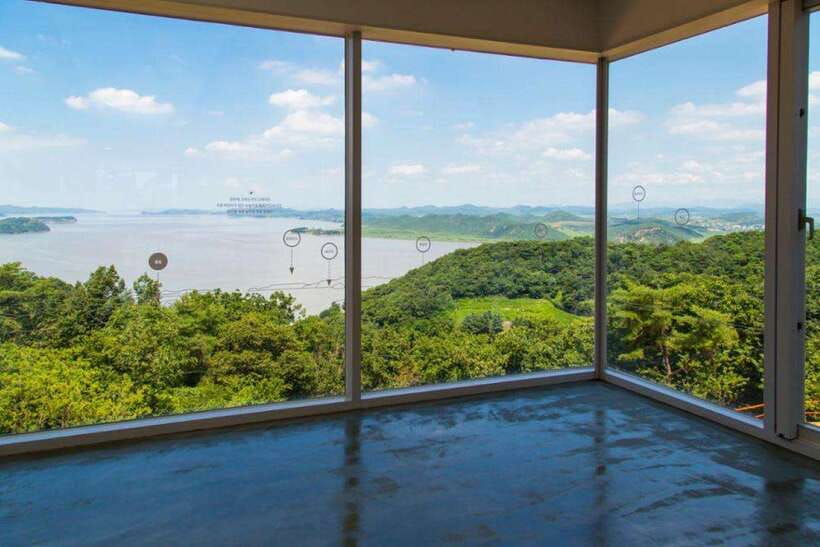
This outing is built around one simple idea: you can get a serious North Korea-adjacent view without spending the whole day. The “center” is Aegibong Peace Park, where the Starbucks sits on the upper floor and faces the Jogang River area through large front windows.
You’re also not stuck indoors. The park includes a suspension bridge that’s long enough (112 meters) to feel like an actual walk, not a token photo spot. If you like your day trips with one part sightseeing and one part sanity check (coffee), this format fits.
You can also read our reviews of more tours and experiences in Seoul.

Your 5-hour route from Seoul: Eco Park first, Jogang Observatory next
The schedule is pleasantly compact: about 1.5 hours at Aegibong Peace Eco Park, then about 1.5 hours at Jogang Observatory, all wrapped into a total of around 5 hours. You’ll have time for a quick guided flow plus photo stops, and you won’t feel like you’re stuck in transit all day.
Starting points vary by option, but common pickups include Myeong-dong, Hongik Univ. Station Exit 3, and THE PLAZA Autograph Collection. You finish back in the city area at Hongik University Station Exit 4, which is great if you want a full evening out instead of a late-night slog.
Inside the Exhibition Hall: panoramic windows, videos, and a coffee break

Once you’re at the park area, the key indoor moment is the Exhibition Hall. It’s on the second floor, and you can view the Jogang River area through a large front window, which is exactly what you want for orientation.
There are also videos shown in the Exhibition Hall. The best way I’ve found to use this kind of media is to treat it like your “cheat sheet” before the outdoor stops—watch, then look outward and match what you saw on screen to what you’re seeing.
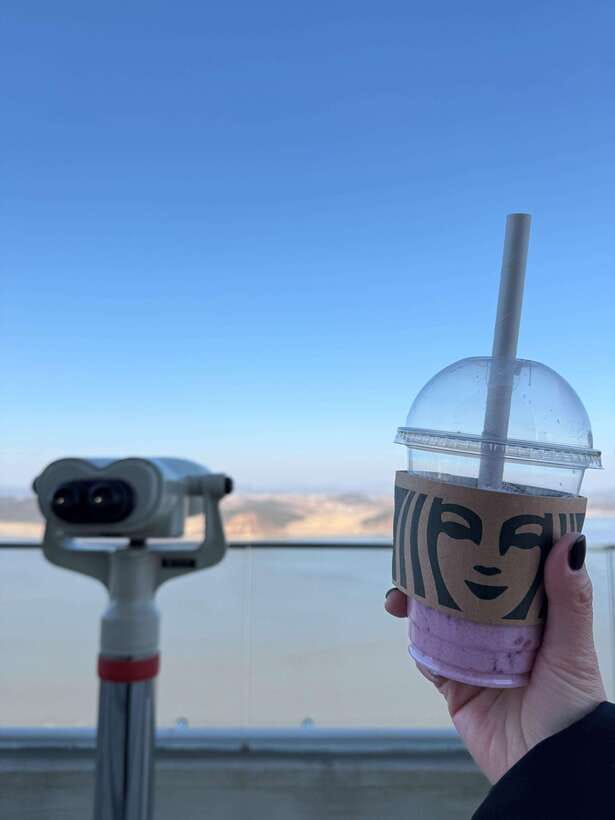
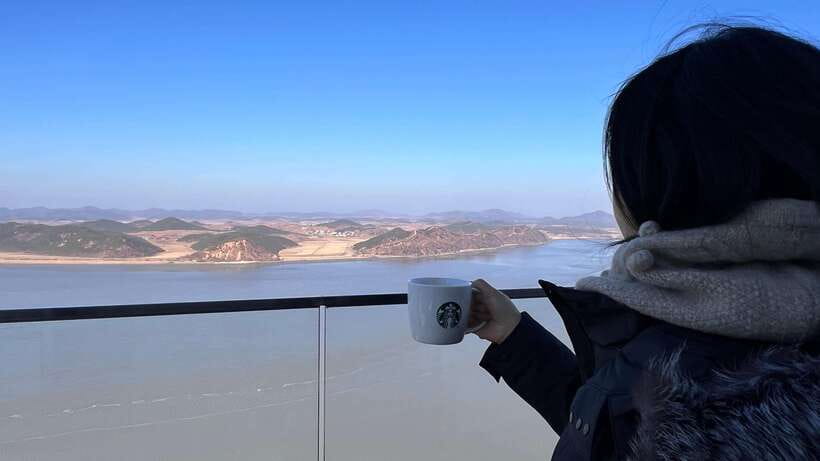
Now for the Starbucks part. The cafes are located on the top floor at Aegibong Peace Park, so the coffee break isn’t an afterthought. You can use it like a reset button: sit down, scan the view, then step back outside when you’re ready.
Jogang Observatory and the 1.4 km view of Gaepung-gun
The outdoor highlight is the Jogang Observatory, described as an outdoor space focused on the heartwrenching beauty of Gaepung-gun in North Korea from about 1.4 kilometers away. That “distance” detail matters because it explains why this is a viewpoint-based experience: you’re looking across, not walking into restricted areas.
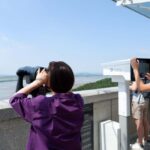
This is also where you’ll want to slow down for photos. One thing that shows up repeatedly is the practical viewing setup—some participants note there are telescopes available—so don’t just snap and run. Take a minute, check what you can actually see, then decide if you want a second look.
Why Jogang River stories matter (and how the guide explains them)
This tour doesn’t treat the view like a postcard. It connects what you see to the Jogang River’s role in history and geography.
The Jogang River is downstream of the Hangang River, where the Imjingang, Hangang, and Yeseonggang rivers meet before flowing into the West Sea. The name Jogang is explained as meaning a large river, or grandfather river—an old-school sense of scale that fits the way the area was described before the Korean War.
Before the Korean War, this area was said to be a large village with around 100 households. After the 1953 ceasefire agreement designated the zone as Neutral Waters at Hangang River Estuary, the villagers lost their homes and were scattered. That’s heavy subject matter, and the value of having a guide is that the facts don’t stay abstract.
The same story includes an ecological angle: in recent decades, the basin became a repository of a diverse ecosystem and a home to endangered and protected species. So you end up with two layers of meaning—human history and environmental survival—both tied back to the river you’re looking at.



Aegibong Peace Park’s Hill 154 myths and Korean War significance
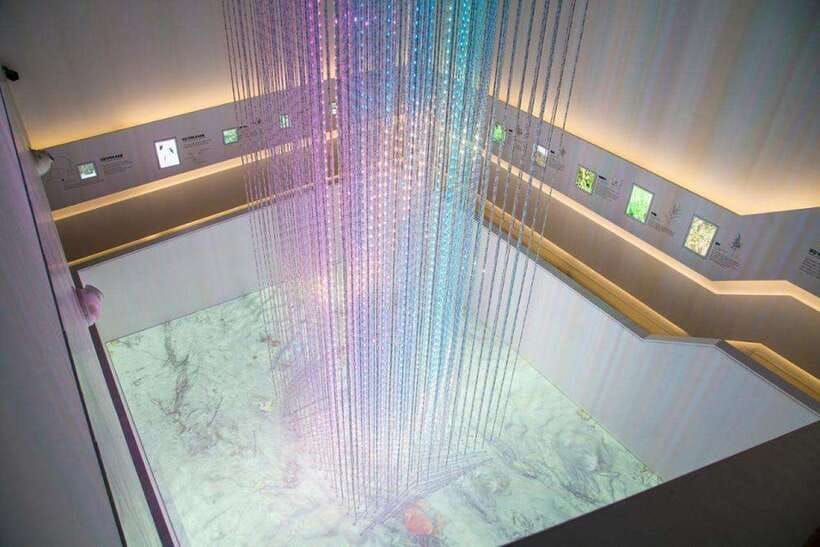
Aegibong Peace Park is on a small mountain at Hill 154. It sits on the boundary between Gageum-ri in Haseong-myeon and Jogang-ri in Wolgot-myeon of Gimpo-si, and its original name is Ssukgatmeori Mountain because it resembles a daisy crown.
There’s also a myth tied to the site: a heartwrenching story about the Governor of Pyeongan Province and Aegi during the Qing invasion of Joseon, passed down through generations. When your guide ties that myth to the physical place you’re standing on, it helps you understand why peace parks here aren’t just “pretty memorial spots.”
Then there’s the strategic layer from the Korean War. The site is described as a military strategic point where a fierce battle took place. When you combine war context, myth, and a river view, you stop thinking of this as only sightseeing. It becomes a place where multiple stories overlap.
The suspension bridge and Sky Forest Garden walk: fun with a purpose
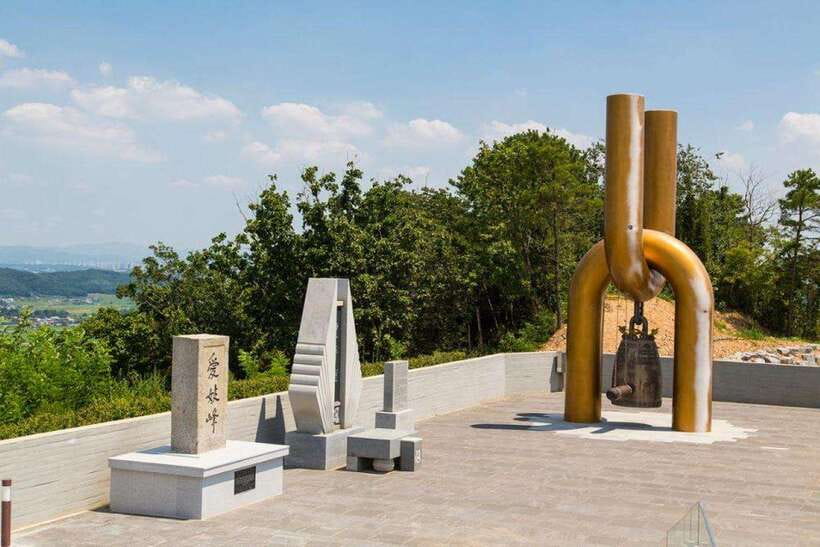
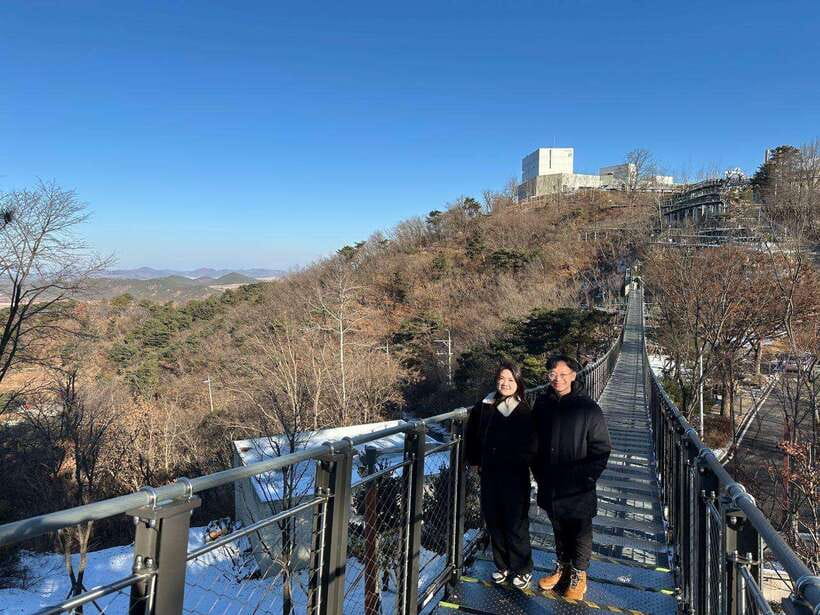
Let’s talk about the bridge. The suspension bridge in this park is 112 meters long and connects the Themed Gardens to the Sky Forest Garden. Even if you’re not a big fan of heights, the point is that the walk gives you energy in the middle of a heavy day.
It also helps you break the day into chunks. You’re not only looking straight across at North Korea; you’re also moving through themed garden spaces and getting a different angle on the area around you.
A practical note: wear comfortable shoes. The tour includes walking and sightseeing around both stops, and you’ll enjoy the views more if your feet aren’t bargaining with you halfway through.
Guides and transport: English explanations, smooth pickup, and calm pacing
This is one of those tours where the guide makes a big difference, and the feedback is consistent about that. Live English guidance is included, and many participants highlight how the guide stayed engaging while sharing facts about the DMZ area and Korea’s situation.
Names that come up often include Hana, Gogo, Eva, Crystal, Alex, Lina, Yuna, Judy, Lily, Gaby, Diana, and Ray. The common thread isn’t personality alone; it’s clarity. People describe guides as answering questions, making the day feel organized, and keeping information understandable without turning it into a lecture.
Transport also gets solid praise. Multiple participants mention comfortable rides and smooth logistics, with meeting instructions sent clearly ahead of time. For a day-trip topic like this—where you want to feel grounded and not stressed—that matters as much as the view.
One more small but meaningful detail: some feedback notes there’s no pushy shopping detour tacked onto the route. If you’re trying to keep the day respectful and focused, that’s a win.
Price and value of the $45 Aegibong Starbucks Observatory tour
At $45 per person for about 5 hours, you’re paying for three things that add up fast: round-trip transportation, a tour guide, and all entrance fees. Food and drinks are not included, but you’re also not paying extra to have every meal served to you.
So the value is strongest if you want structure. If you tried to DIY this route, you’d spend time figuring out the timing, where to park, what to prioritize at each stop, and how to make sense of the place without getting stuck. Here, a guide handles the “what you’re seeing and why it matters” part.
This also works as a smart alternative. One participant specifically called it a good fit if you’ve already done a traditional DMZ visit and want a shorter day with a similar viewing angle, plus time to do other plans afterward.
Who this Seoul day trip suits best
This tour fits best if you want a focused day with a guide, not a long all-day endurance event. You’ll enjoy it if you like history that ties directly to places you can stand in, and if you appreciate that a peace park can be part memorial, part storytelling, part scenery.
Coffee lovers will also get extra mileage from this one, since the top-floor Starbucks isn’t just branding—it’s part of how you slow down and look. If you’re visiting with kids or mixed ages, you’ll like that the day is structured with clear stops and guided explanation, without requiring you to be a military-history expert.
Finally, bring your passport. It’s listed as required, and you don’t want to discover that at pickup time when everyone’s already loaded onto the vehicle.
Should you book this Aegibong Starbucks DMZ-view tour?
Book it if you want a short, guided day that combines a North Korea-facing view, a peace park setting, and a meaningful narrative around the Jogang River and Korean War context. The guide-led approach is the best reason to choose this over a solo plan.
Skip it if you need a full-day experience with more extensive time at each site, or if you strongly prefer having food included in the ticket price. Also keep in mind that views depend on weather, and your best results come from taking your time at the observatory once you’re there.
If your goal is to see the view, understand the place, and still be back in Seoul without wrecking your evening plans, this is a very workable pick.
FAQ
How long is the Aegibong Starbucks observatory and DMZ view tour?
The duration is 5 hours.
What’s the price per person?
The price is listed as $45 per person.
Is there an English-speaking guide?
Yes. The tour includes a live tour guide in English.
What’s included in the price?
You get round-trip transportation, a tour guide, and all entrance fees.
Are food and drinks included?
No. Food and drinks are not included.
Do I need a passport?
Yes. A passport is listed as what to bring.
Where do I get picked up in Seoul?
Meeting points may vary depending on the option booked, including locations such as Myeong-dong, Hongik Univ. Station Exit 3, and THE PLAZA Autograph Collection.
Where does the tour end?
The tour ends at Hongik University Station Exit 4.
How much time is spent at Aegibong Peace Eco Park and Jogang Observatory?
Each major portion is about 1.5 hours: Aegibong Peace Eco Park, then Jogang Observatory.
Is free cancellation available?
Yes. Free cancellation is available up to 24 hours in advance for a full refund.