REVIEW · 4-DAY EXPERIENCES
Discover Western Korea in 4days: All-Inclusive Experience
Book on Viator →Operated by Hanatour ITC (하나투어 아이티씨) · Bookable on Viator
Western Korea in four days, nicely packaged. The big win here is no shopping and included entrance tickets, so the schedule stays focused on places like UNESCO-listed Gongsanseong Fortress, the royal tomb of King Muryeong, and Jeonju’s hanok lanes. I like how the tour builds in real cultural stops plus outdoor time, not just transit. One drawback: it is a full day-to-day plan with walking at fortresses, temples, and village areas, so wear shoes you trust.
This is also the kind of trip where the details matter. When a guide is on top of logistics and keeps things friendly, it changes the whole feel; one highlight in the feedback is Jay, described as very caring, with clean, nice hotels and restaurant choices that make sense. I will say the tradeoff is group travel: with a maximum of 35 people and a fixed route, you will not get spontaneous detours.
In This Review
- Key things that make this Western Korea tour work
- Is this trip really all-inclusive, or just mostly planned?
- Day 1 in Gongju: UNESCO walls and a royal tomb story
- Day 2 in Jeonju: hanok village lanes and a hanbok change of pace
- Day 3 in tea country and wetlands: Boseong to Suncheon Bay
- Day 4 in Busan: UN Memorial Cemetery, then back to Seoul
- Where your money goes: value in meals, hotels, and no-ticket hassle
- Hotels and food: the part that makes or breaks a short tour
- Getting around: start point, end point, and what you handle yourself
- How much walking is too much? Fitness and pacing reality
- Who should book this Western Korea tour?
- Should you book it?
- FAQ
- Where does the tour start and end?
- How long is the experience?
- What is included in the price?
- Are meals included?
- Is there any shopping during the tour?
- Are entrance tickets included for the stops?
- Do I need to arrange transportation to Seoul Station?
- Is KTX included?
- What if the weather is bad?
Key things that make this Western Korea tour work
- UNESCO first day in Gongju with Gongsanseong Fortress plus the Songsan-ri tombs and King Muryeong’s royal tomb complex
- Jeonju hanok Village with hanbok time in one of Korea’s most recognizable traditional neighborhoods
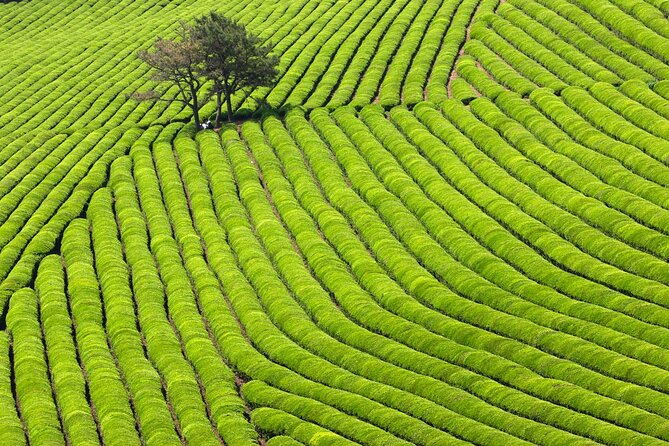
- Tea country on the way to wetlands: Boseong’s Daehan Dawon green tea fields paired with Suncheon Bay’s coastal marsh reserve
- A meaningful Busan finish at the UN Memorial Cemetery, arranged by nation and dedicated to Korean War losses
- Meals and entrances are bundled (breakfasts, lunches, dinners, plus admission fees) so you can budget without surprises
- Small-group feel (max 35) with a professional English-speaking guide or driver-guide and mobile tickets
Is this trip really all-inclusive, or just mostly planned?
This tour is designed to feel like a package with few decisions left for you. You will get a set plan across Seoul, Gongju, Jeonju, Boseong, Suncheon, and Busan, with lodging for three nights, scheduled meals, and admission fees covered. That matters because Korea is very easy to travel in, but it can be annoying when you are trying to coordinate entrance times, buses, and ticket lines while also figuring out food.
There’s also a clear philosophy in the program: no shopping and no side-choice stops. In practical terms, that means your time goes to the listed places—fortress walls, shrine grounds, temples, tea terraces, wetlands—rather than being stretched by optional shopping rounds.
The only real watch-out is how “relaxed” your body feels at the end of each day. Even with a bus or van and an English-speaking guide, you will still walk. Fortress steps, temple paths, and the hanok alleys add up. If your goal is a mostly sit-and-look trip, you might feel the schedule more than you expect. If you are fine with moderate walking and want value for the time you have, it fits well.
You can also read our reviews of more tours and experiences in Seoul
Day 1 in Gongju: UNESCO walls and a royal tomb story
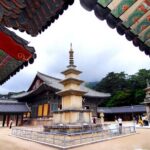
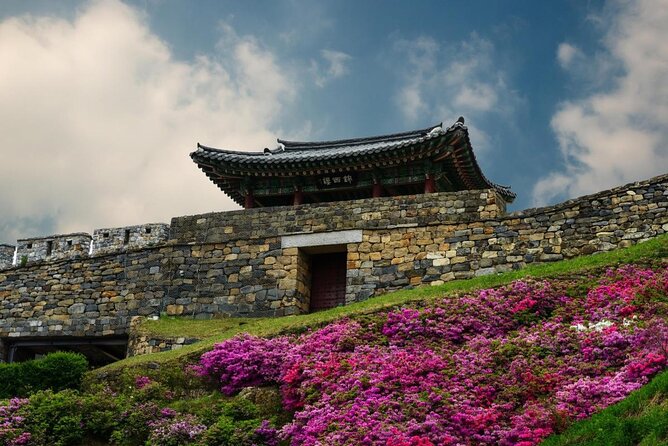
Day 1 starts with a strong historical anchor: Gongju Gongsanseong Fortress. This hillside fortress is UNESCO-listed (designated in 2015), and the payback is the views and the sense of military planning on uneven ground. Even if you do not care about defense history, fortress walls tend to make you think in 3D: how people moved, where they could see, and why the site was worth fighting for.
From there you head to the Songsan-ri Tombs and the Royal Tomb of King Muryeong. The standout detail here is the burial style: a brick-built royal tomb design that is noted for craftsmanship and royal burial practices. This is the kind of stop where a guide’s explanations can make artifacts feel like more than just objects behind glass.
Then you close the day at Gongju National Museum, which holds about 10,000 cultural artifacts. The museum’s usefulness is simple: it gives context. After you’ve walked a fortress and visited tomb sites, the museum helps you connect what you saw outside to what was preserved, collected, or unearthed.
What to know before you go: Day 1 is history-heavy. If you love archaeological details, you will probably feel happy. If you prefer food and scenery more than museums, I would treat the museum as the evening anchor and plan to pace yourself in the galleries.
Day 2 in Jeonju: hanok village lanes and a hanbok change of pace
Jeonju is one of Korea’s most famous cultural towns for a reason, and the tour leans into that. You start the day with Gyeonggijeon Shrine in the heart of Jeonju Hanok Village. The shrine matters because it holds the portrait of King Tae-jo, the founder of the Joseon Dynasty, and it was erected in 1410. That date gives you a real time anchor: you are standing in a living link to early Joseon-era memory.
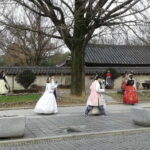
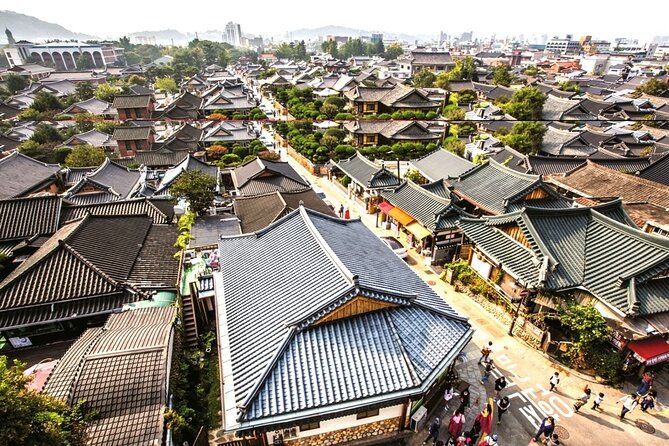
Next comes the most photo-friendly and hands-on part: Hanok Village time plus hanbok. The program includes walking through traditional hanok alleys and a hanbok experience. Even if you have worn hanbok before, doing it in this setting is different because the village layout supports the look. It is also a nice change from tomb and fortress themes.
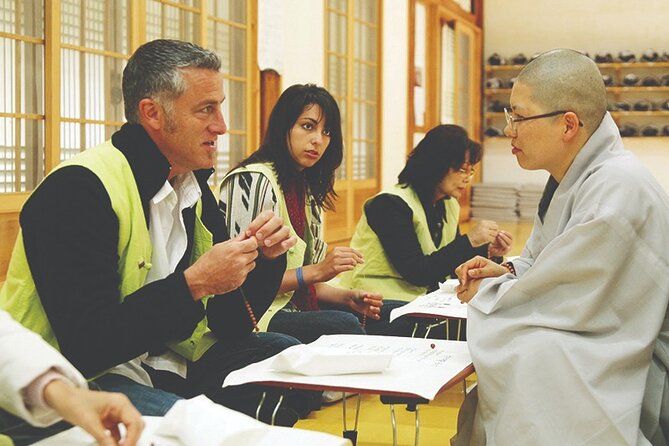
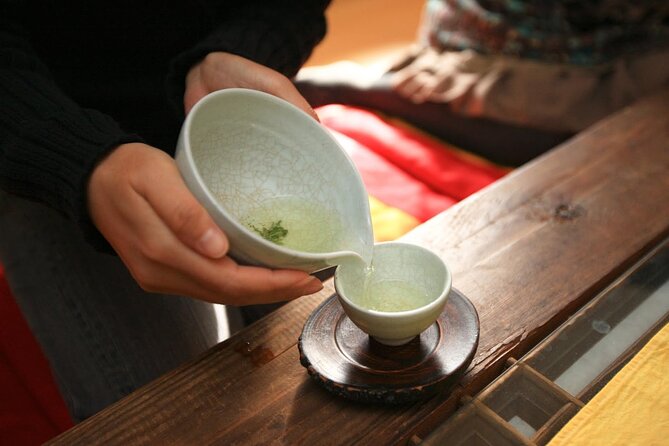
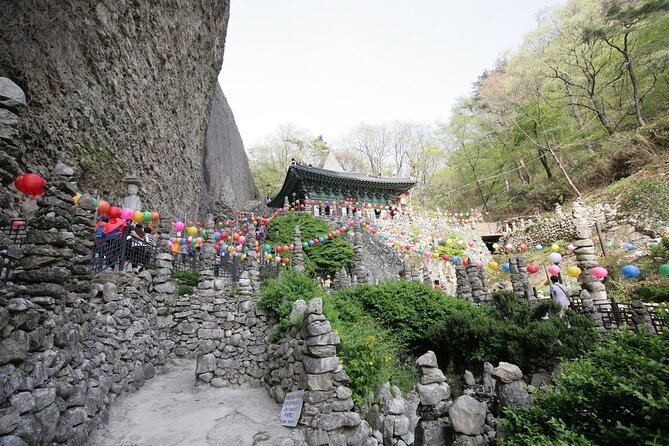
After the hanbok time, you revisit Gyeonggijeon Shrine for the portrait focus in a more structured way. Then you travel to Baekyangsa Temple, where the beauty is described as changing by season. The experience includes a tea conversation with a Buddhist monk, which is exactly the kind of cultural moment that can make a temple visit feel personal rather than purely observational.
The best way to enjoy Day 2: Go slow in the hanok lanes. It is easy to rush because you want photos, but you will also want a few minutes just to listen and watch. The tea conversation is most meaningful if you keep your expectations realistic: you are not there for a staged performance, you are there for a calm exchange.
Day 3 in tea country and wetlands: Boseong to Suncheon Bay
Day 3 is where the tour shifts from human-built landmarks to nature, and it does it with two very different environments.
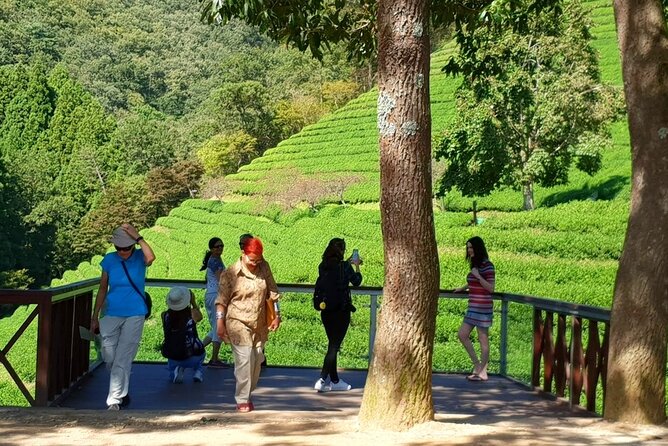
First stop: Boseong Green Tea Field (Daehan Dawon). The program highlights it as the largest green tea field in Korea, with terraced rows of tea bushes. This is one of those stops where you get a double benefit: you walk through the rows, and you also get scenic views that change as you move. It is relaxing in a way that feels earned after a couple of more intense cultural days.
Then you head to Suncheon Bay Wetland Reserve. This is described as one of the world’s top five wetlands, located where river meets sea. The key reason to care is wildlife: it serves as a sanctuary for more than 250 species. Even if you do not spot every animal, the wetland setting is a reminder that ecosystems are not static dioramas; they are living environments that shape how the area looks and breathes.
There’s also an extra program element you should be aware of: the tour includes a visit to a wellness facility designated by the Korea Tourism Organization. You may find it a helpful downtime block between walking-heavy stops. If you prefer to keep your day strictly sightseeing, treat it as a scheduled break rather than a showpiece.
Watch for this on Day 3: Weather affects comfort. Wetlands days can be misty or windy depending on the season, and tea fields are outdoors. Bring a layer you can tolerate for both sun and breeze.
Day 4 in Busan: UN Memorial Cemetery, then back to Seoul
Day 4 is emotionally different from the previous days, and that contrast is part of the value.
You start at the UN Memorial Cemetery in Busan, a solemn place dedicated to UN soldiers who lost their lives during the Korean War. The program notes around 2,300 graves, arranged by nation. The layout and the categorization by country make this less abstract than a general memorial: you can see the scale and the organizing logic.
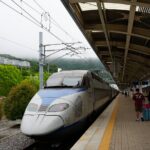
After that, the trip returns you toward Seoul. The notes provide an estimated train window: Busan Station 14:31 → 17:14 Seoul Station. Your guide drops you at Busan Station, and you finish by arriving at Seoul Station. You will handle your own transportation to Seoul Station based on the tour’s meeting-point instructions.
How to handle the mood of Day 4: Give yourself a few minutes after the cemetery to come back to normal. It is not the kind of place you want to race through, and it is also not the kind of place where you want to immediately switch gears into more casual sightseeing without a mental reset.



Where your money goes: value in meals, hotels, and no-ticket hassle
At $1,200 per person for about four days, the headline number can look steep until you break down what is bundled. You are not just paying for seats on a bus. You are covering:
- 3 nights of accommodation
- Breakfast (3), lunch (4), dinner (3)
- All entrance fees
- Air-conditioned vehicle
- English-speaking guide (or driver-guide)
- All fees and taxes
- Mobile ticket
If you tried to replicate this trip on your own, your costs would likely split across lodging, museum and temple admissions, train tickets, and meals. This package reduces decision fatigue. You also avoid the common “missed timing” problems that happen when you are coordinating multiple stops across regions.
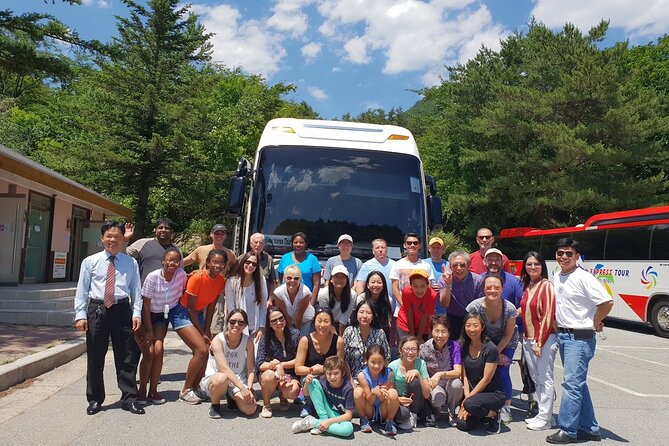
One more value point: the group size limit is 35, which is large enough for flexibility but small enough that you can typically follow the flow without getting lost in a crowd. If your group is 9 or fewer, the notes say KTX tickets are provided. That is another cost that can add up fast when you plan independently.
Hotels and food: the part that makes or breaks a short tour
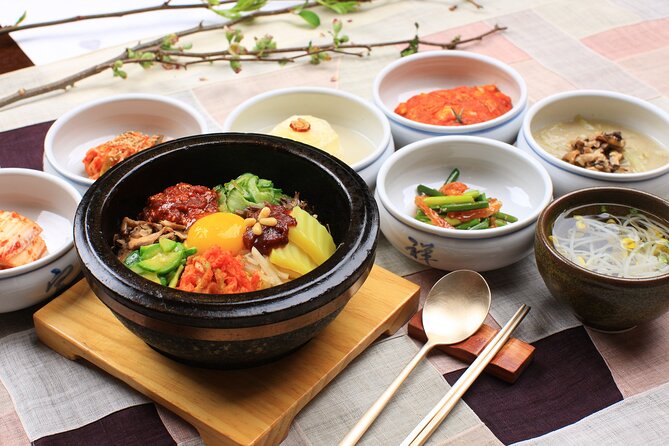
One of the clearest positives in the feedback is food and comfort. Hotels are described as clean and nice, and restaurant choices are described as well thought out, with food described as amazing. Even without knowing every menu item, that pattern is what you want from a fixed-route tour: someone is selecting places that work for groups and preventing the classic mistake of sending you to meal stops that are convenient for logistics but weak on quality.
You will have three dinners across the three hotel nights and four lunches spread across the four days. That matters because Korean travel can mean long stretches between meals. With scheduled meals included, you can spend your energy walking and looking rather than hunting for something that also fits your timing.
Practical tip: Ask your guide early which meal has more free time. Some lunches and dinners feel like a quick stop; others are paced. You want to protect at least one relaxed meal so you do not feel rushed every day.
Getting around: start point, end point, and what you handle yourself
You start in Seoul with a listed meeting point at AMID Hotel Seoul, 38 Insadong 5-gil, Jongno District. The tour end is Seoul Station, 43-203 Dongja-dong, Yongsan District.
The notes also say hotel pickup on the first day and drop-off on the last day are not included, and they reference a pickup point near Center Mark Hotel in Insadong. Since meeting details can vary depending on how your booking confirmation is written, treat this as a “double-check before you go” item. When you have a fixed start time, that extra ten minutes of confirmation can save stress.
Another note you should respect: you are expected to arrange your own transport to Seoul Station. That is straightforward if you are already staying in the city center, but it matters if you arrive late, switch hotels, or need to plan train/subway transfers.
The tour starts around 8:00 am. That early start is typical for multi-stop regional tours, but it means you should be rested the day before.
How much walking is too much? Fitness and pacing reality
The tour calls for moderate physical fitness. That does not mean you need to be an athlete. It does mean you should expect uneven terrain and walking distances at:
- A hillside fortress area (Gongsanseong Fortress)
- Tomb and museum grounds
- Hanok village alleys (not always flat)
- Temple paths (Baekyangsa Temple)
- Outdoor tea terraces and wetland walking areas
- The cemetery grounds
If you do not love stepping on uneven stones or climbing a few flights of stairs, this is where you might feel the schedule. Comfortable shoes and a light layer help more than you think.
Who should book this Western Korea tour?
This tour is a good fit if you want:
- A short, efficient way to see multiple regions in Western Korea
- A plan with entrances, meals, and hotels handled
- Cultural sites plus outdoor nature time
- An experience that avoids the usual shopping stop pressure
It is also a solid option if you like history but do not want to plan every ticket line and transit step. If you are traveling with older family members or a mixed-age group, the written fit is broad: it is listed as suitable for ages from 1 to 80+, with a max group size of 35.
Should you book it?
Book it if your priority is getting real regional variety in a tight window, without DIY logistics and without shopping detours. The strongest reasons to choose this specific tour are the mix of UNESCO-level history (Gongju), a recognizable cultural center (Jeonju hanok), a classic sensory nature day (Boseong tea fields), and a sobering finale (Busan’s UN Memorial Cemetery), all with meals and admissions included.
Skip it if you want lots of free time, slow travel, or zero walking. In four days, you will feel the rhythm. If you can handle that, this is a practical way to taste Western Korea without spending your vacation coordinating it.
FAQ
Where does the tour start and end?
The start is at AMID Hotel Seoul, 38 Insadong 5-gil, Jongno District. The tour ends at Seoul Station, 43-203 Dongja-dong, Yongsan District.
How long is the experience?
It runs for about 4 days.
What is included in the price?
Included are entrance fees during the tour, air-conditioned vehicle, 3 nights’ accommodation, taxes and fees, an English-speaking guide (or driver-guide), and meals (3 breakfasts, 4 lunches, 3 dinners).
Are meals included?
Yes. Breakfast is included for 3 days, lunch for 4 days, and dinner for 3 days.
Is there any shopping during the tour?
No shopping is part of the program.
Are entrance tickets included for the stops?
Yes. Admission tickets and entrance fees during the tour are included.
Do I need to arrange transportation to Seoul Station?
Yes. The tour notes that you will arrange your own transportation to Seoul Station.
Is KTX included?
If the group consists of 9 people or fewer, KTX tickets are provided.
What if the weather is bad?
The experience requires good weather. If it is canceled due to poor weather, you’ll be offered a different date or a full refund.