REVIEW · SEOUL
Traditional Korean Bookbinding Experience in Seoul, Hongdae
Book on Viator →Operated by Danchoodan · Bookable on Viator
Paper and silk turn into your own keepsake. This traditional Korean bookbinding class in Seoul focuses on the real materials and methods, using Hanji (traditional paper tied to the UNESCO Memory of the World Annals of the Joseon Dynasty) and finishing with silk and a norigae knot you tie yourself. I really like that you get to make real choices, from picking one of 22 silk cover designs to selecting your norigae and thread colors, instead of following a rigid script. The only real drawback to consider: it’s a studio craft session, not a sightseeing ride, so plan to enjoy hands-on work for about 2 hours and handle the logistics yourself (no air-conditioned vehicle is provided).
What makes this class work especially well in Hongdae is the small-group size and the steady pace. The group max is 12, there’s a licensed guide, and you’re using tools and materials as part of the experience, not just watching from the sidelines. The format is simple: you start at danchoodan at 10:30am, learn the process step by step, and you leave with a notebook in gift-ready packaging.
If you’re the type who likes tangible souvenirs, this is a strong value at $49 per person. You’re not buying a mass-made journal. You’re making a customized book with traditional materials and a finish that has meaning—and you’ll have it in hand right away.
In This Review
- Key highlights you’ll actually care about
- Hongdae-area bookbinding: why this feels like more than a craft stop
- Meeting danchoodan at 10:30am and the smooth 2-hour structure
- Choosing from 22 silk covers: where your notebook stops looking generic
- Norigae and thread selection: the details that make the finishing personal
- Hanji basics: what makes Korean paper a big deal
- Binding the notebook: silk-and-Hanji craftsmanship you can feel
- Finishing with the norigae knot and packing a gift-ready journal
- Value and price: why $49 can actually make sense
- Who should book this class, and who might feel mismatched
- Small-group tips so you don’t feel rushed
- Should you book this traditional Korean bookbinding experience?
- FAQ
- How long is the traditional Korean bookbinding class in Seoul?
- What does the $49 price include?
- What should I bring for the class?
- Is there an option for a mobile ticket?
- Where is the meeting point?
- What time does the class start?
- Is transportation included in the price?
- How big is the group?
- Is there an age requirement to book?
- Can I cancel for a full refund?
Key highlights you’ll actually care about
- Hanji with a UNESCO connection: tied to the Annals of the Joseon Dynasty listed on Memory of the World
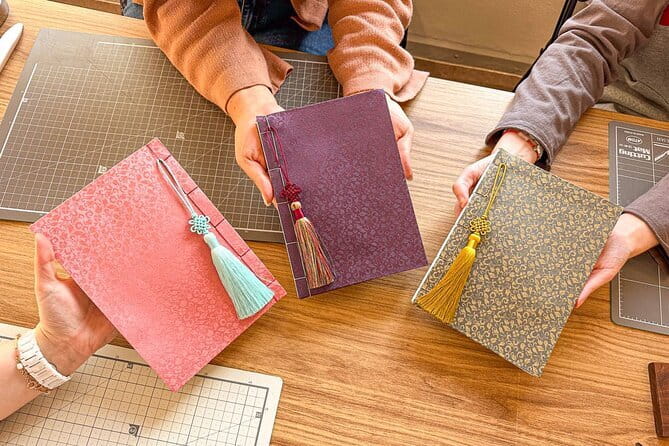
- 22 silk cover patterns to choose from: you’ll pick the look of your final notebook
- Norigae ornament + knot finish: a traditional Korean tie-off you make as the final touch
- Traditional silk-and-Hanji binding method: tools and materials are included
- Takes home a complete journal: packed in gift-ready packaging right after class
- Maximum 12 people: enough attention from the licensed guide without feeling rushed
Hongdae-area bookbinding: why this feels like more than a craft stop
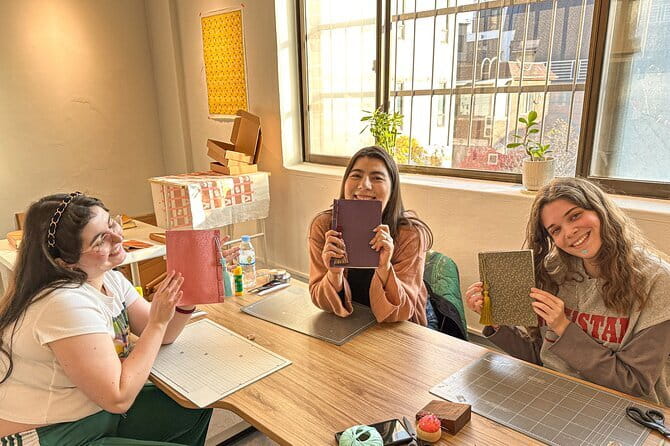
I love the way this experience treats bookbinding as culture, not just a cute activity. In Seoul, it’s easy to bounce between cafés, shopping streets, and K-drama photo spots. This class slows the pace down on purpose. You sit with paper and thread, learn the traditional approach, and end up with something you can actually use.
The location is also practical. The meeting point is at danchoodan in Mapo-gu (Daeheung-ro, 3rd floor). Hongdae is a convenient area to base yourself, and this kind of indoor activity fits nicely when you want a break from walking. It’s also near public transportation, so you’re not forced into a taxi every time you want to get somewhere.
You can also read our reviews of more tours and experiences in Seoul.



Meeting danchoodan at 10:30am and the smooth 2-hour structure
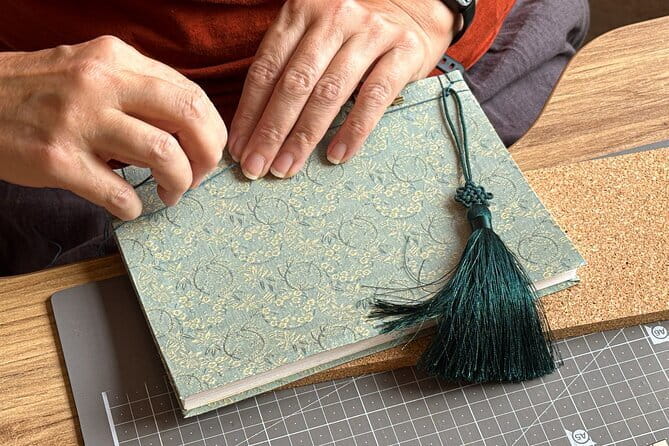
This experience runs about 2 hours and starts at 10:30am. You’ll meet at the danchoodan address (Mapo-gu, Daeheung-dong, Daeheung-ro 100, 3층). The activity ends back at the same meeting point, so you don’t need to plan a separate stop afterward.
A couple of details matter for your timing:
- Only people who reserved can enter the studio.
- You can use a mobile ticket.
- Your class is limited to the reservation group size, with a maximum of 12 total.
That means you should arrive with enough buffer to get checked in and find the studio level. Once you’re seated, the session is built to keep you moving through the steps: choose design elements first, then learn the paper and binding, and finish with the decorative knot and packaging.
Choosing from 22 silk covers: where your notebook stops looking generic
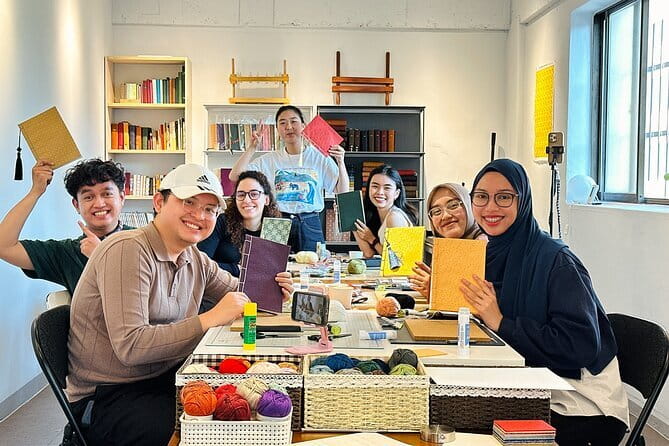
One of the best parts is how early you make decisions. In the class, you choose your silk cover from 22 options featuring traditional Korean patterns. That’s a big deal, because it shapes the look of your final notebook immediately.
Here’s how I’d use that choice time:
- Pick a pattern you actually want to show off. This isn’t hidden inside a drawer.
- Match it to your trip vibe. If your Korea time was all about palaces and Joseon-era stories, lean into more classic motifs. If you want something bold for everyday use, choose the pattern and tone that feels most you.
- Think about what you’ll write in it. A cover you love makes it more likely you’ll use the book for notes, journal entries, or a travel scrapbook.
You also get a cultural talking point along the way: the guide notes that silk can last 500 years, while Hanji can last 1,000 years. Whether you treat that as poetry or a promise, the practical takeaway is the same: you’re making a souvenir designed to endure.
Norigae and thread selection: the details that make the finishing personal

After choosing your silk, you move to the decor step: selecting a norigae (traditional Korean ornament) and the color of thread. This is where the class becomes yours instead of a standard template.
The norigae step matters because it connects to the final action. At the end, you tie a no-ri-gae knot—so the pieces you pick earlier aren’t just decoration choices. They’re part of the actual process you complete with your hands.
When you’re selecting thread color, I recommend picking something that harmonizes with your silk cover pattern. If your cover is busy with color, choose a thread color that won’t fight it. If your cover is more restrained, a brighter thread can look especially intentional.
Hanji basics: what makes Korean paper a big deal

Hanji isn’t just any craft paper in this class. It’s the traditional Korean paper used for documents like the Annals of the Joseon Dynasty, which is listed on UNESCO’s Memory of the World. That’s the kind of context that turns a material into a story.
In the lesson, you learn why Hanji is special and what role it played for Joseon royal family members and Korean Confucian scholars—people writing diaries, notes, and records. You don’t need to be a literature nerd to appreciate this. You just need to care about using materials that carry meaning.
And if you like practical history, this is one of the cleaner ways to experience it. You’re not reading about paper. You’re handling it as the foundation for your notebook.






Binding the notebook: silk-and-Hanji craftsmanship you can feel
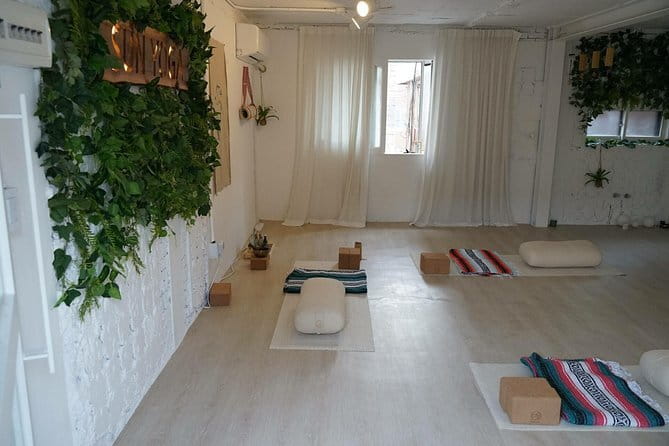
Once you’ve chosen your cover and decorative elements, you get to the core skill: binding the silk and Hanji using Korean traditional binding methods.
This is also where the class feels well supported. Binding tools and materials are included, and you have a licensed guide to walk you through the steps. In other words, you’re not trying to figure out handcrafting technique from scratch.
What you should expect at this stage:
- You’ll learn the traditional sequence of how the components come together.
- You’ll work at a pace that lets you keep up without feeling like you’re being rushed through.
- You’re building a functional notebook, not just assembling a flat craft panel.
This part is also why the class is worth doing even if you’re not a hardcore crafter. The outcome is tangible, and the method is the whole point. By the time you’re finished, you’ll know what you made and why each layer matters.
Finishing with the norigae knot and packing a gift-ready journal
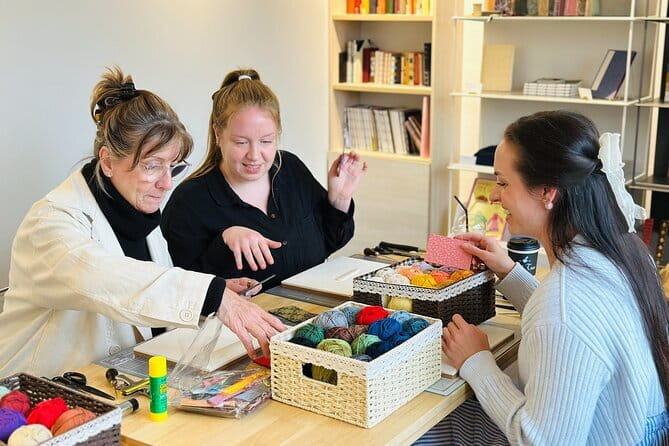
The last step is decorative but also satisfying because you do it yourself: you add the traditional norigae knot to your notebook.
That knot is the final touch that links everything you chose earlier—silk pattern, norigae ornament, and thread color—into one completed look. It also makes the notebook feel like a souvenir with personality, not just a notebook with pretty cover paper.
After decorating, you pack your creation in gift-ready packaging. That’s practical if you’re buying gifts for friends, teachers, or your travel buddy who always wants the “cool thing you did” photo. Even if you keep it for yourself, gift-ready packing also helps it survive the rest of your trip intact.
Value and price: why $49 can actually make sense
At $49 per person for about 2 hours, this class is priced like an experience where the main cost is instruction plus materials—not like a souvenir shop sale.
Here’s the value logic I’d use:
- You’re paying for a licensed guide and for hands-on instruction.
- Tools and materials are included, including the silk cover selection and the Hanji paper used for the notebook.
- You take home a customized notebook immediately, in gift-ready packaging.
The one cost you should plan for is transportation to the studio. There’s no air-conditioned vehicle included, so you’ll likely rely on public transit or walking. If you already plan to move around Seoul independently, that’s not a deal-breaker. It just means this is best treated as a “scheduled experience” rather than something that comes to you.
Who should book this class, and who might feel mismatched
I’d book this if you like any of these:
- You enjoy writing, journaling, or travel scrapbooks and want something you’ll actually use.
- You want a cultural activity that focuses on materials and technique, not just photos.
- You like choosing colors, patterns, and decorative details as part of the process.
- You’d rather bring home an object with personal meaning than a mass-market item.
I’d think twice if:
- You want a mostly passive, sit-and-watch activity.
- You’re short on time and need something that’s under an hour.
- You don’t enjoy crafts that involve careful tying and assembling.
For most people, it lands in that sweet spot: structured teaching plus creative choices, ending with a usable journal.
Small-group tips so you don’t feel rushed
To get the best outcome from a 2-hour session, I’d keep these practical points in mind:
- Arrive a little early for the 10:30am start so you have time to locate the studio on the 3rd floor.
- Spend real time on your silk and norigae choices. Those decisions affect the final look you’ll live with.
- If you’re sensitive to small threads or tying tasks, take your time during the norigae knot step. The guide is there to help you keep going.
- Plan your day so you’re not sprinting afterward. You’ll want a calm moment after class to admire the finished notebook before you store it.
Should you book this traditional Korean bookbinding experience?
Book it if you want a hands-on Seoul experience that connects to real Korean paper culture and ends with a customized notebook you can use or gift right away. The $49 price is easier to justify when the class includes the materials, tools, and instruction, and when your souvenir isn’t something you’d find in a store window.
Skip it only if you’re mainly chasing big scenery or you dislike crafts. This is a “slow down and make” activity, and that’s the point. If that sounds like your travel style, this is a very solid pick in the Hongdae-area.
FAQ
How long is the traditional Korean bookbinding class in Seoul?
It lasts about 2 hours.
What does the $49 price include?
You get binding tools and materials, plus a licensed guide.
What should I bring for the class?
The information provided doesn’t list any specific items. You’ll mainly need yourself ready to craft, since the materials and tools are included.
Is there an option for a mobile ticket?
Yes, the experience uses a mobile ticket.
Where is the meeting point?
You meet at danchoodan, Mapo-gu, Daeheung-dong, Daeheung-ro 100, 3rd floor in Seoul.
What time does the class start?
The start time is 10:30am.
Is transportation included in the price?
No. An air-conditioned vehicle is not included.
How big is the group?
The class has a maximum of 12 travelers.
Is there an age requirement to book?
Yes. Reservation is possible only if you are 17 years old or older.
Can I cancel for a full refund?
You can cancel up to 24 hours in advance for a full refund. If you cancel less than 24 hours before the start time, the amount paid isn’t refunded.