REVIEW · SEOUL
Seoul: Pocheon Art Valley, Garden and Fruit Picking Day Tour
Book on GetYourGuide →Operated by KTOURSTORY · Bookable on GetYourGuide
A quarry-turned-art stop plus fruit picking is a strong combo. I liked Garden of Morning Calm for its calm walking paths and festival-style vibes, and I liked the seasonal farm time—strawberry picking in spring/summer, or apple activities later in the year. One thing to plan for: the day runs long (about 11 hours), so you need to stay flexible on timing when weather and traffic shift.
What makes this trip feel practical is that it’s built around three clear themes: one big garden, one hands-on farm experience, and one scenic art valley with a monorail ticket included. Guides can be Chinese/English/Korean, and I’ve seen named guides like Ron, David, Sheri, Julia, MJ, Joon, and Tino show up as helpful and friendly. My one caution: Pocheon Art Valley is more about views and sculpture walks than a loud, action-heavy attraction, so go with the right expectations.
In This Review
- Key things to know before you go
- Getting from Seoul to Gyeonggi without the headache
- Garden of Morning Calm: the calm walk that still feels like an event
- The farm portion: picking fruit, learning what you’re eating
- Strawberry season (Feb 16–Jun 14)
- Apple season (Jun 15–Nov 30)
- Pocheon Art Valley: quarry-to-art views you can actually plan around
- The timing rhythm: where you’ll feel rushed (and where you won’t)
- Price and value: what $77 actually buys you
- What the guide experience adds (and why names matter)
- Who this tour fits best
- Should you book? My call
Key things to know before you go
- Morning Calm timing changes in winter: Feb 16–Mar 15 shifts the order because of the Winter Light Festival with millions of LED lights.
- Two seasonal tour styles: Feb 16–Jun 14 focuses on strawberries; Jun 15–Nov 30 shifts to apples.
- Apple activities depend on month: Jun–mid Aug can include apple pie making, while late Aug–Nov 30 tends to be apple picking.
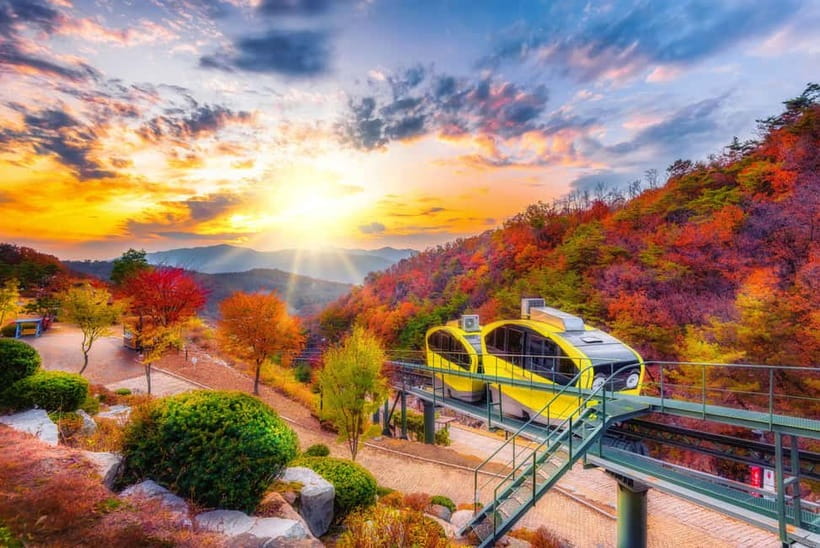
- Monorail round-trip is included inside Pocheon Art Valley, which helps you see the big views without all downhill-on-feet stress.
- Farm experiences may swap if harvest is low, so expect a plan B that keeps the day on track.
- Long transport days are normal here: you’ll be on a bus/coach for multiple legs, and it helps to bring water and something light to snack on.
Getting from Seoul to Gyeonggi without the headache
This is the kind of trip that works because you don’t have to figure out intercity transport. You start from one of four Seoul-area meeting points: Hongik Univ. Station Exit 4, Dongdaemun History & Culture Park Station Exit 10, Namsan Yejang Public Parking Lot, or 남산 예장 공영주차장. After the day, you’re dropped back at one of four locations too, including LOTTE Department Store Main Store and stations around Dongdaemun and Hongik Univ.
In the middle of the day, you’ll do several bus segments—roughly 1.5 hours to the garden, plus additional coach time between the farms and the valley. That adds up to the full 570 minutes (about 11 hours), so I’d treat it as a whole-day outing rather than a quick “half-day add-on.”
A plus I noticed from the trip descriptions and guide comments is that the guides often manage the flow without nonstop talking. People have specifically appreciated that guides like Sheri and Julia create breaks and won’t just chatter the whole ride. That matters more than you’d think when you’re spending most of your day on a coach.
You can also read our reviews of more tours and experiences in Seoul.


Garden of Morning Calm: the calm walk that still feels like an event

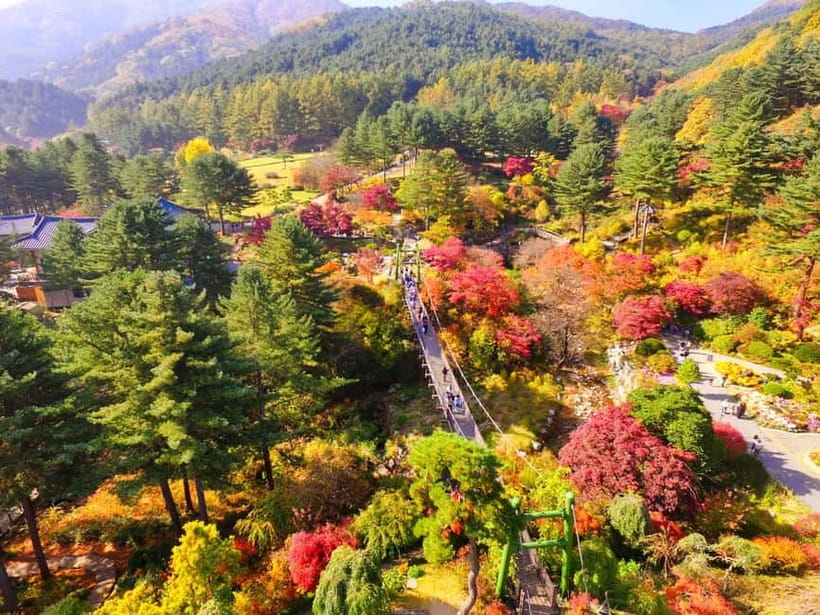
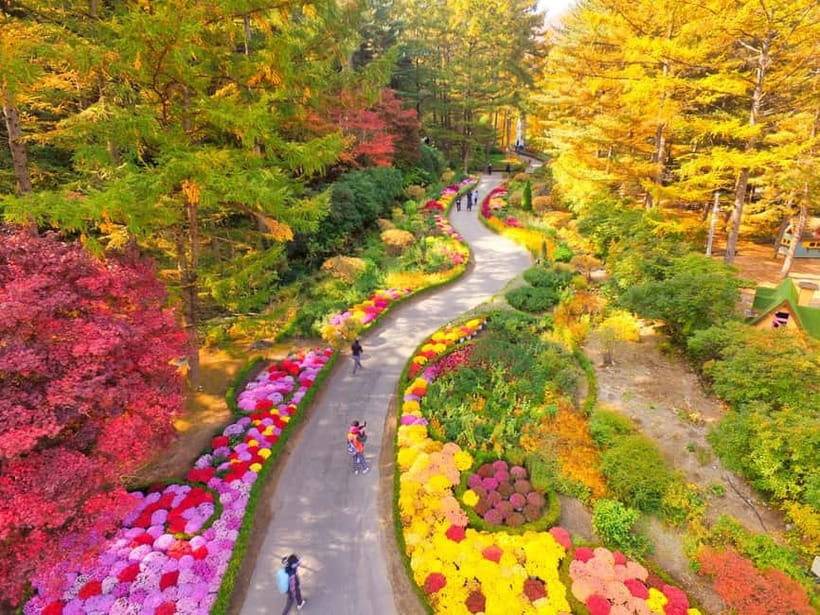
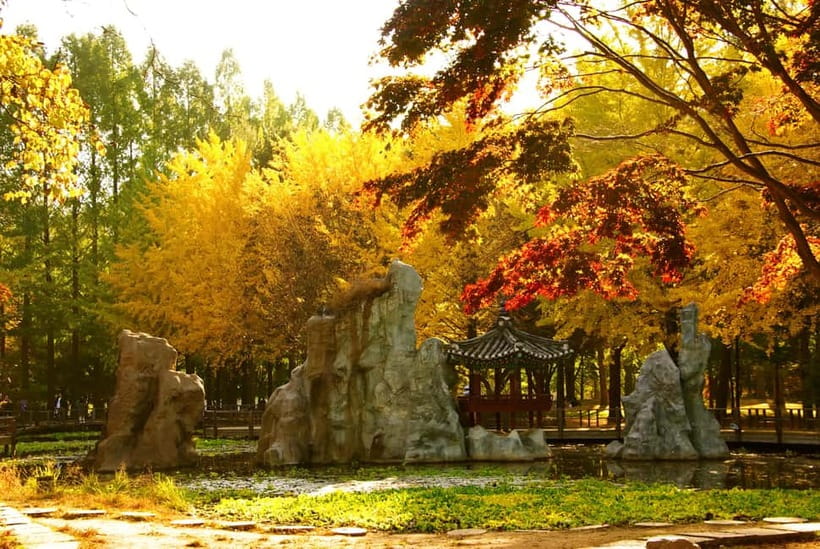
If you like gardens you can actually stroll through, Garden of Morning Calm is the anchor stop. It’s described as the oldest private garden in Korea, and the whole place is designed for wandering. You get a photo stop, a visit, and free time. Translation: you’re not just “dropped off for five minutes.” You’ll have time to actually move at your own pace.
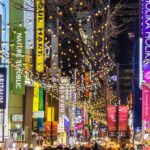
What makes this garden especially worth your attention is how it changes by season and festival schedule. In many months, it’s a soft day-trip vibe: scenic paths, viewpoints, and the kind of orderly beauty that makes even a cloudy day feel photogenic. And if you’re traveling during Feb 16–Mar 15, the garden experience gets flipped because the Winter Light Festival turns the grounds into a glowing setup with millions of colorful LED lights. That’s a very different feeling from the daytime garden look, and it’s exactly the kind of seasonal payoff that makes this stop memorable rather than routine.
Practical tip: wear shoes you can walk in for a while. Even if you only cover part of the garden, you’ll still rack up steps. Also, if you’re going in winter-festival season, plan for colder outdoor time—your camera will love the lights, but your fingers will need gloves.
The farm portion: picking fruit, learning what you’re eating
This tour is built around hands-on fruit time, and it changes with the calendar. The point isn’t just buying produce. It’s the experience of picking fresh fruit and understanding what’s in season.
Strawberry season (Feb 16–Jun 14)
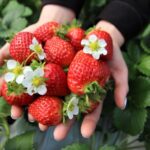
During Spring~Summer (02/16–06/14), the fruit focus is strawberry picking. You go to Yangsu-ri strawberry farm with a visit, a guided tour/class, and a strawberry picking fee included. This is the stretch where you’ll likely spend the most time getting your hands involved—look for the ripe berries low on the plants, and don’t rush. When you pick in-season produce, the fruit tastes noticeably better than the berries that travel far from the farm.
There’s also a practical reward: you can take some fruit home. And on-site, it’s easy to snack while you walk the rows, which makes the long day feel less like a grind.
Apple season (Jun 15–Nov 30)
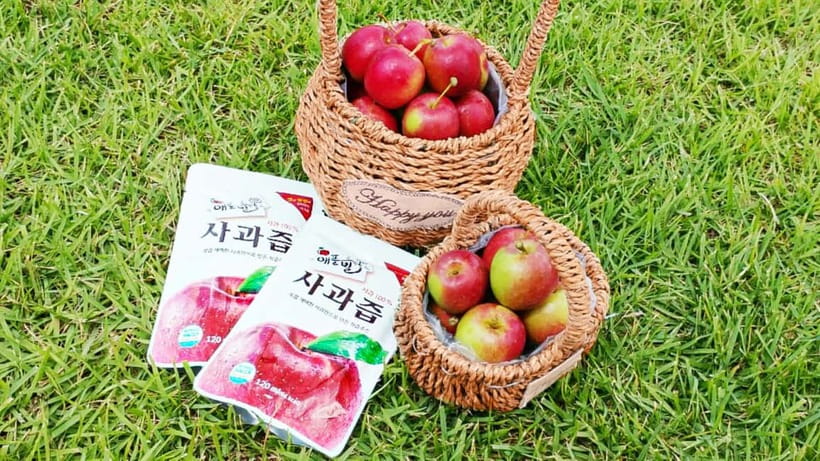
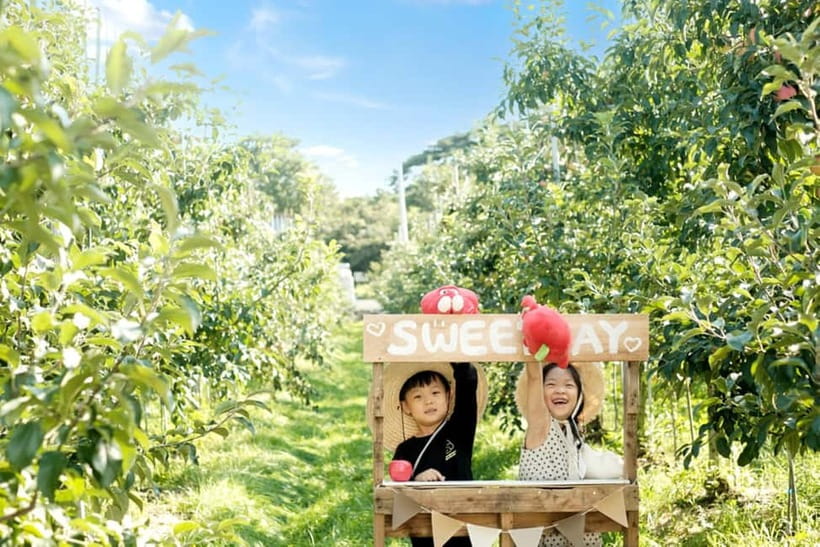
From 06/15–11/30, you shift to apples with Boss Apple Farm 사과깡패. Here, the activity depends on the month:
- Jun to mid-Aug: apple pie making
- Late Aug to Nov 30: apple picking
Either way, you get a guided tour/class and a farm experience fee included. The apple pie option is a good choice if you’d rather do something slightly more structured than picking. One of the standout comments from the day’s experiences is that the apple pie and apple juice at the farm can be really enjoyable, especially if you’re pairing sweet fruit with something warm and bakery-like.
A real-world note: the information provided also says that if harvest is low, the apple or strawberry picking experience may be replaced with a different farm experience. That’s not ideal, but it’s also common in agriculture. The way to stay happy is to go in expecting a farm learning day, not only a strict berry-count challenge.






Pocheon Art Valley: quarry-to-art views you can actually plan around
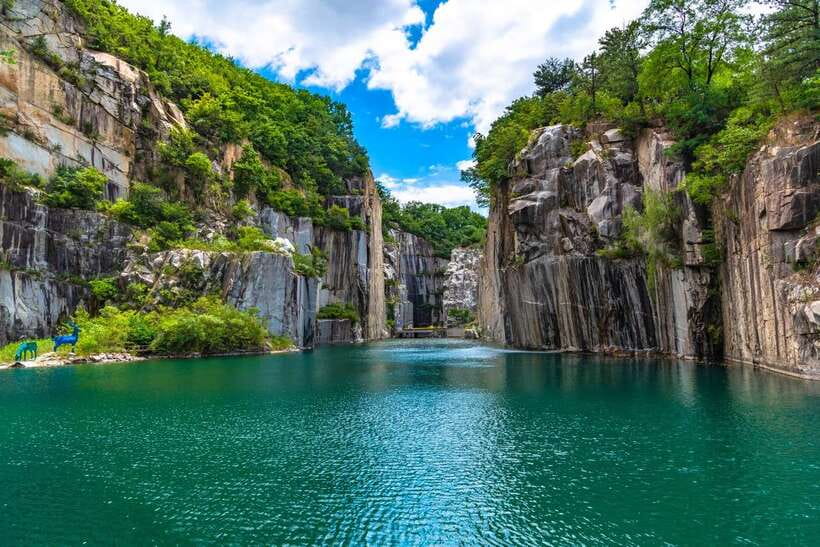
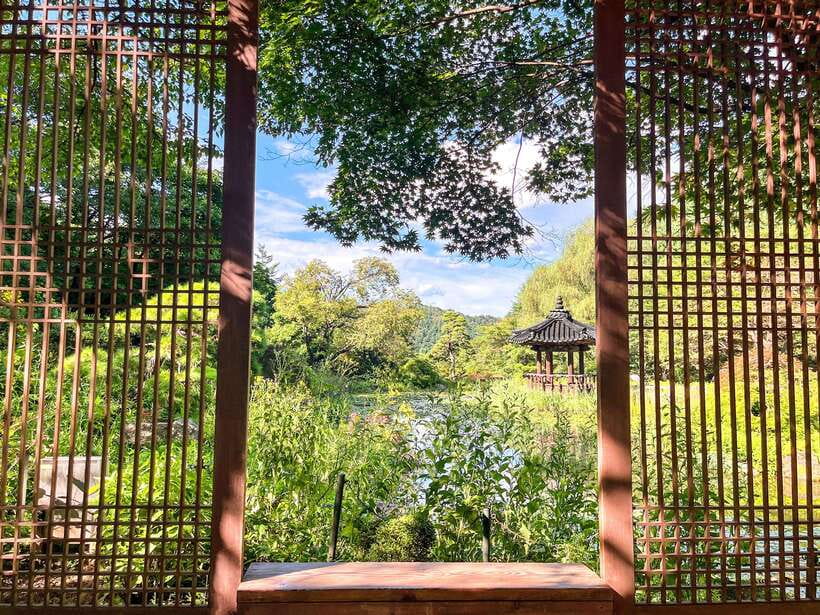
The final star is Pocheon Art Valley, a scenic art destination that transformed from a former quarry. It’s known for sculptures, installations, and panoramic vistas set around a clear-water lake and rugged mountain scenery.
You’ll spend about 2 hours here, with sightseeing time and plenty of chances to stop and look. A round-trip monorail ticket is included, which is a big deal for comfort. Instead of doing everything by foot, you can use the monorail to break up walking and still get those elevated viewpoints people come for.
What I like about this approach is that Pocheon Art Valley works for different travel styles:
- If you’re into photos, you’ll find multiple angles of the lake and cliff setting.
- If you like art but don’t want museum-studio seriousness, the outdoor format is easier.
- If you’re with someone who just wants a scenic wander, it still delivers.
One consideration: this place may not satisfy people who want constant interactive activities. The value here is the scenery + sculptures + walking views. So if you’re the type who needs action every 10 minutes, you might feel like you’re mostly strolling. If you’re okay with a slower pace and photo stops, it’s a strong ending.
The timing rhythm: where you’ll feel rushed (and where you won’t)
This trip is paced with multiple legs and two long anchors—Morning Calm and Art Valley. The garden stop gets about 2.33 hours, and Art Valley is about 2 hours. The farm portion is shorter in clock time, roughly 1 hour for the farm activity slots, but those usually feel longer because you’re actively picking, learning, or making something.
Because you’re on a schedule, you should assume you’ll have less control over perfect timing than if you were traveling independently. If it rains, or if traffic runs slow, the order can feel different—one reason the tour notes that the itinerary can be subject to weather and traffic.
That said, the guides seem to manage breaks well. In particular, named guides in people’s accounts have been praised for creating rest time on the bus rather than filling the whole ride with nonstop narration. That’s the kind of small comfort that makes a long day trip feel sane.
Price and value: what $77 actually buys you
At $77 per person for roughly 11 hours, the best way to judge value is to price out what’s included:
- Round-trip transportation from Seoul-area meeting points
- Garden of Morning Calm ticket
- Pocheon Art Valley ticket
- Monorail round-trip within Art Valley
- Farm experience fees (strawberry picking in the strawberry season; apple farm activities later)
Meals are not included, so you will want to plan for snacks and a meal somewhere on the way. But what you do get is a full day where the big ticket items are handled and the schedule is organized for you.
I’d call it good value if:
- You want the orchard and art stops without research and transit stress.
- You like structured sightseeing with free time built in.
- You’re traveling in a season where fruit picking is actually available and fun.
It may feel less like value if you only care about one of the three highlights. This is a bundle day: garden + fruit + art valley.
What the guide experience adds (and why names matter)
Good guides can turn a bus day into a smoother, more relaxed outing. The guide quality on this itinerary seems to be a recurring theme, with multiple named people showing up in satisfaction comments.
You’ll see guides like:
- Ron, who handled English for someone who wasn’t comfortable in Chinese
- David, described as helpful and cheerful
- Sheri, calm and friendly, including some rest time on the bus
- Julia, praised for handling rainy weather well
- MJ, noted as kind
- Joon and Tino, credited with keeping the day interesting and well-managed
Even if you don’t get the same guide as the one someone else had, this matters because the tour runs on multiple segments and seasonal switches. A steady guide helps you keep track of timing, know where to stand for photos, and get answers fast.
Who this tour fits best
This day trip is a strong match if you:
- Want a seasonal Seoul-area day that changes depending on when you go (strawberries vs apples)
- Prefer outdoor sightseeing with structured time
- Like family-friendly activities where you can participate, not just watch
- Are okay with an 11-hour day and want the convenience of door-to-station transport
It’s also a good choice if you’re visiting Korea and want to see more than Seoul neighborhoods. You get a glimpse of Gyeonggi province’s garden culture and farm seasonal life, then end with a sculptural art setting.
Should you book? My call
I’d book this tour if you want one day that gives you three different kinds of satisfaction: calm garden time, hands-on fruit picking or apple making, and photo-friendly Pocheon Art Valley views with a monorail assist. The included tickets and transportation are the real backbone of the value, especially if you don’t want to fight transit schedules on your own.
Skip—or adjust your expectations—if you’re the type who needs lots of interactive attractions in every stop. Pocheon Art Valley is more about sculpture walks and panoramic scenery than constant action. And because the day is long, it helps to go in with a relaxed mindset and pack for comfort.
If your dates line up with either the strawberry season or apple season windows, this tour is an easy yes for a well-rounded, Seoul-based day trip.