REVIEW · GYEONGBOKGUNG PALACE & HANBOK TOURS
Seoul: Learn Traditional Korean Strings Instrument & Hanbok
Book on GetYourGuide →Operated by TRIPPER · Bookable on GetYourGuide
One instrument, one outfit, one very Seoul moment. This hands-on Gayageum class in Bukchon Hanok Village pairs first lessons on a traditional 12-string zither with a Hanbok and a photo session you will actually want.
I especially like the clear, patient teaching style reported in past classes with instructors like Ava and Yu Min. And I like that you are guided from basics to a recognizable song, instead of just watching and moving on.
The main thing to consider is time: 80 minutes is enough for fundamentals and a satisfying song, but not enough to make you a full performer on your first day.
In This Review
- Key Highlights That Make This Class Worth Your Time
- Gayageum 101: What You Can Learn in 80 Minutes
- Hanbok on Bukchon: The Photo-Ready Cultural Setting
- The Lesson Flow: From First Plucks to a Recognizable Song
- Location and Timing: Meeting Point, Duration, and Practical Planning
- Price and Value: What $106 Buys You (and What It Doesn’t)
- Who Should Book This Gayageum + Hanbok Class
- Tips to Get Better Photos and Better Sound
- Should You Book It? A Simple Decision Checklist
- FAQ
- How long is the Gayageum and Hanbok class in Seoul?
- Where do I meet for the class?
- Is the class taught in English?
- What is included in the price?
- Can I cancel for a refund?
- Can I reserve without paying right away?
Key Highlights That Make This Class Worth Your Time
- Gayageum basics with a step-by-step approach, suitable for first-timers
- Hanbok rental included, with help choosing what fits your look
- Learn a famous melody such as Arirang, then play together near the end
- Professional photos taken while you play in costume in Bukchon
- You can practice your way, including time to work alone or together
- A small keepsake like a diploma with a photo you can choose, based on past sessions
Gayageum 101: What You Can Learn in 80 Minutes
The star here is the Gayageum, a traditional Korean string instrument often described as a 12-string zither. The class is built so you can start with almost nothing and still leave feeling you accomplished something real. That matters, because many “cultural shows” are more about viewing than doing.
In this class, you’ll get the practical mechanics first: how the instrument sits, how your hands move, and how to produce the tones you hear in Korean melodies. Past sessions have included a quick intro to the instrument and its background before you start plucking and practicing in short, manageable steps. The teaching approach is geared toward first attempts, not musical theory homework.
By the end, you’re not just “familiar” with the sound. You’re playing along with what you learned. Some sessions end with a well-known tune such as Arirang, and other well-recognized songs have come up too. The point is simple: you’ll walk away with something you can point to and say, I did that.
You can also read our reviews of more tours and experiences in Seoul.



Hanbok on Bukchon: The Photo-Ready Cultural Setting
Bukchon Hanok Village is famous for its traditional hanok houses and postcard-friendly streets. Here, that setting becomes part of the experience, not just a backdrop you pass through on the way to something else.
The class includes a Hanbok rental for the duration, and the costume component is not treated like an afterthought. In past sessions, instructors helped participants think through what coordinated well, including simple guidance on fit and pairing. That small support is a big deal if you want photos that look put-together rather than accidentally mismatched.
Then there’s the photo session. You are photographed while playing the Gayageum in Hanbok, with pro results that are meant for something more than casual phone pictures. If you like looking at yourself in a different world for an afternoon, this is where the activity delivers beyond the lesson itself.
One note: if you dislike being photographed, this portion will still be part of your experience. For most people, though, it’s the part that makes the class feel like a Seoul memory rather than a quick workshop.
The Lesson Flow: From First Plucks to a Recognizable Song
The structure is designed to keep you moving, not stuck. You typically start with a short orientation—what the instrument is, what to listen for, and how the techniques connect to actual music. Then you practice in small chunks. This keeps your attention up and stops the class from turning into a long, overwhelming demo.
In past sessions, the instruction has been described as patient and flexible. One person noted that after learning the techniques, they could choose whether to practice alone or together. That kind of choice is useful because some learners want more repetition privately, while others gain confidence by playing with the group.
As you progress, you also get to experience how the Gayageum sounds in real time. The tone is often described as warm and beautiful, and it’s easy to see why people get hooked once they hear the instrument properly. Even if your first attempts are shaky, the sound comes through quickly enough that you feel progress.
Near the end, you play together. That final group moment is where the class stops being instructional and turns into performance, even if you are still learning. It’s also where the photos happen, so you get a chance to look comfortable doing something that feels Korean rather than generic.
Location and Timing: Meeting Point, Duration, and Practical Planning
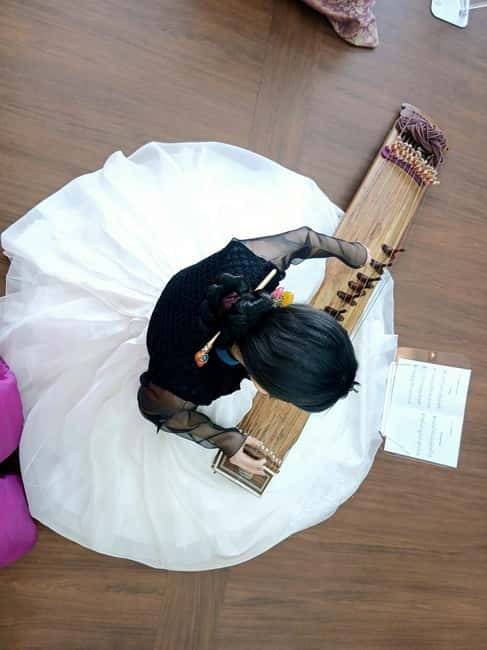
This class runs for 80 minutes, and it has an English-speaking instructor. The meeting point is listed as 3F, 43 Bukchon-ro 5ga-gil, Jongno-gu, Seoul. Since Bukchon is a walk-and-stairs kind of area, I recommend giving yourself a little extra buffer so you can arrive without rushing.
Eighty minutes is a sweet spot for a hands-on cultural activity. Long enough to learn a basic sequence and play through a recognizable song. Short enough that you won’t feel like you lost half a day.
If you’re pairing this with other Bukchon sights, plan your day so you’re not scheduling it as a stress test. You’ll need time to get ready in Hanbok, and you’ll want a calm arrival so the lesson starts well.
Price and Value: What $106 Buys You (and What It Doesn’t)
At $106 per person, you’re paying for more than a music lesson. Your price includes:
- the Gayageum class with a professional instructor
- Hanbok rental for the class duration
- professional photos while you play
That bundle is the value story. If you priced these items separately in Seoul, the costume and photo piece can easily tip the cost higher than you expect. Here, it’s packaged into one time block.
What it doesn’t promise is years of mastery. You’re not leaving as a conservatory-level player. You’re leaving with fundamentals, confidence, and the ability to reproduce a tune that feels meaningful. That’s a very fair trade for the time and cost, especially if this is your first encounter with Korean traditional music.
If you’re the type of traveler who likes experiences that produce a tangible memory—photos, a small keepsake, and a skill you can show—this price tends to make sense.






Who Should Book This Gayageum + Hanbok Class
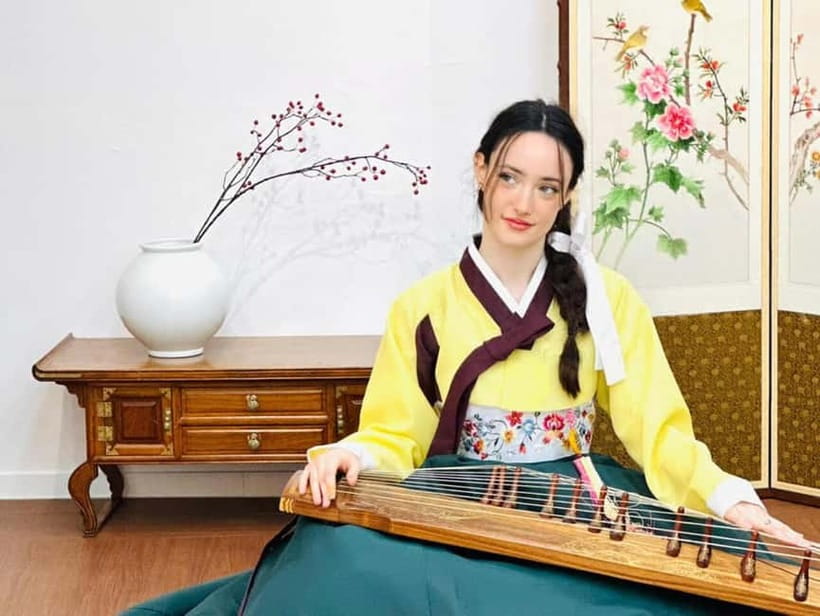
This is a great fit if you:
- want a hands-on culture activity in Seoul, not just another museum stop
- enjoy learning by doing, especially music
- like costumes and want photos that look authentic to the moment
- are a beginner and want patience, not pressure
It’s also a strong option for couples and friends. Music is easier when you’re learning with someone nearby, and the group playing at the end helps everyone feel included.
If you’re a serious musician looking for intensive technique training, this class may feel too short. The same goes for people who want a lecture-style experience rather than practicing. But if you want a fun, structured way to learn, dress up, and end with something recognizable, this one fits.
Tips to Get Better Photos and Better Sound
You will get professional photos, but you’ll still get better results if you show up prepared to participate. A few practical ideas:
- Wear comfortable bottoms and shoes that make getting ready easier. Hanbok dressing can take a bit of time.
- Move calmly during the lesson. If you’re tense, your hands will be, too.
- Listen closely to the instructor’s cues. Even small corrections can make a big difference in how the Gayageum sounds.
- If you don’t feel photogenic, don’t stress. In past sessions, even people who described themselves as not very photogenic still ended up with many photos they liked.
One more useful mindset: treat this as a performance you’re learning, not a test. By the end, you’ll be playing together, and that is the win.
Should You Book It? A Simple Decision Checklist
Book this class if you want:
- a hands-on Korean activity centered on a real instrument
- Hanbok rental plus professional photos as part of the package
- a beginner-friendly lesson with patient, step-by-step guidance
Skip it (or consider another activity) if:
- you hate being in photos or don’t want the costume portion
- you only care about deep musical technique and want hours of advanced training
For most first-time visitors to Seoul who like authentic culture but still want something fun and memorable, this is a strong pick. It’s short, guided, and ends with you playing something recognizable in a setting that feels very Seoul.
FAQ
How long is the Gayageum and Hanbok class in Seoul?
It lasts 80 minutes.
Where do I meet for the class?
The meeting point is 3F, 43 Bukchon-ro 5ga-gil, Jongno-gu, Seoul.
Is the class taught in English?
Yes. The instructor is English-speaking.
What is included in the price?
The class includes the Gayageum lesson with a professional instructor, Hanbok rental for the duration, and professional photos taken while you play.
Can I cancel for a refund?
Yes. You can cancel up to 24 hours in advance for a full refund.
Can I reserve without paying right away?
Yes. You can reserve now and pay later, keeping your travel plans flexible.


![[ Half Day ] Sightseeing, Top 3 spots of Seoul !! - Bukchon Hanok Village in 50 Minutes: What You Can Really See](https://1.visitseoulkorea.com/wp-content/uploads/half-day-sightseeing-top-3-spots-of-seoul-400x267.jpg)