REVIEW · EVENING EXPERIENCES
Seoul: Deoksugung Palace Night Tour
Book on GetYourGuide →Operated by Korea Guide Tour · Bookable on GetYourGuide
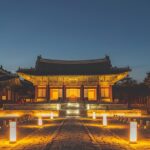
Deoksugung at night turns a palace visit into a lesson you can feel. You’ll walk through Korean royal spaces while your guide connects the Daehan Empire story to the architecture around you, including how it was shaped during Japan’s occupation.
I really like two things about this experience: the tight 2-hour flow (it keeps you from wandering lost), and the way the tour moves room by room through key palace spaces tied to King Gojong’s life. You’ll also get a practical, photogenic view during the darker hours, when palace walls and gates look more dramatic and calm.
One consideration: this is a smaller-group style experience that can be canceled on weekends/holidays or if participant numbers are too low, so you’ll want a backup plan for those days.
In This Review
- Key Highlights You’ll Actually Notice
- Why Deoksugung Palace Night Tour Hits in Just 2 Hours
- Start at City Hall: The Easiest Way to Get Oriented
- Enter Daehanmun Gate: Where the Politics Begin
- Junghwajeon: The Throne Hall Stop That Explains Power
- Seokeodang: The Most Beloved Building of Gojong
- Hamnyeongjeon: A Look Into the King’s Bed Chamber
- Jungkwanheon Hall: The “Cafeteria” Where Coffee Shows Up
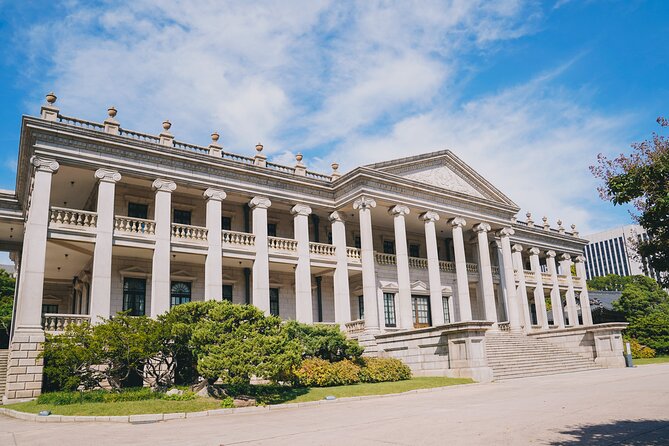
- The Architectural Mix: Oriental Meets Western, Explained Simply
- Guide Quality: Why the Best Tours Sound Like Real Teachers
- Views and Photos: Don’t Rush the Last Minutes
- Price and Value: What You Really Get for $38
- Who This Tour Suits Best
- Should You Book the Deoksugung Palace Night Tour?
- FAQ
- How long is the Deoksugung Palace Night Tour?
- Where do I meet the guide?
- Is the tour in English?
- What’s included in the price?
- What should I bring?
- Is it wheelchair accessible?
- Can I cancel for a refund?
- What if the tour doesn’t meet the minimum number of participants?
- When does it run, and can I choose my time?
Key Highlights You’ll Actually Notice
- Night atmosphere at Deoksugung: gates, corridors, and courtyards feel different after dark
- Guided focus on Daehan Empire history: the story of sovereignty under Japanese colonial pressure
- Room-by-room palace stops: Junghwajeon, Seokeodang, Hamnyeongjeon, and Jungkwanheon Hall
- Oriental meets Western architecture: you’ll see the mix, not just read about it
- Guides praised for clarity: Alan, Joy, and Sally Sung get called out for precise explanations and patient answers
Why Deoksugung Palace Night Tour Hits in Just 2 Hours
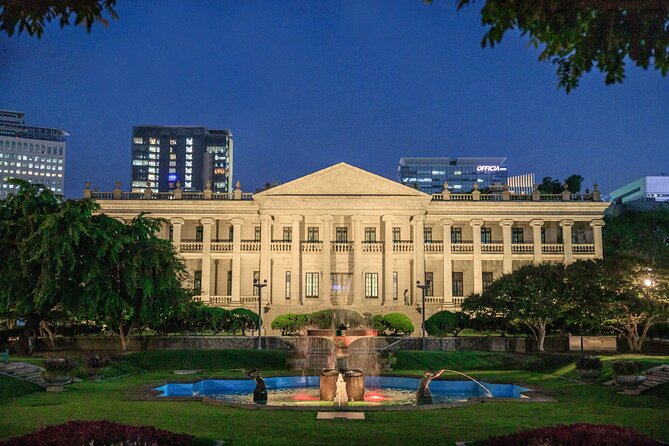
If you’ve ever left a palace tour thinking you saw a lot of buildings but didn’t connect them to real people, this one is built to prevent that. In about 2 hours, you move from gate to throne hall to the spaces tied to King Gojong’s daily world, and you get the historical thread that makes each stop make sense.
Deoksugung isn’t presented here as a “pretty palace photo stop.” It’s treated as a political stage during a rough stretch of Korean history. That’s the core of why this tour works: you’re not only looking. You’re learning the context behind the stone, beams, and floor plans—especially the way the palace reflects the Daehan Empire era and its struggle for control under outside pressure.
And because it runs at morning/night, timing matters. When you’re walking in low light, details you might miss in daylight—rooflines, layered gates, the feel of passageways—become easier to notice. Plus, you get that extra calm that makes a palace feel like a place you can actually think in, not just hurry through.
You can also read our reviews of more evening experiences in Seoul
Start at City Hall: The Easiest Way to Get Oriented
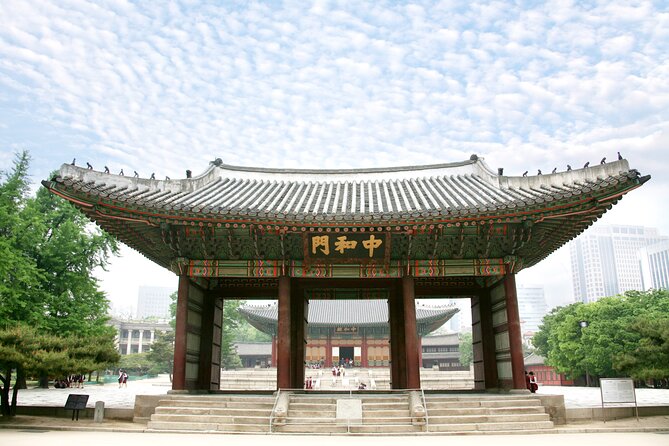
You meet outside Exit 1 of City Hall Station, then head together toward Deoksugung. I like this setup because City Hall is one of Seoul’s most straightforward hubs. You don’t need to figure out transfers or guess which entrance is easiest; you just show up, meet your guide, and go.
From the start, the guide sets expectations for what you’ll see next. You’ll go through the main gate, Daehanmun Gate, and that choice is important. In palaces, the gate isn’t just an entry. It’s the psychological shift from the city to royal space. Once you pass it, you’re in a different rhythm—slower steps, wider sightlines, and a clearer understanding of hierarchy.
Practical tip: wear comfortable shoes. Palace walking is uneven in places and you’ll be on your feet for the whole 2 hours. If your plan is photos, you’ll also want footwear that can handle brief stops without you standing on aching feet.
Enter Daehanmun Gate: Where the Politics Begin
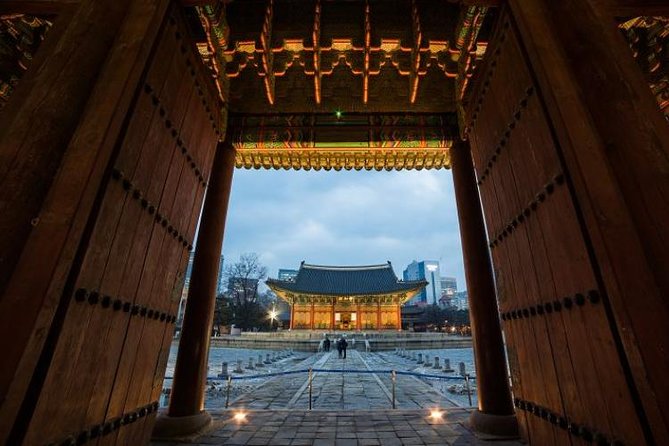
The tour’s first major moment is crossing Daehanmun Gate. This is where the experience becomes more than a stroll. Your guide frames Deoksugung Palace as the royal quarters for 13 years, a period that isn’t portrayed as distant history. It’s treated as lived reality—especially because the palace becomes tied to Emperor/King Gojong and the struggle to regain sovereignty during the Japanese occupation.
That’s why this gate matters. It’s the threshold between outside Seoul traffic and the internal world of royal authority. Once the story is in place, every next stop feels like it’s “answering” a question your guide has already set up.
If you care about Korean modern history, you’ll find this tour’s approach refreshing: it doesn’t dump dates on you and move on. Instead, it keeps connecting history to physical spaces—so you can picture what happened and where.
Junghwajeon: The Throne Hall Stop That Explains Power
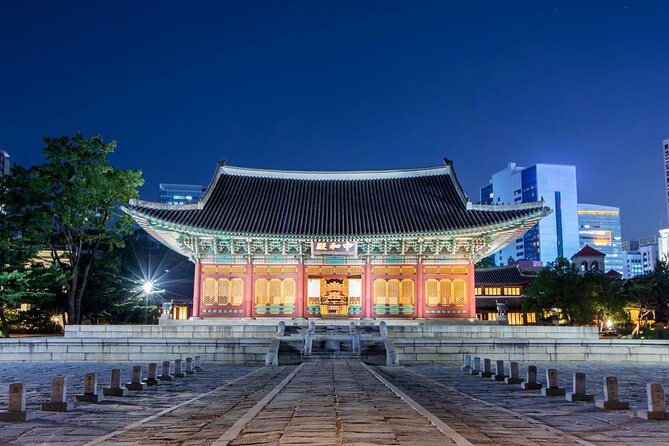
Next up is Junghwajeon, the main throne hall. This stop is where you’ll notice how traditional palace design signals authority. A throne hall isn’t just a room; it’s a layout meant for ceremony and hierarchy. When your guide explains how the space functioned, the size and position start to feel logical instead of random.
What I like here is the balance. The tour doesn’t pretend that architecture is neutral. It points out that spaces like this were used to project rule, identity, and legitimacy—especially at times when political reality was shifting.
Possible drawback to keep in mind: throne halls can feel crowded or visually repetitive if you’re expecting constant dramatic changes every minute. The real value is in the guide’s narration. If you pay attention to what the guide is connecting, Junghwajeon becomes one of the most meaningful stops.
Seokeodang: The Most Beloved Building of Gojong
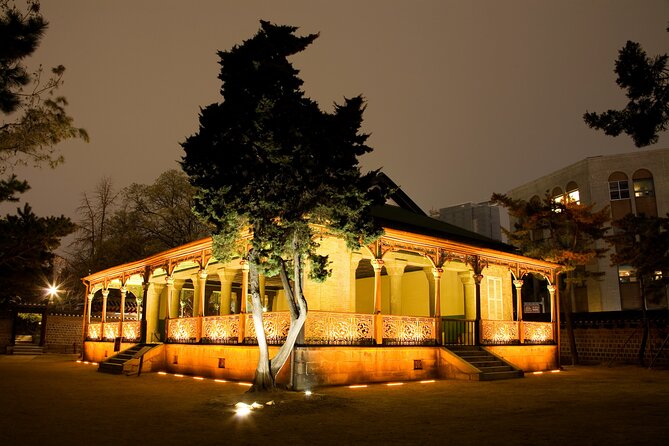
After the throne hall, you’ll visit Seokeodang, described as the most beloved building of King Gojong. That label is useful, because it gives you a different angle on the palace. Instead of only thinking about public ceremony, you get pulled toward the human side of the ruler’s experience.
This is one of those stops that’s easy to skim if you’re just walking and photographing. But with a good guide, Seokeodang turns into a story about preferences, comfort, and meaning. You’re not only seeing a palace room—you’re learning how personal taste and political life can live in the same building.
And at night, you may catch different moods on the same structures: the glow of ambient light, the way shadows emphasize roof curves, and the sense that you’re viewing a quieter, more reflective side of royal space.




Hamnyeongjeon: A Look Into the King’s Bed Chamber
Then comes Hamnyeongjeon, the king’s bed chamber. This is where the tour shifts again, moving from public power toward private life. A bed chamber is not a typical “must-see” for people who only want big highlights, but it’s exactly the kind of stop that helps you understand what you’re looking at.
When your guide ties Hamnyeongjeon into King Gojong’s story, you start to see how the palace functioned as both a home and a political symbol. That double role is key to understanding Deoksugung during the Daehan Empire era—especially in the period when sovereignty was under serious pressure.
One consideration: if you dislike emotional or heavy historical context, Hamnyeongjeon may feel like the emotional pivot of the tour. The facts are historical, not sensational, but the themes are serious.
Jungkwanheon Hall: The “Cafeteria” Where Coffee Shows Up
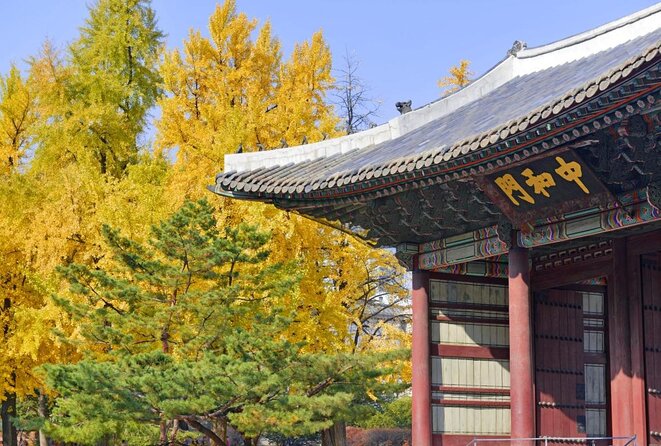
Finally, you’ll reach Jungkwanheon Hall, described as a cafeteria where the emperor enjoyed coffees. This stop is fun, but it’s also smart. It shows you how daily life and foreign influence could intersect in palace settings.
The coffee detail isn’t just a quirky fact for a photo. It’s a clue that the Daehan Empire period included contact with Western ways of living, not in a vague sense, but in recognizable everyday routines. For many visitors, it’s the first time Western influence clicks into the palace context instead of feeling like an external footnote.
That’s also where the tour’s promise about “Korean-style architecture where it meets Western influence” becomes real. You aren’t told to imagine it. You’re guided through the space where that mix is meant to be visible.
The Architectural Mix: Oriental Meets Western, Explained Simply
One of the biggest reasons I recommend this tour is that it teaches you how to look. Many palace visits stop at naming buildings. This one helps you notice what the building design is doing—how Korean palace patterns sit alongside Western-influenced elements.
When you’re walking the grounds, you’ll likely catch contrasts in proportions, design choices, and the overall feel of how spaces are organized. The guide connects those observations to the broader historical moment, so you understand this isn’t random decoration. It’s a physical record of a period when Korea was negotiating identity under pressure and change.
This is a great fit if you’re the type who likes your history practical. Instead of memorizing a timeline, you’ll leave with a mental map: gate → main ceremonial space → personal spaces → daily-life space. By the time you finish, you’ll know how to read the palace like a story.
Guide Quality: Why the Best Tours Sound Like Real Teachers
A tour lives or dies on the guide’s storytelling. The English guides here seem to be especially strong on clarity. Names that have come up include Sally Sung, Joy, and Alan, and the common thread is precision—answers that actually address questions, not vague “because history” explanations.
I value that because palace visits can easily become background noise. A strong guide turns the silence into meaning. You’ll learn why a room matters, what a layout suggests, and where the emotional weight of the Daehan Empire story sits inside the architecture.
If you’re traveling with someone who thinks they hate history, this tour is a fair test. The room-by-room structure gives even non-history people handles to hold onto.
Views and Photos: Don’t Rush the Last Minutes
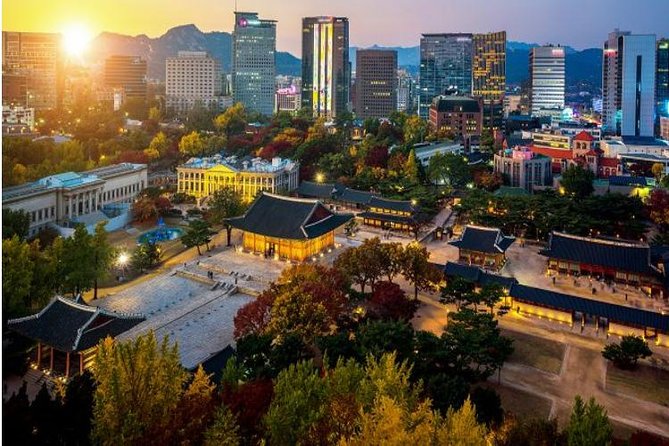
The tour ends with the option to stay behind and explore at your own pace. That matters because Deoksugung can look different depending on where you stand. If you want photos, you don’t have to treat the whole experience like a sprint.
I suggest using the time after the guided portion to do two simple things:
- Walk slowly and compare what the guide pointed out with what you notice on your own.
- Take photos from angles you can’t easily stop for during the group walk.
Night photography in a palace courtyard can be tricky, but it’s also where the lighting makes everything feel cinematic. Even if you don’t want fancy shots, you’ll likely get better “this is what I remember” images when you have a few minutes to breathe.
Price and Value: What You Really Get for $38
At $38 per person for 2 hours, you’re paying for three things: a live English guide, an entrance fee, and a guided interpretation that keeps you from wandering without direction.
Is it cheap? Not really. But it’s also not trying to be a long, multi-hour mega tour. You’re buying focused time plus paid access plus someone to translate the palace into a coherent story.
For this kind of experience, value comes from how much you walk away understanding. If you’ve ever felt like palace tickets were just a “see it and move on” purchase, this tour changes the equation by connecting each stop—Daehanmun, Junghwajeon, Seokeodang, Hamnyeongjeon, and Jungkwanheon—to the Daehan Empire period and the story of sovereignty under Japanese occupation.
Who This Tour Suits Best
This is a strong choice if you:
- Want palace history that connects to modern Korean context
- Enjoy guided walks where you actually understand the spaces you’re seeing
- Prefer shorter, high-focus tours over all-day museum marathons
- Like architecture with a story behind it—especially the Korean-and-Western mix
It’s also a good option for couples and solo travelers because you’ll have a clear path and a guide to keep things moving.
If you only want a quick sightseeing loop with minimal narration, you might find it heavier than you expect. But if you’re curious, the emotional weight is handled as part of understanding the period, not as sensational drama.
Should You Book the Deoksugung Palace Night Tour?
I think you should book this tour if you want a palace visit with a narrative spine. The format is tight, the stops are meaningful, and the guide-led connection between the Daehan Empire story and the palace layout is the main reason it’s worth your time.
Book it especially if you’ll be in Seoul for a short window and want something that feels more “understand the place” than “collect the landmarks.” The added benefit of the night setting is real too—your photos and impressions will likely look calmer and more dramatic than a rushed daytime visit.
Hold off only if you’re set on weekends/holidays and can’t handle the possibility of cancellation when participant numbers are low. Otherwise, this is one of those experiences that makes Seoul’s palaces feel like living history you can actually place in your mind.
FAQ
How long is the Deoksugung Palace Night Tour?
The tour lasts 2 hours.
Where do I meet the guide?
Meet outside Exit 1 of City Hall Station.
Is the tour in English?
Yes, it includes a live English-speaking guide.
What’s included in the price?
You get a local tour guide and an entrance fee.
What should I bring?
Wear comfortable shoes.
Is it wheelchair accessible?
Yes, the tour is listed as wheelchair accessible.
Can I cancel for a refund?
Yes. You can cancel up to 24 hours in advance for a full refund.
What if the tour doesn’t meet the minimum number of participants?
If the number of participants is under 4, the tour will be canceled. You’ll be informed via WhatsApp.
When does it run, and can I choose my time?
It runs at times based on availability. Check starting times when you reserve. Reservations also may not be confirmed on weekends and holidays.