REVIEW · FOOD
10day Small Group Discover Korea Tour : History, Food and Culture
Book on Viator →Operated by Here Korea Travel · Bookable on Viator
Ten days in Korea, nonstop and delicious. The magic here is how the trip strings together Jeju volcanic weirdness, long-studied heritage towns, and the sobering DMZ in one smooth plan with an English-speaking guide keeping the pace sane. You also get the bonus of optional choices along the way, plus restaurant guidance so you’re not guessing what to eat after a full day of walking.
I especially like the way this itinerary mixes big-name sights with hands-on culture time. The Golgulsa Temple Stay adds real calm (and a break from the sightseeing loop), and the final stretch in Seoul includes both the comic show Cookin’ NANTA and a small-group k-cooking class. One drawback: you’re moving almost daily, and weather can affect flights on day one, so you’ll need a flexible mindset—especially if you’re the type who hates schedule changes.
In This Review
- Key things that make this tour worth your time
- Jeju Island: from Dokkaebi Road to lava tubes and sea views
- Flying to Busan: seafood markets, a skywalk, and a temple by the water
- Gyeongju’s Silla glow: tombs, observatories, and night ponds
- From Maisan to Jeonju: horse-ear mountains, 80 stone pagodas, and real food time
- Seoul with stops that keep you from feeling lost: Suwon to Gyeongbokgung to hanok alleys
- DMZ: the rules matter, so go early and stay ready
- Myeongdong finale: NANTA, a small k-cooking class, and Seoul street food
- Value for $3,800: what you’re really buying with this package
- Who should book this tour, and who might not love it
- Should you book this 10-day Korea tour?
- FAQ
- What does the tour start time and day schedule look like?
- Where does the tour begin?
- Does the price include flights within Korea?
- Are meals included?
- Is there an overnight temple experience?
- Are entrance fees included?
- Is the tour private or small group?
- What should I know about visiting the DMZ?
Key things that make this tour worth your time
- Jeju’s volcanic lineup: lava tubes, columnar rock formations, and beaches that look like they belong on another planet
- Food built into the days: market visits, planned meals, and local tastings instead of random snack roulette
- Heritage with context: UNESCO stops and Silla-era sites paced so you don’t just collect photos
- One night at Golgulsa: a genuine culture beat, not just a quick temple stop
- DMZ access with rules: you’ll learn how tickets and timings work in a real military setting
- Seoul at night and in markets: palace views plus places like Kwangjang Market and Myeongdong
Jeju Island: from Dokkaebi Road to lava tubes and sea views
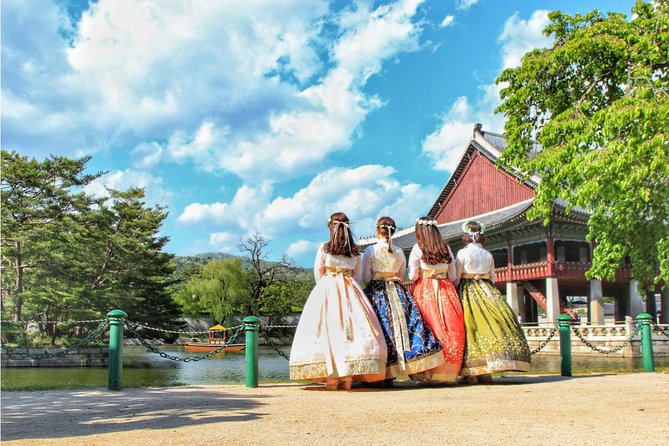
Jeju kicks off the whole trip with a strong theme: the island is basically a geology and imagination playground. Day 1 blends oddball fun with scenic breaks, and it does it early enough that jet lag doesn’t fully derail your day.
You start with Dokkaebi Road (Goblin’s Road), the one locals swear by where the slope feels like it flips when you do a simple experiment—turn the engine off or roll a ball and watch how it behaves. It’s the kind of silly, memorable moment that makes a long itinerary feel lighter. Then you head into art and nature with stops like ARTE MUSEUM JEJU, a video and light arts museum that leans heavily on atmosphere, and Spirited Garden, a bonsai park tied to Korean tourism awards and celebrity visits.
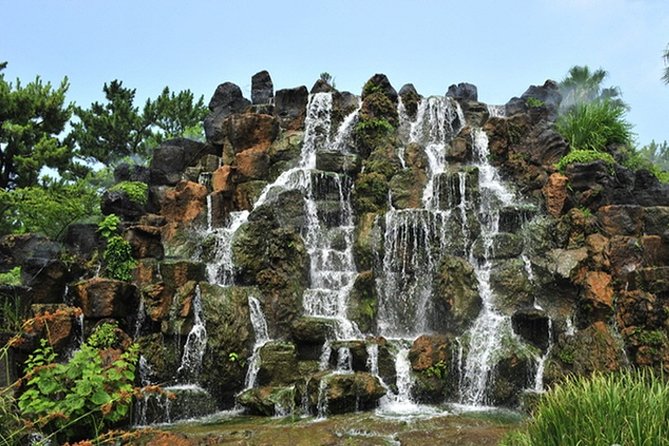
From there, the pace turns outward to the island’s coastline. Hyeopjae Beach is a classic “walk a bit, relax a bit” stop, and you can bring a swimsuit or just choose a cafe with a sea view. A geology hit follows at Jusangjeollidae, known for joint columnar formations—exactly the sort of volcanic leftover that makes Jeju feel different from the rest of Korea. Day 1 ends with Cheonjiyeon Falls, a smaller waterfall stop, but the point here is variety: not only big hikes, but quick nature resets.
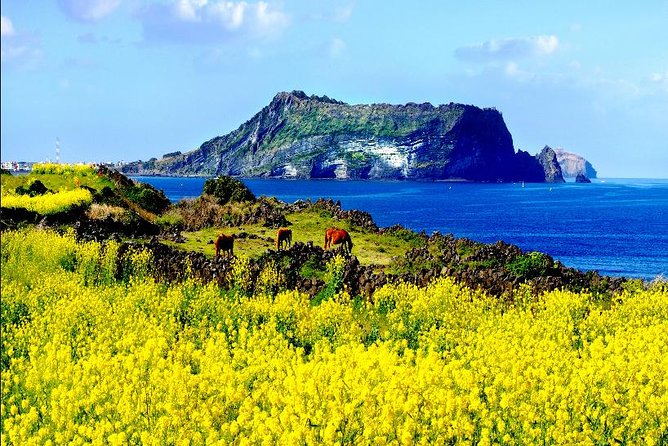
Day 2 doubles down on the volcanic side. Manjanggul Cave is treated as one of the longest and finest lava tubes in the world, and cave time is your built-in “slow down” portion—your feet get a break, and the scenery is entirely different from beaches and roads. Next is Sangumburi Crater, described like a stadium when viewed from above, which makes it easier to imagine the scale once you’re standing near it. Then you get Gwangchigi Beach, notable for soft black sand formed from basalt weathering—again, that distinct Jeju look.
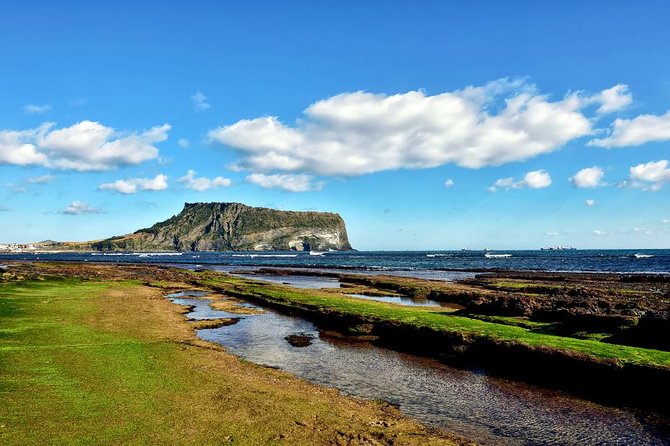
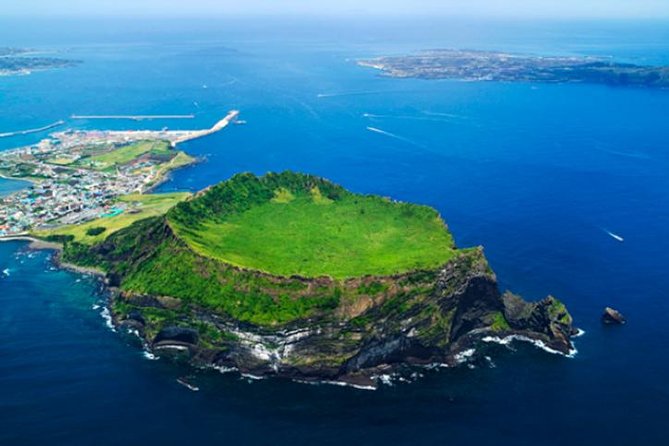
The best-known crater cone stop is Seongsan Ilchulbong (Sunrise Peak). Even if you’re not there at sunrise, climbing to the top and looking into the crater is still the kind of payoff that makes earlier walking feel worth it. Then Jeju culture shows up at Seongeup Folk Village, positioned as a place preserving indigenous Jeju culture and handed-down properties. You finish the day with Dongmun Market, built after liberation in 1945, which is a good place to eat casually because it’s busy and full of inexpensive variety.
Practical note for day-to-day enjoyment: Jeju weather can swing. Comfortable shoes help here, but also bring a light layer; caves and coast stops can feel cooler than you expect.
You can also read our reviews of more food & drink experiences in Seoul
Flying to Busan: seafood markets, a skywalk, and a temple by the water
After Jeju, you hop by domestic flight to Busan, and the energy changes fast. Busan feels like Korea’s “many moods in one city”: coastal views, film-street snacks, and major markets, all within easy reach of each other.
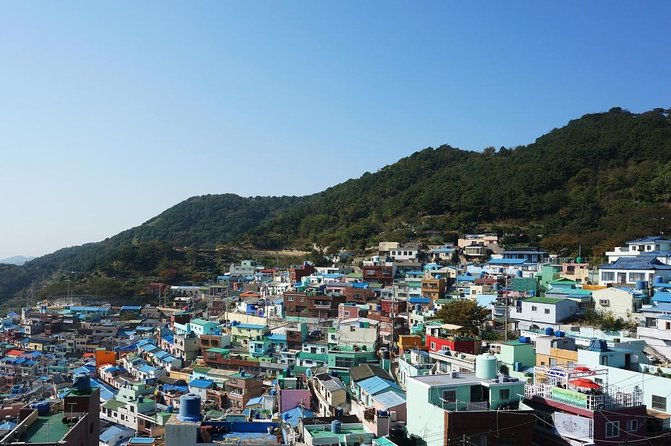
Your Busan start is Gamcheon Culture Village, built in a staircase-fashion layout up a coastal mountain. It’s the kind of place that gives you photo moments without needing museums every hour—because the streets and houses do the work for you. Next comes Songdo Skywalk, described as popular with locals for being clean, and it pairs the skywalk with the area’s ocean-cable-carr style options (the cable car is optional). Even if you skip the optional part, the combination of walking and sea air is the point.
Food and shopping take center stage at BIFF Square, a filming festival location that’s also a street-food area. The “must try” snack here is sweet pancakes, plus it’s a good place to browse without needing a plan. Then you pop by Jagalchi Market, billed as Busan’s biggest fish market where you can see items alive or dead—an intense experience if you’re sensitive, but also one of the most real-market stops in the whole itinerary. If you hate crowds, keep your time short and focus on watching rather than stressing.
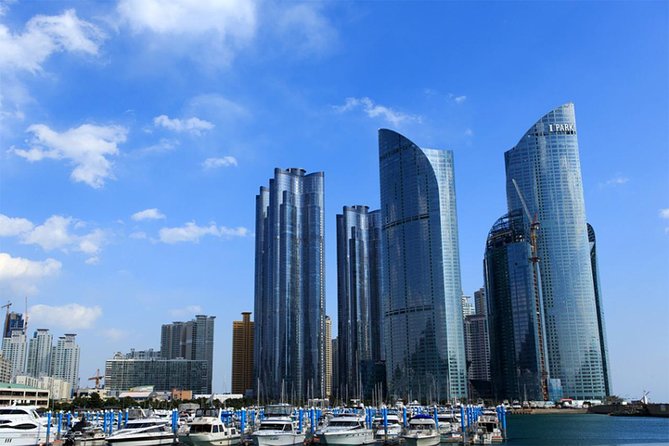
Even the bridge stop is designed for mood. You’ll visit Busan’s long double-decker bridge, and at night the area is described with possibilities like light events, fireworks festivals, and drone events. The specific event can depend on what’s happening while you’re there, so keep expectations flexible and treat it as atmosphere time.
Finally, you end the Busan day with Haedong Yonggungsa, described as Korea’s most beautiful temple in this framing, and specifically because it sits by the seashore. You get that rare “temple plus ocean” harmony, which is a nice contrast after the intensity of the markets.
If you’re deciding how to prepare: this is a day where you’ll want a small bag you can carry easily, since you’ll hop between viewpoints and markets.
Gyeongju’s Silla glow: tombs, observatories, and night ponds
Once you reach Gyeongju, the tour shifts from coastal energy to deep heritage—Silla-era history, and monuments you can feel even if you’re not a history scholar. The pacing here matters: you move between sites that complement each other instead of stacking similar temples back-to-back.
A standout temple day includes Golgulsa Temple, placed just outside Gyeongju. It’s linked to Templestay programs running 365 days a year, and this is also where your overnight temple stay fits. That 1-night temple program changes how you experience the region because it breaks the day-tripping pattern. Instead of always “go, look, leave,” you get time to slow down with the setting.
From there, you go to classic Shilla spiritual landmarks: Bulguksa Temple is described as a 1000-year-old Buddhist temple from the Shilla Kingdom, and Seokguram follows with a highlight description of a famous Buddha statue. These stops work best if you give yourself permission to move slower than you think—temples and stone art can absorb you, especially after a morning of travel.
The next day leans into archaeology and science history. Daereungwon Tomb Complex includes multiple ancient tombs spread around different areas, and this variety helps you see the scale of the site. Then Cheomseongdae appears as an astronomical observatory, noted as the oldest surviving astronomical observatory in Asia. Even if you don’t care about astronomy, the fact that it’s built for observation gives you a different lens for viewing the landscape.
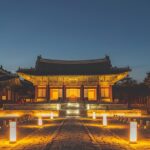
Gyeongju National Museum adds a straightforward cultural anchor by housing Silla artifacts, with mention of a newly renovated Silla Art Gallery and Silla History Gallery lobby. Then you get a “night is the secret ingredient” stop: Donggung Palace and Wolji Pond, described as famous especially at night. You also see Woljeonggyo Bridge, framed as part of a night-view course. This is one of the best ways to keep the itinerary fresh: you end heritage days with scenes that reward evening light, not just daytime photos.
From Maisan to Jeonju: horse-ear mountains, 80 stone pagodas, and real food time
Day 6 is a transition day that prevents the trip from feeling like only temples or only cities. You start with Maisan Mountain, described as looking like a horse ear, and you stop by Maisan observatory before continuing toward Tapsa Temple.
Tapsa Temple is highlighted for having over 80 stone pagodas built by Lee Gapyong, a retired scholar—this detail is useful because it gives the site a clear story rather than feeling random. You’ll also notice the description leans on the number and variation of pagodas, which means it’s a place where walking slowly and looking closely is the right move.
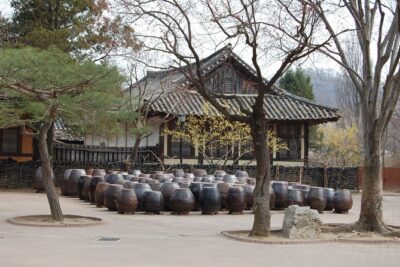
Then you head to Jeonju Hanok Village, and this is the “food city” moment of the tour. You’re set up to try bibimbab, and at night you do a traditional rice wine table. The itinerary also gives you some free time after “three places below,” so you’re not trapped in guided mode the whole evening. This balance is a big deal: it helps you manage energy and avoid souvenir fatigue.
Jeonju’s culture stops keep it varied. Gyeonggijeon Shrine includes the portrait of King Tae-jo, founder of the Joseon dynasty, and the shrine’s erection date (1410) is part of the info package. Jeondong Catholic Church is included with details about Roman Catholic martyrs and a French priest. You also get scenic viewpoint time at Omokdae and Imokdae, described as observatories where you can look down on the hanok village with the naked eye.
To close the day, the tour takes you to 옛촌막걸리 삼천점, described as a Korean-style pub recommended by CNN. The practical hook is how the table experience works: the more rice wine you order, the more side dishes appear—up to three. For value, this is smart because it turns a dinner into an experience where you control quantity without having to plan every single dish.
Seoul with stops that keep you from feeling lost: Suwon to Gyeongbokgung to hanok alleys
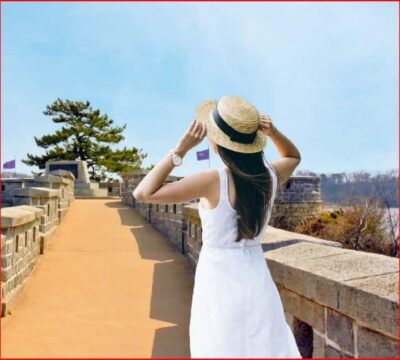
Seoul is where many tours go big, but this one threads the city into a sequence you can actually process. You start by traveling from the previous region, and on the way you stop at Suwon Hwaseong Fortress, which is UNESCO-listed in the provided details.
The Suwon portion also gives you a food reward. You visit the Suwon fried chicken street, described as lined with 20 to 30 fried chicken restaurants. The special note is that the chicken is marinated in a Korean BBQ-style sauce based on a BBQ sauce profile. Even if you don’t eat at every stall, this is a great place to compare flavors and choose what fits your mood.
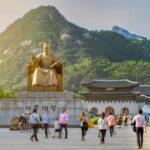
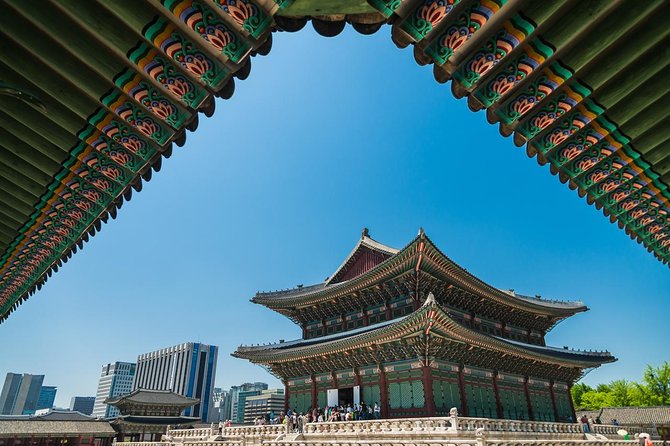
Once you reach Seoul, day 8 is the classic “start with a grand palace, finish with city views” formula, with enough markets to keep it practical. You visit Gyeongbokgung Palace, framed as the first and largest Joseon Dynasty palace built in 1395. It takes about two hours in the plan, which is just long enough to see the major areas without feeling rushed.
Next is Insadong, a shopping street with lots of art galleries and traditional items. It’s ideal for small souvenirs and for getting your bearings in a neighborhood that feels designed for wandering. Then you stroll Bukchon Hanok Village, described as hundreds of hanok houses packed closely together. That “labyrinth” feel—sharing walls, tight alleys—is exactly why this stop works: it gives you a Korea you can feel in your feet.
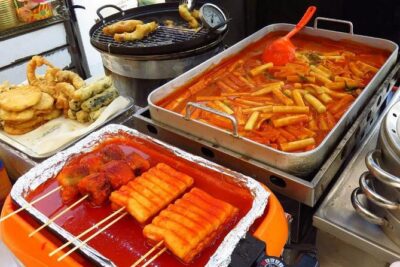
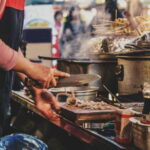
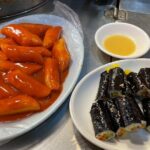
Food comes back at Kwangjang Market, described as Korea’s first permanent market. You can find more than 100 kinds of food, including mungbean pancakes, Korean donuts, gimbab, ddeokbbokki, and fruit juice. Even if you only eat two things, the market does what it should: it gives you variety without making you choose one restaurant and stick to it.
You end with height and a temple beat. N Seoul Tower provides a 360-degree view over the Seoul metropolis, with the tower described at nearly 480m above sea level and including Namsan Mountain and the tower height in the framing. After that, you visit Jogyesa Temple, described as the first temple built in the center of Seoul and known for festivals depending on the season, especially summer and autumn.
Tip that keeps this day enjoyable: build your day around your energy. If your legs are tired, do Bukchon slowly and use the markets to rest your brain.
You can also read our reviews of more tours and experiences in Seoul
DMZ: the rules matter, so go early and stay ready
Day 9 shifts tone. The DMZ isn’t a typical “see it, take a photo, leave” stop. It’s a military environment with procedures, and the tour description makes it clear you need to follow the plan closely.
You start with DMZ entry, and there are explicit points: there’s no reservation for DMZ tickets, and it’s first come, first served, with a note that you must meet early. That means your biggest preparation is not about shoes or snacks—it’s mindset. Treat it like a morning exam: show up on time and don’t assume you can “figure it out later.”
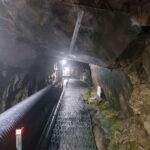
Then you visit The Third Tunnel, sometimes called the tunnel of aggression or third invasion tunnel in the provided description. You can go down into the tunnel and inspect it, which is likely the most physical part of the DMZ sequence. The tour frames it as shocking because it was dug after the Korean War by North Korea.
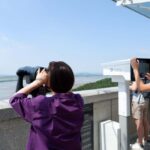
Next comes Dora Observatory, described as a highlight where you can see North Korea with your naked eyes and binoculars. It’s tied to views of Gaeseong city and an industrial complex where the tour says cooperation happened between North and South.
Tongil Park (Unification Park) is the last DMZ stop described as the only village in civilian control zone where people live. You can buy DMZ-related items there, and it’s part of the DMZ shuttle route. Finally, you do Gamaksan Chulleong Bridge, described as a Korean War battlefield area turned into a mountain locals visit. The stop includes a short hike (about 10 minutes) leading to a suspension-view area in the framing.
This day is powerful, and it’s also where you’ll benefit from the guide’s calm logistics help. If you’re sensitive to rules, keep your expectations simple: you’re going to do what they say, in the order they say, and you’ll get the access.
Myeongdong finale: NANTA, a small k-cooking class, and Seoul street food
Day 10 is built to end with fun and flavor, not more lectures. It starts with Cookin’ NANTA (Myeongdong), a none-verbal comic show that uses Korean traditional rhythms in a fusion style. It runs about 1 hour 30 minutes, and the “none verbal” format is one of the reasons this show works well in mixed-language groups.
Then you switch from watching to making: a small group k-cooking class in Seoul. The menu changes every month, but the tour lists examples like bulgogi, gimbab, kimchi, and pancakes. The class is about three hours, so it gives you a real activity break, and it’s one of the best ways to remember the trip after you’re back home and craving Korean flavors.
After cooking, the itinerary brings in a walking-view stop at Seonyudo, Gunsan, described for Han River panoramic views of Seoul. Even if you’re not a formal “viewpoint person,” this is a nice chance to let your body recover from palace steps and market stairs.
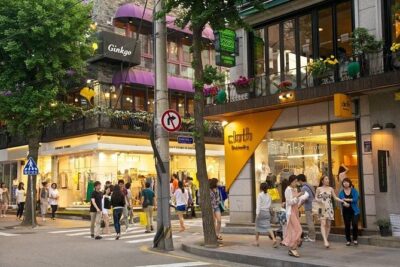
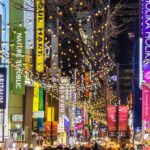
You finish with Myeongdong Shopping Street, described as a must-visit zone with street food vendors and shopping, plus a lively Seoul feel. Since this is open-ended time, it’s where you can turn your “I’ll buy that later” list into real purchases—without forcing it into earlier days when you’re already tired.
Value for $3,800: what you’re really buying with this package
Yes, it’s $3,800 per person. But here’s the math logic that matters: you’re paying for transportation between major regions, a trained guide, most admissions, and a large chunk of your meals—so you’re not piecing together domestic flights, hotel nights, museum tickets, and a daily food strategy on your own.
In the included setup, you get:
- Domestic flights for Gimpo → Jeju and Jeju → Busan
- 9 nights of lodging at 3.5–4 star level, plus a 1-night temple stay at Golgulsa
- An AC vehicle and an English-speaking tour guide
- Entrance fees on the plan
- 7 breakfasts, 7 lunches, and 2 dinners (so you’re not spending every evening making decisions)
Where that adds value for you: it reduces decision fatigue. You can focus on enjoying the differences between Jeju, Busan, Gyeongju, Jeonju, and Seoul rather than hunting down buses, tickets, and reservation systems day after day.
Who should book this tour, and who might not love it
This tour is a strong fit if you want structure without losing variety. It’s especially good for people who like food, history sites, and a final Seoul mix of culture and shows. It also seems to work well for multi-generational groups, mainly because the guide-led pacing and the included meals take pressure off day-to-day choices.
It might feel like too much if you prefer slow travel and long unplanned afternoons. The schedule moves from island to coast to heritage cities to Seoul and ends with DMZ. If you hate early mornings or you struggle with itinerary changes caused by flight weather, then read the pace carefully before you commit.
Should you book this 10-day Korea tour?
If you want a single plan that hits Jeju geology, Busan markets, Gyeongju Silla sights, Jeonju food culture, and Seoul plus DMZ, this is the kind of trip that saves you time and mental effort. The biggest reasons to say yes are the guide-led flow, the mix of included meals, and the temple stay that adds a real change of tempo.
If your travel style is slow and you dislike mornings with rules (DMZ days), you may prefer a more flexible, self-paced approach. But for most people who want maximum Korea in 10 days with fewer headaches, this one makes practical sense.
FAQ
What does the tour start time and day schedule look like?
The tour starts at 9:00 am. The overall duration is about 10 days, with day-by-day sightseeing and included meals.
Where does the tour begin?
The tour is based in Seoul, and it includes a flight from Gimpo Domestic Airport to Jeju on the first day.
Does the price include flights within Korea?
Yes. Domestic flights are included for Gimpo → Jeju and Jeju → Busan.
Are meals included?
Yes. The tour includes 7 breakfasts, 7 lunches, and 2 dinners. Meals not planned are not included.
Is there an overnight temple experience?
Yes. There is 1 night of Golgulsa Temple Stay included.
Are entrance fees included?
Entrance fees on the plan are included.
Is the tour private or small group?
It’s listed as a private tour/activity, meaning only your group participates.
What should I know about visiting the DMZ?
The tour notes that there are no reservations for DMZ tickets, and it follows a first come, first served approach, with a meeting time early for the group.