Food tours are common. This one has a story engine.
At Kwangjang Market, you’re not just grazing—you’re getting a guided plan through one of Seoul’s most famous traditional-food areas, with English help to steer you toward the right stalls. What I like most is the sheer variety packed into a short window, plus the way the guide ties what you’re eating to modern Korea—stories about the peninsula’s division and the military, shared from the guide’s own reserve-forces experience.
The one watch-out is simple: it’s food-heavy. Come with a real appetite, because the pacing and quantity are part of the experience.
In This Review
- Key things to know before you go
- Kwangjang Market in 2 hours: why this plan works
- The tastings: what’s included and how it adds up
- Your guide’s role: more than ordering help
- Stop at Kwangjang Market: what to expect on the ground
- The pace and food strategy: how to get the best experience
- Learning modern Korea through food: what you’ll actually take away
- Logistics that matter: meeting point, ticket, and group size
- Price and value: is $100 worth it?
- Who this tour suits best (and who should skip it)
- Weather reality: the one practical condition
- Should you book Hidden Stories & Flavors at Kwangjang Market?
- FAQ
- FAQ
- How long is the Hidden Stories & Flavors Market Food Tour in Seoul?
- Where do I meet for the tour?
- What food is included during the tour?
- Is the tour offered in English?
- How big is the group?
- Do I need an admission ticket for the market?
- Do I need to book ahead?
- Is the tour canceled if the weather is bad?
- What’s the cancellation window?
Key things to know before you go
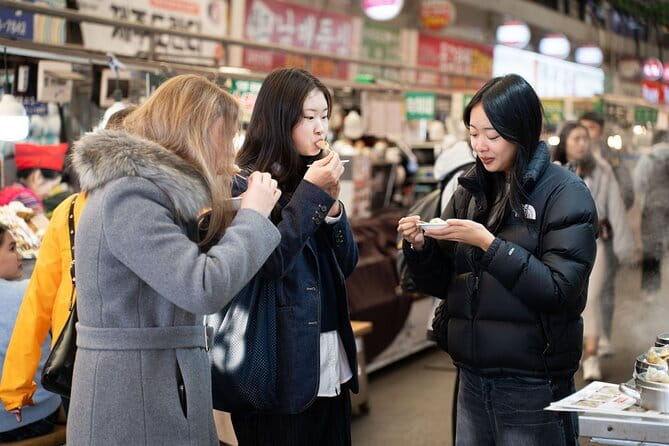
- Kwangjang Market, 2 hours: the tour concentrates on one major market for a focused experience.
- Small group max 10: less crowd pressure, more guide attention, and smoother ordering.
- Fixed tastings that add up: dumpling, meatball, Korean hotdog, rice roll, spicy rice cake, and fish cake, plus dessert/snacks.
- Stories included, not just snacks: you’ll hear context about modern Korea and the realities of the peninsula division from the guide’s perspective.
- Come hungry, stay hungry: the tour is built around multiple stops and multiple bites.
- Mobile ticket + near public transit: easy to start once you find the meeting point at 407 Dongho-ro.
Kwangjang Market in 2 hours: why this plan works
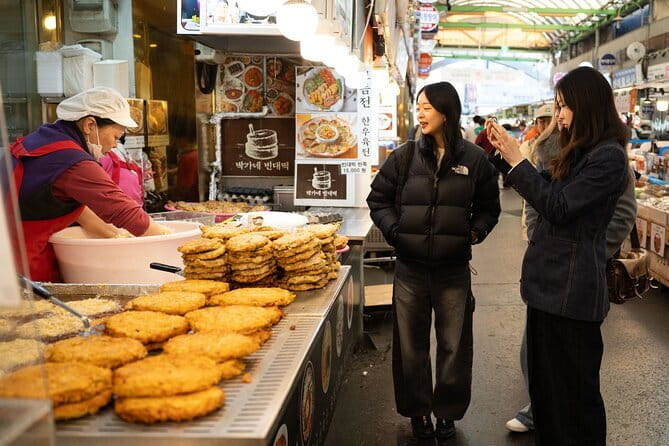
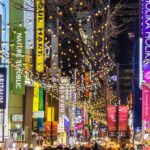
If you’ve ever wandered a Korean market and felt your brain go into overload mode, you’ll get why this tour format is smart. Kwangjang Market is the kind of place where everything smells good and everything looks worth trying. Left alone, you can waste time debating what to order (and still end up with a weird mix).
This tour keeps you moving and keeps your choices grounded. Instead of a random stroll, you get a guided route that helps you sample a rounded set of street-food favorites. The group stays small (up to 10), which matters more here than in some big-city tours, because ordering and timing are half the game.
And yes, you’ll eat a lot. You’re taking on multiple categories—savory bites, chewy-and-satisfying classics, and the spicy-sweet hits that make Korean street food memorable.
You can also read our reviews of more food & drink experiences in Seoul
The tastings: what’s included and how it adds up
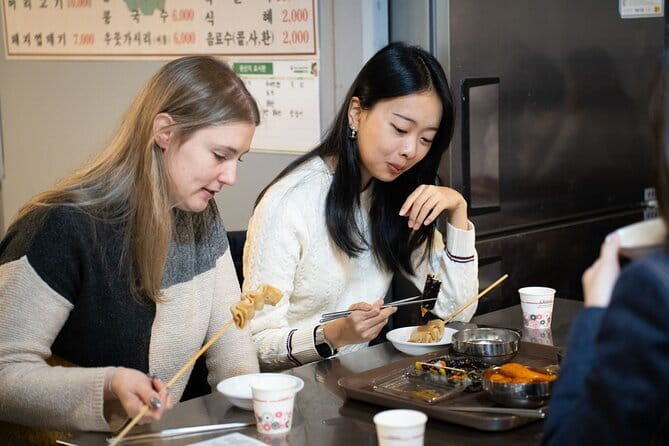
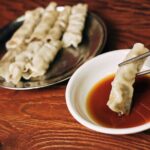
The best way to understand the value is to look at what’s actually on the menu. Your tour includes lunch and snacks designed to cover a spread, not just one theme.
Lunch tastings include:
- Dumpling
- Meatball
- Korean hotdog
- Rice roll
- Spicy rice cake
- Fish cake
Also included:
- Bottled water
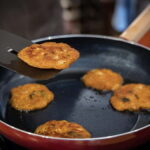
- Snacks: sweet Korean pancake and a fish-shaped bun
That’s a full “street-food lunch” plus dessert-style extras. For $100, the math only works if you actually try everything you’re given. The tour is built so you can—because it’s paced like a tasting route, not a single sit-down meal. You’re paying for the selection, the ordering help, and the way the guide gets you to good vendors efficiently.
Also, this is a nice way to taste variety without turning your day into a planning project. You don’t need to research which stall does the best version of each item. You just follow the guide and eat what makes sense for the order and the timing.
Your guide’s role: more than ordering help
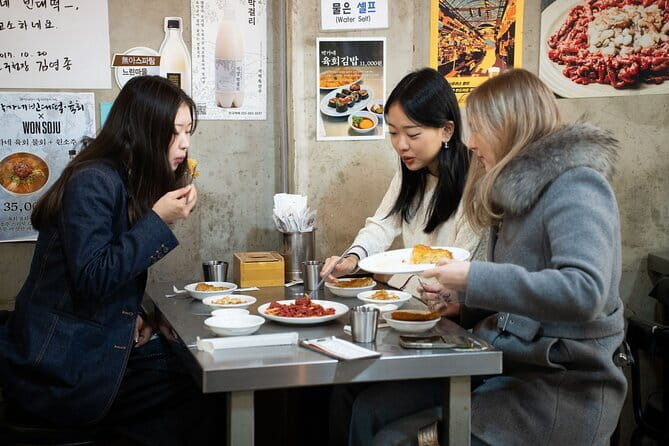
The guide here isn’t limited to pointing at food. The tour is also about modern Korea—how people think about the peninsula’s division, and how the military shows up in everyday perspective.
From the information shared in the tour overview and supported by guide-focused comments from past participants, the guide (Taesong) frames these topics from personal experience as a member of the reserve forces. That kind of perspective doesn’t make the tour political for the sake of it. It gives you context for what you’re hearing in Seoul: how people talk about safety, duty, and the north-south reality without turning it into a textbook lecture.
Practically, the guide also solves two everyday problems:
- Too many choices: you can’t taste everything, so you need a selection strategy.
- Getting your footing: even when you know the city, moving through a market is easier with a plan.
If you want an experience that’s both delicious and meaningfully explained, this is the combination you’re looking for.
Stop at Kwangjang Market: what to expect on the ground
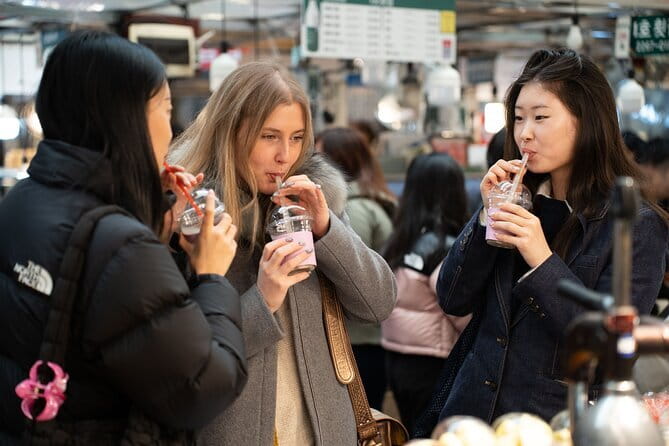
This is a one-stop tour: the action happens at Kwangjang Market for about two hours. With admission free for the market stop, your payment mainly supports the guide, the tasting route, and the included foods.
Here’s what this usually looks like in practice:
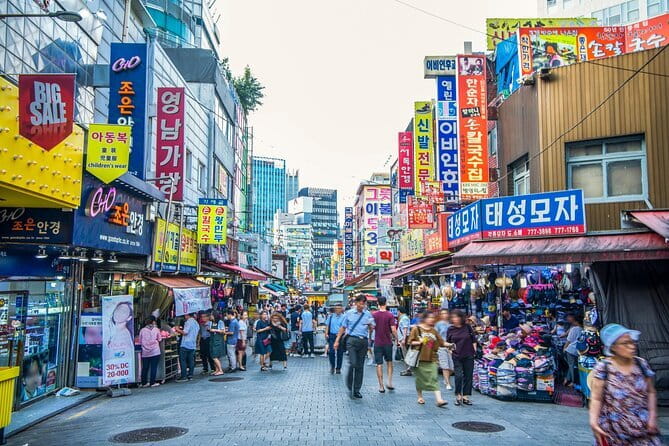
You’ll start at the meeting point at 407 Dongho-ro, Jongno District, then move into the market with a route that keeps you eating and talking. Instead of lingering at one stall, you’re hopping between vendors across the tasting list. That keeps the food from blending into one long blur.
In comments from people who did this before, a common theme is that Taesong knows where the best versions are and how to time popular vendors before lines grow. That’s a real advantage. Lines inside a market can slow your entire afternoon, and they’re not always visible until you’re already committed to a direction. With a plan, you spend more time eating and less time waiting.
The pace and food strategy: how to get the best experience
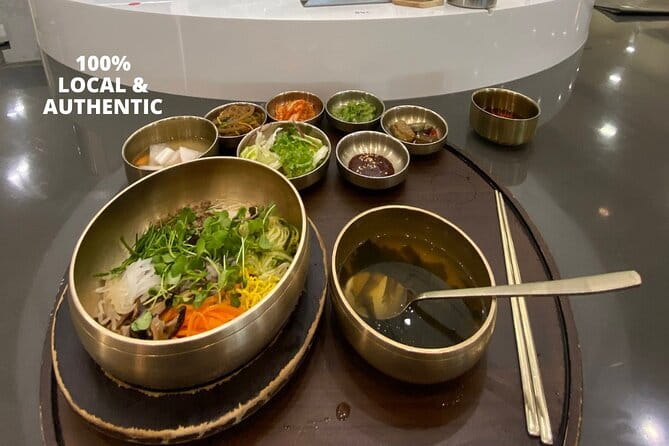
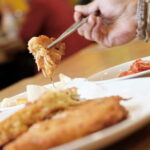
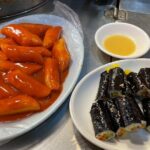
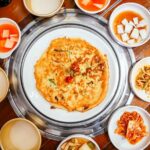
This tour is built on quantity and flow. You’ll likely eat almost the whole time, with bites that are meant to be compared across stalls: dumplings vs. fish cake, rice roll vs. spicy rice cake, savory vs. sweet pancake.
That means you should treat the start of the tour like the beginning of your meal, not like a snack run. If you show up full, you’ll miss the point. If you show up hungry, you’ll actually enjoy the variety as it comes.
A good mindset:
- Focus on tasting, not photographing everything.
- Take small breaks only if you truly need them; the tour moves for a reason.
- Expect spicy hits as part of the selection. If spice is tough for you, it’s worth speaking up when you’re there so the guide can guide you through the order of items.
Comfort also matters. Markets are walk-heavy, and you’ll move between stalls. Wear shoes you can stand in for a couple hours without regrets.
You can also read our reviews of more tours and experiences in Seoul

Learning modern Korea through food: what you’ll actually take away
This is where the tour goes beyond “eat these classics.” The guide connects what you’re eating to perspectives on the peninsula’s division and military realities, shared from personal reserve-forces experience.
You’ll come away with a more grounded understanding of how those realities can shape everyday life in Seoul—how people think, how they talk, and why certain topics carry extra weight. It’s not just facts; it’s framing. You get context that helps you interpret what you see around you after the tour.
Even if you’re not a history buff, you’ll probably appreciate this. Street food is sensory. The stories give it meaning. Together, it turns a market stop into something that sticks.
Logistics that matter: meeting point, ticket, and group size
You’ll meet at 407 Dongho-ro, Jongno District, Seoul and the tour ends back at the meeting point. The start location is near public transportation, which helps if you’re using Seoul’s metro system during the rest of your day.
You’ll also use a mobile ticket, which is a small thing, but it reduces friction. Markets don’t love delays.
The small group size (maximum 10) is another practical win. With fewer people, you get less waiting and more chance to ask questions. That also makes it easier for the guide to keep the tasting route smooth, especially in crowded market conditions.
Price and value: is $100 worth it?
$100 for an about 2-hour market food tour sounds steep to some people—until you break down what you actually get.
You’re paying for:
- A multi-item lunch worth of tastings (dumpling, meatball, Korean hotdog, rice roll, spicy rice cake, fish cake)
- Extra snacks (sweet Korean pancake, fish-shaped bun)
- Bottled water
- In-person English guidance
- A small-group route through one of Seoul’s biggest traditional food markets
- Plus the time spent explaining modern Korea topics and answering questions
If you were to try that many items on your own, the cost could be similar, but you’d still be missing the selection help and the efficient vendor navigation. The guide also reduces decision fatigue. That alone can be worth real money when you’re standing in front of a dozen stalls asking yourself where to start.
So I see this as value if you want more than a snack. It’s a planned meal with context.
Who this tour suits best (and who should skip it)
This fits best if you:
- Want a guided market meal instead of wandering blindly
- Like your food tours to include context and conversation
- Are comfortable with street-food variety, including spicy items
- Prefer small groups for smoother ordering and less waiting
You might skip it if:
- You’re not interested in market walking or you want a more relaxed sit-down meal
- You dislike guided structure and prefer to choose everything yourself
- You have very specific dietary restrictions and need a customized menu (the tour food list is presented as included items, so flexibility isn’t mentioned)
Weather reality: the one practical condition
The experience notes that it requires good weather. If it’s canceled due to poor weather, you’ll be offered a different date or a full refund. That’s a common market-tour constraint, because market conditions can change quickly when rain hits.
If your schedule is tight, pick this tour early in your Seoul stay so you have a backup option if weather forces a change.
Should you book Hidden Stories & Flavors at Kwangjang Market?
Book it if you want a market meal that’s organized, generous, and explained. The combination of a tight 2-hour food route, a small group limit, multiple tastings (plus snacks), and a guide who connects the food to modern Korea topics is a strong mix. If you’ve ever felt lost in a big market, this one gives you a starting point and a reason for each choice.
Skip it if you’re looking for a low-commitment snack stop or a purely historical tour. This is primarily a food experience with story context layered in—not the other way around.
FAQ
FAQ
How long is the Hidden Stories & Flavors Market Food Tour in Seoul?
The tour lasts about 2 hours.
Where do I meet for the tour?
The meeting point is 407 Dongho-ro, Jongno District, Seoul, South Korea. The tour ends back at the meeting point.
What food is included during the tour?
The tour includes lunch items such as dumplings, meatballs, Korean hotdog, rice roll, spicy rice cake, and fish cake, plus bottled water. It also includes snacks like a sweet Korean pancake and a fish-shaped bun.
Is the tour offered in English?
Yes, it is offered in-person in English.
How big is the group?
This tour has a maximum of 10 travelers.
Do I need an admission ticket for the market?
Admission ticket is listed as free for the Kwangjang Market stop.
Do I need to book ahead?
On average, this tour is booked about 28 days in advance.
Is the tour canceled if the weather is bad?
Yes, it requires good weather. If it’s canceled due to poor weather, you’ll be offered a different date or a full refund.
What’s the cancellation window?
You can cancel up to 24 hours in advance for a full refund. If you cancel less than 24 hours before the start time, the amount paid is not refunded.