REVIEW · INCHEON
DMZ tour pick up & drop off at Incheon airport
Book on Viator →Operated by Joy Tour Korea · Bookable on Viator
Border watching beats a terminal nap. This private layover tour from Incheon (ICN) turns a long wait into a real, unforgettable border experience at the DMZ. You’ll pair key sights like Imjingak Peace Park with stops inside the DMZ area, and you’ll still get back to the airport in time to catch your flight.
What I like most is the way it’s built for tight schedules: pickup and drop-off are handled for you, and the pacing keeps the day moving without turning it into a stampede. I also like the focus on the big DMZ touchstones—Dorasan Observatory for the North Korea view-by-telescope moment, and Tunnel 3 for one of the most talked-about infiltration sites.
The main drawback to plan for is time pressure. Even with a private group, you may feel the day is compressed, especially if your flight timing leaves little wiggle room.
In This Review
- Key highlights worth marking on your map
- Why this DMZ layover tour works from Incheon
- Getting picked up at ICN without stress
- Imjingak Peace Park: the emotional primer before the border
- Dorasan Observatory: using the telescope to see the idea of North Korea
- Tunnel 3: the walking part is the gut-level part
- The day’s pacing: 6 to 7 hours that still move quickly
- Value check: is $250 worth it for a private DMZ day?
- Guides and service: what makes the experience feel human
- When the DMZ isn’t operating: how the day can pivot
- Who should book this private ICN DMZ tour
- Should you book? my practical decision guide
- FAQ
- What time does the tour start?
- How long is the DMZ tour from Incheon?
- Where are you picked up and dropped off?
- What’s included in the price?
- What do I need to bring?
- Is the tour private?
- Is lunch provided?
Key highlights worth marking on your map
- ICN pickup and airport drop-off so you’re not guessing how to get out and back with a layover
- Imjingak Peace Park as your on-ramp to understanding what the DMZ means
- Dorasan Observatory (about 40 minutes) with time to see North Korea through a telescope
- Tunnel 3 (about 60 minutes) to walk down and take in what infiltration work looked like
- Private guide for your group only, with English support and help explaining what you’re seeing
Why this DMZ layover tour works from Incheon
If your layover is long enough to step outside ICN, this tour is one of the best ways to make the time count. In a single day you get the “why” (Peace Park and history context) plus the “what you can physically see” (Dorasan Observatory and Tunnel 3). It’s not just sightseeing. It’s a guided reality check on the Korean War’s long afterlife.
The other smart part is that it’s built around airport reality. The day is designed to start in the morning and end back at the airport for your next flight. If you’ve ever watched your layover evaporate into airport food and gate-hopping, you’ll appreciate how clean and direct this plan is.
And yes, it’s intense. You’re visiting one of the most restricted zones in the world. So go in with a calm mindset, and expect it to feel heavy.
You can also read our reviews of more tours and experiences in Incheon.

Getting picked up at ICN without stress
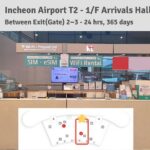
Meet-up is straightforward on paper: an English guide picks you up at the arrival hall of Incheon airport, and then you head out to begin the DMZ tour. Start time is listed as 8:00 am, so plan your arrival and immigration buffer accordingly.
ICN is huge, so here’s the practical tip: when you book, make sure you carry the mobile ticket confirmation details and have your passport info ready. One review called out that finding the guide can be tricky inside the airport maze—and the good news is that the guide came to them. Still, you’ll sleep better if you set yourself up to find your contact quickly.
Also note the nature of the trip:
- It’s a private tour/activity for your group only
- It may be operated by a multi-lingual guide (even though you’re told the tour is English)
So if your group has specific language needs, confirm those at booking.
Imjingak Peace Park: the emotional primer before the border

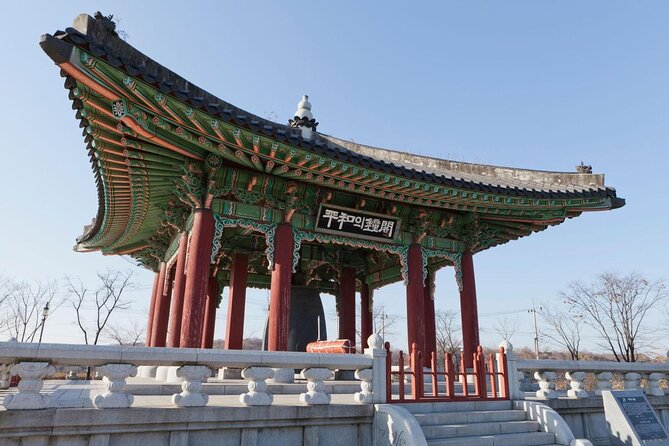
Your day starts at Imjingak Peace Park. This is the place that helps the DMZ make sense beyond “cool photos at a border.” It works like an introduction—where the tension isn’t abstract.
You’ll have time to move through the area and shop for souvenirs. That matters more than you might think. When you’re heading into a restricted, high-intensity part of the day, having a small window for normal human things—walking, looking, buying a memento—can make the shift feel less jarring.
Think of Imjingak as your mental warm-up. Tunnel 3 and the border views are the headline. Imjingak is where the story starts.
Dorasan Observatory: using the telescope to see the idea of North Korea
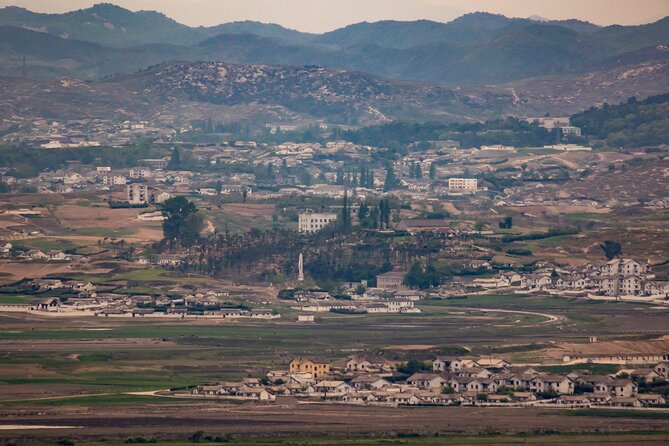
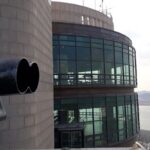
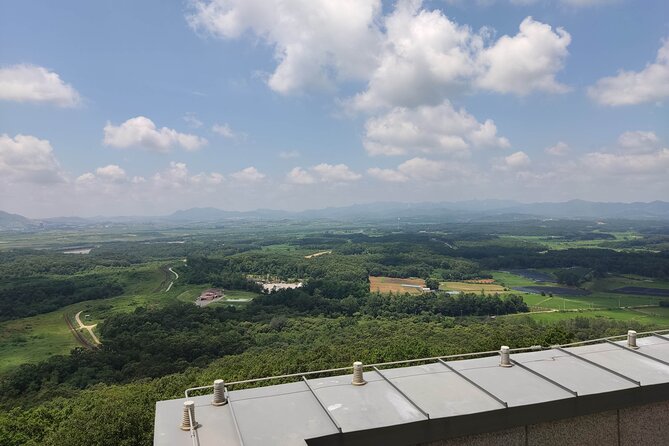
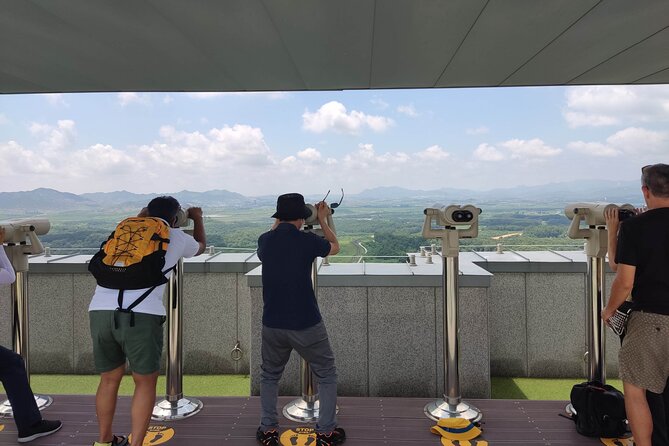
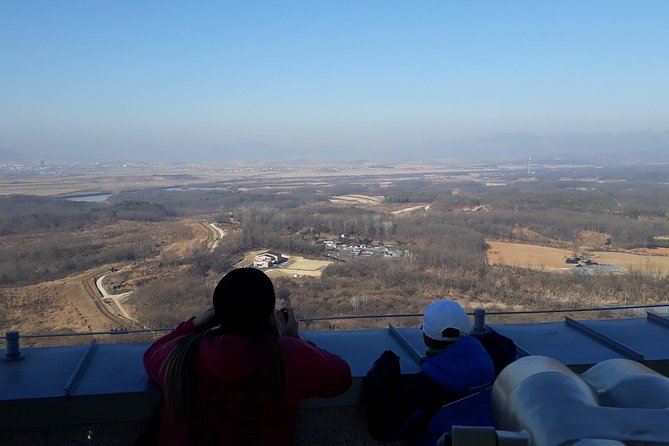
After getting shuttled into the DMZ area, you stop at Dorasan Observatory for about 40 minutes. This is the point where you peer into North Korea using a telescope and see features like a city view and guard post area from the South Korean side.
Forty minutes sounds short, but it’s a good length for this kind of visit. You’re not just staring. You’re looking with context from your guide, who can explain what you’re seeing and why that view is so politically loaded.
What I like about this stop is that it gives you a different kind of “understanding.” Instead of learning only from plaques, you get a visual reference you can return to in your head later. Even if you can’t make out much detail, the act of sighting a real place across the border changes how the history feels.
Tunnel 3: the walking part is the gut-level part
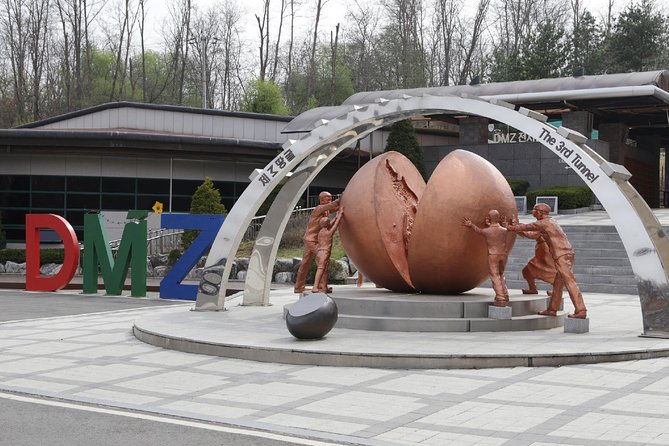
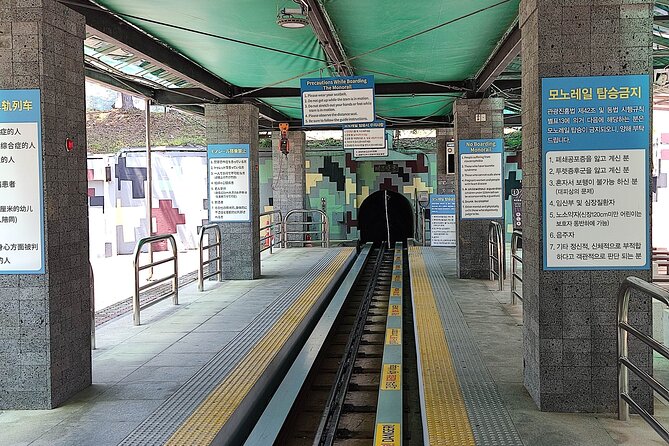
Next is Tunnel 3, with about 60 minutes at the site. You’ll walk down to see the infiltration path. This is the kind of stop where the ground level experience does more talking than words.
Tunnel 3 gets discussed so much because it connects the border tension to physical effort—plans, engineering, and the risk involved. Standing at the start and moving down changes the feeling from classroom to human scale. You can’t fully “get it” from a book in the same way.
The trade-off is that this portion is inherently physical. The tour info asks for moderate physical fitness, which makes sense here. If you have mobility issues, bring that up early—don’t wait until the day of.
Also, expect the pace to feel faster here than you’d want on a casual day. The tunnel stop is where time tends to get squeezed. If you’re the kind of person who likes to slow down at every detail, set your expectations accordingly.





The day’s pacing: 6 to 7 hours that still move quickly
The full tour runs about 6 to 7 hours. Your time in the DMZ portion is about 3 hours (with admission included), while the rest is pickup, travel, Peace Park time, and airport return logistics.
For most layovers, that’s a workable window. For others, it can feel tight—especially if your flight is early or boarding starts soon after your scheduled drop-off. One common issue in the experience feedback is that during the DMZ portion, you can end up feeling you’re being rushed. That doesn’t mean the guide is sloppy; it means the DMZ visit itself has a fixed rhythm.
My practical advice: if you’re choosing between tours or trying to fit this into a layover, pick a layover with breathing room. You’re trying to reduce risk, not add it.
Value check: is $250 worth it for a private DMZ day?
At $250 per person, the big question is what you’re buying besides the sites. You’re buying:
- A private guide
- Admission fee included
- Complimentary round-trip transfer between the airport and the sites (described as a non-fee-based service)
- A schedule engineered for getting you back for your next flight
You’re not paying for lunch. You’re not paying for gratuity. And you’re not paying for the mental load of figuring out transport and timing yourself. In a place like the DMZ—where entry rules and timing matter—that “organized safety net” is part of the value.
In other words: if you were to DIY this, you’d likely spend time coordinating, and you’d risk turning history into stress. When the clock is ticking, paying for a guided structure often makes the day feel simpler.
So who gets the best value? People on tight schedules, and people who want context, not just checkpoints.
Guides and service: what makes the experience feel human
This tour shines when the guide turns stops into meaning. In the feedback, I kept seeing praise for guides by name. People referenced J.K., who was described as extremely knowledgeable and even offered helpful lunch guidance. Others praised Moonhak Song for making Tunnel 3 and the tunnel history feel real. Still more noted Song for being friendly, careful, and making the DMZ trip easy from start to finish.
Here’s why that matters for you: DMZ sites can be confusing if you only get basic directions. A good guide connects each stop to what came before and what it meant in practice. Even small moments—like when you’re standing at a viewpoint or looking at a specific tunnel feature—get clearer with real explanation.
If you want the best version of this tour, ask questions during transitions. Don’t wait until you’re standing by the telescope. Ask earlier, while you’re traveling, when your guide can still shape the story around your curiosity.
When the DMZ isn’t operating: how the day can pivot
One reality check: entry can be affected by public health situations. The experience feedback includes instances where the DMZ was closed due to disease outbreaks, and the operator used a different plan—like a Seoul city tour and an observation post instead.
So don’t plan your emotional expectations around seeing every exact DMZ stop no matter what. Plan as if you’ll go, but accept that in rare cases, your day may shift.
The silver lining is that you’re still out with a guide. The tour isn’t just “go home and hope.” It’s designed to fill the time with meaningful alternatives when possible.
Who should book this private ICN DMZ tour
This fits you best if:
- You have a long layover and want to leave the airport for something truly historic
- You’re comfortable with a fast-paced day (even if you’d love it slower)
- You’re open to a serious subject and want context, not just photos
- You can meet the request for moderate physical fitness for the tunnel walk
It might not fit if:
- Your schedule is so tight that any delay could jeopardize your flight
- You strongly prefer unhurried pacing and lots of free time
- Tunnel walking would be difficult for you
Should you book? my practical decision guide
Book it if your layover is long enough and you want the most meaningful use of that time. The combination of ICN pickup/drop-off, included admission, and a private guide is exactly what you want when time and stress are your biggest enemies.
Skip or consider something else if your flight timing is precarious or if you know you’ll struggle with a tunnel walk. For this kind of day, the risk isn’t the sights—it’s the time crunch.
If you do book, go in ready for a serious morning. Bring your passport, keep your ticket details handy, and treat the day like a guided course in a very real conflict that still shapes the present.
FAQ
What time does the tour start?
The tour start time is 8:00 am.
How long is the DMZ tour from Incheon?
The tour runs about 6 to 7 hours.
Where are you picked up and dropped off?
Your English guide picks you up at the arrival hall of Incheon airport, and after the tour you’re dropped off at the departure floor for your next flight.
What’s included in the price?
The price includes the guide, the admission fee, and complimentary round-trip transfer (described as non-fee-based service). Lunch and gratuity are not included.
What do I need to bring?
You’ll need a current valid passport on the day of travel. DMZ ticket reservation also requires each traveler’s nationality, gender, given name, surname, and date of birth.
Is the tour private?
Yes. It’s listed as a private tour/activity, so only your group will participate.
Is lunch provided?
No. Lunch is not included, so you’ll want to plan for food on your own during the day.